

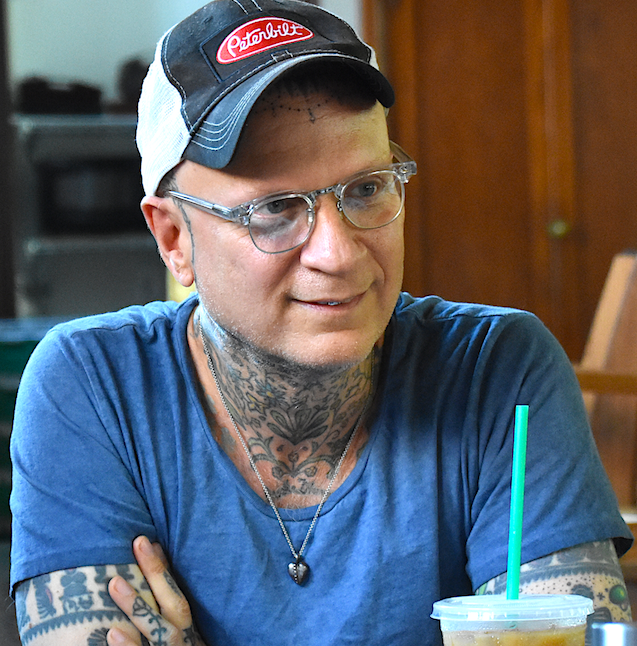
Dharmapunx NYC
josh korda
Josh Korda’s talks at Dharmapunx NYC . To support the teachings one can donate using venmo (dharmapunxnyc) or the paypal button on our website, dharmapunxnyc.com, or patreon.com/dharmapunxnyc.
Episodes
Mentioned books

Oct 14, 2026 • 60min
The past is never dead. It's not even past.
Explore how the brain uses past experiences to predict the present, shaping perception, emotion, and behavior. The discussion examines negativity bias, trauma, avoidance, and the Buddhist “second arrow” of suffering. It also turns practical, with grounding techniques, gradual exposure, relaxation, and guided exercises for updating difficult memories and anchoring attention in present safety.
Sep 9, 2026 • 58min
The Spectacular Illusion of Being Someone
A fascinating exploration of how the brain constructs the feeling of being a unified self. The talk examines perception, body ownership, personal narratives, free will, and the link between self-referential thinking and suffering. It concludes with a guided meditation focused on bodily awareness, observing thoughts, and loosening the sense of an owner behind experience.
10 snips
Sep 1, 2026 • 1h 3min
How Emotions Are Constructed By the Brain
Why do emotions feel automatic when the brain may be constructing them in real time? This talk explores predictive body signals, childhood survival patterns, cultural context, and the mental images shaping fear, anger, and desire. It also includes practical regulation techniques, progressive muscle relaxation, silent meditation, and rehearsal for stressful future situations.
Aug 15, 2026 • 59min
The Haunted Self: Ego States, Parts, Sub-Personalities (note: poor audio, recorded over zoom)
A lively dive into shifting self-states, from the Buddhist idea of no fixed self to trauma-created splits between a functional persona and a wounded part. They map four traditional personality states onto modern attachment patterns and explain how moods and bodily predictions shape perception. The practice focus includes noticing affects, somatic decision cues, emotion contagion, and a guided body-and-breath exercise.
4 snips
Jul 30, 2026 • 1h 2min
Obsession, Fixation and Infatuation. When Our Thoughts Revolve Around One Person.
A talk about how rumination reorganizes life around an unavailable person and impairs functioning. Exploration of how brains build predictive models and resist updating them. Discussion of attachment history, repetition compulsion, and craving as distraction. Practical approaches include limiting contact, community support, CBT-style evidence checks, mindfulness of feelings, and contemplative practices.
9 snips
Jul 23, 2026 • 59min
The Profound Efficacy of Healing Rituals: Ancient Wisdom, Modern Neuroscience and Why the Nervous System Needs More Than Insight
They explore how ritual practice repairs the nervous system beyond talk therapy. You hear explanations linking predictive brain models to embodied change. Rhythm, breath, cold immersion and movement are presented as tools to retrain safety responses. Symbolic acts, communal rites and modern body-based therapies are highlighted as powerful ways to mark transitions and restore connection.
14 snips
Jul 15, 2026 • 1h
Helping Others Without Losing Ourselves in the Process
Conversations about the difference between helping and solving, and why people often need emotional presence rather than fixes. Exploration of how we unconsciously mirror others and catch emotions through right-brain empathy. Practical attention to grounding, bodily regulation, and safety skills to stay present without becoming overwhelmed. Guidance on honest boundaries, widening support, and avoiding carrying others' pain alone.
4 snips
Jun 29, 2026 • 55min
Making the Most of the Time We Have
A lively dive into how the brain constructs time and why our sense of now is an internal model. Topics include neuroscientific experiments on delayed feedback, how attention and novelty stretch or compress perceived time, and cultural and hemispheric differences in temporal experience. The conversation also explores meditation and Buddhist perspectives on expanding the present moment.
22 snips
Jun 15, 2026 • 59min
How Thoughts Affect Your Body—What Happens When We Chronically Activate Our Stress Response system Over Imaginary Worries
A talk on how thinking literally shapes physical stress and health. Neuroscience and Buddhist ideas collide to explain rumination, default mode thinking, and bodily prediction. Practical tactics appear for interrupting worry, repurposing arousal, and using sleep, environment, and social contact. Guided breath and visualization practices show how attention shifts change bodily states.
17 snips
Jun 4, 2026 • 60min
Playing Hide-and-Seek With Adult Reality
A lively look at how the brain constructs reality and how childhood emotional templates shape adult beliefs. Discussion of Winnicott's transitional play and how peekaboo and imaginative games teach resilience. Practical ideas for reintroducing play into adult life, including 'doing badly on purpose' and imagery practices drawn from psychotherapy and Buddhist techniques.

