

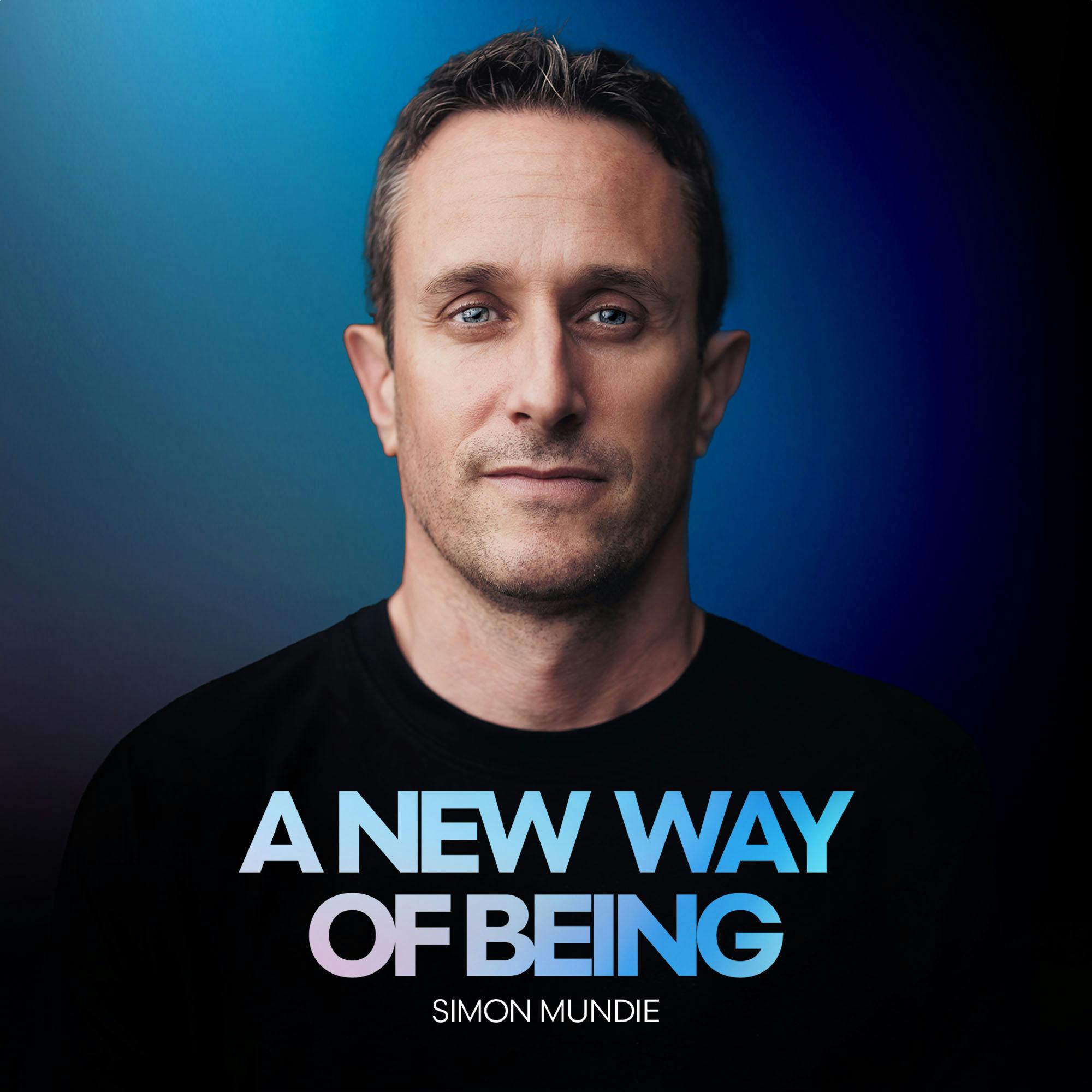
A New Way of Being
Simon Mundie
A New Way of Being is about the art of inner alignment and finding flow.It starts with developing a different relationship with your thinking mind. You are not your thoughts, you are aware of your thoughts. This is a crucial distinction that can have a profound effect.Life isn't something to be 'won', but is rather a continuous miracle to be experienced, and Simon Mundie and guests discuss ways to understand and embody this new way of being.Guests range from world renowned thinkers, philosophers, scientists and healers - to many of the most successful athletes of all time. Hosted on Acast. See acast.com/privacy for more information.
Episodes
Mentioned books

May 3, 2021 • 43min
Hard Work: Sir Alastair Cook
Why all the greats have hard work in common, with the England cricket legend.As well as being England captain, Cook was one of the most prolific batsmen cricket has ever seen.He remains England's most capped player, and is still their leading run scorer in Test matches – and he says it is in a big way down to his work ethic.Here, he gives us tips on managing our inner critics, tells why all the greats have hard work in common, and explains why he would intentionally make himself uncomfortable in training.Hosted on Acast. See acast.com/privacy for more information. Hosted on Acast. See acast.com/privacy for more information.
May 3, 2021 • 55min
Role model: Kate Richardson-Walsh
Setting a positive example with former Team GB hockey captain and Olympic gold medal winner Kate Richardson-Walsh.As Team GB hockey captain, Richardson-Walsh captained the UK to a historic gold medal at the 2016 Rio Olympics.She talks about actively seeking out other people to learn from, the importance of having tough conversations, and explains why it’s worth finding out how you react to pressure. Hosted on Acast. See acast.com/privacy for more information. Hosted on Acast. See acast.com/privacy for more information.
May 3, 2021 • 51min
Self-reflection: Jamie Peacock
The value of observing and evaluating yourself in order to grow as a person.Unlike many athletes, rugby league great Peacock made a smooth transition out of the sport upon retiring, thanks in no small part to his ability to separate his personal from his sporting identity.He explains the importance of living your values, what sport teaches you about problem-solving, and the value of observing and evaluating yourself in order to grow as a person. Hosted on Acast. See acast.com/privacy for more information. Hosted on Acast. See acast.com/privacy for more information.
May 3, 2021 • 54min
Walking: Professor Shane O'Mara
Most of us do it - but almost all of us don’t do it enough. Yes, we're talking about walking. It's hardly news that we are, as a species, too sedentary, and the fact is that we were not designed to spend as much time as we do sitting or slouching around. Walking is what we are designed to do, and our ability to walk long distances helped humans become the dominant species on earth. It helps to protect and repair organs, aids digestion and can turn back the ageing of our brains. Not only that but it's simple and it's good for us - so why aren't we doing it enough? Neuroscientist Shane O’Mara is on a one-man mission to convince us to up our step count. He says that doing so will benefit our muscles, brains and waistline, that our mood will improve and our stress levels will fall - and walking has also been scientifically proven to aid creativity. So if you’re stuck on a problem, going for a brisk walk could well help you on your way to solving your conundrum.**MyTwitter: https://twitter.com/simonmundieInstagram: https://www.instagram.com/simonmundie/Email me: info@simonmundie.comAnd for the 'Mundie on Monday' newsletter - featuring three of the best Life Lessons from four years and 250 of these conversations - head to simonmundie.com (where you can also drop me an email)Please do share this episode - it makes a big difference in helping people find this podcast. Much obliged.Hosted on Acast. See acast.com/privacy for more information. Hosted on Acast. See acast.com/privacy for more information.
May 3, 2021 • 44min
Self-talk: Lucy Gossage
Exploring the stories we tell ourselves and the impact they can have on our lives with Ironman champion and cancer doctor Lucy Gossage.A 13-time Ironman Champion and oncology doctor, Gossage tells us about how she learned to understand how the way she was talking to herself, and the unconscious beliefs she held about herself and the world around her, impacted and hindered her performance. She uncovered her limitations with the help of sports psychologist Helen Davis, who we speak to in the next episode of the series… Hosted on Acast. See acast.com/privacy for more information. Hosted on Acast. See acast.com/privacy for more information.
May 3, 2021 • 1h 9min
Teams: Frances Houghton
How to create a successful team culture and thrive within it – with the five-time Olympic rower.Over the course of her two decades in the British rowing system, including competing at five Olympic Games and winning three siler medals, Houghton underwent a big evolution that led her to question what is truly important. What she discovered is valuable to anyone wanting to compete, collaborate and cooperate to the best of their ability…Hosted on Acast. See acast.com/privacy for more information. Hosted on Acast. See acast.com/privacy for more information.
10 snips
May 3, 2021 • 1h 9min
Circadian rhythms: Professor Satchin Panda
Join Satchin Panda, a leading expert on circadian rhythms from the Salk Institute, as he reveals how our biological clocks impact health and performance. He discusses how athletic performance can fluctuate by 26% throughout the day and offers strategies for syncing workouts with these rhythms. Discover the benefits of time-restricted eating, the importance of natural light exposure for mood and sleep, and how to optimize meal timing for better health. Get ready to harness your body's natural cycles for peak well-being!
Apr 20, 2021 • 1min
A New Way of Being
A New Way of Being is about recognising that we are all innately enough. Most of us don’t always feel that way, but it’s an illusion largely created by identifying with the outdated voice in our heads.And so much stuff out there, including much of the so-called high performance culture, comes from a place of inadequacy. If we are not enough as we are, of course we will expand vast amount of energy trying to BECOME enough in the future. But that’s a trap. We cannot become what we already are, and the search obscures this recognition.Does this mean we become passive, lazy, indifferent and don’t look to do big and important things in the world? Of course not. But crucially the intention is different. We are not seeking to prove our worth. We are choosing to express it.Time for a new way of being, don’t you think? Hosted on Acast. See acast.com/privacy for more information.

