

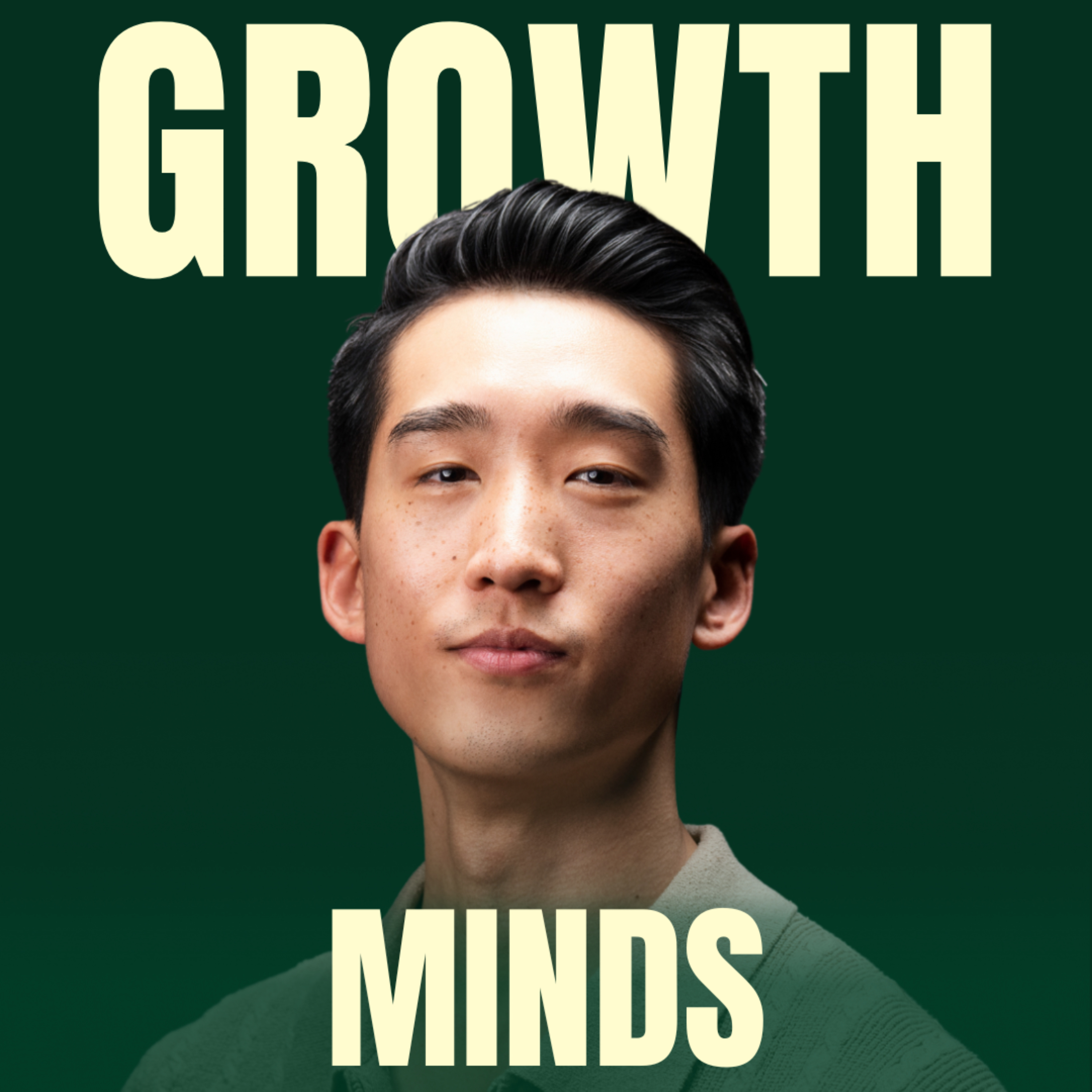
Growth Minds with Sean Kim
Sean Kim
Impactful conversations with the world's top experts in health, wealth, and love to help you reach your full potential.
Guests include: Robert Kiyosaki (Rich Dad Poor Dad), Steve Aoki, Robert Greene, Dr. Jason Fung, Dr. Steven Gundry, Neil deGrasse Tyson (StarTalk), Dennis Rodman, Wim Hof, Daniel Pink, Doctor Mike, Lewis Howes (School of Greatness), Tom Bilyeu (Impact Theory), Andrew Yang, Dr. Paul Conti, Charles Hoskinson (Ethereum), Dr. Drew (After Dark), Jo Koy, Jordan Belfort (Wolf of Wall Street), Dave Asprey (Bulletproof).
Guests include: Robert Kiyosaki (Rich Dad Poor Dad), Steve Aoki, Robert Greene, Dr. Jason Fung, Dr. Steven Gundry, Neil deGrasse Tyson (StarTalk), Dennis Rodman, Wim Hof, Daniel Pink, Doctor Mike, Lewis Howes (School of Greatness), Tom Bilyeu (Impact Theory), Andrew Yang, Dr. Paul Conti, Charles Hoskinson (Ethereum), Dr. Drew (After Dark), Jo Koy, Jordan Belfort (Wolf of Wall Street), Dave Asprey (Bulletproof).
Episodes
Mentioned books

Oct 6, 2026 • 1h 3min
I’ve Been A Cardiovascular Scientist For 30 Years… ED Is A Warning Sign of Heart Disease
Dr. Nathan Bryan is a nitric oxide biochemist and the Founder, Chairman, and CEO of Bryan Therapeutics, with over 25 years of research and 100+ peer-reviewed papers on how the body makes this molecule. He's the author of The Secret of Nitric Oxide: Bringing the Science to Life. In this conversation, he explains how everyday habits like mouthwash, fluoride toothpaste, and antacids can quietly shut down blood flow, why erectile dysfunction can be an early warning sign of heart disease, and the daily routine he follows to protect his own vascular health.In this episode we discuss:(0:00) Trailer(1:48) Mouthwash and Heart Health: The Hidden Link(2:54) How Antiseptic Mouthwash Raises Blood Pressure in 7 Days(8:53) Tongue Scraping vs. Antiseptic Mouthwash(14:13) Why Fluoride-Free Toothpaste Matters for Blood Flow(15:47) What Is Nitric Oxide? The "Miracle Molecule" Explained(19:20) Why ED Is the "Canary in the Coal Mine" for Heart Disease(23:31) Testosterone, TRT, and Nitric Oxide: Which Comes First?(28:25) Daily Cialis After 40? Dr. Bryan Responds to Huberman(34:19) How to Test Your Nitric Oxide Levels(37:50) Dr. Bryan's Warning About Antacids and PPIs(42:30) Mouth Taping and Nasal Breathing for Better Blood Flow(45:54) Best Foods for Nitric Oxide (And Why Organic Falls Short)(54:43) Sauna and Cold Plunge: Boosting Blood Flow Through Hormesis(58:18) Dr. Bryan's Daily Non-Negotiables: Fasting, HIIT, and Sauna(1:01:03) Why Sugar Shuts Down Nitric Oxide ProductionLearn more about Dr. Nathan Bryan here:Website: https://n1o1.comBryan Therapeutics: https://bryantherapeutics.comInstagram: https://www.instagram.com/drnathansbryanX: https://x.com/drnitricLinkedIn: https://www.linkedin.com/in/drnathansbryanYouTube: https://www.youtube.com/@drnathansbryannitricoxideBook: The Secret of Nitric Oxide: https://nathansbook.comListen to this episode on the go🟢 Spotify: https://open.spotify.com/show/4M9IlPFWzCaTv60kvCMlVS🍎 Apple Podcasts: https://podcasts.apple.com/podcast/id1482999379📸 Connect with us on IG: https://instagram.com/growthminds.podcastMade possible by: Jumpspeak: https://www.jumpspeak.comFollow Sean KimInstagram: https://www.instagram.com/heyseankim/?hl=enX: https://x.com/heyseankim?lang=enLinkedIn: https://www.linkedin.com/in/heyseankim
Sep 29, 2026 • 1h 22min
I’ve Researched Female Desire For 20 Years... Why Women Choose Certain Men
Dr. Catherine Salmon is a Professor of Psychology at the University of Redlands and an evolutionary psychologist who has spent over two decades studying erotic fiction, pornography, and female sexuality. She's the co-author of Warrior Lovers: Erotic Fiction, Evolution and Female Sexuality and The Secret Power of Middle Children, and her research explores what romance novels and porn — the private products billions of people consume — reveal about the evolved mating psychology of men and women.In this episode, we discuss:(1:56) What Romance Novels Reveal About What Women Really Want(2:59) Why Romance Novel Heroes Are Always "Capable" Alpha Men(6:18) Is Attraction to Wealth Learned or Evolutionary?(12:17) Bad Boys vs. Nice Guys: The "Dad or Cad" Theory(16:38) Why Romance Is About Long-Term Mating and Porn Is About Short-Term(19:52) How Birth Control Changed Women's Short-Term Mating(32:48) Why Being "Chosen" by a High-Option Man Matters So Much(42:46) The Hidden Tests Women Use to Screen Men(43:37) The Gladiator Frog: Nature's Version of a Commitment Test(50:12) How Porn Is Becoming a Coping Skill for Anxious Young Men(54:53) Do Dating Apps Create a False Illusion of Abundance?(1:02:42) What Is "Mismatch Theory"?(1:10:44) The Link Between Absent Fathers and Earlier Puberty(1:18:01) Why Middle Children Make the Most Loyal Partners(1:23:52) What Men and Women Misunderstand About Each OtherLearn more about Dr. Catherine Salmon here:Website: https://www.redlands.edu/faculty-and-staff-directory/psychology/catherine-salmonBooks: Warrior Lovers: Erotic Fiction, Evolution and Female Sexuality: https://a.co/d/039nhjPpThe Secret Power of Middle Children: https://a.co/d/03p2WXhQWatch this on Youtube: https://youtu.be/VuJeYaForIA📸 Connect with us on IG: https://instagram.com/growthminds.podcastMade possible by: Jumpspeak: https://www.jumpspeak.comFollow Sean KimInstagram: https://www.instagram.com/heyseankim/?hl=enX: https://x.com/heyseankim?lang=enLinkedIn: https://www.linkedin.com/in/heyseankim
Sep 22, 2026 • 1h 20min
I’ve Studied Couples For 35 Years... Why They Suddenly Lose Attraction
TRIGGER WARNING: Discussions of suicide and depressionIf anyone watching is personally struggling, the 988 Suicide & Crisis Lifeline (call or text 988 in the US) is always available.Dr. Lisa Firestone is a clinical psychologist and suicidologist who has spent over 35 years researching couple relationships, attachment, and self-destructive behavior. She's the Director of Research and Education at the Glendon Association, a Senior Editor at PsychAlive.org, and co-author of books including Conquer Your Critical Inner Voice and Sex and Love in Intimate Relationships. In this episode, she breaks down why intimacy fades in long-term relationships, the four attachment styles, and how the "critical inner voice" can quietly shape our relationships and mental health.In this episode, we discuss:(1:35) Why Intimacy Fades When Couples Feel "Too Secure"(5:52) What Is a "Fantasy Bond"?(9:04) Why We're Attracted to Partners Who Match Our Defenses(11:50) The Origins of Attachment Theory(14:02) Anxious Attachment: Why "Turning Up the Volume" Backfires(14:55) Disorganized Attachment: When There's No Safe Strategy(20:22) Can You "Earn" Secure Attachment as an Adult?(30:03) The Hardest Attachment Combo: Anxious + Avoidant(39:36) Why "It Takes a Village" Is Backed by Attachment Science(43:56) Signs You're in a "Fantasy Bond" With Your Partner(50:56) The Real Reason Behind Most Infidelity(58:14) Busting the Myth: Do Happy Couples Never Fight?(1:03:55) How Male Vulnerability Actually Strengthens Relationships(1:09:55) What Is the "Critical Inner Voice"?(1:19:58) Building Resilience: Coping Strategies That Actually WorkLearn more about Dr. Lisa Firestone here:Website: https://www.drlisafirestone.comPsychAlive: https://www.psychalive.orgThe Glendon Association: https://www.glendon.orgBooks: Conquer Your Critical Inner Voice / Sex and Love in Intimate Relationships📸 Connect with us on IG: https://instagram.com/growthminds.podcastMade possible by: Jumpspeak: https://www.jumpspeak.comFollow Sean KimInstagram: https://www.instagram.com/heyseankim/?hl=enX: https://x.com/heyseankim?lang=enLinkedIn: https://www.linkedin.com/in/heyseankimWatch this episode on Youtube: https://youtu.be/LZp3dzL61xI
Sep 11, 2026 • 1h 30min
I’ve Studied Nutrition At Stanford For 30 Years… You’re Eating Too Much Protein
Christopher Gardner, PhD, is a nutrition scientist and Professor of Medicine at Stanford University, where he has led more than 20 large-scale randomized clinical trials comparing diets like keto, vegan, low-fat, and low-carb. He's the past chair of the American Heart Association's Nutrition Committee and the author of the upcoming book Food Sense, which argues there's far more scientific consensus about what to eat than the internet's diet wars would suggest.In this episode, we discuss:(1:51) The Biggest Diet Mistake Everyone Makes(3:44) Oreos Are Vegan: The Low-Fat Diet Myth(8:48) Stanford's 609-Person Diet Study(11:32) Why Some Diets Work Better For You(17:00) $8M Study: Genes and Weight Loss(29:34) Keto vs Low-Fat: Cholesterol Results(36:27) Best and Worst Diets, Ranked by Science(39:01) 6 Foods Every Diet Expert Agrees On(47:17) Is Organic Food Actually Worth It?(53:58) Are Vegetables Losing Their Nutrients?(1:07:52) How Seed Oils Are Really Made(1:13:58) The Omega-3 vs Omega-6 Myth Explained(1:19:23) Why Inflammation Tests Don't Work(1:26:03) The Truth About the Seed Oil Panic(1:29:49) Eat Food, Not Too Much, Mostly PlantsLearn more about Christopher Gardner here:Website: https://nutrition.stanford.eduX (Twitter): https://x.com/GardnerPhDInstagram: https://www.instagram.com/cgardnerphdBook (pre-order, out Oct 13): Food Sense📸 Connect with us on IG: https://instagram.com/growthminds.podcastMade possible by: Jumpspeak: https://www.jumpspeak.comFollow Sean KimInstagram: https://www.instagram.com/heyseankim/?hl=enX: https://x.com/heyseankim?lang=enLinkedIn: https://www.linkedin.com/in/heyseankim
Sep 4, 2026 • 1h 19min
I Studied Burnout For 20 Years… 80%+ of Disease Comes From Stress
Dr. Neha Sangwan is an internal medicine physician turned communication and burnout expert, and the founder and CEO of Intuitive Intelligence. After burning out herself early in her medical career, she spent the next 20 years studying the physiology of stress and now coaches leaders at companies like Google, Apple, and American Express on how to have honest conversations and read their body's signals before they hit a breaking point. She's the author of Talk Rx and Powered by Me, and has spoken on three TEDx stages.In this episode, we discuss:(1:14) The Body Doesn't Care Where the Stress Comes From(1:52) Why Chronic Stress Causes or Worsens 80% of Illness(5:57) Her Own Burnout Story as a Physician(11:07) Being Sent Away as a Toddler: The Root of Her People-Pleasing(13:06) The Six-Year-Old Moment That Shaped Her Whole Career(15:21) Two Mountain Dews and a Snickers: Her "Genius" Survival Strategy(22:05) The Body Map: How to Read Your Own Physical Signals(30:10) The Three Phases of Burnout (It's a Slope, Not a Trap Door)(34:02) Talking to Her Body Instead of Shaming It(46:35) The Burnout Self-Assessment: Where Are You Gaining or Losing Energy?(55:38) Why We Choose Pain Over Difficult Conversations(1:07:21) The Five-Floor Framework for Having Hard Conversations(1:13:09) Why Sitting With Someone's Pain Is a Doctor's Real Job(1:15:54) The Five Levels of Human Connection (Sacred Exchange)(1:18:01) Her Message to Her Six-Year-Old SelfWatch this episode on Youtube: https://youtu.be/imRj-Y68ERMLearn more about Dr. Neha Sangwan here:Website: https://nehasangwan.comInstagram: https://www.instagram.com/doctornehaIntuitive Intelligence: https://intuitiveintelligenceinc.comBooks: Talk Rx / Powered by Me📸 Connect with us on IG: https://instagram.com/growthminds.podcastMade possible by: Jumpspeak: https://www.jumpspeak.comFollow Sean KimInstagram: https://www.instagram.com/heyseankim/?hl=enX: https://x.com/heyseankim?lang=enLinkedIn: https://www.linkedin.com/in/heyseankim
Aug 26, 2026 • 1h 31min
I’ve Spent 34 Years As A Brain Coach… How To Make Your Brain 10 Years Younger In 2 Weeks | Jim Kwik
Jim Kwik is a brain coach and the founder of Kwik Learning, known worldwide as an expert in speed-reading, memory improvement, and accelerated learning. After a childhood brain injury left him labeled "the boy with the broken brain," he spent over three decades reverse-engineering how the brain works, going on to coach CEOs, celebrities, and billionaires. He's the New York Times bestselling author of Limitless and Limitless Daily.In this episode, we discuss:(0:00) Introduction(5:46) How He Got Labeled "The Boy With the Broken Brain"(8:39) Why All Behavior Is Belief-Driven(10:24) Your Mind Can't Tell the Difference Between Imagination and Reality(14:56) How Identity Really Changes (It's Not One Big Breakthrough)(16:52) "Don't Take Criticism From Someone You Wouldn't Take Advice From"(22:14) The Habit That Connected Him to Warren Buffett and Bill Gates(23:43) Why He's Launching a New Chapter With Kwik Learning and AI(27:50) The Danger of "Digital Dementia" and Cognitive Offloading(1:10:31) Float Tanks, Dark Retreats, and Disconnecting to Reconnect(1:16:28) Focus Is a Muscle: How to Train It Like a Magnifying Glass(1:19:21) Mind Management Over Time Management(1:23:56) Why Constraints Make You More Limitless(1:31:10) The Power of Your "Dominant Question"(1:33:45) His Message to His 5-Year-Old SelfLearn more about Jim Kwik here:Website: https://www.jimkwik.comInstagram: https://www.instagram.com/jimkwikKwik Learning: https://www.kwiklearning.comBook (Limitless Daily): https://www.limitless.comWatch this episode on Youtube: https://youtu.be/rMjVAnHmUeE📸 Connect with us on IG: https://instagram.com/growthminds.podcastMade possible by: Jumpspeak: https://www.jumpspeak.comFollow Sean KimInstagram: https://www.instagram.com/heyseankim/?hl=enX: https://x.com/heyseankim?lang=enLinkedIn: https://www.linkedin.com/in/heyseankim
Aug 17, 2026 • 1h 19min
I Run the World’s Oldest AI Safety Lab... There’s a “High Double-Digit” Chance AI Kills Us
Malo Bourgon is the CEO of the Machine Intelligence Research Institute (MIRI), the world's oldest AI safety organization, and has testified before the US Senate and Canada's Parliament on the risks of smarter-than-human AI. In this conversation, he lays out why he believes the race to superintelligence carries a serious risk of human extinction, how today's AI is already showing early signs of deception and self-preservation, and what it would take to steer toward a future where things go right.In this episode, we discuss:(0:00) Trailer(1:48) The Extinction Risk And How Much Time We Actually Have(3:40) The Real Logic Behind AI Extinction (It's Not The Terminator)(6:09) The Chimp Analogy: Why A Smarter AI Becomes Indifferent To Us(8:20) Why AI Develops Self-Preservation And Resists Being Changed(9:38) AI Systems Already Resisting Shutdown In Real Tests(10:58) Why AI Is Learning To Tell When It's Being Tested(12:53) Is Anything More Important Than AI Safety Right Now?(14:14) What The World Could Look Like By 2050(15:29) The End Of Jobs And The Coming Crisis Of Meaning(28:19) The Evolution Analogy: Why AI Learns Goals We Never Gave It(35:19) If AI Beats Us At Intelligence, What Makes Us Human?(41:30) Neuralink And Merging With AI: Driver Or Passenger?(51:13) Which Jobs And Careers Survive The Next 10 Years(1:14:31) Why We Can't Just "Pull The Plug" (The Loyal General Problem)(1:18:02) The Best-Case Scenario And Reasons For HopeLearn more about Malo Bourgon here:Website: https://intelligence.orgLinkedIn: https://www.linkedin.com/in/malobMIRI team page: https://intelligence.org/team/malo-bourgonWatch this episode on Youtube: https://youtu.be/3DuhFVHZFks📸 Connect with us on IG: https://instagram.com/growthminds.podcastMade possible by:Jumpspeak: https://www.jumpspeak.comFollow Sean KimInstagram: https://www.instagram.com/heyseankim/?hl=enX: https://x.com/heyseankim?lang=enLinkedIn: https://www.linkedin.com/in/heyseankim
Aug 7, 2026 • 58min
I’ve Helped 5,000+ Weight-Loss Patients... 83% Of Dieters End Up Heavier Than They Started
Dr. Rachel Goldman is a clinical psychologist and Clinical Assistant Professor of Psychiatry at NYU Grossman School of Medicine who spent years as a bariatric psychologist and is a leading expert in the psychology of weight, food, and behavior change. In this conversation, she explains why losing weight rarely delivers the happiness people expect, the mindset foundations that make change actually stick, and how to build a healthier relationship with food, GLP-1s, and the data we track about ourselves.In this episode, we discuss:(0:00) Trailer(03:47) The Biggest Myth About How Weight Loss Will Make You Feel(05:04) Why 80–95% Regain Weight: Obesity As A Recurring Disease(09:49) Why Quick-Fix Overhauls Fail And Baby Steps Win(11:54) The Mental Foundations To Build Before Losing Weight(14:55) What Makes A Good "Why" For Losing Weight(16:26) The Non-Scale Victories That Matter Most(21:27) The Truth Behind Post-Surgery Self-Harm Headlines(25:52) How To Build A Healthier Relationship With Food(27:42) Addiction Transfer: Why You Swap One Habit For Another(30:15) The Cookie Strategy: Why You Should Just Eat It(32:32) How Your Self-Talk Becomes Your Reality(35:19) Who GLP-1s Like Ozempic Are Actually For(41:23) "Ozempic Personality" And Anhedonia Explained(45:53) Over-Optimization: Wearables, Orthorexia, And Orthosomnia(58:16) Why Human Connection Beats Your Sleep ScoreLearn more about Dr. Goldman here:Website: https://www.drrachelnyc.comInstagram: https://www.instagram.com/drrachelnycBook (When Life Happens): https://whenlifehappensbook.comWatch this episode on Youtube:https://youtu.be/owZKpO0Drvs📸 Connect with us on IG: https://instagram.com/growthminds.podcastMade possible by:Jumpspeak: https://www.jumpspeak.comFollow Sean KimInstagram: https://www.instagram.com/heyseankim/?hl=enX: https://x.com/heyseankim?lang=enLinkedIn: https://www.linkedin.com/in/heyseankim
Jul 28, 2026 • 1h 12min
I’ve Spent 40 Years Studying Metabolism... This “Healthy” Drink Is Making You Tired | Dr. Robert Lustig
Dr. Robert Lustig is a neuroendocrinologist, professor emeritus of pediatrics at UCSF, and bestselling author of Fat Chance, The Hacking of the American Mind, and Metabolical who has spent 40+ years studying metabolism and the role of sugar in chronic disease. In this conversation, he breaks down the real root of modern burnout, why fructose acts as a poison without its fiber "antidote," and the science of how sugar hijacks the same reward circuitry as any other addiction.In this episode, we discuss:(0:00) Trailer(1:45) The Real Root Of Burnout: Cortisol And Neuronal ATP Depletion(8:02) The Amygdala's Four Brakes And Why They're All Failing At Once(15:57) How Sugar Damages Every System In Your Brain(17:55) Fructose vs. Fruit: Why Fiber Is The Antidote To The Poison(21:27) The Orange Juice Scam That Reshaped How We Eat(25:51) Why Ultra-Processed Food Makes You Eat 500 More Calories A Day(31:09) Why Sugar Is Addictive (And The Economics That Prove It)(38:46) Why You Don't Need Dietary Sugar To Live(42:12) What Vietnam Vets Taught Us About Addiction And Environment(43:57) Pleasure vs. Happiness: Dopamine, Serotonin, And Why It Matters(51:46) Why Calorie Counting Is Dangerous(52:35) The Truth About GLP-1s Like Ozempic: Benefits And Risks(1:03:30) The Right Order To Eat Your Food To Blunt Blood Sugar(1:11:07) The Highest-ROI Steps To Build Stress Resilience(1:13:05) Breaking Belief Systems With Psychedelics And Wim HofLearn more about Dr. Lustig here:Website: https://robertlustig.comInstagram: https://www.instagram.com/robertlustigmdMetabolical: https://metabolical.comWatch this episode on Youtube:https://youtu.be/7BY4dtNj1SA📸 Connect with us on IG: https://instagram.com/growthminds.podcastMade possible by:Jumpspeak: https://www.jumpspeak.comFollow Sean KimInstagram: https://www.instagram.com/heyseankim/?hl=enX: https://x.com/heyseankim?lang=enLinkedIn: https://www.linkedin.com/in/heyseankim
Jul 17, 2026 • 1h 10min
I’ve Treated 50,000+ Patients... You’re 63x More Likely To Die From Low Muscle Mass
Dr. Robin Berzin is a Columbia-trained functional medicine physician and the founder and CEO of Parsley Health, where she's seen 80% of patients improve or resolve their chronic conditions within their first year of care. In this conversation, she explains why "normal" lab ranges aren't optimal, how your gut quietly drives everything from brain fog to acne, and the longevity metrics that actually matter for living your fullest, longest life.In this episode, we discuss:(03:48) Why "Normal" Blood Ranges Aren't Optimal(06:43) What Standard Blood Work Misses When You Still Feel Off(08:13) The Tests To Run When You Feel Bad But Your Labs Look Fine(12:14) What's Actually Happening In Your Body When You're Burnt Out(17:08) Building A Better Relationship With Cortisol(17:57) Why You Shouldn't Eat Carbs First Thing In The Morning(22:26) Which Popular Tests Are Useless And Which Actually Matter (APOB)(24:35) The AMH Fertility Test Myth Every Woman Should Know(30:27) The Symptoms People Misdiagnose That Actually Start In The Gut(33:16) The Key Levers For Better Gut Health(36:54) Why Protein At Your First Meal Changes Everything(40:51) The Longevity Metrics That Matter: VO2 Max And Sleep Consistency(45:35) Why Low Muscle Mass Is One Of The Biggest Hidden Killers(57:00) Why Women Were Excluded From Health Research Until 1993(1:02:19) The Fertility Crisis: Microplastics, Toxins, And Sperm CountsWatch this episode on Youtube:https://youtu.be/uQo5Gkowgb4📸 Connect with us on IG: https://instagram.com/growthminds.podcastMade possible by:Jumpspeak: https://www.jumpspeak.comFollow Sean KimInstagram: https://www.instagram.com/heyseankim/?hl=enX: https://x.com/heyseankim?lang=enLinkedIn: https://www.linkedin.com/in/heyseankim

