

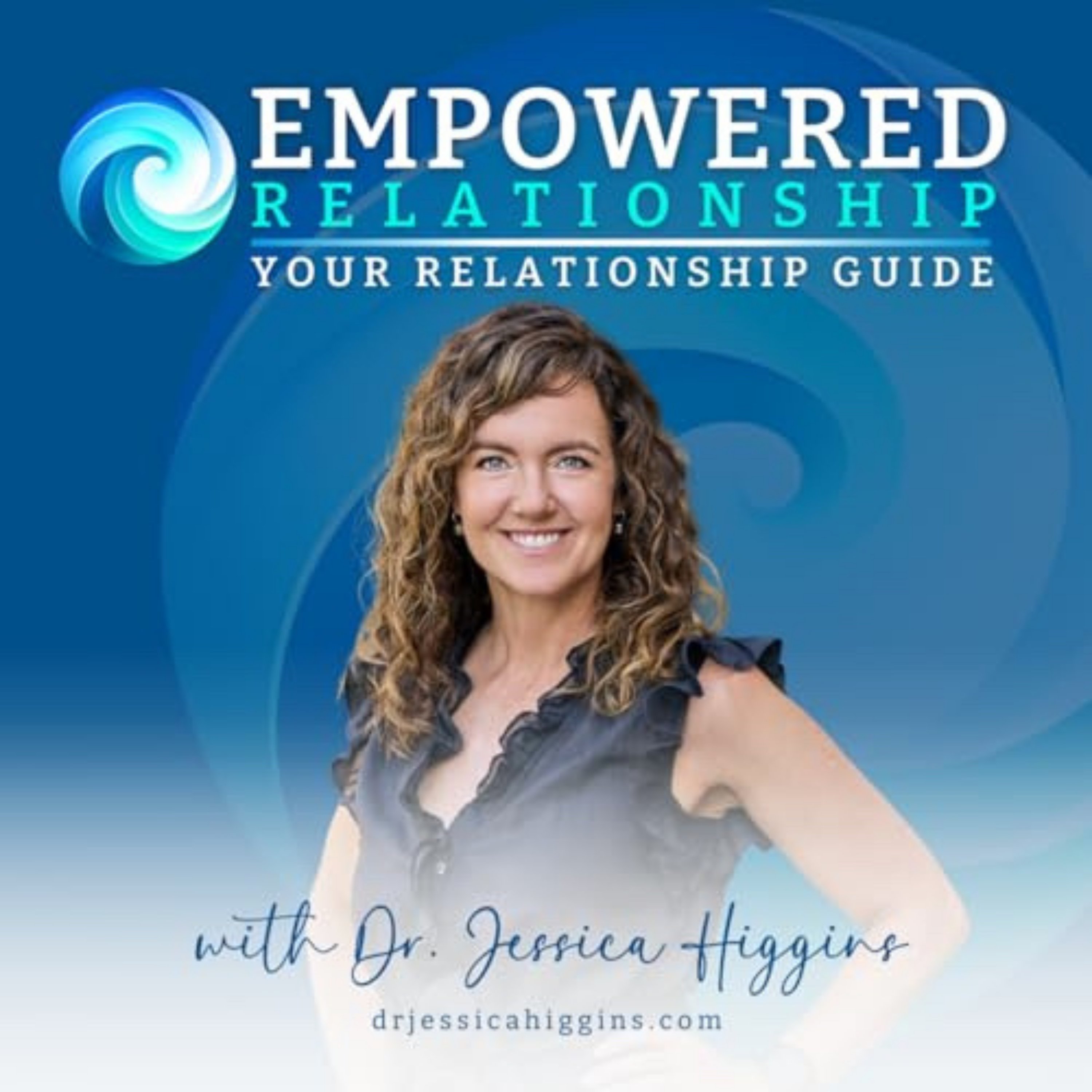
Empowered Relationship Podcast: Your Relationship Resource And Guide
Dr. Jessica Higgins
The Empowered Relationship Podcast helps you turn relationship challenges into opportunities and sets you up for relationship success, satisfaction, and intimacy.
This podcast is designed to inspire, motivate, and guide individuals and couples into more empowered, conscious, and evolved ways of loving.
This podcast is designed to inspire, motivate, and guide individuals and couples into more empowered, conscious, and evolved ways of loving.
Episodes
Mentioned books

Jun 26, 2017 • 53min
ERP 109: How Being Gentle With Your Partner Can Make A Big Difference
In last week's podcast episode, titled "What Most Couples Do That Creates Problems," I talked about how couples tend to try and resolve their concerns through their partner. In a short video by Dr. John Gottman (renowned relationship expert and researcher), he talks about this dynamic. In Gottman's language, he separates couples from his research into two major groups: the "masters" and the "disasters." Masters are the couples that are still happily together after six years. Disasters are the couples that are unhappy and/or are not together anymore. When addressing an issue, masters are gentle in their approach with one another. Whereas, disasters tend to have the attitude of "diagnosing their partner's personality defects." Frequently, I talk about the importance of approaching a difficult conversation from a calm and caring place, in that it sets the conversation up for better communication. Couples will be more apt to listen and hear each other, and hence be a little more able to work towards a resolution together. (Please listen to the podcast episode or read the transcript to hear more explanations, stories and examples.) WHAT IS GENTLENESS? Google's definition of gentleness: "the quality of being kind, tender, or mild-mannered." "softness of action or effect; lightness." WHY DO WE STRUGGLE WITH BEING GENTLE? We think being gentle is a gift or is for the benefit of our partner. We get angry and think our partner doesn't deserve our kindness. Sometimes, we may even want to punish our partner a little bit. We are not gentle because we are protesting something our partner is doing, in hopes they will hear our plea and come to the rescue. We feel offended, slighted as if our partner doesn't care and/or has hurt us purposely, We think our partner will not hear the severity of our concern if we are too gentle in our approach. When in fact, the opposite is true. When we come on strong, our partner is often too busy managing their stress levels of feeling attacked. This is largely an automatic and biological function. If your partner is feeling worried, scared, insecure, and overwhelmed, chances are they will be more focused on trying to protect themselves rather than listening to what you have to say. This prevents communication because partners are not feeling safe, secure, and at ease. WE REACT TO EACH OTHER'S NONVERBAL COMMUNICATION Couples can react to each other within a nanosecond. It doesn't take much…an eye roll…head nod…a sigh. The majority of communication is nonverbal. Here is an excerpt from this article How Does Nonverbal Communication Affect Relationships?: "Most of us remember cringing as children when our mothers gave us that look — the look that meant we were in deep trouble. She didn't have to say a word. And even if she did say a word — even if it was kind — you could probably still tell you were in trouble because the brain processes both verbal and nonverbal communication at the same time and notices when someone's words don't match their body language. A wealth of emotions can be conveyed with a look, a sigh, a smile or a tilt of the head. Nonverbal communication is not just something we do to show how we are feeling, but we also depend on our interpretations of it when we interact with each other. Indication of trouble or upset in the relationship. Nonverbal communication includes body language, tone of voice and facial expressions, all of which can be misinterpreted. When nonverbal cues are misinterpreted, it can create conflict in a relationship." WHEN BOTHERED BY YOUR PARTNER, ARE YOU GENTLE IN YOUR APPROACH? When are you not gentle with your partner? What hinders your ability to be gentle? "When I feel stressed (pressed for time, tired, hungry or overwhelmed)." "When I think my partner knows better, and they do not care." "When I feel scared or threatened." When are you able to be gentle? What helps? "When I feel good and strong." "When I feel in connected with my partner." "When I trust my partner cares, but just does not know what is going on for me." HOW TO CREATE MORE GENTLENESS: 1. One of the best ways to set your communication up for success is to start off soft with your approach. This comes from being in a calm state and caring about having a positive outcome. 2. Prioritize gentleness throughout the conversation. This requires you to manage your stress level. From Nonverbal Communication: "Stress compromises your ability to communicate. When you're stressed out, you're more likely to misread other people, send confusing or off-putting nonverbal signals, and lapse into unhealthy knee-jerk patterns of behavior. And remember: emotions are contagious. You being upset is very likely to make others upset, thus making a bad situation worse. If you're feeling overwhelmed by stress, it's best to take a time out. Take a moment to calm down before you jump back into the conversation. Once you've regained your emotional equilibrium, you'll be better equipped to deal with the situation in a positive way." 3. Give your partner the benefit of the doubt. Trust they care. Being willing to participate in creating a climate of goodwill. 4. Let them know what happens for you, rather than what they are doing wrong. Talk about your experience – reveal your thoughts, worries, fears, and emotions (listen to episode ERP 108 for more information). PRACTICE STEP: Ask yourself: When am I able to be gentle? What helps? When am I not gentle? What hinders? If you have an issue to bring up with your partner, try to practice these 4 steps. Let me know how it goes! MENTIONED: ERP 108: What Most Couples Do That Creates Problems (podcast episode) Nine Destructive Behaviors to Avoid During Relationship Conflict (article) A Step-by-Step Guide To Turn Any Argument Into Effective Communication (article) ERP 074: How To Combat The Damage Of Stress In Your Relationship (podcast episode) ERP 075: How To Combat The Damage Of Stress In Your Relationship – Part Two (podcast episode) "Criticism" video with Dr. John Gottman (video) How Does Nonverbal Communication Affect Relationships? (article) Nonverbal Communication (article) East Beach Volleyball Academy (website) AVP (website) TRANSCRIPT: Click on this link to access the transcript for this episode: ERP 109: How Being Gentle With Your Partner Can Make a Big Difference [Transcript] If you have a topic you would like me to discuss, please contact me by clicking on the "Ask Dr. Jessica Higgins" button here. Thank you so much for your interest in improving your relationship. Also, I would so appreciate your honest rating and review. Please leave a review by clicking here. Thank you! If you are interested in developing new skills to overcome relationship challenges, please consider taking the Empowered Relationship Course or doing relationship coaching work with me.

Jun 19, 2017 • 42min
ERP 108: What Most Couples Do That Creates Problems
We look to solve our concerns through our partner. We spend our time trying to get our partner to see what THEY are doing wrong and get them to see our perspective. We think, "If I can just point it out to them in a way they can hear it…" "Or if I can give them a good enough example and illustrate my point, they will understand." We think if they understand, they will see the error of their ways and they will change their behavior. Attempts at this strategy usually never work. When we tell our partner what they are doing wrong, most often they will get defensive. They will feel hurt, attacked, or blamed. Many times couples go into therapy expecting or hoping that the therapist will help change their partner. One partner or both partners want the therapist to be a judge deeming a particular behavior as unacceptable and convince the offending partner to change. To hear how to shift out of this dynamic, please listen to the podcast episode or read the transcript. You will hear explanations, stories and examples as well. Here are 4 steps to shift out of this challenging dynamic: 1. RECOGNIZE THE CUE (I.E. COMPLAINT OR ISSUE). 2. AS SOON AS YOU ARE ABLE, INQUIRE INTO WHAT IS GOING ON FOR YOU. "Hmm." "What is going on in me?" "What is wanting to be expressed?" 3. STAY WITH IT. Stay interested and curious in what is going on for you. 4. ALLOW NEW INSIGHT AND AWARENESS TO EMERGE (MAY HAPPEN IMMEDIATELY OR IT MAY HAPPEN OVER A FEW HOURS OR DAYS). MENTIONED: Conscious Loving: The Journey to Co-Commitment (Gay & Katie's book) The Hendricks Institute (Gay & Katie's website) ERP 066: How to move out of criticism into love & appreciation With Kathlyn Hendricks (podcast episode) TRANSCRIPT: Click on this link to access the transcript for this episode: ERP 108: What Most Couples Do That Creates Problems [Transcript] If you have a topic you would like me to discuss, please contact me by clicking on the "Ask Dr. Jessica Higgins" button here. Thank you so much for your interest in improving your relationship. Also, I would so appreciate your honest rating and review. Please leave a review by clicking here. Thank you! If you are interested in developing new skills to overcome relationship challenges, please consider taking the Empowered Relationship Course or doing relationship coaching work with me.

May 25, 2017 • 45min
ERP 107: How To Prioritize Relationship With Stan Tatkin
GUEST STAN TATKIN: Dr. Stan Tatkin, PsyD, MFT, is a couple therapist known for his pioneering work in helping partners form happy, secure, and long-lasting relationships. His method—called PACT (Psychobiological Approach to Couple Therapy®)—draws on principles of neuroscience and teaches partners to become what he terms "secure-functioning." Together with his wife, Tracey Boldemann-Tatkin, PhD, Dr. Tatkin founded the PACT Institute to train psychotherapists and other professionals how to incorporate his method into their practices with couples. Therapists from all over the world are being trained in this breakthrough approach. Dr. Tatkin has a private practice in Calabasas, CA, and is an assistant professor at the UCLA David Geffen School of Medicine, Department of Family Medicine. He is the author of several books, including the bestselling WIRED FOR LOVE and WIRED FOR DATING published by New Harbinger. (Please listen to the podcast episode or read the transcript to hear more explanations, stories and examples.) STAN TATKIN TALKED ABOUT: "Secure Functioning" is being in a relationship that is fully collaborative, fully mutual, and based on justice, fairness, and sensitivity. How a couple protects each other and how they handle stress together. Environmental threats may bring stress to the individuals and the couple, and helping couples regulate the stress through connection and relationship. Family culture – is relationship a priority? If relationship is not important and prioritized, than children often develop some level of insecure attachment. Cultural messages can be misleading and confusing (i.e. "Love yourself before you can love another.") Couples often lack purpose in their union…why they are together? What is their partnership all about? What are their shared values, agreements, and principles that keep them committed? People with insecure attachment styles tend to behave in ways that are good for the self, but are not good for the relationship. How our neurobiology impacts our perception and memory, which in turn impacts the way we perceive and experience our partners in relationship. Naturally, we tend to have a negativity bias. Prioritizing emotional attunement in relationship. The importance of having loyalty to the couple system that provides a foundation of security, safety, and sustenance for the couple to thrive. ***UPCOMING PODCAST TOPICS*** I would love your input! Please let me know what topics interest you the most by filling out this very easy survey. Also, feel free to include other topics that you would like to hear episodes on. Thank you!!!!! I appreciate you!!!!! MENTIONED: Stan Tatkin (website) PACT Institute (website) Wired for Love: How Understanding Your Partner's Brain and Attachment Style Can Help You Defuse Conflict and Build a Secure Relationship Wired for Dating: How Understanding Neurobiology and Attachment Style Can Help You Find Your Ideal Mate Relationships Are Hard, But Why? Stan Tatkin (Ted Talk) TRANSCRIPT: Click on this link to access the transcript for this episode: ERP 107: How To Prioritize Relationship With Stan Tatkin [Transcript] If you have a topic you would like me to discuss, please contact me by clicking on the "Ask Dr. Jessica Higgins" button here. Thank you so much for your interest in improving your relationship. Also, I would so appreciate your honest rating and review. Please leave a review by clicking here. Thank you! If you are interested in developing new skills to overcome relationship challenges, please consider taking the Empowered Relationship Course or doing relationship coaching work with me.

May 16, 2017 • 51min
ERP 106: What To Do When You Are Attracted To Someone Else
Recently, a listener posed a question about how to handle attractions towards people outside their relationship. It is normal and healthy to be attracted to people, even to people outside your marriage or long-term relationship. It is what you do with the feelings of attraction that determines if the attraction is going to become constructive or destructive. When we try to hide, conceal, and deny feelings of attraction, we get ourselves into trouble. (Please listen to the podcast episode or read the transcript to hear more explanations, stories and examples.) 1. GIVE SPACE AND ACCEPTANCE FOR YOUR FEELINGS AND ATTRACTION. "Everything begins with a choice to face something or to avoid facing it. Facing is the choice that saves the most lives. Failure to face something is the choice that destroys the most lives. If you are not happy and creative, look first at what you are not facing in your life. When our lives are not working, there is always at least one thing we are not facing." Gay Hendricks in Conscious Living 2. ATTRACTION IS MORE ABOUT YOU THAN IT IS ABOUT ANYONE ELSE. 3. BRING AUTHENTICITY, WHAT IS ALIVE AND FRESH BACK TO THE RELATIONSHIP. 4. TALK ABOUT YOUR EXPERIENCE WITH YOUR PARTNER. Excerpt from Conscious Living a story about how Gay dealt with sexual attraction towards another woman. From page 90 in Conscious Living. ***UPCOMING PODCAST TOPICS*** I would love your input! Please let me know what topics interest you the most by filling out this very easy survey. Also, feel free to include other topics that you would like to hear episodes on. Thank you!!!!! I appreciate you!!!!! MENTIONED: ERP 104: How Can Infidelity Make Your Relationship Stronger? (podcast episode) ERP 105: How To Deal With Limerence In Relationship ERP 071: How To Use Sexual Energy To Improve Your Health & Relationship – With Sarina Stone (podcast episode) ERP 043: How To Transform Jealousy into Passion and Excitement (podcast episode) Conscious Living: Finding Joy in the Real World By Gay Hendricks (book) The Hendricks Institute (Gay's website) ERP 066: How to move out of criticism into love & appreciation With Kathlyn Hendricks (podcast episode) Intimacy & Desire By David Schnarch (book) TRANSCRIPT: Click on this link to access the transcript for this episode: ERP 106: What To Do When You Are Attracted To Someone Else [Transcript] If you have a topic you would like me to discuss, please contact me by clicking on the "Ask Dr. Jessica Higgins" button here. Thank you so much for your interest in improving your relationship. Also, I would so appreciate your honest rating and review. Please leave a review by clicking here. Thank you! If you are interested in developing new skills to overcome relationship challenges, please consider taking the Empowered Relationship Course or doing relationship coaching work with me.

May 1, 2017 • 52min
ERP 105: How To Deal With Limerence In Relationship
What is limerence? Most people see limerence as infatuation, lovesickness or romantic love, while others think of it more as a love obsession or addiction. Limerence is the "I need you, want you, can't live without you" feeling. Limerence ...

Apr 20, 2017 • 44min
ERP 104: How Can Infidelity Make Your Relationship Stronger?
LISTENER'S QUESTION: "If you heard the story of my 18 year relationship, even you might be surprised Over the last couple of years we really tested the boundaries of us being together Now we are better , stronger , more intimate and communicative than ever before We both proclaim most every day how happy we are that we each stood for the relationship when the other faltered The harshest part we went through was my pulling away , near infidelity emotionally which caused me to questioned "us" and although that was short-lived , I did pull away for a couple of years emotionally and physically About the time I was coming back to wanting to repair he started talking to someone at work who pursued him He said he knew it the beginning she was nothing he wanted, but he was drawn in because she gave him what I was not ; attention. They had been talking a month already when I found out Once I found out he almost immediately tried to break it off with the other person but she kept drawing him back and for several months he felt like he was in a vortex of emotions I stood for us this time I listened to you and other podcasts and after a few months he made a clean break and we moved forward After 17 years together and me saying no to getting married , we got married He said it's what he wanted all these years So I would love to hear a podcast on infidelity, limerence and that it can be overcome Your relationship can be stronger and it can even be a wake up call It was a blessing in disguise for us I love your shows so much I feel like you are right here talking to me I listen to the ones that don't seem like they apply as I now know relationships are like a living entity and always changing I want to forever stay on top of my game I share the cliff notes with my hubby and they open up great conversations Thank you for this gift Love and light" (Please listen to the podcast episode or read the transcript to hear more explanations, stories and examples.) HOW TO SURVIVE INFIDELITY: Infidelity undoubtedly puts a lot of strain on a relationship, but in some cases an affair can make your relationship stronger. Experiencing a crisis period is normal: Feeling turmoil, rage, and great despair. Reeling with confusion and betrayal. Feels like an assault to the bond. Feels shattering to dreams, goals, and connection. Previous trauma and other issues can make the dynamics more complicated. Previous affairs. Past traumas. Sexual addiction. Low self-worth and self-esteem. Dealing with hard truths about self and relationship is necessary to move forward in a productive manner. Affairs are often an alert that something isn't being dealt with within the relationship. Loss of attention to sexual connection and love life (i.e. "loss of "erotic tension"). Couple has been in autopilot. Unspoken needs (sexual and emotional). Too much control and constriction (too many rules – can't do this, can't do that). Dissatisfaction. Hiding from each other. Acknowledging choice points and decisions made will be important to confront, as the dishonesty and deception can be more disturbing than the actual sexual affair. Lies and deception. Denial, justification and rationalizations. Avoidance, fear and insecurities. Discontent, disconnect and pain. Unilateral decision making. In order to make room for a stronger connection, partners need to be ready to be accountable and take ownership. Seek awareness, insight, and understanding about self and partner. Be really honest about your experience. Even if the meaning of the affair is fuzzy, try to be in the place of exploration. Being really honest and present creates an opening for connection. Breakdown for a break through. Prioritize the goal of seeking to understanding. Create a space for an honest and safe dialogue. Regardless of your choice of how to move forward, you will get a lot more out of this approach then trying to attack or punish out of hurt and pain. Openness to asking and answering tough questions with truth. Clear the dishonesty. Perception checking (not feeling crazy or going off into fear based fantasies). Gain clarity. Having compassion and empathy for one another. Deep healing for pain and transgressions that occurred (i.e. "Sorry I ignored you." "Sorry I went else where."). Start to rebuild trust. Being willing to tolerate uncertainty. Avoid premature decision-making. Have patience for the process. Resist the urge to take short cuts. Look at what is real and true. It can be incredibly revealing. Develop shared meaning about the affair. What is true (i.e. about self and relationship)? What is the learning? What is the growth? Is there a new foundation to stand on? TRANSCRIPT: Click on this link to access the transcript for this episode: ERP 104: How Can Infidelity Make Your Relationship Stronger? [Transcript] If you have a topic you would like me to discuss, please contact me by clicking on the "Ask Dr. Jessica Higgins" button here. Thank you so much for your interest in improving your relationship. Also, I would so appreciate your honest rating and review. Please leave a review by clicking here. Thank you! If you are interested in developing new skills to overcome relationship challenges, please consider taking the Empowered Relationship Course or doing relationship coaching work with me.

Apr 11, 2017 • 46min
ERP 103: How Love Can Transform Us In Relationship
LISTENER'S COMMENT: "I've been listening to your podcasts for the past few weeks and I'd like to say thank you for the insight and information. Unfortunately it's too late to help in my current marriage, but it is very insightful. Coming from a family with parents that didn't show love to one another I never learned how to express it in a productive way. My wife recently filed for divorce and it has placed me in a state of shock. I've been reflecting on our relationship, going to therapy and attending AA to help through this rough time and realize how broken I am … Nevertheless I am hopeful that I can become a better person in the long run and express myself fully with all those I encounter and your words and guests keep me going. Your podcasts have taught me new skills and opened my eyes to the reality of how to build a strong productive relationship and they also help me get through the rough days. I hope that others will hear you before it's too late and work on developing themselves. God bless you and once again, thank you from the bottom of my heart." (PLEASE LISTEN TO THE PODCAST EPISODE OR READ THE TRANSCRIPT TO HEAR MORE EXPLANATIONS, STORIES AND EXAMPLES.) In this podcast episode, I share quotes and excerpts from Intimate Relationship as a Spiritual Crucible, by John Welwood. I also discuss client stories that exemplify these concepts. Here are a few from the show: "While most people would like to have healthy, satisfying relationships in their lives, the truth is that everyone has a hard time with intimate partnerships." by John Welwood "For one person to love another, this is the most difficult of all our tasks." by Rilke "After numerous hardships and failures, many people have given up on intimate relationship, regarding the relational terrain as so fraught with romantic illusion and emotional hazards that it is no longer worth the energy." by John Welwood "Although modern relationships are particularly challenging, their very difficulty presents a special arena for personal and spiritual growth." by John Welwood "Yet opening to another also flushes to the surface all kinds of conditioned patterns and obstacles that tend to shut this connection down: our deepest wounds, our grasping and desperation, our worst fears, our mistrust, our rawest emotional trigger points." by John Welwood "Many of us have a cartoon-like notion of relational bliss: that it should provide a steady state of security or solace that will save us from having to face the gritty, painful, difficult areas of life. We imagine that finding or marrying the right person will spare us from having to deal with such things as loneliness, disappointment, despair, terror, or disintegration. Yet anyone who has been married for a long time probably has some knowledge of the charnel ground quality of relationship" by John Welwood "The problem with running away when a relationship becomes difficult is that we are also turning away from ourselves and our potential breakthroughs. Fleeing the raw, wounded places in ourselves because we don't think we can handle them is a form of self-rejection and self-abandonment that turns our feeling body into an abandoned, haunted house. The more we flee our shadowy places, the more they fester in the dark and the more haunted this house becomes. And the more haunted it becomes, the more it terrifies us. This is a vicious circle that keeps us cut off from and afraid of ourselves." "One of the scariest places we encounter in relationship is a deep inner sense of unlove, where we don't know that we're truly lovable just for being who we are, where we feel deficient and don't know our value. This is the raw wound of the heart, where we're disconnected from our true nature, our inner perfection. Naturally we want to do everything we can to avoid this place, fix it, or neutralize it, so we'll never have to experience such pain again." by John Welwood "In relationship, it is two partners' greater beings, gradually freeing themselves from the prison of conditioned patterns, that bring about this decisive defeat. And as this starts reverberating through their relationship, old expectations finally give way, old movies stop running, and a much larger acceptance than they believed possible can start opening up between them. As they become willing to face and embrace whatever stands between them—old relational wounds from the past, personal pathologies, difficulties hearing and understanding each other, different values and sensitivities—all in the name of loving and letting be, they are invited to "enter into reality." Then it becomes possible to start encountering each other nakedly, in the open field of nowness, fresh and unfabricated, the field of love forever vibrating with unimagined possibilities." by John Welwood MENTIONED: Build Happy, Love Presentation (webinar replay link – expires 4/17/17) Relationship Map (opt-in download – you will want this for the webinar) Connected Couple Information page (only accepting 20 couples) Discount code: cc500w (expires 4/17/17) Intimate Relationship as a Spiritual Crucible TRANSCRIPT: Click on this link to access the transcript for this episode: ERP 103: How Love Can Transform Us In Relationship [Transcript] If you have a topic you would like me to discuss, please contact me by clicking on the "Ask Dr. Jessica Higgins" button here. Thank you so much for your interest in improving your relationship. Also, I would so appreciate your honest rating and review. Please leave a review by clicking here. Thank you! If you are interested in developing new skills to overcome relationship challenges, please consider taking the Empowered Relationship Course or doing relationship coaching work with me.

Mar 31, 2017 • 47min
ERP 102: What Do You Do When NOTHING Is Working Out?
In this episode, you will hear me share a personal story of dealing with continual roadblocks. I also offer 4 tips on how to deal with the experience of things not working out as planned. (Please listen to the podcast episode or read the transcript to hear more explanations, stories and examples.) HOW TO DEAL WITH THINGS NOT WORKING OUT 1. Understand that experiencing hardship is a normal part of living. There is nothing wrong with you. 2. Surrender the need to control the process. Accept the reality of what you are going through. The more we resist pain the more suffering we experience. Sometimes we need a breakdown to have a breakthrough. 3. Be present with what you are feeling. This is so hard when things are not going well. You may need time to reflect and connect with what you are feeling. You may need a good cry or an empathic ear from a trusted person. Take time to feel what is real. 4. Listen and be receptive. You may get a new insight or new perspective that feels like an opening to something new. Be open to your intuition, inner wisdom and guidance. "The turning point at the crest is when you reach the most materialistic, extroverted view of life, when materialization is complete and we feel 'high' and successful. In physics terms, the wave has become a particle. The most challenging time may be when the wave turns at the trough – when you're bored, feel things fading, need space, and must release meaning and what's outmoded in order to return to Being. In studying physics, this is where the particle becomes the wave. Moving from the trough to crest seems like the fun part because it involves enthusiasm, motivation, and achieving goals. But releasing old forms, relaxing, dreaming of multiple imaginary realities, and rejuvenating ourselves are every bit as pleasurable. Chronic resistance to the turning points of wave can cause exaggerated dramatic shifts, such as crises and traumas." By Penney Peirce MENTIONED: How To Build A Happy, Lasting Love – Webinar (webinar link) What To Do When Nothing Is Working Out By Ruth Lera (article) Frequency: The Power of Personal Vibration By Penney Peirce (book) Agape (website) Mary Morrissey (website) Glenwood Hot Springs (website) TRANSCRIPT: Click on this link to access the transcript for this episode: ERP 102: What Do You Do When NOTHING Is Working Out? [Transcript] If you have a topic you would like me to discuss, please contact me by clicking on the "Ask Dr. Jessica Higgins" button here. Thank you so much for your interest in improving your relationship. Also, I would so appreciate your honest rating and review. Please leave a review by clicking here. Thank you! If you are interested in developing new skills to overcome relationship challenges, please consider taking the Empowered Relationship Course or doing relationship coaching work with me.

Mar 23, 2017 • 51min
ERP 101: How To Move Into Wholeness With Jeff Howard
Jeff is a Reichian/Somatic Psychotherapist in Boulder, Colorado who works with men, women, couples, Men's groups, and members of the LGBTQ community in an emotion-focused, body-centered way. His work centers on relationship—both with self and other—and the ways that unacknowledged trauma can inform how we are in relationship. He also works in the realms of soul & shadow, while using awareness practices as a means to clarify our unique purpose in life. In this episode, Jeff Howard talks with us about conventional views on relationship and intimacy can hinder and harm us. He helps give us some tools on how to gain more authenticity and wholeness within our intimate partnerships. (Please listen to the podcast episode or read the transcript to gain access to the full conversation, points, and examples.) JEFF HOWARD TALKED ABOUT: Breaking down the belief that romantic relationship is the only source for intimacy and connection, as it is too much pressure for our partners to fulfill our every need. "My okayness doesn't rely on my partner's approval." Healthy differentiation is about not over relying on other people for our wellness. Focusing on process over product. Letting go of the need to be perfect. "Showing up a little messy." Looking at how we take these personally. Shifting into being curious. "Slow down and take a breath to consider another option." The importance of proactively becoming aware of your wounds and tender spots as well as your partner's wounds and tender spots. Being in the practice of checking in with your partner and being in communication on a regular basis. Having a safe space to process can be really helpful (especially with really tricky topics). How most of us do not have good models or examples of how to deal conflict well. Helping men (and women) acknowledge their many different parts (especially the parts that we want to deny or consider shameful). How we often do not tell the whole truth. How to deal with anger more effectively. How to look at our triggers and patterns with more awareness. MENTIONED: Jeff Howard – Three Leaves Counseling (website) How To Build A Happy, Lasting Love – Webinar (webinar link) ERP 083: How Vibrant Community Helps Support Healthy Relationship With Christiane Pelmas (podcast episode) Bill Plotkin (website- about) TRANSCRIPT: Click on this link to access the transcript for this episode: ERP 101: How To Move Into Wholeness With Jeff Howard [Transcript] If you have a topic you would like me to discuss, please contact me by clicking on the "Ask Dr. Jessica Higgins" button here. Thank you so much for your interest in improving your relationship. Also, I would so appreciate your honest rating and review. Please leave a review by clicking here. Thank you! If you are interested in developing new skills to overcome relationship challenges, please consider taking the Empowered Relationship Course or doing relationship coaching work with me.

Mar 14, 2017 • 55min
ERP 100: 3 Building Blocks For A Conscious Intimate Relationship
WHAT DOES A SUCCESSFUL, THRIVING, PASSIONATE RELATIONSHIP LOOK LIKE? In this episode, I share with you a little about my personal story and what led me to studying this topic. I also share with you three of the nine themes that came out of my dissertation research. (Please listen to the podcast episode or read the transcript to hear more explanations, stories and examples.) 3 BUILDING BLOCKS FOR A CONSCIOUS INTIMATE RELATIONSHIP Here are three themes from my dissertation research: 1. ESTABLISHING A RELATIONSHIP IN UNKNOWN TERRITORY Little Support: Old paradigms didn't work. Little guidance (i.e."no one ever shows them how to create it") Little modeling. One participant commented on having difficulty recalling any successful relationship that he admired at all. Creating a Conscious Intimate Relationship: Many partners had done a level of personal growth before entering into relationship. They had very clear, defined desires of what they wanted in a partner and the type of relationship. They were not willing to settle for "another ill-conceived relationship" Developed Relationship Model: Most partners experienced unresolved conflict and/or disillusionment with other approaches towards relationship. One participant reflected that before he gained more self-knowledge, awareness, and development, he was primarily focused on protecting himself in relationship. Many participants seem to agree that the notion of an easy, romantic relationship was largely an illusion, and that love and relationship require choice and conscious effort to cultivate and maintain. All of the participants experienced doubts, fears, or hardships within their relationships and concluded that facing these challenges brought them to deeper levels of love and intimacy. Change in Relationship: While many couples entered into relationship with an existing personal commitment to growth and spirituality, other couples developed a growth orientation during the course of their relationship. Many couples reported that engaging in therapy, meditation, workshops, and readings had a significant effect on their relationship and assisted in the formation of a more growth oriented model of relationship. One couple spoke about attending a lecture where they felt a deep connection had been made, and that they now of this as a turning point in their relationship. For couples who developed a growth orientation within their relationship, this change was sequential in that one partner changed, and then in turn the other partner began to change their perspective over time Regardless of when partners developed a growth orientation, the process is very similar. Many couples shifted their perspective into a growth perspective by dealing with either personal or relationship difficulties or disillusionment with other models. 2. RELATIONSHIP AS A JOURNEY PARADIGM Growth Orientation: Partners recognized their relationship as a vehicle for both individual and relationship growth and discovery. "Our relationship is a process through which we grow and expand. At our better moments, we use whatever comes forward in our marriage as an opportunity to expand our sense of who we are and deepen our capacity to forgive and love." A growth-oriented relationship was often associated with a sense of richness and aliveness because life events and difficulties were defined as opportunities for learning and transformation. Couples viewed their relationship as a laboratory for growth and support "We will use our experiences for us instead of against us. Our goal is to use everything for our advancement, upliftment, and growth." Through relationship, couples had the opportunity to meet the challenges "with skillful softening and slowing down and opening it up and being a little more loving and thoughtful about how it gets navigated". Through staying together and facing challenges, couples reported being better people. Couples also spoke about the process of growth, which helped them expand and open up to a greater capacity of joy, love, and happiness. "intimate interactions, such as love, connection, passion, and any other desired relational experience is a self created choice that may take various degrees of arduousness to maintain, such as challenging and restructuring aspects of one's belief system. This differs from a more conventional notion that intimacy, which often is viewed as a passive, uncontrollable, instantaneous romantic emotional exchange or feeling that happens to one's self, such as those indicated by the common clichés "love at first sight" or "swept off one's feet." (p. 103) " The majority of participants acknowledged that in the process of their relationship, their unconscious patterns, shadow material, wounding, and deeper conditioning came up. Partners reported experiencing challenges, difficulties, and struggles along their journey, but the "friction" always led to growth. To realize one's true self, one had to work with one's unconscious material, "where all of one's emotional wounds, fears, and self loathing/rejection reside." Relationship as Teacher: Partners viewed their relationship as a "workroom" in which healing and growth can take place. Couples expressed using their interactions as a source of information to gain insight and understanding about areas of potential growth for themselves. Couples claimed to value the instructive potential of conflicts and challenges because they were able to recognize qualities about themselves to which they would not have otherwise had access. When a partner is in pain, both partners have the opportunity to work with the issue in a productive and constructive way. As partners confront their shortcomings and pain, there is an opportunity to free themselves of habitual reactions and ultimately deepening the experience of one's self. Companions on the Path: Partners expressed seeing and believing in each other's potential, strength, and basic goodness. Couples also expressed a confidence in being able to handle life's hardships together. Partners were able to work together as a team and allies within their relationship rather than against each other. Couples viewed their relationship as a support base, where they could both empower and support one another along their individual journeys. "I'm really for you being you." I don't want to stand in your way even if that means I have to learn some difficult things about myself. And I am asking for you to be for me the same way. Even if it is difficult for you or it hurts in some way. Couples acknowledged their willingness to learn from one another. partners were able to learn from each other's strengths and opposite qualities. CREATING A FOUNDATION OR CONTAINER Commitment: Commonly, people have fears about commitment and these fears often result in restriction and loss of freedom, whereas couples in these studies claimed that their commitments offered them a sense of freedom. Partners reported feeling more confident and free to explore themselves and their relationship more deeply. They shared feeling empowered to fully express themselves and to be who they truly were without feeling pressured to change. Additionally, couples expressed feeling safe to move beyond their fears, and the freedom to take new risks, as well as question and change old patterns and beliefs. One coresearcher commented, "I don't think a lot of people will have that understanding that commitment isn't something that's a chain around your neck. That it's still a very living, breathing thing that has a very strong foundation, that is kind of like the place . . . you soar from. Commitments were not considered to be static and unchanging, but that they were dynamic, changing, and evolving. Commitments were seen as conscious and continual choices. Values and Vision: Couples had a high degree of shared values together as a couple: having a similar spiritual perspective, truth, openness, and cultivating higher principles together. kindness, compassion, and service to others were priorities. loving, honesty, respect, and responsibility. Couples expressed feeling a sense of harmony and joy as a result of being aligned in the most meaningful aspects of life. A participant explained that a shared vision offers direction especially during challenging and stressful times helping partners keep a larger perspective. Willingness and Work: Growth and development takes work and the process can be extremely difficult and painful, especially during times of relationship conflict. While a strong commitment and relationship container helped hold space for the couple, it was essentially up to each individual to choose to do the work The process of growth often involved partners' confronting their unconscious fear and emotional triggers, which ultimately gave them the opportunity to transform themselves, but this process can be terrifying. Oftentimes partners wanted to stay contracted in fear, rejecting the opportunity for joy and expansion because it was too scary. This process required a willingness to commit, as well as strength and courage to do the hard work necessary for growth and development of self and relationship. Couples talked about the importance of being willing to do whatever it takes, rather than avoiding or running from challenges participant claimed that it sometimes takes work to have a loving response, and that love is "more than just a feeling. It's a decision." Relationship Container: The relationship container was seen as providing the "emotional 'ground,' protection, or feeling of safety which might not otherwise have existed." A relationship can then be viewed as a safe place to practice learning new skills, confront challenges, and to allow healing to take place. Feelings of safety and trust helped partners feel safe enough to be vulnerable and open their hearts (i.e. "sharing what is of real value to me with my partner, and having a safe place to be open and honest is a true gift"). With safety, partners began to build trust. To trust is to trust in the "essential goodness" of one's partner and belief that they would not cause intentional harm and that they care about the growth of their partner. A participant talked about safety, in saying"In other relationships, I think I stayed more on the periphery, so I could never really feel the safety or the acceptance to just go in and really connect more deeply in myself. And since to me that's a prerequisite to being able to open up and connect with anything bigger, it was a necessary step for me in a spiritual sense to be open to any greater force." "the relationship deepened as we were really able to trust one another in terms of holding the person's experience. Now there is no concern. A person steps forward, the other person holds them, and the next person steps forward and the other person holds them. Really just promotes a deepening, being able to be in the relationship unconditionally in your entirety and trusting knowing whatever comes up, even if it may promote some kind of conflict, that the relationship can hold whatever kind of individuation is necessary for each person. (p. 108) " MENTIONED: How To Build A Happy, Lasting Love – Webinar (webinar link) This 75-Year Harvard Study Found the 1 Secret to Leading a Fulfilling Life By Melanie Curtin (article) TRANSCRIPT: Click on this link to access the transcript for this episode: ERP 100: 3 Building Blocks For A Conscious Intimate Relationship [Transcript] If you have a topic you would like me to discuss, please contact me by clicking on the "Ask Dr. Jessica Higgins" button here. Thank you so much for your interest in improving your relationship. Also, I would so appreciate your honest rating and review. Please leave a review by clicking here. Thank you! If you are interested in developing new skills to overcome relationship challenges, please consider taking the Empowered Relationship Course or doing relationship coaching work with me.

