

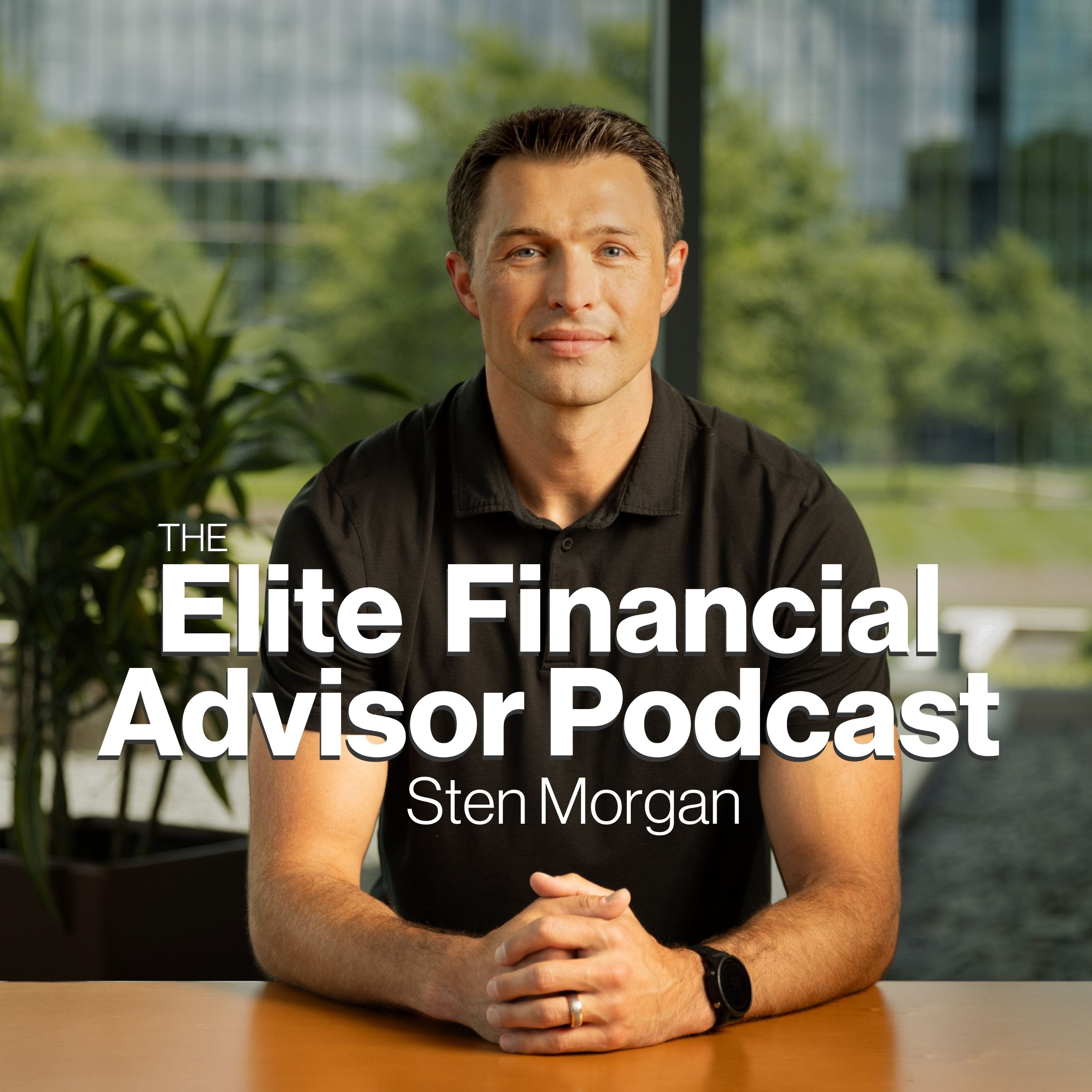
The Elite Financial Advisor Podcast With Sten Morgan
Sten Morgan
A show for financial professionals who want to be challenged to achieve their true potential faster. You will gain practical knowledge that you can implement on Monday morning when you get into the office. You'll learn the true value of your advice and, if you want to, how to charge for that advice. Featuring Sten J. Morgan, CFP®, ChFC®, one of the nation's leading young Financial Advisors.
Episodes
Mentioned books

Oct 2, 2026 • 36min
253 Dr. Jordan Hutchison / Flow State: The Hidden Engine Behind Great Advisors
Dr. Jordan Hutchison, VP of Technology and Operations at RFG Advisory, is a behavioral finance expert and industry veteran who has worked as an advisor, coach, educator, and fintech builder. He explores how technology can create “time well spent,” why financial planning must evolve continuously, and why great advisors need both technical mastery and clear communication. He also challenges action bias and urges advisors to build businesses that fit their strengths.
Sep 25, 2026 • 37min
252 Wes Young & Gavin Filasek / From Chasing Prospects to Creating Demand
Wes Young, founder of a planning firm for business owners and affluent families, and Gavin Filasek, co-founder of Highland Wealth, explore how advisors can stop chasing prospects and start creating demand. They discuss 90-day family plans, fee-based models, pricing, memorable answers to “what do you do?”, referral-friendly processes, and weekly scorecards that turn prospecting into a disciplined growth system.
Sep 18, 2026 • 22min
251 Larry Shumbres / SEO Is Changing. Financial Advisors Need to Learn AEO.
Larry Shumbres, founder and CEO of Archive Intel, brings deep experience from IBM, Wall Street, and fintech to explore the shift from SEO to AEO. They discuss how advisors can become more visible in AI-driven searches, why specific positioning matters, using Claude for marketing, and turning compliance into a launchpad for text, WhatsApp, TikTok, Reddit, and other modern client channels.
Sep 11, 2026 • 29min
250 Sten Morgan / PlanScore: The Advisor of the Future Sells a Process that Gets Results
What happens when financial advisors stop selling products and start selling a process? Sten Morgan traces his shift from insurance and AUM-based advice to clear, scalable planning. He explores the seven pillars of a complete plan, a simple red-to-green scoring system, smarter pricing models, and how technology can make advice more understandable, efficient, and actionable.
Sep 4, 2026 • 31min
249 Tim White / Estate & Tax Planning: The Biggest Untapped Growth Opportunity
In this episode of the Elite Financial Advisor Podcast, Sten Morgan, CFP®, ChFC®, sits down with Tim White, Co-Founder and Chief Growth Officer of wealth.com, to make the case that estate and tax planning is the biggest untapped growth opportunity in the advisory business.Tim shares how he and his co-founders sold their fraud-prevention fintech to LexisNexis for $500 million, then built wealth.com after living through a broken, pen-and-paper estate planning referral themselves. He explains how the platform's AI reads existing plans in minutes, generates state-specific documents across all 50 states, and now folds in tax - the peanut butter and chocolate of a connected plan.They get practical about why estate planning deepens client relationships and unlocks the next generation, how advisors can deliver a comprehensive experience without becoming experts, and why "I'm too busy to evaluate new tools" is a warning sign, not a badge of honor.As Tim puts it: "It's about giving time back. It's not taking time away."In This EpisodeEstate planning is the biggest untapped growth opportunity, and the fastest way to a deeper, stickier client relationship.You do not have to become the expert. The right technology puts the equivalent of 500 analysts behind every advisor.Estate conversations surface held-away assets and unlock the next generation - real AUM and real wealth-transfer opportunities.Compliance is no longer the barrier; the barrier is change. "Too busy to evaluate new tools" is a red flag.Done right, technology gives time back instead of taking it away, so advisors can have the conversations that matter.Episode Timestamps00:00 - Introduction: how do advisors get attention differently?01:00 - From a fintech fraud startup to a $500M exit02:30 - Buying wealth.com (and the domain story)04:40 - Why legal first, then tax05:30 - "Ester": AI that read estate plans before ChatGPT existed07:15 - Shipping a product instead of chasing perfection08:30 - The shift from "I know a guy" to comprehensive planning09:20 - Why estate planning is becoming a tech-stack requirement11:00 - Adding value with efficiency: you do not have to be the expert13:40 - Reading existing plans in minutes, not hours17:20 - What wealth.com actually is: documents, reports, attorney network19:15 - Proactive intelligence: the plan that updates itself20:00 - Estate planning as a prospecting tool and AUM unlock21:40 - Pricing: the license and how advisors monetize it23:00 - Is AI a threat to estate attorneys? Why it is complementary24:50 - Why advisors are slow to adopt, and how to fix it27:00 - Giving time back, not taking it awayGet the Free Episode Companion Guide:Want the cheat sheet for this episode? We turned the biggest ideas into a one-page companion guide - the estate planning growth path, key takeaways, and three action steps.Grab your free copy here:https://gobeelite.com/elite-advisor-podcast-companion-page?utm_source=shownotes&utm_medium=podcast&utm_campaign=ep_249_tim_whiteFree Resources for Financial Advisors:Want to become a more elite advisor? Get our free course on how to become an Elite Advisor, plus training videos that show you how to whiteboard ideas with clients using real examples.Get the free resources here:https://gobeelite.com/elite-advisor-path-resources?utm_source=shownotes&utm_medium=podcast&utm_campaign=ep_249_tim_whiteGet the Free Book: Value First ProspectingMost advisors were trained to sell first and hope trust shows up later. Value First Prospecting shows you how to create demand, lead with ideas, and turn first meetings into strategy conversations instead of sales meetings. You can claim a free copy of Sten Morgan's book, Value First Prospecting. Just cover shipping.Get the book here:https://gobeelite.com/free-book?utm_source=shownotes&utm_medium=podcast&utm_campaign=ep_249_tim_whiteAttend Elite Advisor Live:Elite Advisor Live is our in-person training where advisors get the reps, feedback, and proven system to start charging for advice and clearly communicate their value.Learn more about Elite Advisor Live here:https://www.eliteadvisorlive.com?utm_source=shownotes&utm_medium=podcast&utm_campaign=ep_249_tim_whiteJoin Elite+:Elite+ is for advisors who are done dabbling and ready to become Elite. Inside Elite+, you get proximity, accountability, real-time coaching, and a complete operating system to help you remove resistance and grow at a higher level.Join Elite+ here:https://eadvisornetwork.com/join-ean?utm_source=shownotes&utm_medium=podcast&utm_campaign=ep_249_tim_whiteConnect With Elite Advisor NetworkWebsite: https://www.eliteadvisornetwork.com?utm_source=shownotes&utm_medium=podcast&utm_campaign=ep_249_tim_whitePodcast: https://podcasts.apple.com/us/podcast/the-elite-financial-advisor-podcast-with-sten-morgan/id1601321140LinkedIn: https://www.linkedin.com/company/elite-advisor-networkYouTube: https://www.youtube.com/@EliteAdvisorNetworkSubscribeSubscribe for more conversations, training, and practical ideas to help financial advisors reject average and become elite.#EliteAdvisorNetwork #FinancialAdvisor #StenMorgan #FinancialPlanning #EstatePlanning #TaxPlanning #AdvisorGrowth
Aug 28, 2026 • 51min
248 Carl Richards & Steve Sanduski / How Will Our Industry Change in the Next 10 Years?
In this episode of the Elite Financial Advisor Podcast, Sten Morgan, CFP®, ChFC®, sits down with two of the most thoughtful voices in the profession - Carl Richards, CFP®, creator of the Sketch Guy column and founder of The Society of Advice, and Steve Sanduski, CFP®, founder of Belay Advisor and host of the Between Now and Success podcast - to war-game how financial advice will change over the next ten years.They dig into the two layers of every advisory practice: the execution layer that AI is rapidly automating, and the human layer it cannot touch. As the technical work becomes table stakes, the floor for what counts as a great advisor rises, and Carl and Steve make the case that the future advisor has to be bilingual: fluent in money and fluent in humans.They also get practical about where the business is headed - whether AUM and commission comp survive, why clients pay for trust and outcomes rather than process, and how a young advisor can intentionally build the craft of curiosity instead of waiting for life to humble them.As Carl puts it: "AI is not a threat. It is a reminder of the deeply human work we do."In This EpisodeEvery practice has two layers: the execution layer AI is automating, and the human layer it cannot. The human layer is where advisors win.The floor is rising. A great financial plan is becoming table stakes; the EQ to sit with clients in their hardest moments is the real edge.Be bilingual. Major in money and major in humans. The messy intersection of the two is where the value lives.Greet clients at the "presenting problem" with empathy, then watch for the "crunchy bits" that open the door to deeper work.The way you get paid tells a story. If any part of it is something you would not be comfortable explaining to a client's face, change it.Episode Timestamps00:00 - Introduction: sailing, motorcycles, and catching up04:30 - The war game: what should advisors be ready for?05:45 - Carl: the deeply human craft AI is pointing us back to09:00 - Steve: the execution layer versus the human layer11:00 - Will AI actually increase an advisor's capacity?13:00 - Advice to the next generation of advisors16:00 - Be bilingual: major in money and major in humans19:00 - Why life planning is a small market at any given moment20:30 - Greet clients at the presenting problem23:30 - Will AUM and insurance comp survive?29:00 - Carl: the way you get paid tells a story31:20 - From stockbrokers to goal-based planning35:00 - Process versus outcome in the age of AI38:40 - You cannot market trust, you can only build it43:30 - A practical path to the craft of curiosity48:00 - What has these two most excited right nowGet the Free Episode Companion Guide:Want the cheat sheet for this episode? We turned the biggest ideas into a one-page companion guide - the two layers of an advisory practice, key takeaways, and three action steps.Grab your free copy here:https://gobeelite.com/elite-advisor-podcast-companion-page?utm_source=shownotes&utm_medium=podcast&utm_campaign=ep_248_richards_sanduskiFree Resources for Financial Advisors:Want to become a more elite advisor? Get our free course on how to become an Elite Advisor, plus training videos that show you how to whiteboard ideas with clients using real examples.Get the free resources here:https://gobeelite.com/elite-advisor-path-resources?utm_source=shownotes&utm_medium=podcast&utm_campaign=ep_248_richards_sanduskiGet the Free Book: Value First ProspectingMost advisors were trained to sell first and hope trust shows up later. Value First Prospecting shows you how to create demand, lead with ideas, and turn first meetings into strategy conversations instead of sales meetings. You can claim a free copy of Sten Morgan's book, Value First Prospecting. Just cover shipping.Get the book here:https://gobeelite.com/free-book?utm_source=shownotes&utm_medium=podcast&utm_campaign=ep_248_richards_sanduskiAttend Elite Advisor Live:Elite Advisor Live is our in-person training where advisors get the reps, feedback, and proven system to start charging for advice and clearly communicate their value.Learn more about Elite Advisor Live here:https://www.eliteadvisorlive.com?utm_source=shownotes&utm_medium=podcast&utm_campaign=ep_248_richards_sanduskiJoin Elite+:Elite+ is for advisors who are done dabbling and ready to become Elite. Inside Elite+, you get proximity, accountability, real-time coaching, and a complete operating system to help you remove resistance and grow at a higher level.Join Elite+ here:https://eadvisornetwork.com/join-ean?utm_source=shownotes&utm_medium=podcast&utm_campaign=ep_248_richards_sanduskiConnect With Elite Advisor NetworkWebsite: https://www.eliteadvisornetwork.com?utm_source=shownotes&utm_medium=podcast&utm_campaign=ep_248_richards_sanduskiPodcast: https://podcasts.apple.com/us/podcast/the-elite-financial-advisor-podcast-with-sten-morgan/id1601321140LinkedIn: https://www.linkedin.com/company/elite-advisor-networkYouTube: https://www.youtube.com/@EliteAdvisorNetworkSubscribeSubscribe for more conversations, training, and practical ideas to help financial advisors reject average and become elite.#EliteAdvisorNetwork #FinancialAdvisor #StenMorgan #FinancialPlanning #AdvisorGrowth #ArtificialIntelligence #FutureOfAdvice
Aug 21, 2026 • 38min
247 Tim Maurer / The Biggest Lie Financial Advisors Were Sold
In this episode of the Elite Advisor Podcast, Sten Morgan, CFP®, ChFC®, sits down with Tim Maurer, CFP®, Partner and SVP of Advisor Growth at SignatureFD, to expose the biggest lie the industry sold financial advisors: that growing means selling harder - using better scripts and more products.Tim shares how he spent his early career hunting for the "professional version" of financial advice, why the CFP coursework revealed a real craft, and why the best advisors win with the best questions, not the best answers. He makes the case that we are in a "system one" business where clients decide emotionally, so technical knowledge is only table stakes.They also get practical about becoming the advisor of the future: how to keep client conversations alive instead of sliding into a rut, why the industry quietly breeds burnout, and the permission most advisors need: to build a practice around who they actually are, not what they do.As Tim puts it: "Doing the work creates certainty. Winning the work creates possibility."In This EpisodeThe biggest lie: that selling harder and pushing product is how you grow. The best advisors do it differently.Doing the work vs winning the work: expertise creates certainty, but curiosity and great questions create possibility.We are in a "system one" business - clients decide emotionally. Technical mastery is table stakes; connection is the edge.Be a guide, not a teacher or a consultant - someone walking beside the client, not above them.The industry quietly breeds burnout. You have permission to build a practice around who you actually are.Episode Timestamps00:00 - Introduction00:29 - Getting Into the Business the Hard Way05:00 - Where Is the Industry Actually Going?08:04 - The CFP Coursework and Finding the Craft11:30 - From Technician to Guide14:15 - Know Your "S Word": The Behavioral Edge16:56 - Practice, Curiosity, and the Coaching Pyramid23:00 - Why the Industry Breeds Burnout32:12 - The 80/20 of Adding PlanningGet the Free Episode Companion Guide:Want the cheat sheet for this episode? We turned the biggest ideas into a one-page companion guide - the advisor development path, key takeaways, and three action steps.Grab your free copy here:https://gobeelite.com/elite-advisor-podcast-companion-page?utm_source=shownotes&utm_medium=podcast&utm_campaign=ep_247_tim_maurerFree Resources for Financial Advisors:Want to become a more elite advisor? Get our free course on how to become an Elite Advisor, plus training videos that show you how to whiteboard ideas with clients using real examples.Get the free resources here:https://gobeelite.com/elite-advisor-path-resources?utm_source=shownotes&utm_medium=podcast&utm_campaign=ep_247_tim_maurerGet the Free Book: Value First ProspectingMost advisors were trained to sell first and hope trust shows up later. Value First Prospecting shows you how to create demand, lead with ideas, and turn first meetings into strategy conversations instead of sales meetings. You can claim a free copy of Sten Morgan's book, Value First Prospecting. Just cover shipping.Get the book here:https://gobeelite.com/free-book?utm_source=shownotes&utm_medium=podcast&utm_campaign=ep_247_tim_maurerAttend Elite Advisor Live:Elite Advisor Live is our in-person training where advisors get the reps, feedback, and proven system to start charging for advice and clearly communicate their value.Learn more about Elite Advisor Live here:https://www.eliteadvisorlive.com?utm_source=shownotes&utm_medium=podcast&utm_campaign=ep_247_tim_maurerJoin Elite+:Elite+ is for advisors who are done dabbling and ready to become Elite. Inside Elite+, you get proximity, accountability, real-time coaching, and a complete operating system to help you remove resistance and grow at a higher level.Join Elite+ here:https://eadvisornetwork.com/join-ean?utm_source=shownotes&utm_medium=podcast&utm_campaign=ep_247_tim_maurerConnect With Elite Advisor NetworkWebsite: https://www.eliteadvisornetwork.com?utm_source=shownotes&utm_medium=podcast&utm_campaign=ep_247_tim_maurerPodcast: https://podcasts.apple.com/us/podcast/the-elite-financial-advisor-podcast-with-sten-morgan/id1601321140LinkedIn: https://www.linkedin.com/company/elite-advisor-networkYouTube: https://www.youtube.com/@EliteAdvisorNetworkSubscribeSubscribe for more conversations, training, and practical ideas to help financial advisors reject average and become elite.#EliteAdvisorNetwork #FinancialAdvisor #StenMorgan #FinancialPlanning #AdvisorGrowth #BehavioralFinance #FeeOnly
Aug 14, 2026 • 37min
246 Shruti Joshi / The Financial Advisor Model Is Changing - Are You Ready?
In this episode of Elite Advisor Podcast, Sten Morgan sits down with Shruti Joshi, President and COO of Facet, to unpack where financial advice is heading - and why the future advisor is defined by holistic, ongoing planning rather than the products they sell.Shruti explains why consumers now want an accountability partner who helps them take action, how Facet's flat-fee, CFP-led model removes the conflicts of commissions and asset-based fees, and why the real superpower in an AI world is human connection and behavior change - what she calls "therapy with a calculator."They also get practical for advisors: how to align your service model and pricing, why planning is the product and investing is how you deliver it, and the small steps any advisor can take to adapt without abandoning what already works. If you have felt the ground shifting under the old model, this conversation shows what to do about it.In This EpisodeThe future advisor leads with holistic, dynamic planning, not products, because that is what consumers now demand.Objectivity builds trust: a flat fee with no commissions or asset-based conflicts is what drives real behavior change.Technology plus humans wins. AI handles the computation; your superpower is communication, accountability, and encouragement.Planning is the product and investing is how you deliver it - the opposite of giving away the plan to win assets.You can evolve in small steps. Align your service model and pricing to who you actually serve, without abandoning AUM or insurance.Episode Timestamps00:00 - Introduction00:38 - Where Financial Advice Is Heading02:05 - Money, Stress, and What Consumers Really Want05:16 - Redefining What "Financial Advisor" Means08:18 - Therapy With a Calculator: The Human Superpower09:48 - Facet's Flat-Fee, No-Commission Model12:29 - Aligning Your Service Model and Pricing15:54 - How to Start Becoming a Different Advisor32:17 - Maslow and the Top of Financial PlanningGet the Free Episode Companion Guide:Want the cheat sheet for this episode? We turned the biggest ideas into a one-page companion guide - the future-advisor shift, key takeaways, and three action steps.Grab your free copy here:https://gobeelite.com/elite-advisor-podcast-companion-page?utm_source=shownotes&utm_medium=podcast&utm_campaign=ep_246_shruti_joshiFree Resources for Financial Advisors:Want to become a more elite advisor? Get our free course on how to become an Elite Advisor, plus training videos that show you how to whiteboard ideas with clients using real examples.Get the free resources here:https://gobeelite.com/elite-advisor-path-resources?utm_source=shownotes&utm_medium=podcast&utm_campaign=ep_246_shruti_joshiGet the Free Book: Value First ProspectingMost advisors were trained to sell first and hope trust shows up later. Value First Prospecting shows you how to create demand, lead with ideas, and turn first meetings into strategy conversations instead of sales meetings. You can claim a free copy of Sten Morgan's book, Value First Prospecting. Just cover shipping.Get the book here:https://gobeelite.com/free-book?utm_source=shownotes&utm_medium=podcast&utm_campaign=ep_246_shruti_joshiAttend Elite Advisor Live:Elite Advisor Live is our in-person training where advisors get the reps, feedback, and proven system to start charging for advice and clearly communicate their value.Learn more about Elite Advisor Live here:https://www.eliteadvisorlive.com?utm_source=shownotes&utm_medium=podcast&utm_campaign=ep_246_shruti_joshiJoin Elite+:Elite+ is for advisors who are done dabbling and ready to become Elite. Inside Elite+, you get proximity, accountability, real-time coaching, and a complete operating system to help you remove resistance and grow at a higher level.Join Elite+ here:https://eadvisornetwork.com/join-ean?utm_source=shownotes&utm_medium=podcast&utm_campaign=ep_246_shruti_joshiConnect With Elite Advisor NetworkWebsite: https://www.eliteadvisornetwork.com?utm_source=shownotes&utm_medium=podcast&utm_campaign=ep_246_shruti_joshiPodcast: https://podcasts.apple.com/us/podcast/the-elite-financial-advisor-podcast-with-sten-morgan/id1601321140LinkedIn: https://www.linkedin.com/company/elite-advisor-networkYouTube: https://www.youtube.com/@EliteAdvisorNetworkSubscribeSubscribe for more conversations, training, and practical ideas to help financial advisors reject average and become elite.#EliteAdvisorNetwork #FinancialAdvisor #StenMorgan #FinancialPlanning #FutureOfAdvice #FeeOnly #AdvisorGrowth
Aug 7, 2026 • 34min
245 Marc Adams / Why 9 Out of 10 Business Owners Never Sell Their Business
In this episode of Elite Advisor Podcast, Sten Morgan sits down with Marc Adams, founder of Acquisitions4you and author of Secrets to 10Xing Your Business and Cashing Out Tax Free, to unpack a hard truth most business-owner clients never hear: nine out of ten businesses never actually sell.Marc explains why the dream of owning a business so often becomes a prison, how fees and taxes quietly eat half the sale price in states like California and New York, and how his "double and exit" approach aims to double a company's value in about six months without equity dilution, debt, or personal guarantees.For advisors, this is a masterclass in the business-owner conversation: the options every owner should understand, why most only face the math too late, and how giving the business its own dedicated meeting can set you apart. If you want to serve owners with more confidence, this one will change how you frame the exit.In This EpisodeNine out of ten businesses never sell - and owners rarely find out until they are six months from the exit and the math no longer works.Leakage is the silent killer: between professional fees and taxes, an owner can keep as little as half the sale price. Get leakage down toward 10% and everything changes.The "double and exit" idea: group similar businesses into a larger entity that commands a bigger multiple, so owners walk away with more without diluting, borrowing, or signing personal guarantees.Know the roll-up math: when PE or VC takes half your business, you have to double it just to get back to even. Understand the second bite, earnouts, and where AI adds risk.The advisor's edge: you do not have to be the expert in every exit path, but a great advisor can lay out all the options and give the business its own conversation.Episode Timestamps00:00 - Introduction01:40 - Serving Business Owners: The Opportunity and the Intimidation02:16 - The "Double and Exit" Framework03:15 - The Origin: A Diagnosis and a Son's Question08:02 - Why the Dream Becomes a Prison13:17 - Why Owners Don't Realize 9 in 10 Never Sell20:46 - How Roll-Ups Work and Who Actually Wins27:10 - The Advisor's Move: Give the Business Its Own MeetingGet the Free Episode Companion Guide:Want the cheat sheet for this episode? We turned the biggest ideas into a one-page companion guide - the exit-value framework, key takeaways, and three action steps.Grab your free copy here:https://gobeelite.com/elite-advisor-podcast-companion-page?utm_source=shownotes&utm_medium=podcast&utm_campaign=ep_245_marc_adamsFree Resources for Financial Advisors:Want to become a more elite advisor? Get our free course on how to become an Elite Advisor, plus training videos that show you how to whiteboard ideas with clients using real examples.Get the free resources here:https://gobeelite.com/elite-advisor-path-resources?utm_source=shownotes&utm_medium=podcast&utm_campaign=ep_245_marc_adamsGet the Free Book: Value First ProspectingMost advisors were trained to sell first and hope trust shows up later. Value First Prospecting shows you how to create demand, lead with ideas, and turn first meetings into strategy conversations instead of sales meetings. You can claim a free copy of Sten Morgan's book, Value First Prospecting. Just cover shipping.Get the book here:https://gobeelite.com/free-book?utm_source=shownotes&utm_medium=podcast&utm_campaign=ep_245_marc_adamsAttend How to Charge LIVE:How to Charge LIVE is our in-person training where advisors get the reps, feedback, and proven system to start charging for advice and clearly communicate their value.Learn more about How to Charge LIVE here:https://www.howtochargelive.com?utm_source=shownotes&utm_medium=podcast&utm_campaign=ep_245_marc_adamsJoin Elite Plus:Elite Plus is for advisors who are done dabbling and ready to become Elite. Inside Elite Plus, you get proximity, accountability, real-time coaching, and a complete operating system to help you remove resistance and grow at a higher level.Join Elite Plus here:https://eadvisornetwork.com/join-ean?utm_source=shownotes&utm_medium=podcast&utm_campaign=ep_245_marc_adamsConnect With Elite Advisor NetworkWebsite: https://www.eliteadvisornetwork.com?utm_source=shownotes&utm_medium=podcast&utm_campaign=ep_245_marc_adamsPodcast: https://podcasts.apple.com/us/podcast/the-elite-financial-advisor-podcast-with-sten-morgan/id1601321140LinkedIn: https://www.linkedin.com/company/elite-advisor-networkYouTube: https://www.youtube.com/@EliteAdvisorNetworkSubscribeSubscribe for more conversations, training, and practical ideas to help financial advisors reject average and become elite.#EliteAdvisorNetwork #FinancialAdvisor #StenMorgan #BusinessOwners #ExitPlanning #FinancialPlanning #AdvisorGrowth
Jul 31, 2026 • 35min
244 Andy Schwartz / The Truth About Building an $18 Billion Advisory Firm
In this episode of Elite Advisor Podcast, Sten Morgan sits down with Andy Schwartz, CFP®, CEO and Managing Partner of OnePoint BFG Wealth Partners, to unpack a 42-year career that grew from selling life insurance in college to helping lead a firm with roughly $18 billion in assets.Andy shares why he moved early from sale-by-sale income to recurring revenue, why "he who controls the money controls the relationship," and how alignment, capacity, and scale give advisors the confidence to win in the marketplace.They also get honest about the real trade-offs of running your own RIA versus tucking into a larger firm, how firm valuations and partner true-ups actually work, and why the next five years may belong to the mega-firm. If you are deciding how to build the next chapter of your business, this conversation is a rare look inside how a top advisor thinks.In This EpisodeRecurring revenue changes everything: building a business that is not reliant on making your income sale by sale is the shift that compounds over a career.Confidence wins clients: most of the difference between winning a client and losing one is the confidence that only real capacity and scale can give you.Financial planning can be its own vertical: fee-based planning is a legitimate, scalable offering - and often the best on-ramp for younger advisors.Owner vs advisor is a real choice: do not let your ego pick for you. If you love being client-facing, tucking into a firm with scale can get you twice as big in half the time.Understand the math before you sell: true-ups, EBITDA multiples, and the move toward mega-firms may mean smaller books are worth less over time, not more.Episode Timestamps00:00 - Introduction: A 42-Year Career00:39 - From Selling Insurance to Controlling the Money04:27 - The Northwestern Years and Recurring Revenue07:10 - Is the Industry Really Doing Holistic Planning?09:42 - Confidence, Capacity, and Why Scale Wins11:00 - Financial Planning as Its Own Vertical16:17 - OnePoint BFG by the Numbers18:04 - RIA Owner vs Tucking In: The Real Trade-off21:14 - Valuations, True-Ups, and the Mega-Firm Era29:07 - Who OnePoint BFG Looks For30:52 - Next-Gen Talent and the AI InvestmentGet the Free Episode Companion Guide:Want the cheat sheet for this episode? We turned the biggest ideas into a one-page companion guide - the advisor-to-owner arc, key takeaways, and three action steps.Grab your free copy here:https://gobeelite.com/elite-advisor-podcast-companion-page?utm_source=shownotes&utm_medium=podcast&utm_campaign=ep_244_andy_schwartzFree Resources for Financial Advisors:Want to become a more elite advisor? Get our free course on how to become an Elite Advisor, plus training videos that show you how to whiteboard ideas with clients using real examples.Get the free resources here:https://gobeelite.com/elite-advisor-path-resources?utm_source=shownotes&utm_medium=podcast&utm_campaign=ep_244_andy_schwartzGet the Free Book: Value First ProspectingMost advisors were trained to sell first and hope trust shows up later. Value First Prospecting shows you how to create demand, lead with ideas, and turn first meetings into strategy conversations instead of sales meetings. You can claim a free copy of Sten Morgan's book, Value First Prospecting. Just cover shipping.Get the book here:https://gobeelite.com/free-book?utm_source=shownotes&utm_medium=podcast&utm_campaign=ep_244_andy_schwartzAttend How to Charge LIVE:How to Charge LIVE is our in-person training where advisors get the reps, feedback, and proven system to start charging for advice and clearly communicate their value.Learn more about How to Charge LIVE here:https://www.howtochargelive.com?utm_source=shownotes&utm_medium=podcast&utm_campaign=ep_244_andy_schwartzJoin Elite Plus:Elite Plus is for advisors who are done dabbling and ready to become Elite. Inside Elite Plus, you get proximity, accountability, real-time coaching, and a complete operating system to help you remove resistance and grow at a higher level.Join Elite Plus here:https://eadvisornetwork.com/join-ean?utm_source=shownotes&utm_medium=podcast&utm_campaign=ep_244_andy_schwartzConnect With Elite Advisor NetworkWebsite: https://www.eliteadvisornetwork.com?utm_source=shownotes&utm_medium=podcast&utm_campaign=ep_244_andy_schwartzPodcast: https://podcasts.apple.com/us/podcast/the-elite-financial-advisor-podcast-with-sten-morgan/id1601321140LinkedIn: https://www.linkedin.com/company/elite-advisor-networkYouTube: https://www.youtube.com/@EliteAdvisorNetworkSubscribeSubscribe for more conversations, training, and practical ideas to help financial advisors reject average and become elite.Tags: #EliteAdvisorNetwork #FinancialAdvisor #StenMorgan #ValueFirstProspecting #FinancialPlanning #AdvisorMarketing #AdvisorGrowth

