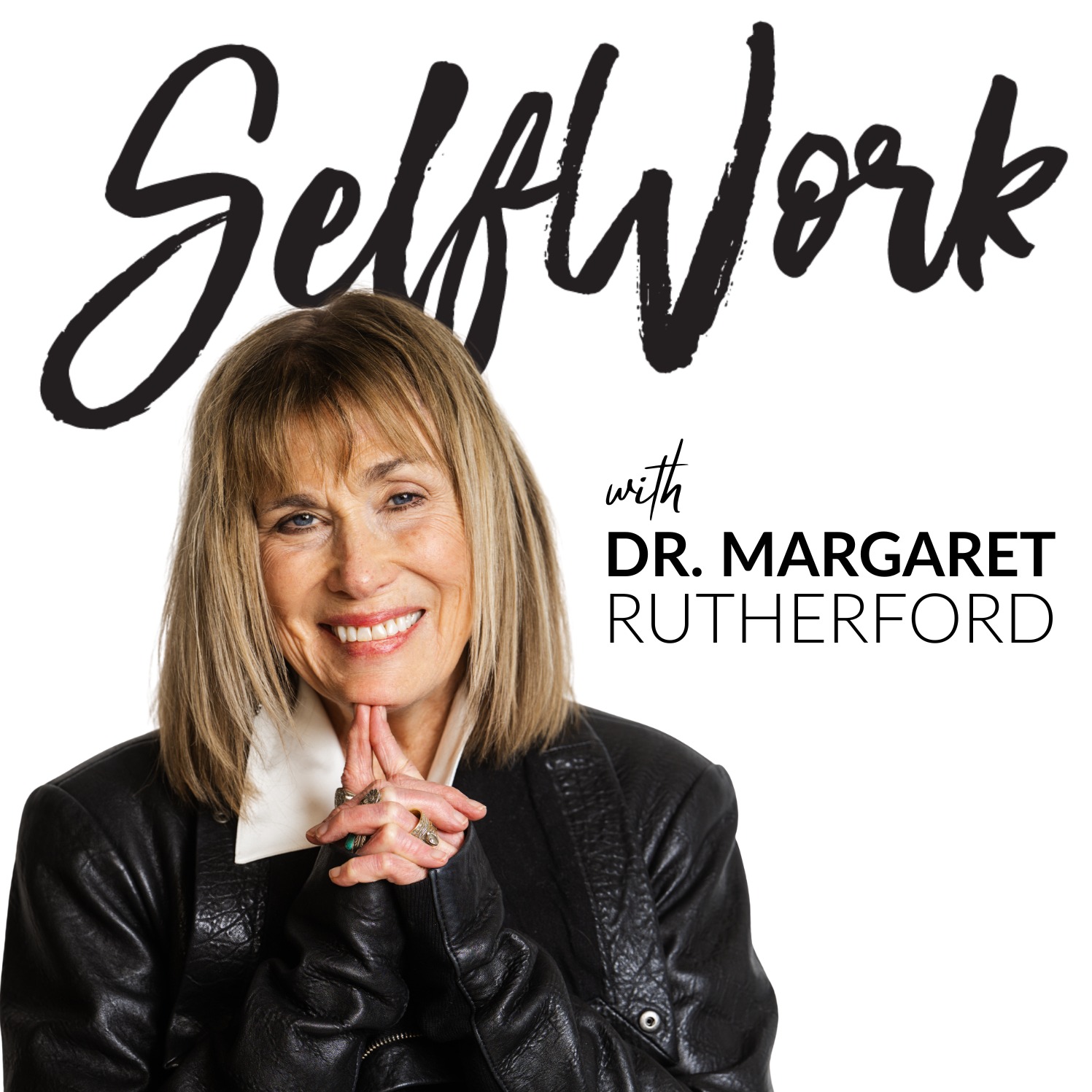

The SelfWork Podcast
Margaret Robinson Rutherford PhD
I'm Dr. Margaret, a psychologist for over 30 years, TEDx speaker, and the author of Perfectly Hidden Depression. I created The SelfWork Podcast in 2016 to explain mental health treatment and to give you the chance to consider therapy without thinking it's weird or that it somehow suggests you can't fix your own problems. My team is very honored that nine years later, SelfWork has earned nearly 5 million downloads! Each episode features the popular listener question as well as interviews with outstanding guests, authors, and experts, adding to the wide diversity of topics listeners so appreciate. Regularly rated as one of the top mental health/depression podcasts out there (ranked as a top .5% internationally) I keep it short, casual, and focused on "what you can do about it." I'd love to hear from you. Please join me.
Episodes
Mentioned books

Jan 16, 2026 • 23min
481 SelfWork: What's Anticipatory Grieving and How Does It Help?
Today we're exploring what's termed "anticipatory grieving."When you know something is going to happen that will bring its own kind of grief… whether it’s a loved one being diagnosed with a terminal illness, an unwanted divorce being filed, learning that a child will struggle with a learning difference – it can bring a slew of emotions, many of them moving in and out of your awareness quickly. Anticipatory grieving is a way to imagine, visualize, and begin to emotionally prepare for the loss that is to come.We’ll focus today on the five steps of anticipatory grieving – the how, when, what, where, and why it’s important. But before I do that, for any of you who are thinking, “Why in the hell would I want to do that?” I’ll answer that very good and reasonable question.I received a lovely message from someone telling me she’d listened to my podcast episode with Terry McGuire – who’s the host of Giving Voice to Depression and has struggled with depression herself. Terry talked about anhedonia – and this listener asked me to talk more about what you can do about this particular symptom of depression.Vital Links:Link to pre-order the Perfectly Hidden Depression Workbook! By the way...I’m excited to let you know that my new workbook, The Perfectly Hidden Depression Workbook, is available for pre-order! It’s a stand-alone workbook (so doesn't need to be used with the original book) and goes through the ten traits of PHD - things like taking on too much responsibility, not knowing how to be more open emotionally - and guides you through new exercises and ideas. These can help you decide what about your drive or your perfectionism you want to keep - and what you need to let go. It’ll publish on April 1st - but pre-order numbers are very important! So I’ll hope you’ll pre-order now! Here's the link!You can hear more about mental health and many other topics by listening to my podcast, SelfWork with Dr. Margaret Rutherford. Subscribe to my newsletter and receive one weekly email from me, highlighting my weekly blog post and podcast! If you’d like to join myself and others in my private FaceBook group, click here and answer the membership questions! I'd love to see you there!And there’s another way to send me a message! You can record by clicking below and ask your question or make a comment. You’ll have 90 seconds to do so and that time goes quickly. By recording, you’re giving SelfWork (and me) permission to use your voice on the podcast. I’ll look forward to hearing from you! Our Sponsors:* Check out BetterHelp: https://www.betterhelp.com* Check out Timeline: https://Timeline.com/selfwork30Advertising Inquiries: https://redcircle.com/brands

Jan 9, 2026 • 22min
480 SelfWork: Why Am I So Self-Critical?
Self-criticism can take on a life of its own. And become so constant that you have to fight it on a daily or even hourly basis.So today we’re going to focus on what may be keeping your self-criticism alive and well in ways that you don't realize.There are two steps we’ll cover. The first is raising awareness of your own inner self-critical voice. The second is assessing what role or function it may have for you. What purpose might self-criticism have that weirdly protects you in some way or serves a role for you in your life?For our email, I’ve pulled some excerpts from an email I received from a younger reader who’d read the article on enmeshment I have on my website. She has questions about her relationship with her parents – she finds herself, even in her early 20’s, sharing certain kinds of things with them that her friends don’t share with their parents – and think it’s a little strange that she shares those experiences with hers. Her friends are saying that that’s oversharing – that there are certain things you no longer share with your folks as you grow and develop your own life away from them. Are her friends right?Advertisers Links: Click HERE for the NEXT GEN offer from AG1 – with bonus product with your new subscription!Vital Links:Link to pre-order the Perfectly Hidden Depression Workbook! Dr. Margaret's article on covert narcissismEnmeshment article by Dr. Margaret By the way...I’m excited to let you know that my new workbook, The Perfectly Hidden Depression Workbook, is available for pre-order! It’s a stand-alone workbook (so doesn't need to be used with the original book) and goes through the ten traits of PHD - things like taking on too much responsibility, not knowing how to be more open emotionally - and guides you through new exercises and ideas. These can help you decide what about your drive or your perfectionism you want to keep - and what you need to let go. It’ll publish on April 1st - but pre-order numbers are very important! So I’ll hope you’ll pre-order now! Here's the link!You can hear more about mental health and many other topics by listening to my podcast, SelfWork with Dr. Margaret Rutherford. Subscribe to my newsletter and receive one weekly email from me, highlighting my weekly blog post and podcast! If you’d like to join myself and others in my private FaceBook group, click here and answer the membership questions! I'd love to see you there!And there’s another way to send me a message! You can record by clicking below and ask your question or make a comment. You’ll have 90 seconds to do so and that time goes quickly. By recording, you’re giving SelfWork (and me) permission to use your voice on the podcast. I’ll look forward to hearing from you!Our Sponsors:* Check out BetterHelp: https://www.betterhelp.com* Check out Timeline: https://Timeline.com/selfwork30Advertising Inquiries: https://redcircle.com/brands

Jan 2, 2026 • 20min
479 SelfWork: Are You Being Judgmental? Two Mental Mistakes That Take You There
Are you being judgmental? Many of us would quickly say "no" to that question. But how many people do you know one thing about – and one thing only – and you categorize them as “bad” or “good”, "weak" or "strong," "smart" or "not the brightest bulb."It doesn’t take long for us to form an opinion. And there are obvious situations – such as one where there’s the possibility of harm – where quick judgments are necessary and very helpful.But what about the kind of judgment that you make because of your own biases? There are two mental mistakes we'll focus on today: confirmation bias and fundamental attribution error. They sound fancy, but many of us make these errors in judgment every day.So today we’re going to focus on how you judge your own judgmental-ness. Are you using your better judgment? Or are you making quick judgments that are based on biases and assumptions?Advertisers Links: Click HERE for the NEXT GEN offer from AG1 – with bonus product with your new subscription!Vital Links:Test on the Psychology Today website to rate your own judgmental-ness!New York Times article on Kristin CabotTime article on Monica LewinskyBy the way...I’m excited to let you know that my new workbook, The Perfectly Hidden Depression Workbook, is available for pre-order! It’s a stand-alone workbook (so doesn't need to be used with the original book) and goes through the ten traits of PHD - things like taking on too much responsibility, not knowing how to be more open emotionally - and guides you through new exercises and ideas. These can help you decide what about your drive or your perfectionism you want to keep - and what you need to let go. It’ll publish on April 1st - but pre-order numbers are very important! So I’ll hope you’ll pre-order now! Here's the link!You can hear more about mental health and many other topics by listening to my podcast, SelfWork with Dr. Margaret Rutherford. Subscribe to my newsletter and receive one weekly email from me, highlighting my weekly blog post and podcast! If you’d like to join myself and others in my private FaceBook group, click here and answer the membership questions! I'd love to see you there!And there’s another way to send me a message! You can record by clicking below and ask your question or make a comment. You’ll have 90 seconds to do so and that time goes quickly. By recording, you’re giving SelfWork (and me) permission to use your voice on the podcast. I’ll look forward to hearing from you! Our Sponsors:* Check out BetterHelp: https://www.betterhelp.com* Check out Timeline: https://Timeline.com/selfwork30Advertising Inquiries: https://redcircle.com/brands

Dec 26, 2025 • 22min
478 SelfWork: The Mind Games of Sociopathy
How do you know if someone with sociopathic traits is playing with your mind? Today on SelfWork we’re going to talk about just that.The term cognitive dissonance has been around for quite a long time. What it’s describing is when you do something or say something that you believe to be wrong or unkind or unjust. But you do it or say it anyway. So, you’re not following or abiding by the values that you say you have.The gaslighting technique of those with sociopathy... But cognitive dissonance can also be caused or created as well through toxic manipulation or what’s termed gaslighting. This is when someone with narcissistic traits or sociopathic ones creates a smokescreen of confounding lies, even telling you one thing is true as well as its opposite, and expecting you to blindly follow. The trap is complete when they prevent you from trusting your own gut or mind or heart. Or guide or lead you away from their manipulation.It can be paralyzing.You either must cut yourself off from the value that you hold – or you must become more aware of the manipulation. You must see that it’s happening and how it’s happening. But remember, the actions and manipulations of the person who wants you to be paralyzed are still coming on strong.Today’s voicemail is from a woman in France who’s asking me about perfectly hidden depression – and in French. I had to get out my translating app because my own French was a little too rusty – but I was pretty much on the mark.Vital Links:BBC article on the young Elizabeth HolmesThriveWorks article on emotional manipulation and sociopathyBustle article on games played by those with sociopathic traitsAdvertisers Links: Click HERE for the NEXT GEN offer from AG1 – with bonus product with your new subscription!Other offerings from Dr. MargaretYou can hear more about this and many other topics by listening to my podcast, SelfWork with Dr. Margaret Rutherford. Subscribe to my website and receive my weekly newsletter including a blog post and podcast! If you’d like to join my FaceBook closed group, then click here and answer the membership questions! Welcome!My book entitled Perfectly Hidden Depression is available and you can order here! Its message is specifically for those with a struggle with strong perfectionism which acts to mask underlying emotional pain. But the many self-help techniques described can be used by everyone who chooses to begin to address emotions long hidden away that are clouding and sabotaging your current life. And it’s available in paperback, eBook or as an audiobook!And send me a message! You can record by clicking below and ask your question or make a comment. By recording, you’re giving SelfWork (and me) permission to use your voice on the podcast. I’ll look forward to hearing from you! Our Sponsors:* Check out BetterHelp: https://www.betterhelp.com* Check out Timeline: https://Timeline.com/selfwork30Advertising Inquiries: https://redcircle.com/brands

Dec 19, 2025 • 21min
477 SelfWork: Disappointments, Expectations, and Blind Spots
Disappointment often stems from unmet expectations, revealing the thin line between hope and hurt. Childhood experiences shape our trust and relationship expectations, influencing how we handle setbacks. Dr. Margaret discusses the duality of high expectations as both motivators and sources of perfectionism. She emphasizes the importance of accepting others as they are and recognizing our own blind spots in relationships. The conversation encourages self-awareness and gradual risk-taking to overcome feelings of disappointment.

Dec 12, 2025 • 23min
476 SelfWork: Is There A Right Way to Grieve?
Grief is never easy. And it can be made harder by the many things that happen with grief that you’re not prepared for – or believe ‘should’ be happening or ‘shouldn’t’. Dr. Elizabeth Kübler Ross made the observation about terminally ill people that they seemed to go through five stages of grief: denial, anger, bargaining, depression, and acceptance. But she never meant for that model, no matter how interactive or nonlinear we may think about it – to become what it’s become – some kind of standard yardstick where you’re supposed to measure if you’re grieving the ‘right’ way.There’s not a right way. And it’s been my professional and personal experience that grief has a way of weaving in and out of your awareness. It’s not like there’s a tangible end. You may know when your grief began. And it’s not that it’s never-ending – that can be very difficult if that happens and cause deep depression and a kind of forlorn emptiness. But there may be days or weeks when you don’t really feel it – and then suddenly, your grief reappears. Or there’s an anniversary of a death – or simply life bringing you back to your sadness.So, we dig deeper into grief today featuring an episode I did two years ago. I’m having a little outpt surgery and am a bit behind. So I thought this would be helpful to many of you who’ve had loss around the holidays – or really anyone. One story at the end of the episode comes from a mother’s story after losing her son. She says (and this isn't a quote), “He loved me deeply and I’ll honor that love. I can’t die along with him.”As hard as that may be. It may be the most important idea to take away with you.Advertisers Links: Click HERE for the NEXT GEN offer from AG1 – with bonus product with your new subscription!Other offerings from Dr. MargaretYou can hear more about this and many other topics by listening to my podcast, SelfWork with Dr. Margaret Rutherford. Subscribe to my website and receive my weekly newsletter including a blog post and podcast! If you’d like to join my FaceBook closed group, then click here and answer the membership questions! Welcome!My book entitled Perfectly Hidden Depression is available and you can order here! Its message is specifically for those with a struggle with strong perfectionism which acts to mask underlying emotional pain. But the many self-help techniques described can be used by everyone who chooses to begin to address emotions long hidden away that are clouding and sabotaging your current life. And it’s available in paperback, eBook or as an audiobook!And send me a message! You can record by clicking below and ask your question or make a comment. By recording, you’re giving SelfWork (and me) permission to use your voice on the podcast. I’ll look forward to hearing from you!Our Sponsors:* Check out BetterHelp: https://www.betterhelp.com* Check out Timeline: https://Timeline.com/selfwork30Advertising Inquiries: https://redcircle.com/brands

Dec 5, 2025 • 23min
475 SelfWork: Nine Ways to Challenge Low Self-Esteem
“Low self-esteem” is one of the symptoms or reflections of classic depression. Of course, it goes along with other symptoms or signs - a negative self-image, feelings of helplessness and/or hopelessness, not enjoying much of anything – which is called anhedonia.But how do you increase self-esteem? What is self-esteem anyway? It’s a recognition of your value – of your worth. You can have high self-esteem, low self-esteem, or an inflated sense of self-esteem where you think too highly of yourself and even see others as less valuable or worthy than you.So, self-esteem often gets built in your childhood as your caregivers provide you with not only safety and security, but with love. They give you the message that you’re valuable – right?Well, maybe not. Maybe they don’t give you that message. Or maybe your parents did a pretty good job, not perfect but good enough. But you had other relationships – or chose them – where you got the message that you weren’t so valuable after all.This is the focus today on SelfWork – what you can do about low self-esteem after it has seeped into your very being. It’s work – but everything worthwhile typically is.Our listener email is from a man from South Jersey who asks how you know if you’re with the right therapist. It’s another great question so I’ll do my best to answer it. Here’s one clue – it seems to me that if you’re asking that question, you may be overly doubting of yourself and your choices in general OR your therapy isn’t providing you with things that you can see are valuable and are helping you to change in desirable ways. Or both. Basically, could it be an issue with trusting yourself? Listen in to hear my answer!Vital Links: Recent SelfWork Episode on dealing with my own shame001 SelfWork: Episode answering the question "What is good therapy?"SelfWork episode describing how therapy works... or can workAdvertisers Links: Advertisers' Links and Special Offers:Have you been putting off getting help? BetterHelp, the #1 online therapy provider, has a special offer for you now!You can hear more about this and many other topics by listening to my podcast, SelfWork with Dr. Margaret Rutherford. Subscribe to my website and receive my weekly newsletter including a blog post and podcast! If you’d like to join my FaceBook closed group, then click here and answer the membership questions! Welcome!My book entitled Perfectly Hidden Depression is available here! Its message is specifically for those with a struggle with strong perfectionism which acts to mask underlying emotional pain. But the many self-help techniques described can be used by everyone who chooses to begin to address emotions long hidden away that are clouding and sabotaging your current life.There’s another way to send me a message! You can record by clicking below and ask your question or make a comment. You’ll have 90 seconds to do so and that time goes quickly. By recording, you’re giving SelfWork (and me) permission to use your voice on the podcast. I’ll look forward to hearing from you! Our Sponsors:* Check out BetterHelp: https://www.betterhelp.com* Check out Timeline: https://Timeline.com/selfwork30Advertising Inquiries: https://redcircle.com/brands

Nov 28, 2025 • 41min
474 SelfWork: Healing Through Intuition: A Conversation with Author Laura Day
Have you ever thought that intuition could be used for healing crisis?Laura Day, the New York Times bestselling author is back with a long-awaited, life-altering book to help you learn how to do just that. In her past breakthrough book Practical Intuition, she explained how anyone can train themselves to gain full access to the powers of the intuitive brain. However, only Laura’s closest friends knew that behind the book’s phenomenal success was a dark family history.In this, her first book in fifteen years, Day, shares her haunting and unforgettable family story. Multiple suicides including her mother. A home life where the kids actually lived by themselves in a separate apartment from their parents. Only her intuition helped her figure out what no one had taught her – how to care for herself and her siblings.Now, Day has combined her experiences and teaching in her new book, The Prism: Seven Steps to Heal Your Past and Transform Your Future (Spiegel & Grau; April 29, 2025. It reveals seven points in our growth as children and adults that can hinder or help us thrive.Next week’s episode will begin our official 9th year here at SelfWork! We can’t believe it really. I won’t say it’s flown by – 9 years is a long time. But guests keep coming – listeners let us know through comments and questions – and supporting our sponsors – that SW remains important to you. We thank you so much for that. And see you next week.Advertisers Links: Click HERE for the NEXT GEN offer from AG1 – with bonus product with your new subscription!Other offerings from Dr. MargaretYou can hear more about this and many other topics by listening to my podcast, SelfWork with Dr. Margaret Rutherford. Subscribe to my website and receive my weekly newsletter including a blog post and podcast! If you’d like to join my FaceBook closed group, then click here and answer the membership questions! Welcome!My book entitled Perfectly Hidden Depression is available and you can order here! Its message is specifically for those with a struggle with strong perfectionism which acts to mask underlying emotional pain. But the many self-help techniques described can be used by everyone who chooses to begin to address emotions long hidden away that are clouding and sabotaging your current life. And it’s available in paperback, eBook or as an audiobook!And send me a message! You can record by clicking below and ask your question or make a comment. By recording, you’re giving SelfWork (and me) permission to use your voice on the podcast. I’ll look forward to hearing from you! Our Sponsors:* Check out BetterHelp: https://www.betterhelp.com* Check out Timeline: https://Timeline.com/selfwork30Advertising Inquiries: https://redcircle.com/brands

Nov 21, 2025 • 25min
473 SelfWork: Blame, Perfectly Hidden Depression, and Bipolar Disorder
Today we have a grab bag of questions and comments, with the topics being blame, perfectly hidden depression, and bipolar disorder.The first is from a mom who lived through her daughter and yet also didn’t offer safety or a sense of security – even with the basic things. This listener is now sober for a year (much to her credit) and is asking about how to navigate her relationship with her mom – who's still chaotic. The second is from a therapist who attended one of my workshops on perfectly hidden depression and had a great comment to make. The third is a voicemail from an older mom who sees her daughter as blaming her without reasonable cause. And last, someone whose fairly new boyfriend revealed he’d been diagnosed with bipolar disorder. Since her father also had bipolar disorder, she’s not quite sure how to respond or react…I’m very honored when listeners of SelfWork or readers of my articles on my website respond to me in some way. Realizing there’s much I don’t know after reading or listening to their email or voicemail, I hope what I can do is offer some kind of helpful perspective, knowing only the things they tell me.Vital Links:Defining intergenerational trauma - VeryWell Mind ArticlePractical Neurology article on bipolar disorder occurring after a head injuryHarvard research article on bipolar disorderAdvertisers' Links and Special Offers:Have you been putting off getting help? BetterHelp, the #1 online therapy provider, has a special offer for you now!You can hear more about this and many other topics by listening to my podcast, SelfWork with Dr. Margaret Rutherford. Subscribe to my website and receive my weekly newsletter including a blog post and podcast! If you’d like to join my FaceBook closed group, then click here and answer the membership questions! Welcome!My book entitled Perfectly Hidden Depression is available here! Its message is specifically for those with a struggle with strong perfectionism which acts to mask underlying emotional pain. But the many self-help techniques described can be used by everyone who chooses to begin to address emotions long hidden away that are clouding and sabotaging your current life.There’s another way to send me a message! You can record by clicking below and ask your question or make a comment. You’ll have 90 seconds to do so and that time goes quickly. By recording, you’re giving SelfWork (and me) permission to use your voice on the podcast. I’ll look forward to hearing from you! Our Sponsors:* Check out BetterHelp: https://www.betterhelp.com* Check out Timeline: https://Timeline.com/selfwork30Advertising Inquiries: https://redcircle.com/brands

Nov 14, 2025 • 24min
472 SelfWork: What To Do After You've Lost Your Shit
Anger has a place. It’s an important emotion to feel and know how to handle. It lets you know a boundary and maybe a very important boundary, value, or expectation has been ignored or crossed or threatened in a very real way. But it’s a skill then to think through what you’re going to do with that anger.It seems that there are a lot more people these days who are angry. Maybe it’s because the immediacy that social media and texting have provided that have made it SO much easier to attack someone else online – or it was online at first. Maybe it’s political rhetoric that’s become more aggressive and insulting, as if that’s okay.There's anger... and then there's losing your shit. But what do you do after you've lost your shit? Losing your shit is about losing control. It’s about very poor management – yes. But that term – albeit fairly colorful – usually means that you got way too mad about something and even you recognize that you were way out of line. Maybe it’s a pattern for you. Maybe you do it all the time. Or maybe it’s after something that suddenly happened – or seemed to suddenly happen - and here comes a shit fit.The speaker voicemail is from a man living in the UK – that discovered my writing about enmeshment. He describes giving so much of himself away to his parents, which then served as the pattern of his relationships with others – where he’s the caregiver for all – and feels that he has nothing left for himself. I’ll do my best to answer him!Vital Links:Article on enmeshmentArticle on the American Counseling Associations’ website on women's angerAnger Management ResourcesArticle on regret after losing your temperAdvertisers Links: Click HERE for the NEXT GEN offer from AG1 – with bonus product with your new subscription!Other offerings from Dr. MargaretYou can hear more about this and many other topics by listening to my podcast, SelfWork with Dr. Margaret Rutherford. Subscribe to my website and receive my weekly newsletter including a blog post and podcast! If you’d like to join my FaceBook closed group, then click here and answer the membership questions! Welcome!My book entitled Perfectly Hidden Depression is available and you can order here! Its message is specifically for those with a struggle with strong perfectionism which acts to mask underlying emotional pain. But the many self-help techniques described can be used by everyone who chooses to begin to address emotions long hidden away that are clouding and sabotaging your current life. And it’s available in paperback, eBook or as an audiobook!And send me a message! You can record by clicking below and ask your question or make a comment. By recording, you’re giving SelfWork (and me) permission to use your voice on the podcast. I’ll look forward to hearing from you!. Our Sponsors:* Check out BetterHelp: https://www.betterhelp.com* Check out Timeline: https://Timeline.com/selfwork30Advertising Inquiries: https://redcircle.com/brands


