

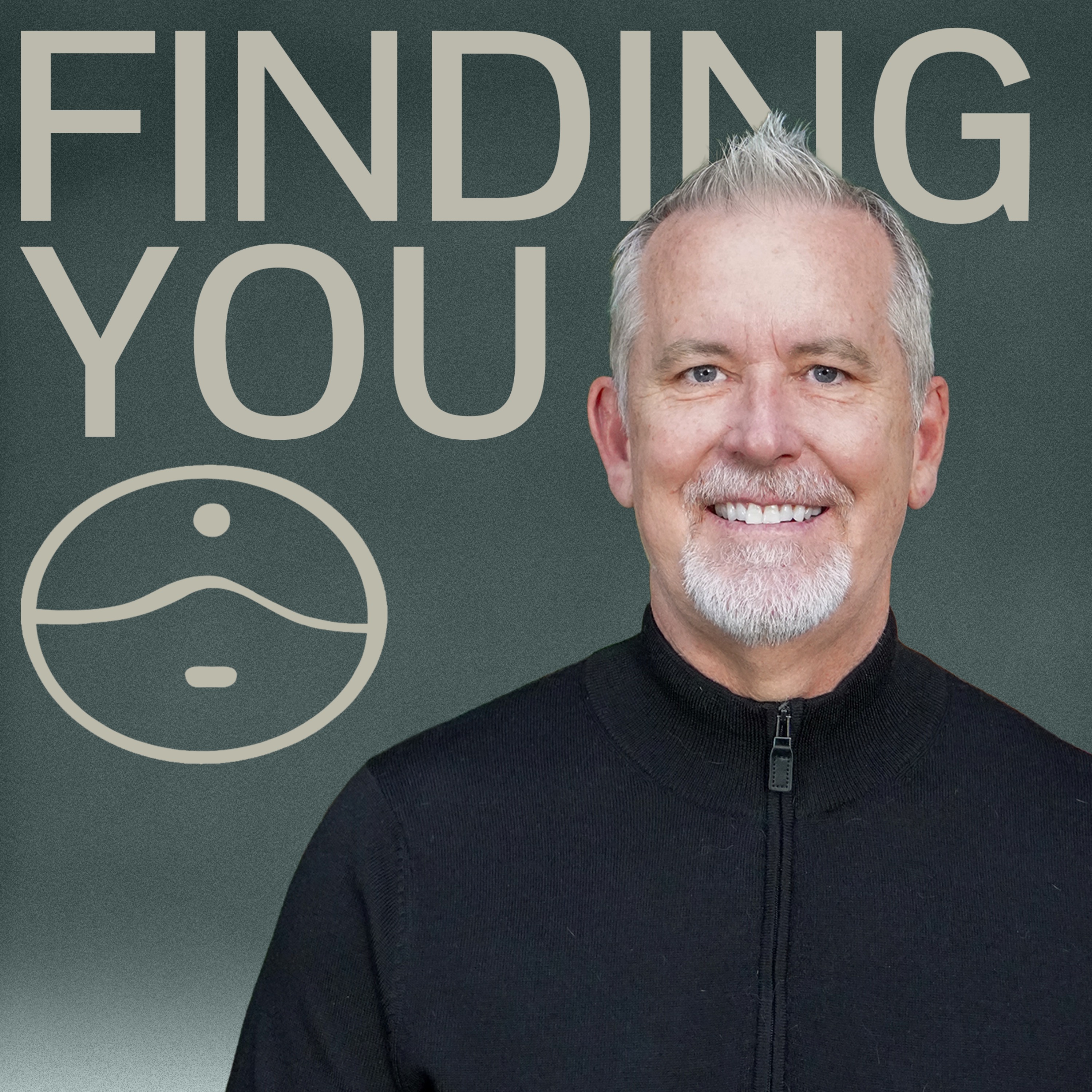
Finding You: with Dr. Brad Reedy
Brad Reedy
Introducing Inner Circle, our new premium Finding You podcast experience. Support the show and receive access to exclusive content, bonus AMA episodes, and more. Join at findingyou.supercast.comFinding You Therapy Programs is an experientially based therapeutic program serving individuals, parents, couples, and families. Email the host drbradreedy@gmail.com Hosted on Acast. See acast.com/privacy for more information.
Episodes
Mentioned books

Jul 11, 2025 • 58min
Psychedellic Assisted Psychotherapy - an Interview with Alexa Altman, Ph.D. - Ep 677
Dr. Reedy welcomes Dr. Alexa Altman where she discusses how psychedelics bring the unconscious material into consciousness. She talks about the importance of integration. Dr. Altman’s Website: https://www.i-psychedelic.com 1. Single-dose psilocybin (25 mg) with psychological support for MDDJAMA – “Single-Dose Psilocybin Treatment for Major Depressive Disorder” psychiatryonline.org+15sunstonetherapies.com+15pmc.ncbi.nlm.nih.gov+15 Summary: Demonstrated strong antidepressant effects and good tolerability over follow-up. Email: info@hopkinspsychedelic.org 2. One-Year Follow-Up of Psilocybin for DepressionStudy: Long-term effects of psilocybin therapy for depressionJohns Hopkins – “Psilocybin treatment for major depression effective for up to a year” Summary: 67% of participants remained in remission one year post-treatment.3. MDMA-Assisted Therapy for Severe PTSDRandomized, placebo-controlled MDMA-assisted therapyNature Medicine – “MDMA-assisted therapy for severe PTSD” Summary: Significant reduction in PTSD symptoms, well‑tolerated in a diverse cohort.Contact (MAPS / Lykos Therapeutics): Email: info@maps.org 4. Psilocybin for Cancer-Related Anxiety & DepressionPsilocybin in patients with life-threatening cancerPMC – “High-dose psilocybin produced large decreases in depressed mood and anxiety…” Summary: 80% of participants maintained significant symptom relief at 6 months. Website: heffter.org (contact via site) en.wikipedia.org 1. Johns Hopkins UniversityCenter for Psychedelic and Consciousness ResearchPsilocybin for depression, anxiety, addiction, and end-of-life distressWhy it’s top-tier: The first major U.S. institution to receive regulatory approval for psychedelic research in modern times. 🔗 hopkinspsychedelic.org 2. Imperial College LondonCentre for Psychedelic ResearchPsilocybin for treatment-resistant depression, brain imaging, DMT studiesWhy it’s top-tier: Home of pioneering neuroimaging studies on psychedelics; led by Robin Carhart-Harris (now at UCSF). 🔗 imperial.ac.uk 3. Multidisciplinary Association for Psychedelic Studies (MAPS)MDMA for PTSD (now in Phase 3 trials), harm reduction, global educationWhy it’s top-tier: MAPS initiated the first FDA-approved Phase 3 trials for MDMA-assisted therapy. 🔗 maps.org4. University of California, San Francisco Psychedelic Research Program Psilocybin, DMT, ibogaine; Robin Carhart-Harris now leads U.S. armWhy it’s top-tier: Integrates neuroscience, clinical psychology, and pharmacology. 🔗 psychedelics.ucsf.edu5. NYU Langone HealthCenter for Psychedelic MedicineEnd-of-life anxiety, alcoholism, PTSD, and psilocybin studiesWhy it’s top-tier: Known for rigorous clinical trials and major collaborations. 🔗 med.nyu.edu6. University of California, Los AngelesUCLA Psychedelic Studies InitiativePsilocybin + CBT, anxiety, clinical protocolsWhy it’s top-tier: Conducting one of the few FDA-regulated psilocybin trials with integrated therapy. 🔗 uclapsi.org7. University of Wisconsin–Madison / Usona InstitutePsilocybin for major depression (FDA Phase 3 trials)Why it’s top-tier: Leading U.S.-based nonprofit with regulatory traction and major academic partnerships. 🔗 usonainstitute.org8. Massachusetts General Hospital / Harvard Medical SchoolCenter for the Neuroscience of PsychedelicsNeurobiological mechanisms of psychedelicsWhy it’s top-tier: Combines Harvard academic leadership with Mass General clinical infrastructure. 🔗 massgeneral.org9. University of New MexicoPsychedelic-Assisted Therapies & Research GroupKetamine, DMT, and MDMA research; Indigenous-informed approachesWhy it’s top-tier: Interdisciplinary and trauma-informed program with cultural awareness. 🔗 hsc.unm.edu10. Oregon Health & Science University State-licensed psilocybin therapy programs, public health, trainingWhy it’s top-tier: One of the first institutions engaging with psilocybin therapy post-legalization under Measure 109. 🔗 ohsu.edu Hosted on Acast. See acast.com/privacy for more information.

Jul 7, 2025 • 1h 7min
O.C.D. - an Interview with Katia Moritz, Ph.D., ABPP - Ep 676
Dr. Reedy welcomes Dr. Katia Moritz, an expert in the treatment of Obsessive Compulsive Disorder. Dr. Moritz discusses common misperceptions is the diagnosis and treatment of the disorder. She explores the etiology and how family members are the not cause of the issue, but may be inadvertently contributing to some of the dynamics. N.B.I.: https://www.nbiweston.com Dr. Moritz’s bio: https://www.nbiweston.com/katia-moritz Hosted on Acast. See acast.com/privacy for more information.

Jul 2, 2025 • 1h 2min
Choosing To Go "No Contact" with Family - Ep 675
Dr. Reedy discusses the issue related to individuals choosing to cut contact with their family members. He also talks about what to do when you are on the receiving end of this kind of boundary. Hosted on Acast. See acast.com/privacy for more information.

Jun 27, 2025 • 60min
Rebellion, Individuation, and Connection - Ep 674
Dr. Reedy discusses how rebellion is a response to a situation where the project of individuation is threatened or stalled. He explains that individuation is the answer to the soul’s longing for itself. He invites listeners to consider disregarding what they were taught about parenting, children and even this broadcast. He explained the attachment requires that we accept the premise that “our children are not our children.” (Gibran) Hosted on Acast. See acast.com/privacy for more information.

Jun 18, 2025 • 46min
The Science of Holding Space - Ep 673
Dr. Reedy talks about what it means to hold space for another, what gets in the way of doing so and how this impacts the development of a child or the client in therapy. He explains that seeing someone is the key to mental health and resiliency and that the foundation of our ability to do that is in how we have managed to heal our own narcissistic wounding (the wounding of not being seen and accepted as we are). Hosted on Acast. See acast.com/privacy for more information.

Jun 13, 2025 • 51min
Carrying Your Own Shadow (A.M.A.) - Ep 672
Dr. Reedy takes live questions from the audience on parenting and boundaries. He explains how compassion is born by our boundaries. He explains that children and partners will inevitably require us to face aspects of ourselves we have avoided. We will have to fail, come up short and own our limitations as we practice self-care and attempt to meet our loved ones with love and compassion. Hosted on Acast. See acast.com/privacy for more information.

Jun 11, 2025 • 58min
Emotional Safety - Ep 671
Dr. Reedy defines and discusses what makes for emotional safety. He talks about how emotional safety heals us and how repeated exposure to an emotional safe person changes our nervous system permanently. He explains that when the “big people” from our childhood were unable to sit with us and our feelings, we learned to hide and protect ourselves… and these efforts to protect ourselves become our mental illnesses. Hosted on Acast. See acast.com/privacy for more information.

Jun 4, 2025 • 1h 2min
How Behavioral Therapy Falls Short - Ep 670
Dr. Reedy discusses how skills and tools don’t make up the transformative substance of our therapy journey. He talks about a “transformation of consciousness” that occurs when we are deeply changed. He explains ego-death and how fear and love are the primary forces that drive our behavior. He explains that therapy is not about improvement but rather about self-compassion, increased consciousness, and rests on a foundation of sense of safety. Hosted on Acast. See acast.com/privacy for more information.

May 31, 2025 • 58min
The Identified Patient & You - Ep 669
Dr. Reedy discusses how the identified patient is someone who expresses the issues with a system through mental health symptoms. He talks about projection and triangulation as ways for individuals in a system to scapegoat others and avoid the responsibility that each member of a system bears. He talks about how we can become a part of the solution as we learn to see mental health issues in the context of the greater system and make changes to disrupt patterns. He discourages the use of shame and guilt as barometers of our progress on our mental health journey. Hosted on Acast. See acast.com/privacy for more information.

May 23, 2025 • 59min
Being the Villain in Your Child’s Story (AMA) - Ep 668
Dr. Reedy takes live questions from the audience on attachment, parenting, and relationships. He talks about how a parent’s self-acceptance, which leads to self-awareness, is the key to your children's healthy development. He explains that self-compassion is the key to greater awareness and consciousness. And he talks about how boundaries and skills are really the evidence or signposts that reveal where we are on our journey. He emphatically points out that the goal in therapy is not to be so good we are beyond reproach, but rather the outcome of therapy is learning to love and see our "horrible, rotten, human, fallible, lovable, selves." Hosted on Acast. See acast.com/privacy for more information.

