

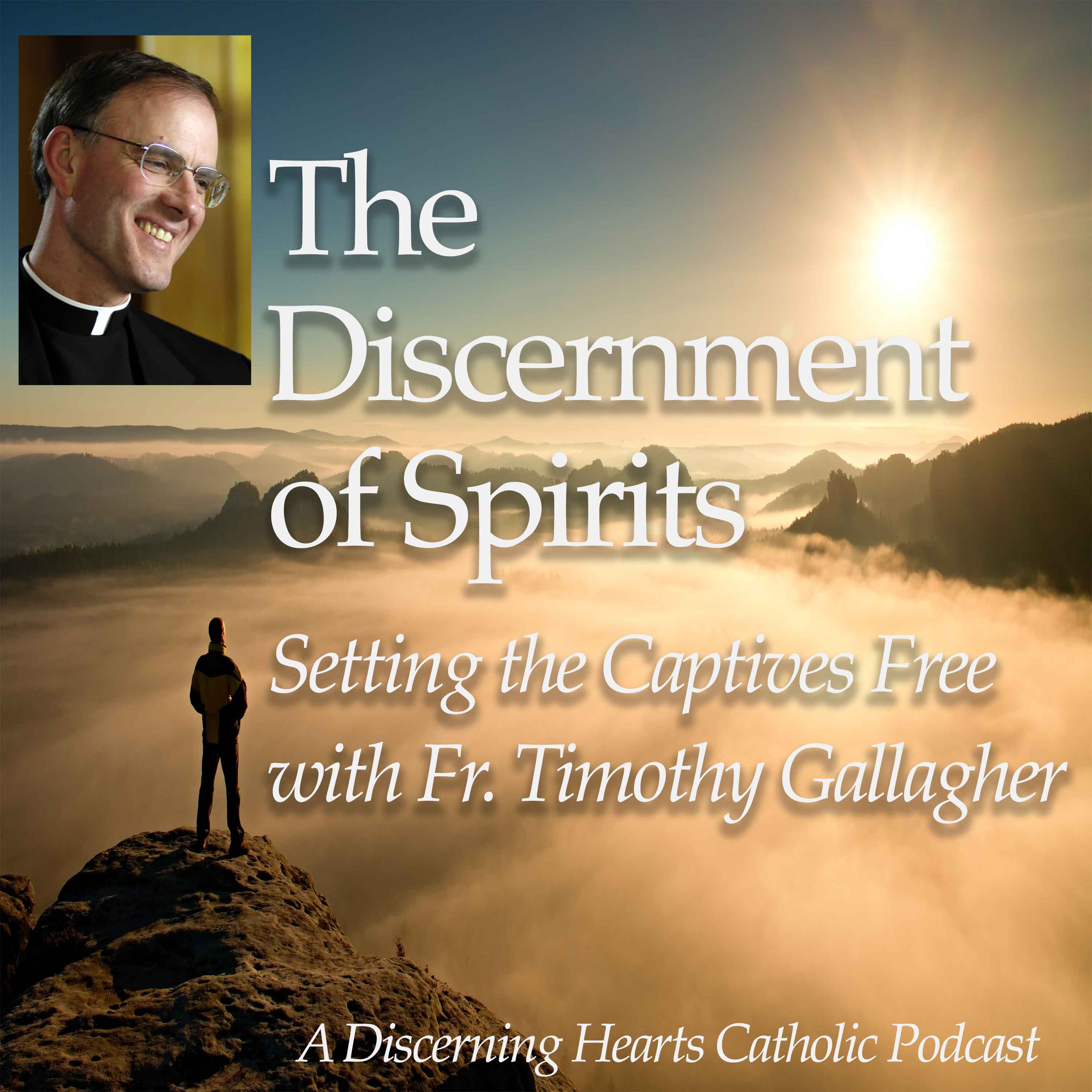
Discernment of Spirits with Fr. Timothy Gallagher - Discerning Hearts Catholic Podcasts
Fr. Timothy Gallagher / Kris McGregor
The Discernment of Spirits: Setting the Captives Free – Serves as an introduction to the Spiritual Exercises of St. Ignatius of Loyola
Episodes
Mentioned books

20 snips
Dec 20, 2020 • 30min
DOS#1 – Introduction – Discernment of Spirits w/ Fr. Timothy Gallagher – Discerning Hearts Podcast
Father Timothy Gallagher, ordained priest and author, discusses the importance of the discernment of spirits in the Ignatian spiritual exercises, exploring its relevance in finding satisfaction for the hungry heart. He emphasizes the need for starting slow and gradual in spiritual exercises, while also highlighting the availability of the Discerning Hearts app for guidance. The chapter concludes with an invitation to explore and apply Saint Ignatius' 14 rules of discernment in daily life.
15 snips
Dec 20, 2020 • 28min
DOS#2 – The Life of St. Ignatius – Discernment of Spirits w/ Fr. Timothy Gallagher – Discerning Hearts Podcasts
Discover the life of St. Ignatius of Loyola and the foundational elements of the Spiritual Exercises. Explore Ignatius' teaching on discernment of spirits, his transformative confession, and his decision to reject worldly thoughts. Learn about the obliques of the Virgin Mary and their role in retreats, as well as moments of discernment and the journey of spiritual transformation. Delve into the three essential steps of discernment and pay attention to your thoughts and emotions.
42 snips
Dec 20, 2020 • 31min
DOS#3- The First Rule – Discernment of Spirits w/ Fr. Timothy Gallagher – Discerning Hearts Podcast
The 14 Rules of the Discernment of Spirits with Fr. Timothy Gallagher with Kris McGregor.
Episode Three: Rule One – When the Heart Is Moving Away from God
Episode 3 -The First Rule:
In the persons who go from mortal sin to mortal sin, the enemy is commonly used to propose to them apparent pleasures, making them imagine sensual delights and pleasures in order to hold them more and make them grow in their vices and sins. In these persons the good spirit uses the opposite method, pricking them and biting their consciences through the process of reason.
Episode Three of The Discernment of Spirits: Setting the Captives Free turns to Rule One of the Discernment of Spirits. Fr. Timothy Gallagher explains how this rule applies when a person’s life is moving away from God and toward serious sin.
To illuminate the rule, Fr. Gallagher draws from the conversion story of St. Augustine. Augustine’s early life was marked by powerful desires and imagined pleasures. These thoughts were engaging and compelling. They promised satisfaction and fulfillment. Yet over time, they left his heart restless, empty, and unable to find peace.
Fr. Gallagher explains that this pattern reveals the action described in Rule One. When a person is moving away from God, the enemy works primarily through the imagination. Apparent pleasures are proposed and entertained. They hold the heart in patterns of sin and keep it from turning toward what brings lasting joy.
At the same time, the good spirit acts in a contrary way. God works through conscience and reason. He allows discomfort, restlessness, and unease to surface. This is not punishment. It is mercy. It is the loving refusal of God to abandon the heart to a path that cannot satisfy.
Through contemporary examples, Fr. Gallagher shows how this rule applies in ordinary life today. This is especially true in a culture shaped by constant images and distraction. The good spirit works patiently through conscience, relationships, and grace. The purpose is to awaken the heart to the need for change.
The restlessness and dissatisfaction that feel like distance from God may actually be signs of His nearness. They may be the quiet action of love calling the heart back.
Episode Three offers a clear and compassionate understanding of Rule One. It helps listeners recognize both the tactics that lead the heart away from God and the grace that draws it home.
Discerning Hearts Questions for Reflection and Study
Personal Reflection
Have you noticed times when imagined pleasures promised satisfaction but left your heart unsettled afterward?
When have feelings of restlessness or dissatisfaction led you to deeper reflection about your life?
How do images and media influence your imagination and spiritual focus?
Can you recognize moments when discomfort or unease in conscience may have been an invitation to change?
Where might God be gently calling you back through experiences that feel like interior struggle?
Group Reflection or Study
How does St. Augustine’s experience help clarify the meaning of Rule One?
Why does Ignatius describe the action of the good spirit as “stinging and biting” the conscience?
How can restlessness serve as a form of mercy rather than condemnation?
In what ways does modern culture intensify the dynamics described in Rule One?
How can understanding this rule foster hope for personal and communal conversion?
The 14 Rules for Discerning Spirits –
“The Different Movements Which Are Caused In The Soul” as outlined by St. Ignatius of Loyola click here
For the other episodes in this series visit Fr. Timothy Gallagher’s “Discerning Hearts”click here
Father Timothy M. Gallagher, O.M.V., was ordained in 1979 as a member of the Oblates of the Virgin Mary, a religious community dedicated to retreats and spiritual formation according to the Spiritual Exercises of St. Ignatius. Fr. Gallagher is featured on the EWTN series “Living the Discerning Life: The Spiritual Teachings of St. Ignatius of Loyola”.
The post DOS#3- The First Rule – Discernment of Spirits w/ Fr. Timothy Gallagher – Discerning Hearts Podcast appeared first on Discerning Hearts Catholic Podcasts.
27 snips
Dec 20, 2020 • 31min
DOS#4 – The Second Rule – Discernment of Spirits w/ Fr. Timothy Gallagher – Discerning Hearts Podcasts
The 14 Rules of the Discernment of Spirits with Fr. Timothy Gallagher with Kris McGregor
Episode Four: Rule Two – When the Heart Is Moving Toward God
Episode 4 -The Second Rule:
In the persons who are going on intensely cleansing their sins and rising from good to better in the service of God our Lord, it is the method contrary to that in the first Rule, for then it is the way of the evil spirit to bite, sadden and put obstacles, disquieting with false reasons, that one may not go on; and it is proper to the good to give courage and strength, consolations, tears, inspirations and quiet, easing, and putting away all obstacles, that one may go on in well-doing.
Episode Four of The Discernment of Spirits: Setting the Captives Free turns to Rule Two of the Discernment of Spirits. Fr. Timothy Gallagher explains how the spiritual dynamics change when a person is sincerely striving to turn away from sin and grow in the service of God.
Fr. Gallagher begins by recalling the contrast with Rule One. When a person is moving away from God, the enemy works to facilitate that movement. When a person’s life changes direction and begins to move toward God, the two spirits act in the opposite way. The enemy now works to hinder growth. The good spirit works to support it.
St. Ignatius describes this person as one who is “intensely purifying” life from sin and rising from good to better in the service of God. This includes concrete changes. Sin is resisted. Prayer becomes more faithful. Participation in the sacraments deepens. Love is expressed more intentionally in family life, work, and parish involvement. This is the ordinary path of growth for someone who desires God sincerely.
Fr. Gallagher explains that in this situation the enemy seeks to disturb the heart. Ignatius names four tactics. The enemy bites and troubles the soul. He brings a heaviness that steals peace. He places obstacles that make growth seem too difficult. He disquiets the mind with false reasoning that drains courage and clarity.
Through vivid examples, Fr. Gallagher shows how these tactics appear in daily life. A person may feel sadness without knowing why. Prayer may suddenly feel dry. Discouraging thoughts may arise just as a new spiritual practice is about to begin. These experiences are not signs of failure. They are signs of opposition.
At the same time, the good spirit acts powerfully and creatively. The good spirit gives courage and strength. Consolation is offered. Tears may arise. Inspirations clarify the next step. Obstacles are quietly eased and removed. God strengthens the heart in ways that are often gentle and unexpected.
Fr. Gallagher illustrates this through simple moments. A word heard at Mass. A smile offered at the right time. A remembered sign of God’s care. A child’s embrace. These moments restore courage and renew peace. They allow the person to continue forward in doing good.
Episode Four shows why struggle often accompanies growth. God allows trials because they become moments of decision. When resisted with grace, they lead to deeper strength and lasting spiritual maturity. Discernment makes these moments intelligible and hope-filled.
This episode offers a clear and hope-filled understanding of Rule Two. It helps listeners recognize both the enemy’s discouragement and the quiet, steady action of grace that carries the heart forward.
Discerning Hearts Questions for Reflection and Study
Personal Reflection
When you have tried to grow closer to God, have you noticed new forms of discouragement arise?
Can you recognize moments when peace or joy seemed to fade without an obvious reason?
What obstacles tend to appear when you begin new spiritual practices?
Where have you experienced quiet encouragement or strength that helped you continue?
How does understanding Rule Two change the way you interpret spiritual struggle?
Group Reflection or Study
Why does Ignatius describe Rule Two as the opposite of Rule One?
How do the enemy’s tactics in Rule Two differ from those in Rule One?
Why is discouragement such an effective way to hinder spiritual growth?
How do the examples in this episode show God’s action in ordinary life?
How can this rule help parish communities support those who are growing in faith?
The 14 Rules for Discerning Spirits –
“The Different Movements Which Are Caused In The Soul” as outlined by St. Ignatius of Loyola click here
For the other episodes in this series visit Fr. Timothy Gallagher’s “Discerning Hearts”click here
Father Timothy M. Gallagher, O.M.V., was ordained in 1979 as a member of the Oblates of the Virgin Mary, a religious community dedicated to retreats and spiritual formation according to the Spiritual Exercises of St. Ignatius. Fr. Gallagher is featured on the EWTN series “Living the Discerning Life: The Spiritual Teachings of St. Ignatius of Loyola”.
The post DOS#4 – The Second Rule – Discernment of Spirits w/ Fr. Timothy Gallagher – Discerning Hearts Podcasts appeared first on Discerning Hearts Catholic Podcasts.
30 snips
Dec 20, 2020 • 28min
DOS#5 The Third Rule – Discernment of Spirits w/ Fr. Timothy Gallagher – Discerning Hearts Podcast
The 14 Rules of the Discernment of Spirits with Fr. Timothy Gallagher with Kris McGregor
Episode Five: Rule Three – Understanding Spiritual Consolation
Episode 5 -The Third Rule:
Of Spiritual Consolation. I call it consolation when some interior movement in the soul is caused, through which the soul comes to be inflamed with love of its Creator and Lord; and when it can in consequence love no created thing on the face of the earth in itself, but in the Creator of them all.
Likewise, when it sheds tears that move to love of its Lord, whether out of sorrow for one’s sins, or for the Passion of Christ our Lord, or because of other things directly connected with His service and praise.
Finally, I call consolation every increase of hope, faith and charity, and all interior joy which calls and attracts to heavenly things and to the salvation of one’s soul, quieting it and giving it peace in its Creator and Lord.
Episode Five of The Discernment of Spirits: Setting the Captives Free turns to Rule Three, which addresses the experience St. Ignatius of Loyola calls spiritual consolation. Fr. Timothy Gallagher, in conversation with Kris McGregor, explains how Ignatius describes consolation through lived spiritual experience rather than abstract definition.
Fr. Gallagher begins by reading Ignatius’s text, which describes consolation as an interior movement that inflames the heart with love for its Creator and Lord. This love brings peace. It draws the soul toward heavenly things. It quiets the heart in God. Ignatius lists concrete signs of this grace, including tears, joy, and an increase of faith, hope, and charity.
To help listeners recognize these experiences, Fr. Gallagher shares vivid examples. He reflects on the spiritual journals of Raïssa Maritain, whose prayer reveals tenderness, nearness, and deep joy in God. He also points to moments in Scripture, such as Peter’s encounter with Christ in the boat, where the heart is gently warmed and drawn closer to the Lord.
Fr. Gallagher explains that spiritual consolation can vary greatly. It may be gentle or intense. It may last only a moment or remain for a longer season. Tears may come quietly or with great force. What remains constant is the fruit. Consolation strengthens the soul. It gives peace. It draws the heart toward God and the things of salvation.
The episode also clarifies an important distinction. Ignatius speaks specifically of spiritual consolation. This differs from healthy non-spiritual consolation, such as rest, beauty, friendship, or accomplishment. These natural joys are gifts from God. Yet they are not, in themselves, the basis for discernment. Discernment concerns the spiritual movements that draw the soul into deeper relationship with God.
At the same time, Fr. Gallagher shows how God often uses non-spiritual consolation as the place where spiritual consolation arises. He reflects on the experience of St. Thérèse of Lisieux, whose delight in a simple scene of nature became the doorway to a profound awareness of God’s faithful and protecting love throughout her life.
Episode Five helps listeners learn to recognize spiritual consolation when God gives it. It teaches how to name these experiences. It clarifies their meaning. Most importantly, it shows that the proper response to consolation is simple. It is to receive it with gratitude and allow it to strengthen the heart for the journey ahead.
Discerning Hearts Questions for Reflection and Study
Personal Reflection
Can you recall moments when your heart felt gently warmed or lifted in prayer?
How do you recognize peace that comes from God rather than from circumstances?
Have you experienced consolation that was brief but left a lasting effect?
What signs help you distinguish spiritual consolation from natural enjoyment?
How do times of consolation strengthen you for moments of difficulty?
Group Reflection or Study
Why does Ignatius describe consolation through examples rather than a strict definition?
How do the examples shared in this episode help clarify Rule Three?
Why is peace such an important sign of spiritual consolation?
How can non-spiritual consolation become a doorway to spiritual grace?
What is the proper response to consolation according to Ignatian discernment?
The 14 Rules for Discerning Spirits –
“The Different Movements Which Are Caused In The Soul” as outlined by St. Ignatius of Loyola click here
For the other episodes in this series visit Fr. Timothy Gallagher’s “Discerning Hearts”click here
Father Timothy M. Gallagher, O.M.V., was ordained in 1979 as a member of the Oblates of the Virgin Mary, a religious community dedicated to retreats and spiritual formation according to the Spiritual Exercises of St. Ignatius. Fr. Gallagher is featured on the EWTN series “Living the Discerning Life: The Spiritual Teachings of St. Ignatius of Loyola”
The post DOS#5 The Third Rule – Discernment of Spirits w/ Fr. Timothy Gallagher – Discerning Hearts Podcast appeared first on Discerning Hearts Catholic Podcasts.
33 snips
Dec 20, 2020 • 28min
DOS#6 The Fourth Rule – Discernment of Spirits w/ Fr. Timothy Gallagher – Discerning Hearts Podcasts
The 14 Rules of the Discernment of Spirits with Fr. Timothy Gallagher with Kris McGregor
Episode Six: Rule Four – Understanding Spiritual Desolation
Episode 6 -The Fourth Rule:
Of Spiritual Desolation. I call desolation all the contrary of the third rule, such as darkness of soul, disturbance in it, movement to things low and earthly, the unquiet of different agitations and temptations, moving to want of confidence, without hope, without love, when one finds oneself all lazy, tepid, sad, and as if separated from his Creator and Lord.
Because, as consolation is contrary to desolation, in the same way the thoughts which come from consolation are contrary to the thoughts which come from desolation.
Episode Six of The Discernment of Spirits: Setting the Captives Free turns to Rule Four, which addresses the experience St. Ignatius of Loyola calls spiritual desolation. Fr. Timothy Gallagher, in conversation with Kris McGregor, explains why this rule is one of the most valuable and practical teachings in Ignatian discernment.
Fr. Gallagher begins by naming spiritual desolation as the direct opposite of spiritual consolation. Where consolation lifts the heart, desolation weighs it down. Ignatius describes it through lived experience rather than abstract definition. Spiritual desolation includes darkness of soul, interior disturbance, confusion, sadness, and a loss of confidence, hope, and love. The heart feels heavy. God feels distant. Prayer feels empty.
To make this concrete, Fr. Gallagher shares the story of Alice. She is a woman who loves the Lord and has served faithfully in her parish for years. After moving to a new town, she struggles to connect in her new parish. Over time, discouragement grows. In prayer, she feels abandoned by God. Though she remains faithful, everything feels hopeless and meaningless. This lived experience captures what Ignatius means by spiritual desolation.
Fr. Gallagher carefully distinguishes spiritual desolation from non-spiritual desolation. Non-spiritual desolation may arise from physical exhaustion, emotional strain, anxiety, or depression. These experiences are part of ordinary human life. Yet Ignatius warns that when non-spiritual desolation becomes excessive or prolonged, it easily spills into the spiritual life. Fatigue, imbalance, and emotional heaviness can weaken prayer and openness to grace.
Because of this, Fr. Gallagher stresses the importance of wise care for the whole person. Attention to rest, balance, and physical well-being often resolves struggles that appear spiritual. He recalls the wisdom of St. Teresa of Avila, who once advised a sister struggling in prayer to sleep more. Caring for the human dimension strengthens the spiritual life.
Ignatius then describes the specific signs of spiritual desolation. These include confusion, anxiety, a pull toward lower and earthly distractions, and a desire to abandon prayer and spiritual practices. Activities once loved become burdensome. The heart feels slothful, tepid, and sad. Above all, the person feels as if separated from God. Fr. Gallagher highlights Ignatius’s careful wording. God is not absent. The feeling of abandonment is real, but it is not true.
This sense of isolation is the deepest lie of spiritual desolation. The enemy seeks to convince the heart that it is alone and powerless. Fr. Gallagher explains that recognizing this lie is the beginning of freedom. No saint has been spared from such experiences. Growth comes not from avoiding desolation, but from understanding it and responding wisely.
Fr. Gallagher clarifies an important distinction. Spiritual desolation is not the same as the dark night described by St. John of the Cross. The dark night is a purifying work of God in prayer and must be accepted with trust. Spiritual desolation, by contrast, is always a work of the enemy. God never gives spiritual desolation. He permits it. Therefore, the correct response is always to reject it.
The episode concludes by returning to Ignatius’s central teaching. The thoughts that arise in consolation and desolation are always contrary. When discouraging thoughts arise in desolation, they must not be trusted. When they are recognized and rejected, the heart regains freedom. Discernment restores hope. Captives are set free.
Discerning Hearts Questions for Reflection and Study
Personal Reflection
Can you recognize times when discouragement affected your prayer or desire to serve?
How do you experience heaviness of heart in your relationship with God?
Are there non-spiritual factors that may influence your spiritual life right now?
Have you noticed a pull toward distractions during difficult moments of prayer?
How does knowing that desolation is a lie change the way you respond to it?
Group Reflection or Study
Why does Ignatius consider teaching on spiritual desolation so important?
How does the story of Alice help clarify Rule Four?
Why is it important to distinguish spiritual from non-spiritual desolation?
What dangers arise when decisions are made during times of desolation?
How does this rule bring hope to those facing discouragement in parish life?
The 14 Rules for Discerning Spirits –
“The Different Movements Which Are Caused In The Soul” as outlined by St. Ignatius of Loyola click here
For the other episodes in this series visit Fr. Timothy Gallagher’s “Discerning Hearts”click here
Father Timothy M. Gallagher, O.M.V., was ordained in 1979 as a member of the Oblates of the Virgin Mary, a religious community dedicated to retreats and spiritual formation according to the Spiritual Exercises of St. Ignatius. Fr. Gallagher is featured on the EWTN series “Living the Discerning Life: The Spiritual Teachings of St. Ignatius of Loyola”
The post DOS#6 The Fourth Rule – Discernment of Spirits w/ Fr. Timothy Gallagher – Discerning Hearts Podcasts appeared first on Discerning Hearts Catholic Podcasts.
24 snips
Dec 20, 2020 • 28min
DOS#7 The Fifth Rule – Discernment of Spirits w/ Fr. Timothy Gallagher – Discerning Hearts Podcast
The 14 Rules of the Discernment of Spirits with Fr. Timothy Gallagher with Kris McGregor
Episode Seven: Rule Five – Never Make a Change in Time of Desolation
Episode 7 -The Fifth Rule:
In time of desolation never to make a change; but to be firm and constant in the resolutions and determination in which one was the day preceding such desolation, or in the determination in which he was in the preceding consolation. Because, as in consolation it is rather the good spirit who guides and counsels us, so in desolation it is the bad, with whose counsels we cannot take a course to decide rightly.
Episode Seven of The Discernment of Spirits: Setting the Captives Free focuses on Rule Five, one of the most decisive and practical rules in Ignatian discernment. Fr. Timothy Gallagher, in conversation with Kris McGregor, explains why this rule has the power to protect the spiritual life over an entire lifetime.
Rule Five is direct and uncompromising. In time of spiritual desolation, never make a change. The rule applies to any spiritual proposal that was in place before the desolation began. Prayer commitments. Retreat plans. Parish involvement. Spiritual direction. Even major vocational decisions. When desolation is present, change must wait.
Fr. Gallagher explains why Ignatius insists on this rule without exception. In spiritual consolation, the good spirit guides and counsels. In spiritual desolation, it is the enemy who guides and counsels. The thoughts that arise during desolation may feel convincing. They may sound reasonable. Yet they do not lead to clarity or peace. They lead away from it.
Through concrete examples, Fr. Gallagher shows how Rule Five works in daily life. A person feels heaviness in prayer and considers canceling a meeting with a pastor. Another feels discouraged and wants to abandon a retreat planned months earlier. In each case, the questions are the same. Am I in a time of spiritual desolation? Am I considering changing something that was decided before the desolation began? When the answer to both is yes, the response is firm. Do not change.
The episode carefully distinguishes spiritual desolation from non-spiritual desolation. Physical exhaustion, anxiety, or emotional strain may require practical changes, such as rest or balance. Yet even here, Ignatius’s wisdom often applies. Many discouraging thoughts still arise from desolation and must be resisted, not obeyed.
Fr. Gallagher explains that Rule Five does not mean changes are never made. Changes may be considered in times of peace, tranquility, or spiritual consolation. They must be made prayerfully and wisely. What Ignatius forbids is change during desolation, when judgment is clouded and discouragement distorts reality.
To illuminate the rule, Fr. Gallagher draws on an image from J. R. R. Tolkien. He recalls the scene in which Frodo receives a small light with the words, “This will be a light when all other lights go out.” Rule Five serves the same purpose. When darkness presses in and everything urges change, this rule becomes a steady light that preserves freedom.
Fr. Gallagher concludes by returning to Ignatius himself. Even at the height of his sanctity, Ignatius experienced profound spiritual desolation. Thoughts arose urging him to abandon plans already discerned. Because he recognized desolation and remained firm, clarity returned. The discernment was completed. Peace followed.
Episode Seven presents Rule Five as a lifelong companion. It is a rule that saves the heart from confusion. It protects decisions made in grace. It becomes a steady guide when all other lights seem to fail.
DOS7-REV
Discerning Hearts Questions for Reflection and Study
Personal Reflection
Can you recall moments when discouragement urged you to abandon a spiritual commitment?
How do you recognize heaviness of heart in your own experience of prayer?
What spiritual proposals were in place in your life before recent struggles began?
How does knowing Rule Five change the way you interpret discouraging thoughts?
Where might firmness and fidelity bring freedom rather than rigidity?
Group Reflection or Study
Why does Ignatius insist that Rule Five admits no exceptions?
How do the examples in this episode help clarify the danger of change in desolation?
Why do discouraging thoughts often feel convincing during desolation?
How does the Tolkien image help illuminate the purpose of Rule Five?
How might this rule protect parish communities and leaders from burnout or retreat?
The 14 Rules for Discerning Spirits –
“The Different Movements Which Are Caused In The Soul” as outlined by St. Ignatius of Loyola click here
For the other episodes in this series visit Fr. Timothy Gallagher’s “Discerning Hearts”click here
Father Timothy M. Gallagher, O.M.V., was ordained in 1979 as a member of the Oblates of the Virgin Mary, a religious community dedicated to retreats and spiritual formation according to the Spiritual Exercises of St. Ignatius. Fr. Gallagher is featured on the EWTN series “Living the Discerning Life: The Spiritual Teachings of St. Ignatius of Loyola”
The post DOS#7 The Fifth Rule – Discernment of Spirits w/ Fr. Timothy Gallagher – Discerning Hearts Podcast appeared first on Discerning Hearts Catholic Podcasts.
21 snips
Dec 20, 2020 • 28min
DOS#8 The Sixth Rule – Discernment of Spirits w/ Fr. Timothy Gallagher – Discerning Hearts Podcast
The 14 Rules of the Discernment of Spirits with Fr. Timothy Gallagher with Kris McGregor
Episode Eight: Rule Six – Resisting Spiritual Desolation
Episode 8 -The Sixth Rule:
Although in desolation we ought not to change our first resolutions, it is very helpful intensely to change ourselves against the same desolation, as by insisting more on prayer, meditation, on much examination, and by giving ourselves more scope in some suitable way of doing penance.
Episode Eight of The Discernment of Spirits: Setting the Captives Free focuses on Rule Six, one of the most hope-filled teachings in Ignatian discernment. Fr. Timothy Gallagher, in conversation with Kris McGregor, explains why God never asks us to passively endure spiritual desolation.
Fr. Gallagher begins by naming a common misunderstanding. Many faithful people believe that God asks them to simply carry spiritual heaviness as a permanent burden. They remain faithful. They continue to pray. Yet they assume joy in the Lord belongs only to the past or to eternal life. Rule Six directly challenges this belief. Spiritual desolation is never meant to be carried passively. It is meant to be resisted.
Ignatius teaches that while we do not change our spiritual commitments during desolation, we must change ourselves intensely against the desolation itself. This resistance is not aggressive or anxious. It is hopeful and active. Ignatius gives four concrete means for doing this. They are prayer, meditation, much examination, and suitable gestures of penitential courage.
Fr. Gallagher explains that prayer in desolation means simple petition. It is the act of turning toward God when everything feels heavy. Even the smallest prayer matters. A simple “Lord, help me” can begin to lift the heart. This turning toward God often weakens the power of desolation immediately.
Meditation follows prayer. In desolation, Ignatius invites us to recall the truths of faith that assure us of God’s faithful presence. Scripture becomes especially powerful here. Verses remembered from the Psalms or the Gospels remind the heart that God is present even in darkness. Fr. Gallagher shares personal examples of recalling God’s fidelity in past trials as a way of sustaining hope in present struggle.
The third means is what Ignatius calls much examination. Rather than fleeing into distraction, we stop and look at what is happening. Fr. Gallagher shows how examination often reveals when and how the desolation began. A conversation. A remark. A moment of neglect. Understanding brings freedom. It allows concrete and healing action to be taken.
Ignatius then calls for suitable gestures of penitential courage. These are small acts of resistance. They are never excessive. They are always possible. Waiting a few minutes before turning to distraction. Completing a prayer even when it feels difficult. Offering a small act of service when there is no inclination to do so. These gestures break the momentum of desolation.
Fr. Gallagher stresses that these practices do not deepen desolation. They weaken it. When prayer, meditation, examination, and small acts of courage are practiced, desolation loses its grip. It passes more quickly. Freedom returns. Hope is restored.
Episode Eight presents Rule Six as a true spirituality of hope. It teaches that desolation is not a life sentence. With grace and spiritual wisdom, it can be resisted. Captives are set free.
Discerning Hearts Questions for Reflection and Study
Personal Reflection
Have you ever assumed that spiritual heaviness was something God wanted you to endure passively?
How do you usually respond when prayer feels difficult or empty?
What Scriptures or memories of God’s fidelity strengthen you during hard moments?
Are you willing to pause and examine what may have triggered discouragement?
What small act of courage might help you resist desolation today?
Group Reflection or Study
Why does Ignatius insist that spiritual desolation must always be resisted?
How do the four means of Rule Six work together?
Why is simple prayer so powerful in times of desolation?
How does examination restore clarity and freedom?
How might small gestures of courage change the spiritual life of a parish or community?
The 14 Rules for Discerning Spirits –
“The Different Movements Which Are Caused In The Soul” as outlined by St. Ignatius of Loyola click here
For the other episodes in this series visit Fr. Timothy Gallagher’s “Discerning Hearts”click here
Father Timothy M. Gallagher, O.M.V., was ordained in 1979 as a member of the Oblates of the Virgin Mary, a religious community dedicated to retreats and spiritual formation according to the Spiritual Exercises of St. Ignatius. Fr. Gallagher is featured on the EWTN series “Living the Discerning Life: The Spiritual Teachings of St. Ignatius of Loyola”
The post DOS#8 The Sixth Rule – Discernment of Spirits w/ Fr. Timothy Gallagher – Discerning Hearts Podcast appeared first on Discerning Hearts Catholic Podcasts.
22 snips
Dec 20, 2020 • 28min
DOS#9 The Seventh Rule – Discernment of Spirits w/ Fr. Timothy Gallagher – Discerning Hearts Podcasts
The 14 Rules of the Discernment of Spirits with Fr. Timothy Gallagher with Kris McGregor
Episode Nine: Rule Seven – Trusting God’s Grace in Spiritual Desolation
Episode 9 -The Seventh Rule:
Let him who is in desolation consider how the Lord has left him in trial in his natural powers, in order to resist the different agitations and temptations of the enemy; since he can with the Divine help, which always remains to him, though he does not clearly perceive it: because the Lord has taken from him his great fervor, great love and intense grace, leaving him, however, grace enough for eternal salvation.
Episode Nine of The Discernment of Spirits: Setting the Captives Free focuses on Rule Seven, which teaches how to endure spiritual desolation with trust, courage, and faith. Fr. Timothy Gallagher, in conversation with Kris McGregor, explains why this rule transforms desolation from a meaningless burden into a moment of spiritual growth.
Fr. Gallagher begins by describing a familiar experience. Prayer feels dry. Energy for spiritual things is low. Commitments that once brought joy now feel heavy. Without understanding, these moments seem pointless and exhausting. Rule Seven changes everything by revealing the meaning of desolation within God’s loving providence.
Ignatius invites the person in desolation to consider. This is a conscious act. The desolation is a trial permitted by God. It is not random. It is not abandonment. When the heart understands this, the burden becomes lighter. Suffering gains meaning. Endurance becomes possible.
To illuminate this truth, Fr. Gallagher turns to the life of Blessed Angela of Foligno. During a prolonged period of desolation, Angela felt abandoned by God. She could not pray. She could not praise God. Yet beneath the desolation, something remained untouched. Her firm resolve never to consent to sin endured. Grace was at work on a level deeper than feeling.
Fr. Gallagher explains that this is the heart of Rule Seven. In desolation, spiritual consolation may be taken away. Fervor may fade. Warmth may disappear. Yet God never withdraws the grace needed for salvation. Divine help always remains, even when it cannot be felt.
Ignatius teaches that desolation is permitted so the person may learn to resist it. Resistance strengthens the soul. Each time discouragement is resisted, spiritual capacity grows. Over time, the heart becomes rooted. Stability develops. A quiet strength forms that nothing can easily shake.
Fr. Gallagher shares personal experiences of encountering deeply peaceful and grounded individuals. These are often people who have passed through many trials. Their serenity is not accidental. It is the fruit of resisting desolation again and again with God’s help.
A recurring lie of desolation is the voice that says, “I can’t.” I can’t pray. I can’t persevere. I can’t continue. Rule Seven exposes this lie. Even when consolation is absent, sufficient grace remains. The heart can continue. Fidelity is possible. Love can still be chosen.
The episode also clarifies an important distinction. On the non-spiritual level, exhaustion or emotional strain may truly require rest. On the spiritual level, desolation never removes the grace needed to remain faithful. Recognizing this difference restores courage and confidence.
Episode Nine presents Rule Seven as a powerful source of hope. Desolation is never empty time. God is always at work. Grace is always present. When these truths are recalled in the moment of trial, trust grows. The heart is strengthened. Captives are set free.
Discerning Hearts Questions for Reflection and Study
Personal Reflection
Have you experienced times when prayer felt dry or burdensome?
How do you usually interpret spiritual heaviness when it arises?
Can you recall moments when you continued faithfully despite feeling empty?
What helps you remember that God’s grace remains even when it is not felt?
How does Rule Seven change your understanding of perseverance?
Group Reflection or Study
Why does Ignatius ask the person in desolation to consider specific truths?
How does the story of Blessed Angela help clarify Rule Seven?
What does it mean to say that desolation is a trial permitted by God?
How does resisting desolation strengthen the spiritual life over time?
How can this rule help parish leaders support others in discouragement?
The 14 Rules for Discerning Spirits –
“The Different Movements Which Are Caused In The Soul” as outlined by St. Ignatius of Loyola click here
For the other episodes in this series visit Fr. Timothy Gallagher’s “Discerning Hearts”click here
Father Timothy M. Gallagher, O.M.V., was ordained in 1979 as a member of the Oblates of the Virgin Mary, a religious community dedicated to retreats and spiritual formation according to the Spiritual Exercises of St. Ignatius. Fr. Gallagher is featured on the EWTN series “Living the Discerning Life: The Spiritual Teachings of St. Ignatius of Loyola”
The post DOS#9 The Seventh Rule – Discernment of Spirits w/ Fr. Timothy Gallagher – Discerning Hearts Podcasts appeared first on Discerning Hearts Catholic Podcasts.
27 snips
Dec 20, 2020 • 28min
DOS#10 The Eighth Rule – Discernment of Spirits w/ Fr. Timothy Gallagher – Discerning Hearts Podcast
The 14 Rules of the Discernment of Spirits with Fr. Timothy Gallagher with Kris McGregor
Episode Ten: Rule Eight – Patience in Time of Spiritual Desolation
Episode 10 -The Eighth Rule:
Let him who is in desolation labor to be in patience, which is contrary to the vexations which come to him: and let him think that he will soon be consoled, employing against the desolation the devices, as is said in the sixth Rule.
Episode Ten of The Discernment of Spirits: Setting the Captives Free focuses on Rule Eight, which teaches that patience is the key virtue in time of spiritual desolation. Fr. Timothy Gallagher, in conversation with Kris McGregor, explains how Ignatian patience is not passive endurance but an active, hope-filled perseverance.
Fr. Gallagher begins by clarifying what Ignatius means by patience. The word comes from the Latin patior, meaning to suffer, to bear, and to endure without giving up. In desolation, patience means staying the course. Prayer continues even when it feels dry. Commitments remain even when energy is gone. Love is chosen even when it requires great effort.
To illustrate this virtue, Fr. Gallagher turns to the spiritual journal of Elizabeth Leseur. In the midst of physical suffering, emotional struggle, and deep interior darkness, Elizabeth writes of a will unshakably turned toward God. Though she feels no consolation, she continues in prayer, work, charity, and love. Her example reveals the deep strength that patience forms in the soul.
Fr. Gallagher explains that Rule Eight applies in very concrete situations. A person begins a time of prayer and immediately feels dryness. Everything urges shortening the prayer or giving up altogether. Another feels tempted to withdraw from a parish commitment or retreat that once brought great joy. In these moments, Ignatius gives clear guidance. Stay. Finish. Do not abandon what was freely chosen before the desolation began.
Ignatius then offers a powerful help for perseverance. The person in desolation is to think that consolation will soon return. Desolation lies by telling the heart that the darkness will last forever. Ignatius counters this lie with truth. Consolation does return. It returns much sooner than desolation suggests.
Fr. Gallagher uses a striking image to explain this. Two patients experience similar discomfort. One is told healing will take weeks. The other is told relief will come tomorrow. The second endures far more easily. In the same way, hope sustains patience when the heart knows desolation will pass.
The episode also clarifies an important distinction. Rule Eight does not describe the dark night spoken of by St. John of the Cross. The dark night is a purifying work of God and must be accepted. Spiritual desolation, by contrast, is the work of the enemy and must be resisted. Most people experience ordinary spiritual desolation, not the dark night.
Fr. Gallagher emphasizes that alternation between consolation and desolation is normal in the spiritual life. No one is exempt. There is no shame in desolation. Growth occurs on both sides of this movement. Consolation strengthens love and clarity. Desolation, when resisted with patience, strengthens perseverance and maturity.
The episode concludes by returning to Ignatius’s central insight. Patience in desolation is an act of faith and hope. It chooses truth over feeling. When patience is joined to prayer, examination, and small acts of courage, desolation loses its power. Consolation returns. The heart grows strong. Captives are set free.
Discerning Hearts Questions for Reflection and Study
Personal Reflection
How do you usually respond when prayer feels dry or difficult?
Have you noticed thoughts urging you to give up during discouragement?
What helps you stay faithful when spiritual energy is low?
How does remembering that desolation will pass affect your perseverance?
Where might God be inviting you to practice patience today?
Group Reflection or Study
Why does Ignatius call patience the key virtue in desolation?
How does Elizabeth Leseur’s example illuminate Rule Eight?
Why is hope essential for perseverance in spiritual struggle?
How does this rule protect parish leaders and volunteers from burnout?
What practices help communities remain faithful during difficult seasons?
The 14 Rules for Discerning Spirits –
“The Different Movements Which Are Caused In The Soul” as outlined by St. Ignatius of Loyola click here
For the other episodes in this series visit Fr. Timothy Gallagher’s “Discerning Hearts”click here
Father Timothy M. Gallagher, O.M.V., was ordained in 1979 as a member of the Oblates of the Virgin Mary, a religious community dedicated to retreats and spiritual formation according to the Spiritual Exercises of St. Ignatius. Fr. Gallagher is featured on the EWTN series “Living the Discerning Life: The Spiritual Teachings of St. Ignatius of Loyola
The post DOS#10 The Eighth Rule – Discernment of Spirits w/ Fr. Timothy Gallagher – Discerning Hearts Podcast appeared first on Discerning Hearts Catholic Podcasts.

