

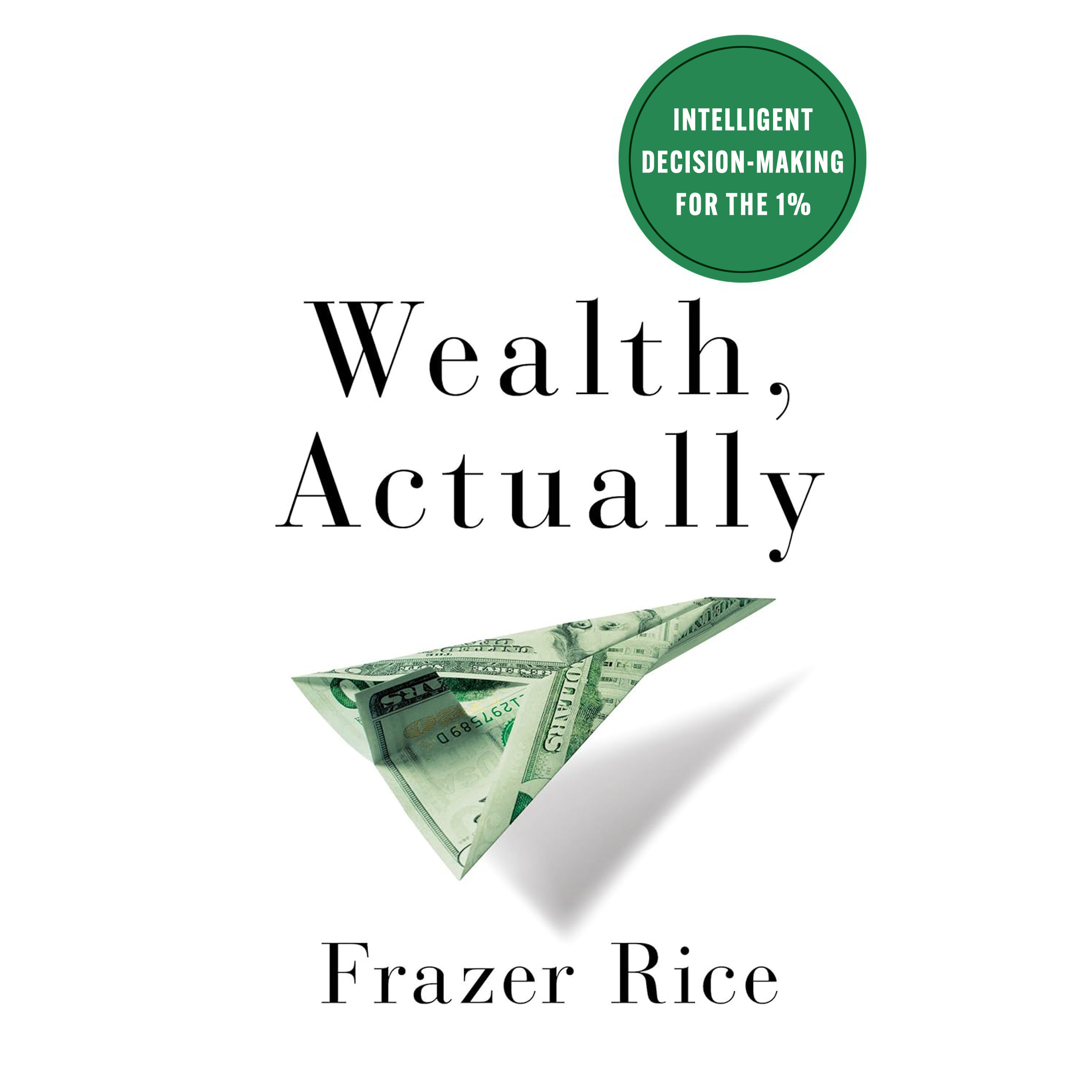
Wealth Actually
Frazer Rice
Covering the issues that affect business, entrepreneurship, wealth, trusteeship and culture.
Episodes
Mentioned books

Dec 26, 2019 • 31min
BREXIT: The “Pundificator” and “Wealth, Actually” take on Brexit
Haven and Frazer discuss Brexit and its Implications
First, some quick housekeeping: “Wealth, Actually” is setting the schedule to post content every Thursday. Interviews with entrepreneurs, experts, and tastemakers AND Haven Pell and I will take on noteworthy and timely topics. SUBSCRIBE today on most major podcast venues. Tell friends, leave comments and get in touch!
Second, HAVEN PELL and I are discussing Brexit. We take on . . . .
England’s Political Process (and how we got here)
Some of the Personalities Behind the Election (Boris et al . . . )
Labour vs. Tories (and others)
5 Years of Labour?
Ramifications for the UK and the EU
Potential Implications for the US (and the big decisions coming up in our electoral process)
Here are a couple of articles that are useful in understanding what just took place:
BRITISH ENDGAME: BRITISH VOTERS BACK BORIS AND BREXIT
https://pundificator.com/the-u-k-election-wont-solve-brexit/
Find Frazer’s book here:
https://www.amazon.com/Wealth-Actually-Intelligent-Decision-Making-1-ebook/dp/B07FPQJJQT
Dec 21, 2019 • 44min
COLLEGE: Haven Pell (“The Pundificator”) and Frazer Rice (“Wealth, Actually”) take on “College”
In a new regular feature on the “Wealth, Actually” Podcast, Haven Pell and I will take on a topic. (For our first one, we discuss the concept of “College” in modern American Society)
With some fun questioning and debate, we’ll try to make some sense of a subject that has some controversy, broad policy implications and a little bit of hypocrisy to unwind. Hopefully, it’s weighty and important. We hope to tackle things that are both evergreen and timely.
MEET HAVEN HERE: https://pundificator.com/haven-pell/
In this first segment, we take on “College”.
A broad, wide-ranging topic? You bet.
We address:
The cost
The pressure (on applicants and graduates)
The Insider vs the Outsider Viewpoint
STEM vs Liberal Arts
The Impact on Culture
A Year of Service
A Venue for People over 60?
Sports and University Life
Broader Ramifications on the Future of the U.S.
Look forward to WEALTH ACTUALLY and the PUNDIFICATOR as regular feature . . . as we take on current events and and some of the big concepts and issues facing society today. SUBSCRIBE, TELL YOUR FRIENDS AND LEAVE COMMENTS.
https://www.amazon.com/Wealth-Actually-Intelligent-Decision-Making-1-ebook/dp/B07FPQJJQT
Dec 21, 2019 • 21min
Leslie and Mark Begert, Co-Founders of Fabulingua
In this edition of “Wealth, Actually”, I was able to speak with Leslie and Mark Begert of the newly launched, Fabulingua. The company helps to accelerate the learning of second languages through a unique blend of technology, storytelling and gamification. The program is initially focussing on English and Spanish, but the Begerts have big plans for the company in the future. Today we get to hear more about their journey, the nuts and bolts of the company, and, finally, what it’s like being married entrepreneurs. Enjoy!
Here is the best way to learn about the company:
Device download link via App Store or Google Play Store: https://fabulingua.app.link/XMJRpLZ9h2
Website:Â https://www.fabulingua.com/
FB:Â https://www.facebook.com/fabulingua
IG:Â https://www.instagram.com/fabulinguakids/
Leslie Omana Begert and Mark Begert of Fabulingua
Co-founders of Fabulingua, a company borne out of her deep linguistics and psychology training.
Fabulingua is devoted to providing a revolutionary way for kids to learn a second language.
It uses many of the features of traditional natural story reading and modern gamified learning techniques so popular today.
Backgrounds:
Raised in Barcelona, Leslie is a true polymath with academic backgrounds linguistics, psychology and anthropology from Oxford and Cambridge.
She further cultivated her professional experience at Goldman and L’Oreal.
She has turned her attention to developing a better way for kids to learn a second language by founding Fabulingua with her husband, Mark.
Mark began his career in finance and worked internationally (especially in China with wireless company, Linkstone) before locating in Austin.
He began focusing on the clean energy economy at Long Branch Capital and then Meridian Solar before starting Fabulingua
The Importance of being bi-lingual today . . .
How does FabuLingua work?
What if there are no other native speakers in the household?
There are many products out there (Rosetta Stone, Pimsluer, Duoligo)- what makes FabuLingua different and better?
How does the gamification work? How does the storytelling accelerate the learning process? Answers to FAQ’s about the site can be found here:  https://www.fabulingua.com/faq-fabulingua
What is the plan for the business? Where can we start seeing it?
Describe running your own business and entrepreneurship. How do you balance the raising a family with entrepreneurship? What is it like working with your husband?
What is the best way for us to keep track of your progress or try FabuLingua out?
Interesting Facts about the Begerts.
Outro:
You will notice a new format for the podcast. I hope you enjoy it.
Extra special thanks to Matt Passy who has been extremely helpful in helping me reboot.
Please subscribe, tell your friends and leave comments,
https://www.amazon.com/Wealth-Actually-Intelligent-Decision-Making-1-ebook/dp/B07FPQJJQT
Nov 17, 2019 • 26min
Jasmine Nahhas di Florio, Effective Philanthropy in the Middle East (Education For Employment – EFE.ORG)
First, this is the first podcast with some formatting changes (including making it easier to subscribe via iTunes and Google Play) and the addition of music . . . let me know what you think of it . . . now back to the podcast.
One of the main themes in 2019 is the focus on effective philanthropy amongst the wealthy. Following the example of the Bill and Melinda Gates Foundation among others, measurable outcomes, specific examples of positive change and solutions delivered at scale are more and more important to the people making philanthropic investments. Interested in seeing an example of a difficult philanthropic problem identified and addressed, I spoke with Jasmine Nahhas di Florio, Senior Vice President, Strategy & Partnerships, of EFE-Global. It’s difficult to not be impressed by Jasmine’s background and the accomplishments of EFE. Founded by Ron Bruder after a successful career in real estate development, Jasmine and EFE have devoted their efforts to providing opportunity and structure to men and women in the MENA region (Middle East and North Africa). Listen with me as we learn about the problems in the area, the challenges overcome and some of the successes that they have been able to achieve in an area that many hear about, but few understand.
Below are some of the stories and links to EFE on Twitter and Facebook.
https://efe.org/success-stories/alumni-stories
Twitter: @EFE_Global
https://www.facebook.com/EFEGlobal/
1)Â Introduction
Jasmine Nahhas di Florio has over 20 years of experience spanning the nonprofit, philanthropy, government and private sectors. Having joined EFE in 2005, she has worked closely with the organization’s Founder and Chairman, Ronald Bruder, since its startup and is currently Senior Vice President for Strategy & Partnerships. Today, EFE is the leading youth employment and nonprofit job placement network in the Middle East and North Africa. Previously, Jasmine ran programs for private donors in Afghanistan for Afghan Women Leaders Connect at Rockefeller Philanthropy Advisors, and Arzu, a carpet social enterprise. Earlier in her career, Jasmine was a corporate attorney at the international law firm Davis Polk & Wardwell, and she also served as an attorney-advisor at the U.S. Department of Treasury. Jasmine consulted the United Nations (UNFIP) on private-public sector partnerships. A Rhodes Scholar, Frank Knox Scholar and Fulbright Scholar, she is a graduate of the University of Alberta, Oxford University and Harvard Law School. She also completed the Columbia Business School’s Social Enterprise Program Senior Leaders Program for Nonprofit Professionals and currently serves on the board of the Middle East Children’s Institute. Jasmine’s expert commentary on economic opportunity, women’s empowerment and youth issues has been featured in The Financial Times, Forbes, Stanford Social Innovations Journal, and Finance Middle East, among others.
2)Â How did the EFE come about and how did you become associated with it?
3) We watch the news and intuit the the economic situation in parts of the Middle East / North Africa are desperate. How does this relate to the problem that EFE tries to solve?
(EFE’s WHITE PAPER ON ECONOMIC DEVELOPMENT IN THE REGION)
4)Â This seems to be a widely supported goal- what are the challenges in addressing the regions?
5)Â What are the different options for programs?
6)Â How do you select your initiatives?
7)Â Describe some of the successes?
8)Â What are some of the future initiatives that are being considered?
9)Â How do we stay in touch with you and find out ways to be involved with EFE?
https://www.youtube.com/watch?v=ZZNdOo28u4c&feature=youtu.be
https://www.amazon.com/Wealth-Actually-Intelligent-Decision-Making-1-ebook/dp/B07FPQJJQT
Jun 4, 2019 • 45min
Tyrone Ross, Cryptocurrency Guru and Wealth Management Industry Voice
Frazer Rice and Tyrone Ross in the studio for “Wealth, Actually”
Welcome back to the “Wealth, Actually” podcast.
(Reminder:Â There is no investment advice here!)
Bitcoin and other cryptocurrencies have come back into the news as they have jumped around in price in the last two years.  To help us understand the crypto phenomenon, I spoke with Tyrone Ross of Noblebridge Wealth. An extra special thank you to Tyrone for his unique insight, not only into cryptocurrencies, but in describing his personal journey in the wealth management space. There are powerful lessons to be learned here.
Website:Â tyroneross.io
Twitter: @TR401
Tyrone is a start up investor and financial consultant. He has developed a deep expertise in the cryptocurrency space
He has been a go-to expert for many financial advisors as the space evolves. In addition to his cryptocurrency niche, Tyrone has carved out a burgeoning media and twitter presence with his outspoken and impactful views on the need for inclusion in the closed off world of financial advice. Tyrone is also officially the fastest person I have ever interviewed as he was an Olympic Qualifier in the 400m back in 2004!
(For those looking for excellent primer on the blockchain and how Bitcoin and other cryptocurrencies work, check out
BLOCKCHAIN BASICS: A NON-TECHNICAL INTRODUCTION IN 25 STEPS by Daniel Drescher. You will know more about how Crytpocurrencies and other technologies work [and their limits) than 99.9% of the public. I also explored the subject in two terrific WA podcasts with Blockchain investor, BART STEPHENS and the CEO and Co-Founder of the Kowala, EILAND GLOVER.)
Background:
Tell us a bit about your professional background . . .
Educational / Family experience
Olympic experience- what did you take from it? How did you use it?
How does that inform your advice to clients?
How did you get interested in cryptocurrencies?
Let’s get right to cryptocurrency.
What is the appeal of cryptocurrencies?
How is the world adopting cryptocurrencies into use cases?
How do you distinguish between the use of crypto and investing in crypto?
Describe what the market has done in the last couple of years . . .
How do we distinguish between Bitcoin, Ethereum, Ripple and the other currencies?
Who is equipped to parse through the differences?
Do you need to understand code? How many people really get the underlying structure of the cryptocurrencies?
Is blockchain- the technological underpinning behind cryptocurrencies and other uses- a better bet?
How would you get exposure to that space?
What are you telling clients?
Media and Marketing
When did you “know” you were an entrepreneur?
What was your marketing plan and how have you developed your practice?
We met through twitter and I am amazed at the power of that medium- what is your take?
Relationships within the #fintwit and media community (Josh Brown, Justin Castelli and Doug Boneparth, among others)- what are your impressions?
You tweeted an amazing video on the role of privilege and background in the investment community and lots of great media appearances- Where should these discussions be taking us? What’s next?
How do we stay in touch with you?
Website:Â tyroneross.io
Twitter: @TR401
DON’T FORGET TO PICK UP YOUR COPY OF WEALTH ACTUALLY- THE LINK IS BELOW.
https://www.amazon.com/Wealth-Actually-Intelligent-Decision-Making-1-ebook/dp/B07FPQJJQT
Feb 13, 2019 • 37min
John Farr, Movie Guru and President of the Bedford Playhouse
We’re back with another “Wealth, Actually” podcast. This time I got to speak with John Farr, a man who blended his love of movies with the world of movie house restoration. John Farr has helped restore one historic cinema (The Avon in Stamford) and did it again for the BEDFORD PLAYHOUSE in Bedford, NY.  Boasting a half-century love of great film and a career in advertising, John guides smart audiences to smart films through his website – BEST MOVIES BY FARR.
Quick bio- what was your background?
Ties to Bedford, career in advertising to interest in movies and that industry . . .
Best Movies by Farr . . . tell us how this came to be and what it is.
How did you go from being in advertising to becoming urban planner / real estate developer / media mogul?
Concept of movie theater as cultural center for a town
Brief history of the theater and the closing in 2015. Â
History of Bedford Playhouse – opened in 1947,
It survived my frequent attendance! from 1980 on . . .Â
What happened in 2015? Â
Experience with the Avon Theater in Stamford, Jacob Burns in Pleasantville, how did that translate to Bedford?
How did you get the various stakeholders around a reinvigorated concept? Â How did you meet Ken Horn and how did he get involved?
Groundswell and Description of process post-2015.
Challenges.
What can we look forward to in 2019 and beyond. Â
What are some of the interesting features that we should be on the lookout for?
Favorite movies generally:Â Hitchcock, Notorious, Vertigo, Cary Grant
Oscar picks
How do we stay in touch with the Playhouse, Best Movies by Farr and your other exploits?
www.bestmoviesbyfarr.com
www.bedfordplayhouse.org
Twitter: @BedfordPlayHse
Instagram:Â Â @bedfordplayhouse
Some additional notes on the history of the Bedford Playhouse:
The Bedford Playhouse is a former movie theater located in Bedford, New York which first opened its doors back in April 1947 to much fanfare. It operated continuously in the village for close to seventy years. It had a state of the art sound system and projection, “modern†air conditioning and an exterior designed to blend in with the historic village of Bedford. The owner and designer, Joseph H. Stearns, was a resident of Pound Ridge.
In 1983, the theater was divided into two smaller theaters, and much of its majesty and historic nature was lost. In early 2015, the theater closed.
A grass roots organization was formed under the leadership of Bedford resident John Farr, with the goal of transforming it into a not-for-profit arts house cinema, cultural center, and community hub. Over $8 million has been raised since then and construction of the new facility began in Spring, 2017.
https://www.amazon.com/Wealth-Actually-Intelligent-Decision-Making-1-ebook/dp/B07FPQJJQT
Dec 4, 2018 • 35min
Advising through Divorce with Storey Jones, Founder and CEO of dtour.life
I recently spoke with kick-butt entrepreneur, Storey Jones. She is an expert on divorce and family planning and has founded a company around her expertise. I’ll let her bio from her startup DTOUR.LIFE tell the story:
INTRODUCTION
“Been there. Done that. Survived and thrived. In 1998 Storey Jones married a technology entrepreneur. By 2001 his company had executed a successful IPO and then an accounting scandal brought everything crashing down leaving her in a highly complex seven-year legal quagmire that included every unimaginable financial and emotional challenge including a protracted high-conflict divorce and custody battle. Though she lost everything including her home, possessions, savings & retirement, she gained a purpose. She recognized the glaring chasm between the human experience of divorce and the legal system; she developed a new business model as a divorce consultant to assist men and women in becoming far more informed, prepared and supported as they navigate their own unique processes. She also worked closely with divorce legal teams to help their clients be better prepared participants in their own divorce.
After 12 years as a divorce consultant in the San Francisco Bay area, Storey has now leveraged that experience to build the first holistic end-to-end platform for divorce to bring innovation and technology to an outdated system. She is determined to change the experience by providing education and smart efficiency with expansive day-to-day tools that are designed so both clients and professionals can seamlessly work on and understand the same financial and other case-related data. dtour.life is designed from the ground up to fundamentally redefine this life transition for both spouses and professionals.
Prior to founding Lemon Tree Advisors and dtour.life, Storey was president of Addis, a bay area brand strategy and design firm where for 13 years she was integral to its growth and vision. Storey now lives in New York City with her teenage son; she has a B.A. from Colgate University.”
We covered an enormous amount of ground and I’m excited for you to hear her story:
Tell us a little bit about your background and help us understand how you came to start dtour.life
“I have a business background and when I found myself quite suddenly and surprisingly in the middle of a highly complex, expensive and protracted divorce at a young age. I realize now how naïve I was, and through my process, I was horrified at the system, the inefficient process and the lack of accountability of the professionals. It was one of those classic “If only I knew then what I know now,†and I couldn’t bear to think of anyone else going through it with the blind faith in the system that I had, so I developed a divorce consultancy to work with families. I had a consultancy for about 10+ years in the SF Bay area. Then, during those years, with a front row seat to the day-to-day workflow process, I had my second epiphany when I realized what was actually the root cause of so much of the massive cost and protracted timelines…that is what led me to develop and found dtour.life…)”
How does the process of divorce typically play out?Â
There are four fundamental layers to divorce:
Emotional
Financial
Children
Post-Divorce Lifestyle
Who are the advisers that surround this process?  Traditionally, everyone believes they just need a lawyer, is that still true? Are there other advisors to be considered?
I prefer a team model, and at first that might sound expensive, but in fact, it is the most efficient and cost-effective model. Every case has a unique set of factors be It the psychological dynamic between the spouses, the complexity of a financial issue, the ownership of a business, difficult child emotional or schedule issues, etc.  As we discussed earlier, divorce is this huge lifestyle arc that affects every single aspect of your life. It so far exceeds simply the legal issues that I encourage everyone to think a little differently about their own situation and what they actually need, and then, how to manage that.
What makes this an industry ready to disrupt?  (Or modernize/transform)
Many, many factors, but let me start with what I feel are the key reasons why it is not only imperative, but a fact that this industry MUST be disrupted
Technologically starved
Paper-based system
Simplistic level, all about paper
Faxing/pdfs
Cost and the Systemic issues breaking families
Families have evolved to two-income and they cannot afford it
We have to streamline it
Millennials
Will not tolerate
Millennial Lawyers will require digital
What are the factors that make it so brutal? We hear all these horrific stories about divorce, so what are the key factors that contribute to it being so difficult?
The honest answer is that it is different for everyone. There are unique family-specific issues and there are systemic issues.
I consider myself an expert in the human experience of divorce, and what I learned early on is that while there are certainly patterns, every family has a unique set of pain points be it the emotional, the financial, the children, the extended family, the grandfather clock, etc. At the heart of every divorce is the relationship between the two spouses. That dynamic and those behaviors will do a lot to drive the process and then unfortunately, the system takes over.
Systemic issues that contribute to the brutality of divorce include the confusion of what to do, how to do it, the enormous cost, the manner in which lawyers conduct themselves, etc. And we think “fair†exists, but everyone has a different version of fair and it can be gut-wrenching to be handed a response to a motion, an evaluation, a support calculation, a judgment, whatever it might be and have it be polar opposite of what you feel is fair and just.
What does dtour.life do to help?  Can this be used by both spouses? Who is the audience and can this be used by both spouses? How do people see the savings and efficiency?
When you launch new technology you have to identify where you believe you can make the biggest difference, immediately. Â So in our initial release we have focused on aspects of the day-to-day workflow that we feel is at the core of the inefficiency, inaccuracies cost and protracted timelines.
Dtour.life is designed for multiple audiences so that it can have a comprehensive and dimensional impact. It is designed for all spouses and all professionals so that the stakeholders on the team be it the lawyer, the lawyer’s paralegal, the mediator, the financial experts, etc., can have access to the data, real time. And, we are working with corporations to make it available to their employees as an employee benefit due to the disastrous effects divorce have in the workplace. And, we are making t available to all legal aid and pro bono groups for free because we want to support those families in need and the lawyers who give of their time.
What’s next/How has the entrepreneurship side of things been?
The most difficult product or service to introduce to the market is something new. It is easy to market and sell another form of what we already know.
If this was a platform geared to spouses in the middle of or already divorced, we would have more users than we would know what to do with, for one reason. They know exactly what the process is like and value the features. But we are selling to spouses who right now are considering the move, likely haven’t admitted it to anyone, and are just finding the courage to call a lawyer. And, we are selling to family law attorneys and professionals who already have a system, inefficient, if you ask me, but a system that they are loathe to change. Corporations have been very interested in this, but they move at a snails pace, so as with any new technology, we are educating the market, we are designing new and improved features and UX every day, and our team is 100% dedicated to making a difference and this will make a difference.
How do we find out more? How do we keep track of your progress?
Dtour.life! We keep it updated with new feature announcements and press, and we have an ever-expanding knowledge center with content for anyone who wants to learn more about any aspect of divorce.
https://www.amazon.com/Wealth-Actually-Intelligent-Decision-Making-1-ebook/dp/B07FPQJJQT
Oct 14, 2018 • 29min
Personal Finance Author, Jonathan Clements
This is a special “Wealth Actually” podcast. I spoke with an author and educator that has had a major impact on financial literacy and wealth management. He is also a terrific guy to boot! Over the course of our discussion, While I felt like I was nodding my head in agreement a lot (that’s the whoosh near the microphone), My guest’s nuanced views on wealth and his consistent and deep writing taught me a lot about the importance of great advice, clear thinking and long-term planning.
Jonathan Clements is the founder and editor of HUMBLEDOLLAR.COM. He’s also the author of eight personal finance books, including his latest, “From Here to Financial Happiness.â€Â Born in England and educated at Cambridge University, Jonathan spent almost two decades at The Wall Street Journal in New York, where he was the newspaper’s personal finance columnist. He also worked for six years at Citigroup as Director of Financial Education for the U.S. wealth management business. You can find him on on Twitter (@ClementsMoney) and Facebook (https://www.facebook.com/ClementsMoney)
FROM HERE TO FINANCIAL HAPPINESS
Background:
Tell us a little bit about your background
How did your career evolve?
How did writing become a part of it?
“From Here to Financial Happiness . . . in 77 Days”
Where did the need for this book come from?
“Just because it’s not complicated doesn’t mean it’s easy!”
The Power of Compounding- why it’s vital.
I’m impressed with the structure of the book and breaking down self-improvement steps in a series of days. How did you decide on that?
Enjoyed the saving for retirement section. It has to happen first even though it’s a liability that is farthest away.
What works and what doesn’t when trying to teach financial discipline to people whose
After tax, After fee, After Inflation (spending); why is it so hard for wealth managers to frame things in these terms?
Estate planning – necessary for everyone
Friendly debate . . . whole life insurance as a way to save for LTC (instead of LTC insurance);Â The emergence of HSA’s . . .
Where should you expect an advisor to add value? Robo-advice, tax advice, sounding board, investment performance
State of the wealth management industry . . . fee compression, business models, the role of the advisor, consolidation, service standards
Humble Dollar- terrific blog on investing and general financial literacy- what can we do as a country to help make people make better decisions?
Contact
How can we get a hold of “From Here to Financial Happiness.”
How do we find out more about your other writings?
How do we keep track of your whereabouts?
To find my book, “Wealth, Actually”, click below!
https://www.amazon.com/Wealth-Actually-Intelligent-Decision-Making-1/dp/1619618605/ref=sr_1_2?s=books&ie=UTF8&qid=1539574775&sr=1-2&keywords=wealth+actually
Oct 5, 2018 • 33min
The Impact Coalition’s Matt Posner: “Municipal Bonds: The Original Impact Investment?”
“MUNICIPAL BONDS: THE ORIGINAL IMPACT INVESTMENT?”
For this first WA episode, I spoke with Matt Posner the Director of the Impact Coalition. We attack a bunch of topics centered around the emergence of the municipal bond markets’ increased relevance in the impact investing world. Matt is helping to coordinate through the efforts of the Impact Coalition.
THE IMPACT COALITION (www.theimpactcoalition.com) is working with the largest underwriters, investors, and state and local governments to build a new language to analyze public infrastructure projects. The Coalition allows market practitioners to have a universally recognized Social Rate of Return on projects that improve the daily lives of our communities, and as a result, lower the costs for those that are raising funds for the public good.
Matt has spent the last 15 years analyzing the intersection of public policy, financial markets and state and local governments. Prior to the Impact Coalition, Matt was Head of Market Strategy for a venture-backed start-up aiming to modernize public finance through technological advances, called Neighborly. During his tenure there, the firm successfully raised a Series A round and started an asset-management firm with a focus on socially responsible investing. It was during this time that Matt dove into the impact space and realized its true potential to help make positive community changes around the world.
Prior to Neighborly, Matt started a consulting and research firm, Court Street Group, which provides weekly analysis of public finance along with several municipal bond market veterans. He is an Advisor to that company and writes for them. He began his career writing about Nuclear Energy and was a Managing Director at a boutique public finance research firm, Municipal Market Advisors.
Matt has testified before the U.S. Senate Committee on Finance on infrastructure finance problems facing the country and spent years educating staff in the U.S. House of Representatives, the U.S. Senate, the U.S. Treasury Department and the Securities and Exchange Commission, among others, on public policy and market implications. Matt has been quoted on his views and published in the Wall Street Journal, the New York Times, Bloomberg News, The Bond Buyer, the Municipal Finance Journal, and the Government Finance Officers Association’s Government Finance Review, among others.
Matt doesn’t lack for international experience! He spent most of his childhood abroad in Senegal, The Gambia, Bolivia and Peru. He is a graduate of Georgetown University with degrees in Government and History.
The format of our discussion is below.
Questions
Background:
Tell us a little bit about your background
How did your career evolve?
The Impact Coalition:
What problem was it formed to solve? Why do we need a new language for public infrastructure?
What does it do?
Who is a part of it?
Various issues in the Municipal Space
Vast number of public issues
Some universal language, some language particular to state law
Problems with indexing
Intensive manual reading and credit analysis
Predicting interest rates
Different levels of information
Emerging technology AI, ML
Active v. Passive Management
How would the IC’s work help the RIA community?
What is there problem in dealing with clients fixed income needs?
Fixed income ignored?
Difficult to tell the fixed income story?
Difficult to tell the ESG story? Municipals: The Original Impact Investment?
Munis simply a tax free income play or something more?
Tech issues
International Investing community
Confused by lack of universal vernacular around public infrastructure
Interest in infrastructure- unsure about “impact”
Little experience in munis- Americans have long retail history- don’t understand the disconnect
Grappling with increasing interest rates?
Better to go with high dividend equity infrastructure on after tax basis?
Contact
How do we keep track of the Impact Coalition’s progress? (www.theimpactcoalition.com)
How do we keep track of your whereabouts?
Some quick news which you all probably guessed: the Frazer Rice podcast has been rebranded “Wealth, Actually” to align with my new book on the issues around wealth management. And don’t forget about “Wealth, Actually” the book:
https://www.amazon.com/Wealth-Actually-Intelligent-Decision-Making-1-ebook/dp/B07FPQJJQT
Aug 31, 2018 • 23min
Frazer Rice discussing “Wealth, Actually” on Bookstr’s Facebook Live Channel
https://frazerrice.com/wp-content/uploads/2018/08/Frazer-Rice-FB-Live.mp4
Thanks to David Grasso, Scott Richmond and the team at Bookstr for having me on their Facebook Live channel. It’s always a pleasure to discuss “Wealth, Actually.”
A link to the book is here and don’t forget to leave comments on the Amazon site.
https://www.amazon.com/Wealth-Actually-Intelligent-Decision-Making-1-ebook/dp/B07FPQJJQT

