
Entrepreneur Intel
Wes Mathews
Welcome to Entrepreneur Intel, a podcast where we discuss the most important strategies for success from amazing entrepreneurs. Host Wes Mathews sits down with business owners to learn about how they got started running their own business, what helped them succeed and the biggest lessons they learned along the way.
Be sure to catch new episodes every Thursday morning, and to make sure you never miss out on any insights, don’t forget to subscribe to Apple Podcasts, Spotify, You Tube or wherever you get your podcasts.
This show is sponsored by Stealth Consulting, your Fractional CMO. Stealth provides the roadmap and accountability to reach your business and marketing goals. Learn more at https://stealthconsulting.com/
Be sure to catch new episodes every Thursday morning, and to make sure you never miss out on any insights, don’t forget to subscribe to Apple Podcasts, Spotify, You Tube or wherever you get your podcasts.
This show is sponsored by Stealth Consulting, your Fractional CMO. Stealth provides the roadmap and accountability to reach your business and marketing goals. Learn more at https://stealthconsulting.com/
Episodes
Mentioned books
Jul 4, 2024 • 40min
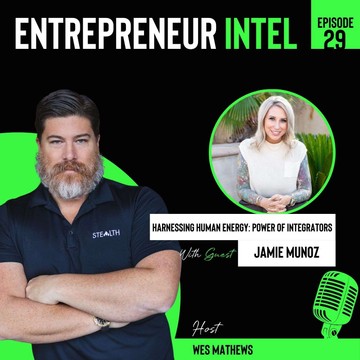
Harnessing Human Energy: Power of Integrators - Jamie Munoz - Entrepreneur Intel - Episode # 29
Want to bring your Idea to the next level? Most visionary entrepreneurs struggle with implementing their ideas onto paper. Jamie Munoz is a Fractional Integrator with Catalyst Integrators. She teaches the reason for an Integrator, process of Fractional Integration and how it can help bring your vision to life. Enhance your ideas and businesses to optimize your time and outcomes. Takeaways:The importance of harnessing human energy effectively, whether personal or within a team, is emphasized. This involves self-awareness and inner work.Discuss how professionals act as fractional COOs, focusing on operational execution and implementing the EOS framework. They help translate the visionary's ideas into actionable plans and ensure their implementation across the organization.Jamie talks about how unlike full-time roles, fractional integrators provide flexibility and scalability, making them ideal for smaller companies or during growth phases without the need for a full-time executive.The discussion also touches on personal experiences, such as transitioning from a full-time integrator role to founding Catalyst Integrators. This shift highlighted the need for fractional integrators in smaller organizations and the benefits they bring, especially in times like the COVID-19 pandemic when virtual operations became crucial.The conversation explores how fractional integrators build trust within leadership teams and organizations. They act as unbiased third-party facilitators who integrate into company culture while providing expertise and a fresh perspective.Quote of the Show:“The integrator role is a very clear seat that plays a puzzle piece to the visionary.” - Jamie MunozLinks:LinkedIn: https://www.linkedin.com/in/jamie-munoz/ Website: https://www.catalystintegrators.com/ Facebook: https://www.facebook.com/p/Jamie-Munoz-10042848/?_rdr Ways to Tune In:Spotify: https://open.spotify.com/show/2I9O1Du2CFBfhGkvR1Oyem Apple Podcasts: https://podcasts.apple.com/us/podcast/entrepreneur-intel/id1720785558 Amazon Music: https://music.amazon.com/podcasts/4d7fcd6e-e68f-4855-bb8a-8f872fc5b799 Podchaser: https://www.podchaser.com/podcasts/entrepreneur-intel-5556614
Jun 27, 2024 • 46min
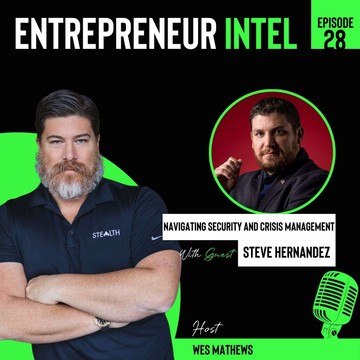
Navigating Security and Crisis Management - Steve Hernandez - Entrepreneur Intel - Episode # 28
In this insightful conversation, Wes chats with Steve Hernandez, the CEO and President of The North Group. Steve shares his journey from being a military personnel to becoming a prominent figure in the intelligence and security industry. He discusses the importance of situational awareness, the complexities of handling threats in both personal and corporate realms, and provides valuable advice on business risk management. Additionally, Steve dives deep into the dark world of human trafficking and the importance of safeguarding against digital exploitation. Entrepreneurs and leaders will find this episode particularly useful as Steve provides pragmatic advice on crisis management, stakeholder protection, and the evolving landscape of security. Takeaways: Leaders must have situational awareness and preparedness. This means being acutely aware of the environment and potential risks your organization may face and having plans in place to address these risks before they materialize.Create and maintain strong communication channels. Ensure that every team member knows they are not alone, and foster a culture of openness where concerns and observations about potential threats can be shared and addressed promptly.Invest in pre-crisis risk management. Being proactive in identifying and mitigating potential risks is far less costly and more effective than dealing with the aftermath of a crisis. This includes having security assessments, creating emergency protocols, and educating employees on these measures.Understand and prepare for the broader impacts of risks. Analyze the second and third-order effects of potential risks. For instance, supply chain disruptions can have cascading impacts on various aspects of the business, from financial health to workforce stability.Leverage technology for security and risk management. Utilize advanced tools for data collection, analysis, and threat monitoring. Ensure your company's data and communications are secure, especially when dealing with sensitive information or traveling internationally.Adopt a trust-but-verify mindset in professional relationships. While it's essential to foster trust within your team and with external partners, verification processes should be in place to prevent exploitation of that trust, ensuring the integrity and security of operations.Focus on building resilient systems and processes. Ensure that your company has robust systems to handle disruptions, including backup plans and redundancies to maintain operations under various scenarios. Continuous refinement and testing of these systems are crucial to organizational resilience.Quote of the Show:“You can't have a company full of donkeys when you're trying to raise thoroughbreds.” - Steve HernandezLinks:LinkedIn: https://www.linkedin.com/in/stevehernandeztng/ Website: https://tngdefense.com/ Ways to Tune In:Spotify: https://open.spotify.com/show/2I9O1Du2CFBfhGkvR1Oyem Apple Podcasts: https://podcasts.apple.com/us/podcast/entrepreneur-intel/id1720785558 Amazon Music: https://music.amazon.com/podcasts/4d7fcd6e-e68f-4855-bb8a-8f872fc5b799 Podchaser: https://www.podchaser.com/podcasts/entrepreneur-intel-5556614
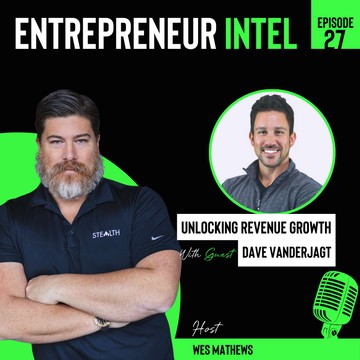
Jun 20, 2024 • 43min
Unlocking Revenue Growth - Dave VanderJagt - Entrepreneur Intel - Episode # 27
Meet Dave VanderJagt, a Fractional CRO with over 15 years of experience in developing and managing high-performing B2B and B2C revenue teams. Dave discusses the critical role of a Fractional CRO, especially for companies under $20 million in revenue, and how aligning marketing, sales, and customer success is essential for growth. Dave joins Host Wes Mathews to explore the challenges of transitioning from founder-led sales to a structured team approach, the importance of having the right data and process-oriented models, and the role of AI in sales.Takeaways:Success in creating revenue does not depend on inherent superpowers but on a data-driven approach to marketing, sales, and customer success. Having the right people in the right roles is crucial for any organization's go-to-market strategy.Your team needs to work cohesively across functions like sales, marketing, customer success, and customer support to achieve significant growth. The CRO is responsible for building, running, and leading this unified team to maximize growth potential.For organizations, even those pre-revenue, having a Chief Revenue Officer can be highly beneficial to structure and lead revenue generation efforts, especially if the company is funded and must quickly return investor dollars.For effective CRM usage, start by using it consistently to manage your client base and revenue, then analyze where your leads and deals originated to recognize your successful strategies.To succeed in sales-led growth companies, it's crucial to quickly learn, build, execute, and pivot effectively. Focus on tracking key leading indicators such as meetings booked, qualified opportunities, and pipeline progression to validate your efforts and drive results.When selecting a CRM, consider the internal expertise and proficiency your team already has with a particular platform to avoid potential opportunity costs associated with learning a new system. The first priority upon gaining traction and initial revenue is to understand the unit economics of your business, such as customer acquisition costs and annual contract value, to inform your sales strategy.Quote of the Show:“If you think it’s just a sales or marketing game, you’re going to hamper your growth.” - Dave VanderJagtLinks:LinkedIn: https://www.linkedin.com/in/dvanderjagt/ Website: https://vanderjagtcro.com/ Ways to Tune In:Spotify: https://open.spotify.com/show/2I9O1Du2CFBfhGkvR1Oyem Apple Podcasts: https://podcasts.apple.com/us/podcast/entrepreneur-intel/id1720785558 Amazon Music: https://music.amazon.com/podcasts/4d7fcd6e-e68f-4855-bb8a-8f872fc5b799 Podchaser: https://www.podchaser.com/podcasts/entrepreneur-intel-5556614
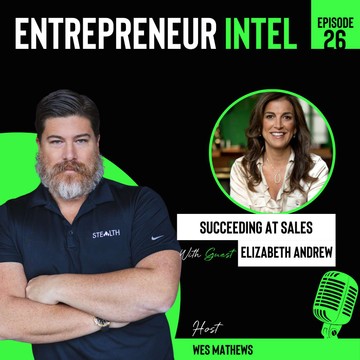
Jun 13, 2024 • 40min
Succeeding At Sales - Elizabeth Andrew - Entrepreneur Intel - Episode # 26
Joining the show this week is a 5x sales leader who helps SaaS startups find opportunities to break new ground and make things grow. Please welcome to the show, CEO and Founder at Elizabeth Andrew consulting, Elizabeth Andrew!Elizabeth sits down with Host Wes Mathews to dive into some of the biggest challenges startup founders face. Elizabeth shares the challenges of founder led sales, the obstacles to overcome when returning to the workforce and the importance of learning on the job. Takeaways: One of the most important lessons in entrepreneurship is that anything is possible, even amidst challenging times. Never give up, as success is achievable by anyone willing to persevere.The most significant obstacle for people returning from a career break is the perception that they are out of touch with current tools and trends. To combat this, immerse yourself in industry events and actively seek out learning opportunitiesStartup success heavily depends on effective sales; relying solely on the product's intrinsic value is a common mistake. Early sales hires should be strategic, avoiding premature VP appointments or inexperienced salespeople to ensure sustainable growth.Consider being conservative with funding even when it is available, to avoid running out of funds. Be sure to cherish small milestones in your startup journey, as these moments signify growth and progress.If you're entering the job market without prior experience, especially post-2020, you need a strong work ethic and motivation to succeed. Ensuring team engagement in a remote or hybrid work environment is crucial.It is important to conduct an audit to identify and address weaknesses within a company. Establishing a clear ideal customer profile and implementing effective sales processes can significantly improve outreach and sales functions.Quote of the Show:“I like wearing a lot of hats. I'm good in the startup space. I like building, I like growing, I like solving problems.” - Elizabeth AndrewLinks:LinkedIn: https://www.linkedin.com/in/elizabethaandrew/ Website: https://elizabethandrew.com/ Ways to Tune In:Spotify: https://open.spotify.com/show/2I9O1Du2CFBfhGkvR1Oyem Apple Podcasts: https://podcasts.apple.com/us/podcast/entrepreneur-intel/id1720785558 Amazon Music: https://music.amazon.com/podcasts/4d7fcd6e-e68f-4855-bb8a-8f872fc5b799 Podchaser: https://www.podchaser.com/podcasts/entrepreneur-intel-5556614
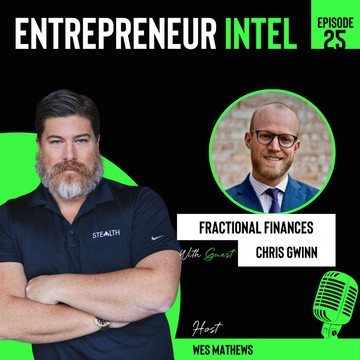
May 30, 2024 • 42min
Fractional Finances - Chris Gwinn - Entrepreneur Intel - Episode # 25
This week’s guest has a rich background in corporate finance, and experience managing over $85M in assets. Please welcome to the show, Founder and Fractional CFO at Midwest CFOChris Gwinn! Chris sits down with Host Wes Mathews and shares invaluable lessons from his entrepreneurial journey, emphasizing the importance of finding high-demand, recurring revenue models. Chris also offers practical tips for business owners to ensure profitability, strategic planning, and financial forecasting. Takeaways: Entrepreneurs should focus on finding and selling a product or service that solves a pressing, high-urgency problem for customers, which makes sales easier and ensures more predictable cash flows. To increase recurring revenue, form strategic partnerships and focus on understanding customer purchase frequency and proactively meeting their needs rather than just maximizing short revenue spikes. In order to effectively manage your business finances, start by ensuring your financial data is clean and well-organized to understand the profitability of different services and make strategic decisions. To accurately determine your gross margin, subtract the costs of producing your goods or services from your revenue, ensuring all expenses are cleanly categorized. Understanding industry-specific margins leads to better financial management.Secure financing when business is thriving, not just when in need, to ensure you have the resources to fuel growth during challenging times. Maintain a cash reserve of 200% to 400% of monthly overhead to weather economic storms and seize opportunities.To effectively manage business finances, focus on key performance indicators such as revenue, profitability, and customer metrics, while understanding essential financial statements like accounts receivable, balance sheets, and profit and loss statements.Business owners should consider adopting the EOS framework for its simplicity and effective operational models. Success hinges on a professional EOS implementer and a strong integrator (COO) to align goals and ensure smooth execution.Quote of the Show:“It's going to be really, really difficult to figure out how to create a profit in your business if you don't understand what your margin is.” - Chris GwinnLinks:LinkedIn: https://www.linkedin.com/in/chris-gwinn-cfa-96383b26/ Website: https://midwestcfo.com/ Ways to Tune In:Spotify: https://open.spotify.com/show/2I9O1Du2CFBfhGkvR1Oyem Apple Podcasts: https://podcasts.apple.com/us/podcast/entrepreneur-intel/id1720785558 Amazon Music: https://music.amazon.com/podcasts/4d7fcd6e-e68f-4855-bb8a-8f872fc5b799 Podchaser: https://www.podchaser.com/podcasts/entrepreneur-intel-5556614
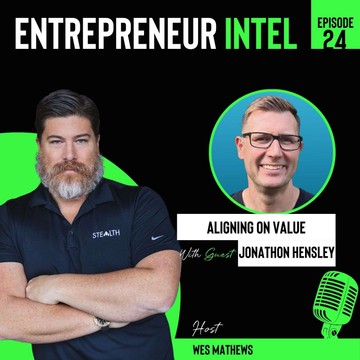
May 23, 2024 • 43min
Aligning On Value - Jonathon Hensley - Entrepreneur Intel - Episode # 24
Join Host Wes Mathews on Entrepreneur Intel as he sits down with Jonathon Hensley, CEO and Chief Product Officer at Emerge. Jonathan shares profound lessons on leadership, strategy, and leveraging AI in business. Learn about his journey from Silicon Valley enthusiast to successful entrepreneur, and get insights into building a strong vision, fostering team alignment, and driving business growth. This episode is packed with valuable advice for both new and seasoned entrepreneurs. Takeaways:The most important lesson in entrepreneurship and leadership is to ensure alignment between your company's vision, team's work, and market offerings. Help every individual understand their impact and contribution towards the company's goals.When it comes to AI, it's essential to understand the cycle it is in and the potential it holds. As we move beyond the hype, focus on leveraging AI to enhance expertise and human connections.Embrace challenges and seek opportunities for growth in areas where you feel uncomfortable. Adapt and evolve your business to align with market and technological changes for long-term success.When building a team in a startup, it's crucial to understand the outcomes needed for each role and hire individuals who share the passion to achieve that success. Clear goals and aligning roles with outcomes are key to effective team building.Entrepreneurs should focus on creating a vision that is both inspiring and measurable, ensuring that it provides clear direction and purpose to the team. Aligning the vision with specific objectives that serve a greater purpose can motivate the team and drive success in achieving long-term goals.Every entrepreneur needs to understand the fundamentals of strategy, and planning is not strategy. Strategy necessitates knowing the problem you are solving, and the value you bring customers. From there you can strategize what you will bring to customers. The core of a successful product revolves around value. Before you start building, step back and assess the value you are creating, and how what you are building is going to actually deliver on the value. Quote of the Show:“It fundamentally has to start with what's the problem that you want to solve, right?” - Jonathon HensleyLinks:LinkedIn: https://www.linkedin.com/in/jonathonhensley/ Website: https://www.emergeagency.com/ Book Link: https://a.co/d/aKcbwog Ways to Tune In:Spotify: https://open.spotify.com/show/2I9O1Du2CFBfhGkvR1Oyem Apple Podcasts: https://podcasts.apple.com/us/podcast/entrepreneur-intel/id1720785558 Amazon Music: https://music.amazon.com/podcasts/4d7fcd6e-e68f-4855-bb8a-8f872fc5b799 Podchaser: https://www.podchaser.com/podcasts/entrepreneur-intel-5556614
May 16, 2024 • 45min
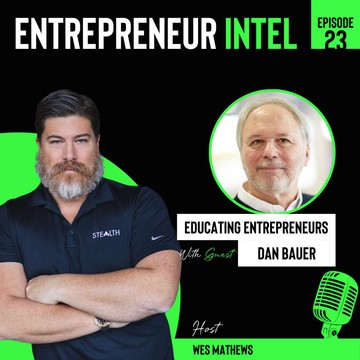
Educating Entrepreneurs - Dan Bauer - Entrepreneur Intel - Episode # 23
Joining host Wes Mathews on this week’s episode of Entrepreneur Intel is a founder who has been on the Inc 5000 list several times, and is currently educating the next generation of entrepreneurs. Our guest is none other than President of Bauer and Associates, and Founder & Entrepreneur-in-Residence of Inc Magazine's Inc. Young Entrepreneurs, Dan Bauer!Wes and Dan sit down to dive into the work of Inc’s young entrepreneurs, and the skills that are essential to any entrepreneur. Dan shares the importance of hiring the right people, the need to not fall in love with your first idea, and how to encourage organic interactions between clients and employees. Takeaways:As an entrepreneur, it’s important to stay fluid with your ideas. While you may be drawn to your first idea, an overfocus on it can be restrictive. Pivoting from an idea you love to one you like, but can fall in love with works quite well. When you consult with clients, it’s important to have the right employees. Hire and train slowly, but don’t be afraid to fire fast. One wrong employee can cause multiple clients to leave. There are four main components of entrepreneurship to keep in mind. Entrepreneurs need to be focused on gaining knowledge, having the right perspective, building a strong network, and developing a strong brand. While there have been previous entrepreneurship training programs aimed at students, they often left out key elements. Programs that were run by colleges had too much of an academic focus, and others are too tech focused. For students planning for their future, becoming an entrepreneur should be on their radar. Many employers are less focused on pure academic accomplishments, and successful business acumen is desirable. A good leader is one who has strategies and frameworks for employees, but still allows them to work organically with clients. Allowing for that organic element creates stronger bonds with clients. Quote of the Show:“It's the second or third iteration of it [an idea] that really hits the sweet spot.” - Dan BauerLinks:LinkedIn: https://www.linkedin.com/in/bauerdan/ Website: www.bauer-inc.com Website: https://www.nslcleaders.org/youth-leadership-programs/business-entrepreneurship/ Ways to Tune In:Spotify: https://open.spotify.com/show/2I9O1Du2CFBfhGkvR1Oyem Apple Podcasts: https://podcasts.apple.com/us/podcast/entrepreneur-intel/id1720785558 Amazon Music: https://music.amazon.com/podcasts/4d7fcd6e-e68f-4855-bb8a-8f872fc5b799 Podchaser: https://www.podchaser.com/podcasts/entrepreneur-intel-5556614
May 9, 2024 • 46min
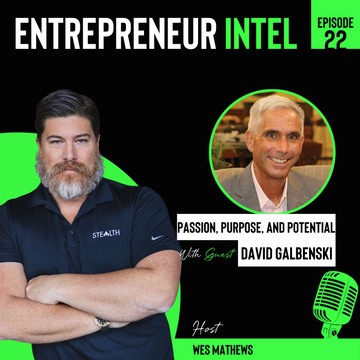
Passion, Purpose, And Potential - David Galbenski - Entrepreneur Intel - Episode # 22
Today’s guest is an entrepreneur who has successfully exited a company, wrote two books, and co-founded an organization that advocates for increased awareness around liver transplants. He’s served as the Global Chair of EO, and helps teach entrepreneurs how to be their best. Please welcome to the show, Co-Founder of Living Liver Foundation and the Global School of Entrepreneurship, David Galbenski!David joins Host Wes Mathews for a conversation on the challenges of rapid growth. David shares what it takes to make the INC 500 list twice, the importance of having your integrator, and when the right time to sell is. Takeaways:As an entrepreneur, you need to remember the three P’s: Passion, Purpose, and Potential. If you can align yourself at the intersection of all three, you increase your chances at whatever you do. While you may have internal motivators for selling a company, it’s important to wait for the right external factors to sell. When the economy is strong, the offers that come in will be higher. Waiting for the right offer will maximize profit. Fast growth is good, but you have to be prepared for the consequences. As you continuously move you will be outstripping your leadership capacity, the level of quality you want, and your own capital. Balancing growth with these factors is crucial. Letting your clients pay you net 30 or 60 is gracious, but can have significant risks during times of recession. If one of your clients goes bankrupt, and you are an unsecured creditor, you won’t be able to recuperate your losses. When looking to sell, you always want to pursue a few potential buyers at the same time. By comparing buyers, you can get a clearer picture of what your company is worth, and multiple buyers can increase the closing price. While the financial aspect of selling a business can be exciting, there can be an emotional toll as well. To ease things, make sure you are taking care of employees through the transaction, and that you have a clear plan for post exit. As a visionary entrepreneur, having an integrator is crucial as they can take your ideas and put them into action. It doesn’t matter if your integrator is your spouse, best friend, or total stranger, as long as you have one. Quote of the Show:“Fast growth I realized is like being on one of the craziest roller coaster rides in the world.” - David GalbenskiLinks:LinkedIn: https://www.linkedin.com/in/davidgalbenski/ Website: https://www.gse.mba/ Website: https://livingliver.org/ Website: https://edwardlowe.org/ Book Link: https://a.co/d/5S3aW0M Book Link: https://a.co/d/1wbOmUI Ways to Tune In:Spotify: https://open.spotify.com/show/2I9O1Du2CFBfhGkvR1Oyem Apple Podcasts: https://podcasts.apple.com/us/podcast/entrepreneur-intel/id1720785558 Amazon Music: https://music.amazon.com/podcasts/4d7fcd6e-e68f-4855-bb8a-8f872fc5b799 Podchaser: https://www.podchaser.com/podcasts/entrepreneur-intel-5556614
4 snips
May 2, 2024 • 43min
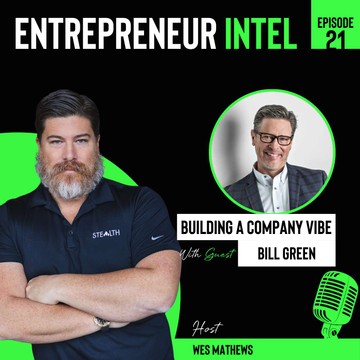
Building A Company VIBE - Bill Green - Entrepreneur Intel - Episode # 21
Bill Green, founder of Affect Advisors, shares insights on authentic leadership and building a company vibe. He emphasizes living authentically, coaching with care, and focusing on a niche in business. Avoiding hourly rates, he suggests pricing based on value delivered to clients.
Apr 25, 2024 • 45min
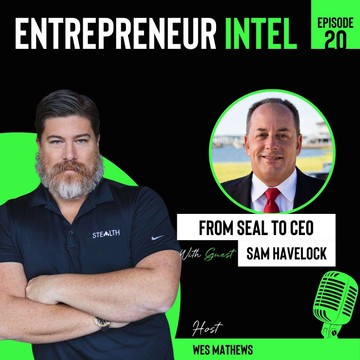
From SEAL To CEO - Sam Havelock - Entrepreneur Intel - Episode # 20
Joining the show this week is a former Navy SEAL and Marine who uses his entrepreneurial expertise to inform a community of over 30,000 strong. Please welcome to the show, CEO and Founder of the SOFX Network, Sam Havelock! Sam sits down with Host Wes Mathews to explore the importance of having focus, and other strategies for entrepreneurs. Sam shares the importance of building trust, how privacy is an important aspect of community, and how to cut through the noise. Takeaways: Focus is the most important thing for any entrepreneur to have. Many entrepreneurs have a strong vision and a drive to feed their own intellectual curiosity. However, without focus, you can end up chasing every idea you create. When you work in a profession that is heads down and fast paced, you often don’t have time to understand what the rest of the world is saying about you. Having a quick access feed that aggregates and summarizes allows professionals to stay in the loop. When creating media, it’s important to tailor your content to your audience. For the special forces community, quick updates on happenings matter more than opinions on command decisions. While entrepreneurs aren’t running secret missions, they do have some overlap with special operations forces. Both groups are under-resourced, have more tasks to accomplish than time to accomplish them, and are less risk averse than peers. In the current media landscape of news and social media, it is a challenge to cut through the noise. The best way to reach an audience is by targeting a specific niche and creating a high trust environment. Creating a walled garden for your community can be attractive to users as it creates a sense of privacy. Users who don’t have to worry about their data being sold or used to train AI will have a better connection with your community. While situations don’t always pan out as expected, it’s always worth taking a swing at an idea. Failure is better than regret, and if you can afford to take those risks, you should take them. Quote of the Show:“It’s really all about the people.” - Sam HavelockLinks:LinkedIn: https://www.linkedin.com/in/samhavelock/ Website: https://www.sofx.com/ Instagram: https://www.instagram.com/sam.havelock/?hl=en Ways to Tune In:Spotify: https://open.spotify.com/show/2I9O1Du2CFBfhGkvR1Oyem Apple Podcasts: https://podcasts.apple.com/us/podcast/entrepreneur-intel/id1720785558 Amazon Music: https://music.amazon.com/podcasts/4d7fcd6e-e68f-4855-bb8a-8f872fc5b799 Podchaser: https://www.podchaser.com/podcasts/entrepreneur-intel-5556614

