

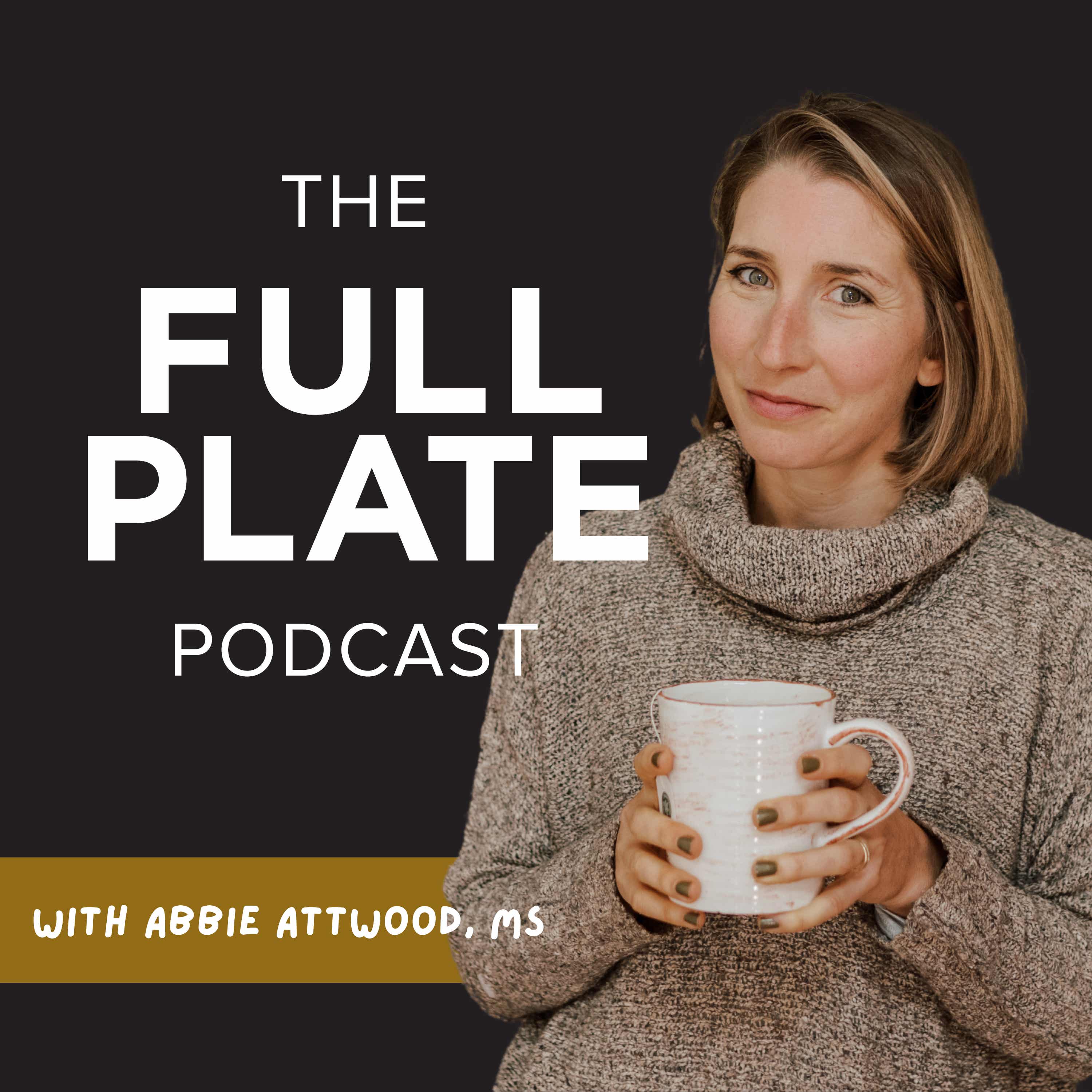
The Full Plate Podcast with Abbie Attwood, MS
Full Plate by Abbie Attwood
Full Plate is a podcast about healing from diet culture, creating peace with food, reclaiming body autonomy and trust, and taking a weight-inclusive approach to our well-being.
Each week, Abbie interviews guests or answers listener questions that explore our relationship to food and our bodies.
Abbie is an anti-diet nutritionist with a master’s in nutrition and integrative health. She is also the founder and owner of Abbie Attwood Wellness, a virtual private practice dedicated to weight-inclusive care, food freedom, body image healing, and dismantling diet culture.
Find Full Plate on Instagram @fullplate.podcast
Abbie is @abbieattwoodwellness
This show is ad-free and listener-supported. For bonus episodes and more content, join us on Patreon: http://www.patreon.com/fullplate abbieattwoodwellness.substack.com
Episodes
Mentioned books

Nov 17, 2026 • 9min
Macro Tracking: When Does “Healthy Eating” Become Disordered?
This is a free preview of a paid episode. To hear more, visit abbieattwoodwellness.substack.comThis is a bonus episode for our paid subscribers! To listen, you can upgrade to paid right here.Or go to https://abbieattwoodwellness.substack.com/subscribeBased on something I saw recently on social media, I'm unpacking the culture of macro tracking, protein goals, the difference between physical and psychological restriction, and why eating a variety of foods doesn't necessarily mean we have freedom in our relationship with food.I'm also sharing my own experience with macro tracking a few years into recovery from disordered eating, when I turned to counting macros during a difficult period of chronic illness because I wanted to make sure I was "eating enough." But some sneaky old thoughts and patterns started taking hold.In this episode, we explore:* Why macro tracking has earned a reputation as a healthier, more flexible version of dieting.* How under-eating can exist even when no foods are technically off limits.* The difference between physical and psychological restriction, and why eating a variety of foods doesn’t necessarily mean having freedom with food.* The clinical overlap between macro tracking and disordered eating, including food preoccupation, rigidity, anxiety, and compensatory behaviors.* Why good intentions don’t always mean a behavior is supporting our well-being.* How health and fitness culture can normalize behaviors that might otherwise raise concern.* The influence of family environments and social media on our relationships with food and bodies.Support the show on Substack for bonus episodes, community engagement, and access to "Ask Abbie" at abbieattwoodwellness.substack.com/subscribeApply for Abbie’s Group Membership for live sessions every other week and a community of support from healing from diet culture:https://www.abbieattwoodwellness.com/circle-monthly-groupSocial media:Find the show on Instagram: @fullplate.podcastFind Abbie on Instagram: @abbieattwoodwellness

Nov 10, 2026 • 1h 6min
What We Get Wrong About Eating Disorders (and How to Actually Help) with Therapist Alli Spotts-De Lazzer
Alli Spotts-De Lazzer, a licensed psychotherapist, eating-disorder specialist, author, and educator, explores why eating disorders can hide behind “healthy” behaviors. She discusses fear, early warning signs, body-size myths, caregiver guilt, and compassionate communication. The conversation also considers avoiding accommodation, modeling food freedom, and how recovery can restore joy, connection, and a fuller life.

Nov 3, 2026 • 1h 3min
Is Diet Culture a Cult? Beauty, Patriarchy, and the Worship of Thinness with Paula Atkinson
Paula Atkinson, a psychotherapist and former Weight & Society professor, brings decades of insight into trauma, disordered eating, and body image. She shares her journey from body shame and starvation to questioning thinness as a cult. The conversation explores beauty, patriarchy, white supremacy, shifting body ideals, GLP-1s, and the grief and feminist rage involved in rejecting body hierarchy.

Oct 27, 2026 • 34min
Hungry for Connection: On Loneliness, Body Image, and Disordered Eating with Dr. Vanessa Scaringi and Kate Garland, LCSW
Dr. Vanessa Scaringi, a psychologist and eating disorder specialist, and Kate Garland, a clinical social worker and eating disorder specialist, co-authored Hungry for Connection. They explore attachment theory, loneliness, and the links between belonging, body image, and disordered eating. The conversation also examines diet culture, GLP-1 weight-loss pressure, self-trust, and healing through genuine relationships.

Oct 20, 2026 • 1h 16min
“I Refuse to Be Good”: The Politics of Thinness and the Cost of Obedience with Savala Nolan, Author of “Good Woman: A Reckoning”
Savala Nolan, an essayist, professor, and author of Good Woman: A Reckoning, examines the cost of being the “good woman.” They explore thinness as social control, dieting and GLP-1s, body liberation, midlife rupture, and becoming illegible to misogynistic culture. Nolan also discusses raising girls to resist obedience, race and white female compliance, and learning to live beyond shame, self-silencing, and the pursuit of an acceptable body.

Oct 6, 2026 • 27min
“You’re Here for a Reason”: Living Fully When Eating Disorder Recovery is Still Unfinished with Johanna Scoglio
Johanna Scoglio, an author, mental health educator, and peer supporter, shares her 25-year journey with an eating disorder. They explore why “high functioning” doesn’t mean okay, how perfectionism reshapes food and movement, and what treatment can leave unresolved. Johanna also discusses weight stigma, harm reduction, emotional avoidance, and finding freedom in homemade bread.

Sep 29, 2026 • 48min
You Understand Diet Culture, So Why Do You Still Hate Your Body? with Stephanie Dodier
Stephanie Dodier, a non-diet nutritionist, Intuitive Eating counselor, and cognitive behavior coach, explores why understanding diet culture doesn’t always change body image. They discuss pleasure and satisfaction in eating, patriarchy and self-worth, why Intuitive Eating may not stick, and how gradual embodied practice and community can support a freer relationship with food and the body.

Sep 22, 2026 • 6min
Beyond GLP-1 Weight Loss: Weight Regain, Long-Term Use, and Pharma Influence with Ragen Chastain (Part Two)
What happens after stopping GLP-1 medications? This conversation explores weight regain, muscle loss, body composition, and the idea of lifelong use. It also examines expanding claims about GLP-1s, pharmaceutical influence on medical care, incomplete research, weight stigma, BMI-based treatment denials, and ways patients can advocate for themselves.

Sep 15, 2026 • 40min
GLP-1 Medications: What We Know About Safety, Food Noise, and Weight Loss with Ragen Chastain
Ragen Chastain, a researcher, writer, speaker, and patient advocate, brings a weight-inclusive, evidence-focused perspective to GLP-1 medications. They explore how these drugs affect digestion, hunger, and weight, unpack the slippery idea of “food noise,” and examine weight stigma in healthcare. The conversation also questions long-term safety evidence, dosing differences, and what remains unknown about metabolic effects.

Aug 25, 2026 • 1h 14min
How to live in a body that hurts: chronic illness, disability, and body image with Dr. Jennifer Caspari
Dr. Jennifer Caspari, a health psychologist living with cerebral palsy, brings personal and professional insight to life with chronic illness and disability. She discusses body image, inaccessible environments, pain flares, fatigue, grief, and uncertainty. The conversation explores rest, radical acceptance, relationships, values, and finding joy and agency without waiting for symptoms to disappear.

