

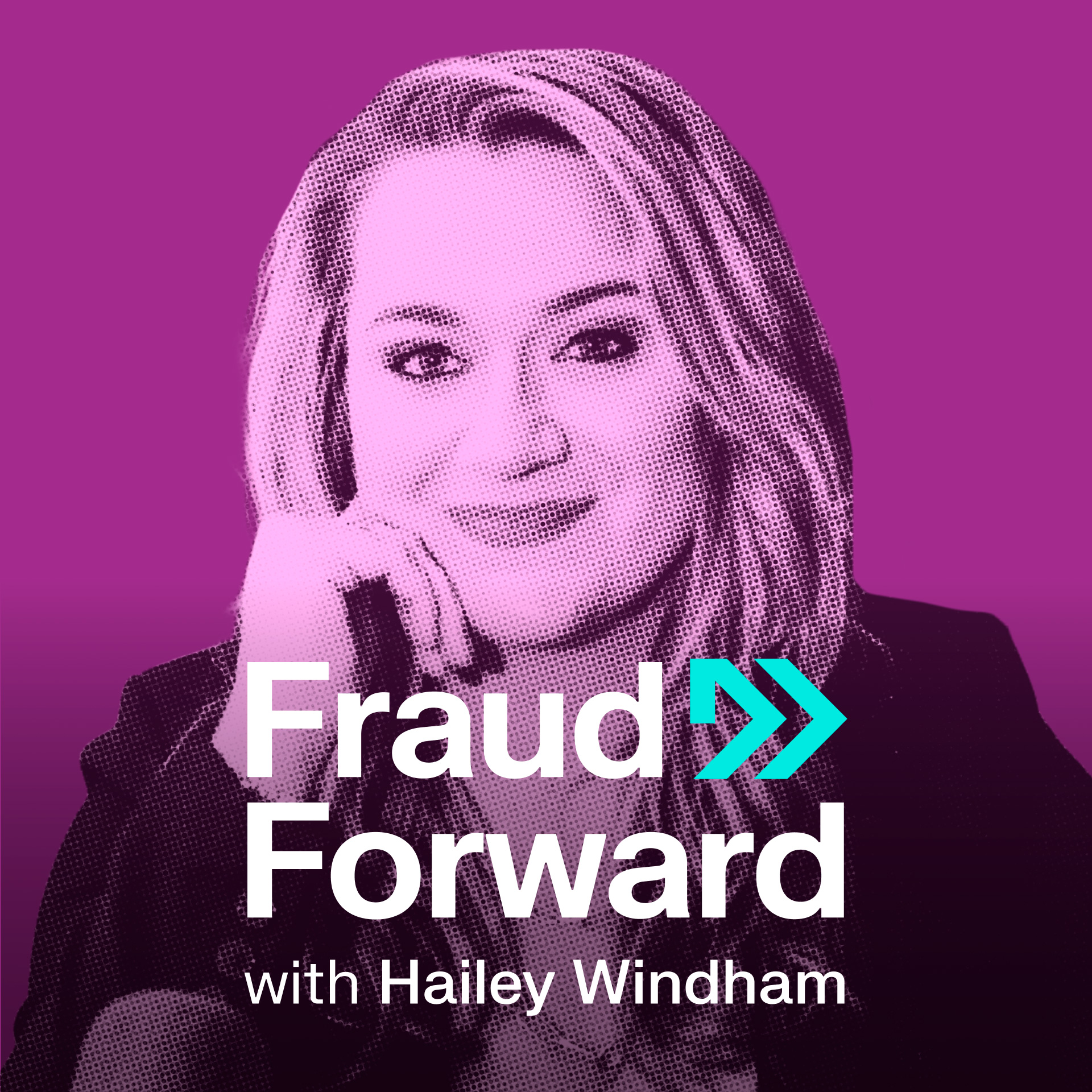
Fraud Forward
Hailey Windham
Fraud Forward is a banking-focused podcast bringing together fraud fighters, risk leaders, and financial crime experts to explore how fraud is evolving, and how financial institutions must adapt.
Each episode features practical, candid conversations with teams in the trenches, covering strategy, governance, prevention, and recovery. Rather than chasing headlines, Fraud Forward focuses on what’s working, what’s changing, and what fraud leaders need to prepare for as financial crime accelerates.
This is where banking comes together to challenge assumptions, pressure-test controls, and move fraud forward.
Each episode features practical, candid conversations with teams in the trenches, covering strategy, governance, prevention, and recovery. Rather than chasing headlines, Fraud Forward focuses on what’s working, what’s changing, and what fraud leaders need to prepare for as financial crime accelerates.
This is where banking comes together to challenge assumptions, pressure-test controls, and move fraud forward.
Episodes
Mentioned books

Jan 21, 2026 • 1h 17min
Fraud at Machine Speed: What 2025 Taught Us About 2026
Fraud isn’t slowing down, it’s evolving. The Banking on Fraudology podcast is now Fraud Forward, and we’re kicking off the new era with a no-nonsense look at what financial institutions are actually facing on the front lines.In this premiere episode, host Hailey Windham brings together fraud, risk, and BSA leaders from banks and credit unions to separate real signals from industry noise. No hype. No fear-mongering. Just firsthand insight from teams fighting fraud at machine speed.We unpack:What fraud teams saw escalate over the past yearWhich threats are accelerating into 2026Where banks and credit unions remain most exposedHow digital arrest scams, Ghost Tap fraud, and self-adapting AI attacks are changing the gameWhy in-branch controls are making a comebackIf you’re responsible for fraud prevention, BSA, risk, or compliance, this episode offers clear, realistic guidance on what to prioritize now, and what needs to change as fraud keeps moving faster.🎙 Guest lineup:Karen Boyer, SVP, Financial Crimes - M&T BankJen Lamont, BSA & Fraud Manager - America’s Credit UnionAngela Diaz, Senior Risk Manager, External Fraud Oversight - TDHailey Windham, Host of Fraud Forward & Community Banking Lead - Sardine👉 Subscribe for more real-world fraud insights from the people closest to the risk.

Dec 17, 2025 • 10min
Leveling Up for Impact: My Big News and the Future of Banking on Fraudology
In this episode of Banking on Fraudology, Hailey Windham reflects on her journey in the industry by sharing big news and zooming out to address the "seismic shift" this change represents for her career and the community. Hailey officially announces she has joined Sardine as their Community Lead for Banking. She directly addresses industry skepticism, clarifying that this move is a values-aligned, impact-driven decision and "not a sellout moment". The conversation dives into the industry's evolution , highlighting how shared learning, cross-institution conversations, and an authentic community are shaping the future of fraud prevention. Key Takeaways: Why the Move, What Changes, and the Future of CommunityBelief and Values Alignment are Essential: The "Why" Behind the DecisionThe Trust Filter: Hailey notes that she only puts her name behind brands she trusts and never stays silent for convenience. Culture Over Tech: What stood out about Sardine was its culture of humility and curiosity, and a willingness to say, "We don't have this all figured out. Let's build it with the community". Voice and Ownership: Crucially, she was never asked to change her voice , and she retains ownership of her catalog. Scaling Impact (Internal Threat): The Shift from Individual to CommunityHailey explains that the role isn't about pushing product; it's about building authentic banking and credit union communities and challenging the status quo. This move is about scaling impact—moving from helping one or two credit unions at a time to having a much bigger reach and connecting them with resources. The goal is to move past institutional silos, driven by the mindset that "fraud doesn't happen in silos and neither should our solutions". Fraud Forward (External Threats): The Podcast Evolves Alongside the IndustryBanking on Fraudology is evolving and will be rebranded as Fraud Forward. The rebrand will bring improved production quality, consistency, and reach, allowing for bigger, bolder conversations. Hailey promises the same honesty, hard conversations, and advocacy for fraud fighters will continue. Get in the mood of being grateful for the fraud-fighting community, and be reminded of how strong the fraud-fighting community truly is. The next chapter is about moving fraud prevention forward together.
Dec 12, 2025 • 31min
Bonus Episode — Powered by Safeguard:Building Smarter, Not Harder: Using AI to Eliminate Fraud’s Busy Work with Ben Graf
In this bonus episode of Banking on Fraudology, powered by Safeguard , Hailey Windham talks with Ben Graf, a self-taught AI expert in the neobank space. Ben embodies the spirit of curiosity and courage driving the next wave of fraud-fighting transformation.The conversation dives into what it really looks like to learn AI from the ground up, emphasizing that the future of fraud prevention isn't about replacing people, but empowering them through technology.Key Takeaways: AI, Innovation, and Fraud-Fighting EmpowermentUsing AI to Learn AI: Ben explains how he used varying LLM chats (like ChatGPT, Claude, and Gemini) as a coach or mentor, experimenting for hours to understand their capabilities, consistency, and how to effectively prompt them.This approach helped him translate technical language and practices (like data analysis, SQL, and JavaScript) into actionable knowledge for his team, breaking down communication barriers.The hardest part was knowing where to start, but the key was realizing that "something is better than nothing" and compounding knowledge quickly breaks down barriers.Practical AI Applications for Eliminating Busy Work: AI should be used to make teams more efficient and help professionals focus strategically.Automating Document Verification: AI can use OCR to pull data, flag inconsistencies, and serve up summaries for identity, business, and income documents, which are often the most time-consuming parts of a review.Data Retrieval and System Silos: AI can help team members write their own SQL queries to retrieve data from data warehouses, dramatically reducing requests to the data team.Product and Feature Proposals: AI tools can mock up full dashboard concepts and even provide code snippets to give engineers a visual and break down communication barriers between fraud and technical teams.The Power of Empowerment and Buy-In: Leadership should create a culture where fraud fighters are empowered to explore and innovate.The magic of time savings lies in filling the time freed from "busy work" (like false positives) with new, high-impact tasks, whether that's cost savings in fraud loss or better customer retention.Teams are advised to keep proprietary or PII information out of the loop and find safe spaces to explore, remembering that everyone is still figuring out what AI can do.Get in the mood of being grateful for the fraud-fighting community, and be reminded of how strong the fraud-fighting community truly is. About Hailey Windham:As a 2023 CU Rockstar Recipient, Hailey Windham, CFCS (Certified Financial Crimes Specialist) demonstrated unbounding passion for educating her community, organization and credit union membership on scams in the market and best practices to avoid them. She has implemented several programs within her previous organizations that aim at holistically learning about how to prevent and detect fraud targeted at membership and employees. Windham’s initiatives to build strong relationships and partnerships throughout the credit union community and industry experts have led to countless success stories. Her applied knowledge of payments system programs combined with her experience in fraud investigations offers practical concepts that are transferable, no matter the organization’s size. Connect with Hailey on LinkedIn: https://www.linkedin.com/in/hailey-windham/
Dec 10, 2025 • 20min
The Fraud Stories That Defined 2025 — And the Payment Shifts That Will Define 2026
In this episode of Banking on Fraudology, Hailey Windham reflects on a transformational year in fraud by unpacking recent, high-stakes cases and zooming out to address the "seismic shift" in the payment ecosystem. The conversation dives into the industry's evolution , highlighting how human intuition, technology, and a unified view of risk are shaping the future of fraud prevention. Key Takeaways: Cases, Controls, and the Future of PaymentsEmpathy and Human Intuition are Essential: The episode shares several cases that underscore the power of the human element.The Mrs. Doubtfire Scam: A bizarre case where a man disguised himself as his deceased 82-year-old mother to collect her pension for three years. The case was cracked by a frontline clerk who noticed the hands looked too young and the voice slipped, proving that intuition is irreplaceable. The Frontline Hero: A Missouri bank teller saved a woman from a jury duty arrest scam by quietly slipping her a note, proving that no AI system can replace human compassion and intuition. The End of Siloed Intelligence (Internal Threat): Insider threats highlight a control problem, not just an employee problem. Cases involving unauthorized withdrawals, debit card ordering, and forged checks by multiple employees at a major US bank point to patterns of inadequate monitoring and excessive permissions. The Tacoma Credit Union case, where a remote employee stole $345,000 weeks after hire, reinforces that remote work requires stronger oversight, and new hires are high-risk periods. Innovation is Working For Us (External Threats): Scams are evolving alongside technology. Scammers are using real bank activity (transaction amounts and timestamps) to build trust and bypass knowledge-based authentication. New tactics include fake CAPTCHAs that install malware to bypass 2FA, log keystrokes, and spy on sessions, leading to rapidly climbing losses. The State of the Fraud Fighter (Payment Rail Shift): The industry must adapt to the speed of instant payments. Scams are the #1 driver of losses across every rail (ACH, Wires, P2P, Zelle, RTP, FedNow); the vulnerability is social engineering, not the rail itself. The number one strategic imperative is to build a unified, real-time view of risk across every payment rail, as regulators now demand real-time resilience and proof that harm could have been prevented. Get in the mood of being grateful for the fraud-fighting community, and be reminded of how strong the fraud-fighting community truly is. Show Notes — Resources & Articles MentionedInsider Fraud Cases1 - Multiple Trust Employees Accused of Draining Customer Accounts — $363,452 in Losses2 - The “Mrs. Doubtfire” Fraud Case (Italian Identity Fraud Scandal) - Source via Frank on Fraud (PDF)3 - Tacoma Credit Union Insider Steals $345,014Scams, ATO, and External Fraud TrendsScammers Reciting Real Bank Activity to Gain Trust — FBI Warning5 - Bank Teller Saves Customer from Jury-Duty Arrest ScamAbout Hailey Windham:As a 2023 CU Rockstar Recipient, Hailey Windham, CFCS (Certified Financial Crimes Specialist) demonstrated unbounding passion for educating her community, organization and credit union membership on scams in the market and best practices to avoid them. She has implemented several programs within her previous organizations that aim at holistically learning about how to prevent and detect fraud targeted at membership and employees. Windham’s initiatives to build strong relationships and partnerships throughout the credit union community and industry experts have led to countless success stories. Her applied knowledge of payments system programs combined with her experience in fraud investigations offers practical concepts that are transferable, no matter the organization’s size. Connect with Hailey on LinkedIn: https://www.linkedin.com/in/hailey-windham/
Dec 3, 2025 • 47min
Building a Unified Front Against Human Crime: The Knoble’s Mission, Momentum & Moment of Need
In this special episode of Banking on Fraudology, Hailey Windham welcomes back Ian Mitchell, founder of The Knoble, to delve into the organization's critical mission, its global impact, and the urgent need for community support. The conversation centers on the concept of "human crimes" , a focus area for The Knoble which includes human trafficking, child exploitation (especially online exploitation of children), scams, and elder financial exploitation. Ian emphasizes that banks are in a powerful position to detect and disrupt these financially motivated crimes proactively. Key Takeaways: Mission, Impact, and UrgencyThe Knoble's Network & Tools: The Knoble is a 501c3 nonprofit that serves as a community of nearly 3,000 financial professionals dedicated to fighting financial crime with heart. The network has collaboratively developed tactical tools, including a business case sheet for justifying scams programs , a post-scam victimization guide , and a SAR addendum/template that attaches data fields to SAR filings to help law enforcement modernize their approach to analytics. Human Crime Specialist Program: Ian introduces the six-month Human Crime Specialist (HCS) Program , an intensive training course designed to equip financial professionals across all organizational levels (with 5+ years experience preferred) to fight all human crimes, covering everything from prevention and detection to policy and victim response. Global Impact: The Knoble's commitment to coordinated industry action has earned them an invitation to the United Nations to help strengthen the worldwide response to human trafficking. Critical Funding Shortfall: Ian transparently addresses the urgent funding moment facing The Knoble. He appeals to the community for support to ensure their work—which is critical to human safety and disrupting organized crime—can continue. The Call to Action: Ian's message to fraud fighters and leaders is to "live with heart" and to remember that they are in the people business. He encourages listeners to get involved in The Knoble's free network and consider sending a team member to the HCS Program. TheKnoble.comThe Knoble Human Crime Specialist ProgramImpact ReportsDonate to The KnobleAbout Hailey Windham:As a 2023 CU Rockstar Recipient, Hailey Windham, CFCS (Certified Financial Crimes Specialist) demonstrated unbounding passion for educating her community, organization and credit union membership on scams in the market and best practices to avoid them. She has implemented several programs within her previous organizations that aim at holistically learning about how to prevent and detect fraud targeted at membership and employees. Windham’s initiatives to build strong relationships and partnerships throughout the credit union community and industry experts have led to countless success stories. Her applied knowledge of payments system programs combined with her experience in fraud investigations offers practical concepts that are transferable, no matter the organization’s size. Connect with Hailey on LinkedIn: https://www.linkedin.com/in/hailey-windham/
Nov 26, 2025 • 21min
A Giant Serving of Gratitude: Thanksgiving Special on Empathy, Collaboration, & the Future of Fraud Fighting
In this reflective and gratitude-filled episode of Banking on Fraudology, Hailey Windham takes a moment to step back and appreciate the people and themes shaping the fight against fraud, delivering a "giant serving of gratitude" for the community.The conversation dives into the industry's evolution, highlighting how innovation and collaboration are aligning to create a powerful, transformative moment in fraud prevention. Hailey also shares personal highlights from a recent major industry event and spotlights the leaders who are making a significant impact.Key Takeaways: Gratitude, Collaboration, and the Future of Fraud FightingEmpathy is Not Optional: Hailey stresses that empathy must be recognized as a core fraud prevention strategy. Inspired by Kathy Stokes of AARP and the "Words Matter campaign," the episode emphasizes that if we shame victims, we protect fraudsters, and we must talk about victims with dignity.The End of Siloed Intelligence: Collaboration is no longer optional; we fight better when we fight together. Hailey discusses conversations with innovators like Robbie from Sardine, who advocate for collective intelligence, shared signals, and bringing smaller institutions into the fold.Innovation is Working For Us: Drawing on insights from Andrea at Old Glory Bank, Hailey asserts that this is the best time to fight fraud, as technology, data, and awareness are aligning, and tools are evolving quickly. Fraud fighters should start embracing tech and AI resources.Spotlight on Industry Leaders: Hailey expresses gratitude for the impact of numerous leaders, including Jen (America's Credit Unions) for empowering frontline teams with quarterly fraud trainings, Mark Solomon (IAFCI) for his global perspective , and Trisha Stoner (Carolinas Chapter IAFCI) whom Hailey is honored to serve as Second VP under.Honoring Courage and Legacy: The episode shares moving highlights from the Carolinas IAFCI Conference, including the creation of a Community Service Award and the naming of the Gavin Guffey Cyber Investigator of the Year award. This new award honors the legacy of Gavin Guffey and the advocacy of House Representative Brandon Guffey in the fight against online exploitation and sextortion.The State of the Fraud Fighter: The biggest theme resonating with every guest is that fraud fighters are exhausted, but hopeful. That combination of determination and optimism is what is creating movement.Get in the mood of being grateful and be reminded of how strong the fraud-fighting community truly is.
Nov 19, 2025 • 39min
The Next Evolution of Fraud Defense: Unlocking Collective Intelligence with Sonar AI (with Ravi Loganathan)
Banking on Fraudology is presented by Sardine.ai.In this episode of Banking on Fraudology, Hailey Windham sits down with Ravi Loganathan, Co-founder and President of Sonar AI and Head of Banking and Policy at Sardine. Ravi, who has over 20 years in banking and consortium work with institutions like Early Warning Services, Zelle, and Bank of America, has been leading the charge at Sardine to make intelligent sharing accessible and actionable for all institutions.The conversation dives deep into the concept of collective intelligence, which Ravi describes as a "must-have" in the age of accelerating AI-driven scams. Fraudsters exploit information sharing gaps by jumping from one institution (like a fintech) to another (like a large regulated bank), making an ecosystem-wide defense essential.Key Takeaways: Unlocking Collective Intelligence with Sonar AIThe Sonar AI Origin Story: Sonar AI was kickstarted three years ago by a group of banks and fintechs to fill a critical gap: the lack of infrastructure for real-time risk information sharing when funds movement or instant settlement is authorized. This was driven by the need to combat authorized push payment (APP) fraud, particularly concerning the lack of insights on the recipient.How Sonar AI Works: Sonar AI is an industry utility. Before an institution authorizes a fund movement or account opening, they can inquire into Sonar on the entity conducting the transaction. Sonar returns curated signals (often simplified to "high, medium, low" risk, block list status, etc.) for the institution to augment their existing risk decisioning process. In return, the institution provides feedback, benefiting the next inquiring member.Regulatory Foundation: Sonar AI is built on a strong regulatory framework, having worked with FinCEN to receive 314(b) designation to form an association of financial institutions. It also facilitates broader fraud signal sharing under the Gramm-Leach-Bliley Act (GLBA).Empowering Smaller FIs: Sonar AI offers features specifically for smaller community banks and credit unions, including batch contribution and batch inquiry to eliminate the need for immediate API tech builds. Ravi details their collaboration with the Independent Community Bankers of America (ICBA) accelerator program to embed Sardine's solutions into core providers and invite FIs to join Sonar as members.Future Innovations: Ravi reveals Sonar AI's newest services, including Footprint, which provides a broader view of a consumer's financial standing by tracking their transactions across crypto exchanges, marketplaces, and fintechs , and the expansion of the Red Flag service for monitoring credentials leaked on the dark web.This is a must-listen for investigators, executives, and anyone working in the financial crimes space who is serious about strengthening prevention efforts and is ready to embrace the future of shared, collective defense.About Hailey Windham:As a 2023 CU Rockstar Recipient, Hailey Windham, CFCS (Certified Financial Crimes Specialist) demonstrated unbounding passion for educating her community, organization and credit union membership on scams in the market and best practices to avoid them. She has implemented several programs within her previous organizations that aim at holistically learning about how to prevent and detect fraud targeted at membership and employees. Windham’s initiatives to build strong relationships and partnerships throughout the credit union community and industry experts have led to countless success stories. Her applied knowledge of payments system programs combined with her experience in fraud investigations offers practical concepts that are transferable, no matter the organization’s size. Connect with Hailey on LinkedIn: https://www.linkedin.com/in/hailey-windham/
Nov 14, 2025 • 23min
Bonus Episode — Powered by Safeguard: Why Now Is the Best Time to Fight Fraud (w/ Andrea Valentin)
In this powerful bonus episode of Banking on Fraudology, powered by Safeguard, Hailey Windham sits down with Andrea Vallentine, Senior Vice President of Fraud and Risk at Old Glory Bank. The conversation dives deep into Andrea's genuinely excited perspective that "this might actually be the best time to be fighting fraud". We explore the rising momentum of collaboration and shared learning that is unifying the industry against fraudsters. Key Takeaways: Collaboration, AI, and Empathy in Fraud PreventionThe Power of Collaboration: Andrea highlights the exciting activities and investments from groups like Fraud Fight Club, Operation Shamrock, and House of Fraud. The focus is shifting from selling products to learning, educating, and collaborating. The AI Perspective: The industry is moving past fear, recognizing that AI has been around for a long time. The recent AI explosion has gotten people more open to listening, realizing they are already using smart technologies in areas like transaction scoring (e.g., Falcon) and link analysis. A Shift to Purpose: Collaboration is increasing because the industry now recognizes the emotional devastation and human impact of fraud. The focus has moved beyond competing to a shared mission of working together "against the fraudsters". Tips for Smaller Teams (Leveraging AI): Andrea recommends that smaller teams use AI (like ChatGPT) to draft summaries, create templates, and refine procedures. This allows teams to find holes in their processes and generate new ideas without using sensitive PII. The Human Side of Design: Empathy is shaping the next generation of fraud design. Using machine learning to identify patterns of customer friction , and giving real-life stories to team members, helps move them out of "robot mode" and focus on the customer experience. Andrea's Final Thought: AI is not scary, and we have been using it forever in things like marketing suggestions on Amazon. She encourages everyone to get involved and leverage the wealth of existing, shared resources instead of recreating materials. This is a must-listen for executives, investigators, and all fraud professionals who are serious about strengthening prevention efforts and building a fraud-fighting community driven by empathy and innovation. Links:Connect to Andrea on LinkedInLearn more about the Safeguard AI deep dive retreat happening in May : SafeguardEvent.comAbout Hailey Windham:As a 2023 CU Rockstar Recipient, Hailey Windham, CFCS (Certified Financial Crimes Specialist) demonstrated unbounding passion for educating her community, organization and credit union membership on scams in the market and best practices to avoid them. She has implemented several programs within her previous organizations that aim at holistically learning about how to prevent and detect fraud targeted at membership and employees. Windham’s initiatives to build strong relationships and partnerships throughout the credit union community and industry experts have led to countless success stories. Her applied knowledge of payments system programs combined with her experience in fraud investigations offers practical concepts that are transferable, no matter the organization’s size. Connect with Hailey on LinkedIn
Nov 12, 2025 • 44min
International Fraud Awareness Week — Igniting the Spirit of Fraud Fighters Everywhere with John Duffley
In this powerful episode of Banking on Fraudology, Hailey Windham sits down with John Duffley, Communications Director at the Association of Certified Fraud Examiners (ACFE), who leads the global coordination and growth of International Fraud Awareness Week.The conversation dives deep into the origins of this massive global initiative, which began in 2000 as "National Fraud Awareness Week" and has since evolved to be celebrated by thousands of organizations across more than 130 countries, supporting a community of over 95,000 fraud professionals.Key Takeaways: International Fraud Awareness WeekA Global Springboard: Fraud Week is an annual opportunity for organizations of all sizes—from local law firms to Fortune 500 companies—to discuss and address fraud prevention and detection efforts, serving as a launchpad for success in the coming year.Creative Campaign Ideas: Organizations participate in countless impactful ways, including multi-week campaigns, virtual trainings, community events, social media efforts, and internal recognition (like Hailey's personal "Scooby Doo Awards"!).Tips for Smaller Teams: John and Hailey share simple, budget-friendly ways smaller financial institutions (FIs) like credit unions and community banks can participate, emphasizing conversation, awareness, social media engagement, and internal recognition. Hailey shares a successful, low-cost fraud roundtable example.Essential ACFE Resources: Get a rundown of the free resources available on fraudweek.com, including proclamation and press release templates, interactive games like "Geo Party" and "Fraud Myth Busters," videos, infographics, and a simple Fraud Prevention Checklist.Building a Fraud-Savvy Culture: Learn how Fraud Week can initiate long-term cultural change, the importance of gaining leadership buy-in by reaffirming brand trust, and the proven ROI of awareness training (tips are the most common detection method, accounting for 43% of frauds).John's Top Tip for Every Fraud Fighter: Start a conversation with someone close to you—a colleague, supervisor, or family member—because awareness begins with simply sharing what you know to protect those most vulnerable to scams.This is a must-listen for investigators, executives, and anyone working in the financial crimes space who is serious about strengthening prevention efforts and building a global fraud-fighting community.Don't forget to use #FraudWeek when sharing your organization's efforts!Links:Connect with the global fraud-fighting community and download your free resources: fraudweek.comacfe.com/
Nov 5, 2025 • 44min
Words Matter: Changing How We Talk About Victims of Fraud with Kathy Stokes
In this powerful episode of Banking on Fraudology, Hailey Windham sits down with Kathy Stokes, Director of Fraud Prevention Programs at AARP, a nationally recognized leader in consumer protection and elder fraud prevention. The conversation dives deep into Stokes's foundational statement: "We need to talk about victims in order to talk about the fraud as a crime". They explore why language is the single most critical tool in the fight against financial crime and how the words we choose can either help or harm. Key Takeaways:- Calling it a Crime: Stokes explains that financial fraud must be viewed as a crime, not as a mistake by the person who experienced it, which helps shift the blame from the victim to the transnational criminal enterprises that are often responsible. - The Problem with Avoiding "Victim": While a person who experienced the crime should be allowed to lead the conversation one-on-one, in the third person, the term "victim" should be used to help people understand the severity of the crime. - The Power of Empathy: They discuss the psychological impact of being deceived, and why approaching a person with context and empathy (rather than immediately saying "you've been scammed") is crucial to prevent them from shutting down. - Changing the Language: Stokes shares two terms she wishes the industry would eliminate: "fraudster," because it sounds "kind of cute" and gets the perpetrator "off the hook," and "victim assisted," which inaccurately implies the victim aided the crime rather than being coerced or manipulated. - A Call to Action for Fraud Teams: Kathy Stokes stresses that the first reaction to someone who has experienced fraud should be: "My God, I'm so sorry this happened to you. It's not your fault. Come on, let's talk about it. Let's report it". - Hope for the Future: Hear about AARP's groundbreaking work, including the Words Matter campaign and their effort to change the narrative surrounding fraud through advocacy, education, and partnerships. This is a must-listen for investigators, executives, and anyone working in the financial crimes space who is serious about strengthening prevention efforts and supporting those impacted by fraud.______________________________Connect with Hailey on LinkedInConnect with Kathy on LinkedInLinks:AARP Words Matter Campaign: aarp.org/wordsmatterFraud Wars on YoutubeAARP Fraud Watch Network

