

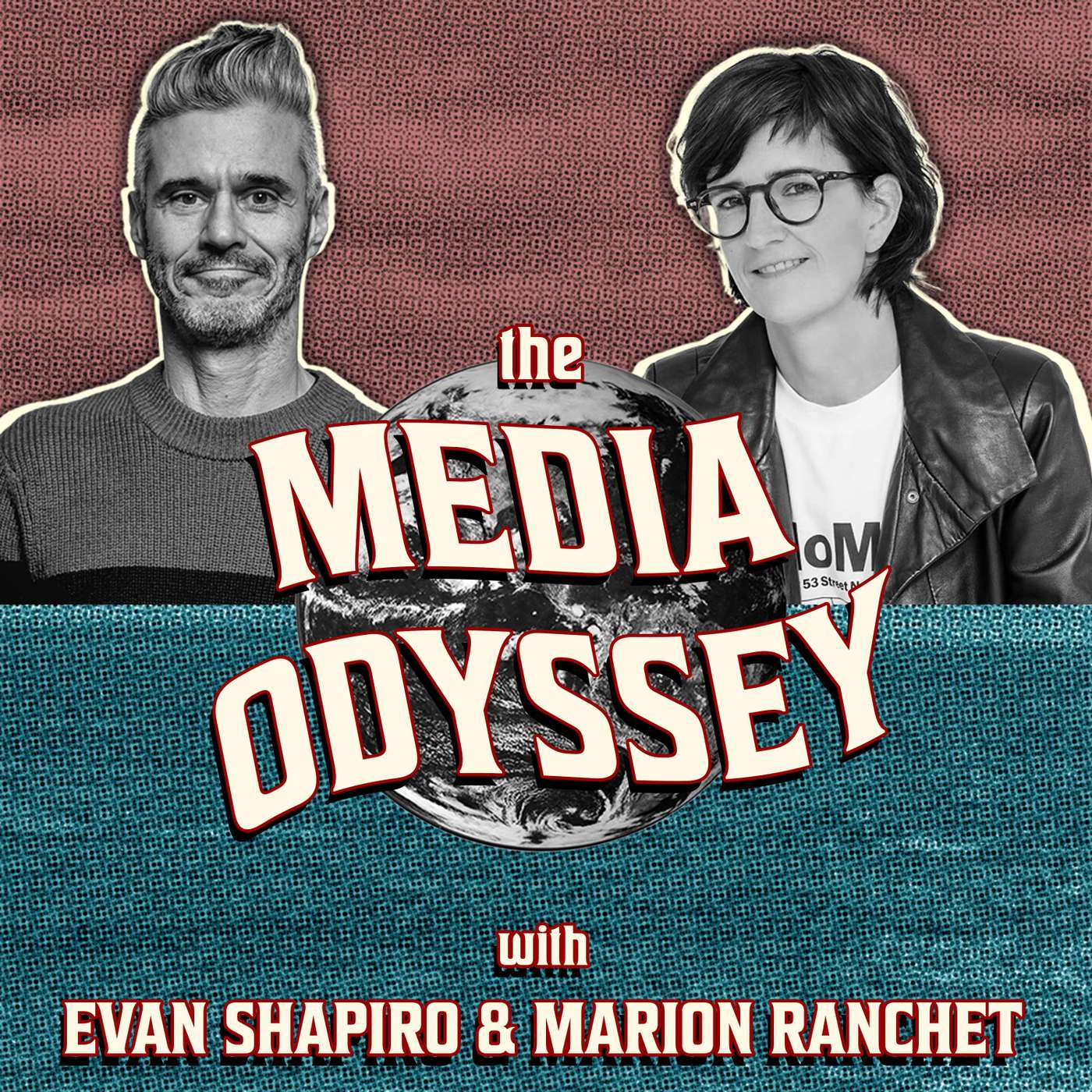
The Media Odyssey
Evan Shapiro & Marion Ranchet
Each week, two of media’s most influential thinkers, Evan Shapiro & Marion Ranchet, take on the hottest media topics with their hottest takes, helping their audience chart a course through the maelstrom that is today’s Media Odyssey.
Based in the US, Evan Shapiro is the Media Industry’s official Cartographer, known for his well-researched and provocative analysis of the entertainment ecosystem in his must read treatises on Media’s latest trends and trajectories.
Marion Ranchet, French expat based in Amsterdam, has become the industry’s go-to expert in all things streaming, building a following for turning even the most complex problems into easily digestible and actionable insights.
Ranchet and Shapiro are known for their sharp-yet-accessible content on Media consumption, audience trends, and the shifting fundamentals of the business itself. Even during the toughest of topics, they each make talking about Media fun. Together every week, these two will offer entertaining, often humorous, and always educational content on today’s Media Odyssey.
Based in the US, Evan Shapiro is the Media Industry’s official Cartographer, known for his well-researched and provocative analysis of the entertainment ecosystem in his must read treatises on Media’s latest trends and trajectories.
Marion Ranchet, French expat based in Amsterdam, has become the industry’s go-to expert in all things streaming, building a following for turning even the most complex problems into easily digestible and actionable insights.
Ranchet and Shapiro are known for their sharp-yet-accessible content on Media consumption, audience trends, and the shifting fundamentals of the business itself. Even during the toughest of topics, they each make talking about Media fun. Together every week, these two will offer entertaining, often humorous, and always educational content on today’s Media Odyssey.
Episodes
Mentioned books
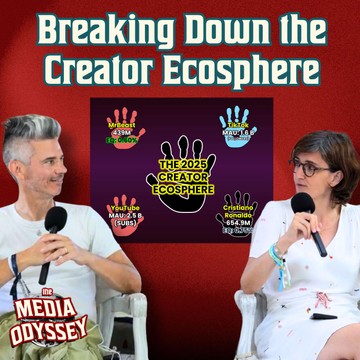
Oct 16, 2025 • 39min
BREAKING DOWN THE CREATOR ECOSPHERE
Dive into the fascinating world of the creator economy! Discover who truly drives engagement — creators, corporations, or algorithms. Unpack the revolutionary Creator Ecosphere Map, showcasing the dynamics between platforms, studios, and fan engagement. Learn why follower counts don't equate to true fandom and how metrics like Engagement Quality (EQ) reveal real influence. Explore the rise of creator-led companies and the nuances of platform strategies. Plus, see how big media could reshape this thriving landscape!
Oct 9, 2025 • 60min
MEET THE MINDS BEHIND RUPAUL'S DRAG RACE
What happens when a niche fandom becomes a global streaming powerhouse?In this episode of the Media Odyssey Podcast, hosts Evan Shapiro and Marion Ranchet sit down with World of Wonder co-founders Fenton Bailey and Randy Barbato, the creative minds behind RuPaul’s Drag Race, and a streaming empire built on fandom. They explore how World of Wonder transformed drag culture into an international media brand spanning 17 territories, while redefining what “community-first” streaming looks like in the era of algorithmic sameness.The conversation dives into how WOW thrives outside traditional Hollywood logic through owning its IP, embracing global fandoms, and turning social engagement into subscription loyalty. The founders share how RuPaul’s Drag Race became a template for modern, participatory media and how WOW’s next frontier lies in audience-driven global storytelling that stays defiantly weird.Key Takeaways:1. From Subculture to Global BrandWorld of Wonder built its empire by championing authenticity over mass appeal. Instead of chasing algorithms, they built a streaming platform for passionate fans—and let those fans drive expansion into over a dozen localized Drag Race editions worldwide.2. DTC Before DTC Was CoolLong before YouTube or Netflix, WOW pioneered a direct-to-consumer model on Manhattan Cable in the early 1990s—building a loyal audience through raw, participatory storytelling that bypassed traditional TV gatekeepers. That same spirit lives on in WOW Presents Plus, which now connects millions of subscribers directly to the creators and culture they love.3. The Power of Ownership and Community WOW’s success comes from owning its IP and nurturing a direct-to-fan relationship. By combining strong brand identity, event culture, and social storytelling, the company has created a flywheel that sustains both fandom and revenue across platforms and formats.4. Streaming Against the Grain While major platforms chase scale, WOW proves that specificity is the new mainstream. Their model rooted in community, creativity, and unapologetic individuality shows how small, focused streamers can thrive even as the broader industry consolidates.5. A Blueprint for Creator-Led MediaBailey and Barbato’s approach blurs the line between creator and audience. By empowering talent and fans alike, WOW Presents Plus anticipates a media future where participation, not programming, drives value.Interested in sponsorship? https://forms.gle/2LCWfX2HBNT8mtpx8Connect with us on Linkedin:Evan Shapiro - https://www.linkedin.com/in/eshap-media-cartographer/Marion Ranchet - https://www.linkedin.com/in/marionranchet/The Media Odyssey Podcast - https://www.linkedin.com/company/the-media-odyssey-podcastFenton Bailey - https://www.linkedin.com/in/fenton-bailey-4270204/Randy Barbato - https://www.linkedin.com/in/randy-barbato-866a1146/World of Wonder - https://www.linkedin.com/company/world-of-wonder/
(00:00) - Chapter 1
(00:00) - The Origins of Drag Race
(01:14) - Meeting the Founders of World of Wonder
(01:59) - The Early Days: Film School and Beyond
(03:58) - Starting World of Wonder
(06:10) - From Public Access to Channel 4
(10:19) - The Rise of RuPaul
(17:36) - Creating Drag Race
(23:08) - International Success and Adaptations
(30:56) - The Early Days of Newsletters and Online Communities
(31:21) - The Rise of RuPaul's Drag Race and Direct-to-Consumer Strategy
(32:33) - The Genesis of WOW Presents Plus
(35:11) - Challenges and Successes of WOW Presents Plus
(37:28) - New Projects and Collaborations
(48:56) - Advice for Producers and the Future of Media
(58:43) - Conclusion and Gratitude
Oct 2, 2025 • 52min
HOW DISNEY KILLED BROADCAST WITH KIMMEL
Jimmy Kimmel is at the center of the conversation where politics, free speech, and billion-dollar mergers collide.In this episode of the Media Odyssey Podcast, hosts Evan Shapiro and Marion Ranchet unpack the dramatic suspension and reinstatement of Jimmy Kimmel—a flashpoint that highlights the collision of politics, regulation, and the crumbling power of broadcast TV. Shapiro explains the FCC’s limited authority, why Chair Brendan Carr’s threats crossed constitutional lines, and how Disney’s rapid cave-in to political pressure triggered a fierce backlash.The discussion broadens to late-night’s decline, the chilling precedent for free speech in U.S. broadcasting, and the looming wave of media consolidation involving Paramount, Warner Bros Discovery, and possibly Netflix. Marion draws contrasts with Europe’s regulatory environment, where broadcasters face different pressures but free expression is protected in opposite ways.Key Takeaways:The Kimmel Affair and FCC OverreachKimmel was suspended after discussing how MAGA has used activist Charlie Kirk’s killing for political gain, despite committing no FCC violation. Shapiro details how FCC Chair Brendan Carr, who is aligned with Project 2025 and pending affiliate mergers, used threats to coerce Disney and affiliates into action. The result: a blatant clash between politics and the First Amendment, costing Disney billions in market value before Kimmel’s reinstatement.Broadcast’s Dying GripThe controversy underscored how fragile broadcast TV has become. Kimmel’s late-night audience is under 2 million, dwarfed by his YouTube reach—and by Joe Rogan’s podcast empire. Shapiro argues that Kimmel and others should abandon dying formats and embrace direct-to-consumer platforms where free speech and financial upside are greater. Marion warns that it is not an easy, overnight transition. Media Oligarchs and ConsolidationThe hosts connect Kimmel’s ordeal to broader maneuvers by billionaires like Larry and David Ellison, whose influence over FCC approvals and mergers (Paramount-Skydance, Warner Bros Discovery) shows how free speech is increasingly transactional. Late-night hosts like Colbert and Oliver may be next in line as consolidation reshapes who controls the cultural narrative.Europe’s Contrasting PathMarion highlights how European regulators tackle misconduct differently—punishing hosts who spread disinformation or incite harm, rather than silencing dissent. The comparison underscores a widening gap: in the U.S., politics is shrinking the space for speech on broadcast, while in Europe, regulation is trying to protect it.Interested in sponsorship? https://forms.gle/2LCWfX2HBNT8mtpx8Connect with us on Linkedin:Evan Shapiro - https://www.linkedin.com/in/eshap-media-cartographer/Marion Ranchet - https://www.linkedin.com/in/marionranchet/The Media Odyssey Podcast - https://www.linkedin.com/company/the-media-odyssey-podcast
(00:00) - Introduction and Episode Overview
(01:05) - Jimmy Kimmel Controversy Explained
(03:43) - FCC Regulations and Enforcement
(08:40) - Impact and Backlash
(11:24) - Comparisons with Other Media Figures
(16:36) - Jimmy Kimmel's Return and Future Speculations
(22:55) - Broader Implications on Free Speech
(24:34) - Controversial TV Hosts and Their Impact
(26:52) - Success Stories of Media Personalities
(31:02) - The Future of Public Broadcasting
(32:26) - Media Mergers and Acquisitions
(41:28) - The Decline of Broadcast TV
(47:01) - Concluding Thoughts on Media Evolution
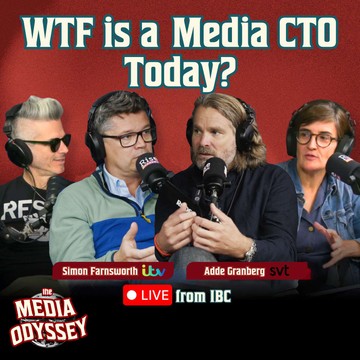
Sep 25, 2025 • 46min
WTF IS A MEDIA CTO TODAY?
Simon Farnsworth, CTO at ITV, and Adde Granberg, CTO at SVT, join the discussion on transforming public broadcasting. They emphasize the shift from merely 'doing' digital to 'being' digital, highlighting the cultural challenges faced by legacy broadcasters against tech giants. The duo explores how generative AI, cloud workflows, and 5G can revolutionize content production. They advocate for embracing platforms like YouTube and TikTok to connect with audiences, stressing the importance of a creator-first mindset and agile, software-driven production methods.
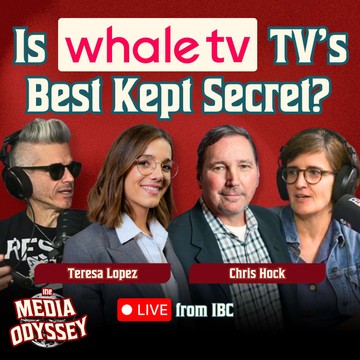
Sep 18, 2025 • 41min
IS WHALE TV TV'S BEST KEPT SECRET?
In a special episode recorded live from IBC in Amsterdam, the Media Odyssey Podcast brings together hosts Evan Shapiro and Marion Ranchet with Whale TV’s Teresa Lopez and Chris Hock. Once a white-label operating system hidden inside millions of TVs, Whale TV has rebranded and stepped into the spotlight. The discussion dives into the shifting economics of TV hardware, why operating systems are now the key battleground for audience attention, and how Whale TV’s profit-sharing model, Whale TV Profit Sharing, offers a different path than big tech rivals.The group also explores broader industry themes—from Europe’s need for greater collaboration, to the generational divides slowing change, to the critical role of user experience in Connected TV.Key Takeaways:From White Label to Global BrandFormerly known as Zeasn, Whale TV powered tens of millions of smart TVs without consumers even knowing. With 44M monthly active TVs worldwide, Whale TV has rebranded to claim its space, offering not just a Connected TV OS but also Whale TV Plus, a FAST service integrated directly into the home screen.Whale Profit Sharing (WPS)Instead of charging TV makers upfront, Whale TV gives its OS away for free and shares revenue on the backend. OEM partners get cash bounties upfront and recurring revenue streams as advertising and subscriptions flow in. This partnership model contrasts sharply with big tech’s “take it all” approach.Advertising at the Heart of the Living RoomWhale TV positions the TV home screen, and the living room as a whole, as the most valuable real estate in media. With innovative ad formats—pause ads, L-shapes, and integrated discovery units—it promises advertisers premium inventory without breaking the viewer experience. Categories from luxury goods to QSRs are already leaning in.4. Collaboration vs. FragmentationBoth hosts Marion Ranchet and Evan Shapiro and Whale TV execs stress that the industry suffers from too many competing OS platforms and a lack of collaboration. Whether across generations, broadcasters, or tech providers, success will depend on cooperation, shared standards, and smarter creative—not just piling on new players.Interested in sponsorship? https://forms.gle/2LCWfX2HBNT8mtpx8Connect with us on Linkedin:Evan Shapiro - https://www.linkedin.com/in/eshap-media-cartographer/Marion Ranchet - https://www.linkedin.com/in/marionranchet/The Media Odyssey Podcast - https://www.linkedin.com/company/the-media-odyssey-podcastTeresa Lopez: https://www.linkedin.com/in/teresa-alonso-l%C3%B3pez-4a22bb94/Chris Hock: https://www.linkedin.com/in/chrishock/Whale TV: https://www.linkedin.com/company/whaletv/
(00:00) - Introduction to Media Odyssey Podcast
(00:08) - What is IBC?
(00:56) - Marianne's IBC Experience
(01:36) - Generational Divide in Media
(04:59) - The Affinity Economy
(06:15) - Redefining Broadcasting
(07:35) - Introduction to Whale TV
(08:03) - Whale TV's White Label Journey
(09:44) - The Shift to Streaming
(11:39) - Whale TV's Business Model
(19:48) - Whale TV Plus Explained
(21:59) - Advertisers and Connected TV Challenges
(22:32) - Whale TV's Unique Advertising Opportunities
(23:59) - Emerging Advertising Categories
(25:34) - Balancing User Experience and Monetization
(26:03) - Innovative Ad Formats
(29:25) - Global Reach and Collaboration
(30:56) - Industry Challenges and Future Directions
(36:41) - Conclusion and Final Thoughts
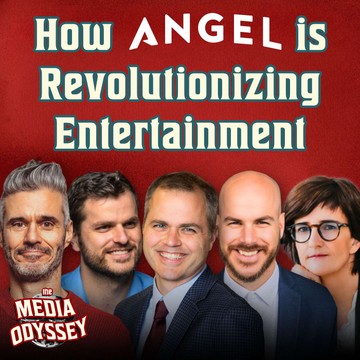
Sep 11, 2025 • 1h 10min
HOW ANGEL IS REVOLUTIONIZING ENTERTAINMENT
After raising $55M in commitments in just 18 days, Angel is ringing the bell on Wall Street and the three founding brothers come on this special episode of The Media Odyssey Podcast for the first time ever! In this episode, hosts Evan Shapiro and Marion Ranchet sit down with the Harmon brothers—Neal, Jeff, and Jordan, founders of Angel—to explore how they’ve turned an outsider’s vision into one of the most disruptive forces in global entertainment. What started as a family-driven mission to create values-based content has evolved into a studio powered by its audience, financed by its community, and structured to give creators a fairer share of success.The conversation unpacks Angel’s radically different approach to greenlighting, where fans—not executives—decide which films and series move forward. It dives into how the studio has managed to outperform industry peers at the box office without relying on nine-figure budgets, and how its data-driven distribution gives it a marketing edge even the majors haven’t built. Along the way, the Harmons share why they believe cinema is still central to culture, how Angel is preparing to go public under ticker ANGX, and what a future of truly community-owned media could look like.Key Takeaways: TakeawaysTakeawaysGoing Public TodayAngel officially lists under ticker ANGX, marking a major milestone in its journey from a community-funded experiment to a fully public studio. This IPO signals not just growth, but the next step in building a media company owned and guided by its audience, with a model that blends traditional box office, streaming, and fan-driven funding.From Fans to GatekeepersAngel’s 1.5M+ Guild members vote on which projects get made, flipping the Hollywood power structure on its head. This audience-led model ensures that projects are chosen by the very people most likely to support them, resulting in a slate that consistently resonates and drives strong audience scores.Sustainable Box Office HitsWith $416M in box office revenue from just 12 films, Angel is outperforming competitors like A24 on a per-film basis. Instead of chasing tentpole blockbusters, they’ve built a strategy around steady, profitable “base hits” in the $5M–$30M range—proof that community support and precision marketing can rival studio scale.A Fairer Deal for CreatorsAngel offers filmmakers a two-thirds profit share, transparent reporting, and no hidden fees. By rejecting Hollywood’s opaque accounting and Netflix’s cost-plus model, Angel has created an environment where efficiency is rewarded and creators share directly in the upside of their work.Data as a SuperpowerThrough direct integrations with 90% of U.S. exhibitors, Angel gets real-time box office data—something no other studio has secured. This allows them to target only the audiences most likely to engage, cutting waste and maximizing impact. It’s a technological edge that turns limited budgets into outsized results.TMO listeners can receive 20% off Angel's subscription streaming service! http://www.angel.com/TheMediaOdysseyRead much more about Angel HERE. Interested in sponsorship? https://forms.gle/2LCWfX2HBNT8mtpx8Connect with us on Linkedin:Evan Shapiro - https://www.linkedin.com/in/eshap-media-cartographer/Marion Ranchet - https://www.linkedin.com/in/marionranchet/The Media Odyssey Podcast - https://www.linkedin.com/company/the-media-odyssey-podcastNeal Harmon: https://www.linkedin.com/in/nealharmon/Jeff Harmon: https://www.linkedin.com/in/jeffreyharmon/Jordan Harmon: https://www.linkedin.com/in/jordanharmon/
(00:00) - Introduction to the Media Odyssey Podcast
(00:12) - Spotlight on Angel
(00:35) - Marion's First Encounter with Angel
(00:51) - The Future of Independent Film
(01:30) - How Angel Came to the Podcast
(02:08) - Meet the Founders of Angel
(02:50) - The Origin Story of Angel
(04:14) - From Marketing to Media: The Early Days
(08:05) - Crowdfunding and Community Building
(10:00) - The Angel Guild and Audience Involvement
(11:03) - Innovative Fundraising and Distribution Strategies
(18:04) - Building a Tech-Driven Media Platform
(20:03) - Empowering Employees and Encouraging Innovation
(24:37) - The Wisdom of the Guild: Audience-Driven Content
(29:59) - Box Office Success and Data-Driven Decisions
(35:07) - The Importance of Theaters in Cultural Conversations
(35:57) - The Power of Community in Cinema
(36:27) - Theater vs. Streaming: A Unique Experience
(37:33) - Angel's Release Strategy
(38:30) - Subscription and Membership Benefits
(39:29) - Series and Future Projects
(41:41) - Going Public: The Journey and Vision
(51:19) - Innovative Filmmaking Model
(58:14) - International Expansion and Future Plans
(01:03:07) - Conclusion and Reflections
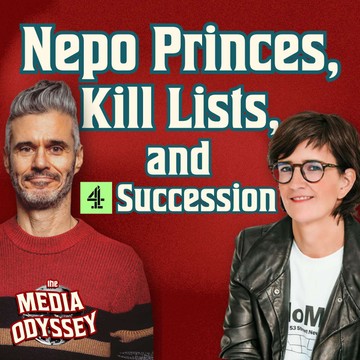
Sep 4, 2025 • 48min
NEPO PRINCES, KILL LISTS, AND C4 SUCCESSION
Welcome back to the Media Odyssey Podcast!In the first episode of Season 2, hosts Marion Ranchet and Evan Shapiro return from summer break to unpack the biggest stories shaping the media landscape on both sides of the Atlantic. They cover everything from NBCUniversal’s cable spin-off and MSNBC rebrand, to European consolidation led by MFE and ProSiebenSat.1, and the growing dominance of YouTube on TV screens. They also examine Roku’s pivot into subscription video and debate who should take the reins as Channel 4’s next CEO.Key Takeaways:1. NBCUniversal’s Strategy VacuumEvan critiques Comcast/NBCUniversal’s decision to spin off cable networks into a new entity, Versant, and rebrand MSNBC as “MSNow”—calling it mismanaged, brand-confusing, and emblematic of leadership by “nepo babies” failing upwards. He recalls their costly misstep with The Office and Netflix, underscoring the company’s lack of coherent long-term strategy.“Nepo baby” is shorthand for industry leaders who inherit power or rise through connections rather than merit. In this case, Evan points to executives like Comcast CEO Brian Roberts as examples of privilege trumping strategy.2. The “Kill List” Era of Media LayoffsAt Paramount, new president Jeff Shell used the term “kill list” to describe a planned round of 3,000 layoffs. Evan calls this emblematic of poor leadership, where executives fail upward while employees bear the brunt of their mistakes. Marion and Evan stress that professionals must prepare for disruption by owning their personal brands on platforms like LinkedIn and being ready to pivot careers.3. European Media Consolidation AcceleratesMarion highlights MFE’s (Media for Europe) successful bid to take majority control of ProSiebenSat.1. This move positions MFE as a pan-European broadcaster across Italy, Spain, and Germany. While cultural differences and political scrutiny present execution challenges, the consolidation trend mirrors moves in the U.S. and could expand further to markets like the UK and France.4. YouTube’s Growing Share of TV ViewingYouTube now accounts for 13.5% of all U.S. television viewing, surpassing Disney and closing in on broadcast combined. In the UK, BARB’s first YouTube channel measurement shows Peppa Pig leading, with MrBeast also ranking high. The hosts debate whether YouTube should be seen as “TV” and stress that broadcasters must adapt and embrace YouTube as a distribution and monetization platform rather than resisting it.5. Roku Experiments with Subscription VideoRoku has launched a low-cost $3 SVOD alongside its free Roku Channel, a diversification play as advertising headwinds grow. The hosts note that much of the content overlaps with free offerings, raising questions about strategy, but agree it reflects the need for multi-revenue models in today’s market.6. Who Should Lead Channel 4?With CEO Alex Mahon stepping down, Marion and Evan propose successors ranging from internal candidate Jonathan Allan to YouTube leaders Pedro Pina and Alison Lomax, as well as BBC’s Jasmine Dawson. Their picks emphasize the need for a digital-native, next-generation leader to future-proof Channel 4.Interested in sponsorship? https://forms.gle/2LCWfX2HBNT8mtpx8Connect with us on Linkedin:Evan Shapiro - https://www.linkedin.com/in/eshap-media-cartographer/Marion Ranchet - https://www.linkedin.com/in/marionranchet/The Media Odyssey Podcast - https://www.linkedin.com/company/the-media-odyssey-podcast
(00:00) - Introduction to Season Two
(00:03) - Summer News Highlights
(00:57) - YouTube's Rising Dominance
(01:33) - Channel Four's Leadership Vacancy
(02:07) - Welcome Back to the Media Odyssey Podcast
(02:46) - Summer Break Recap
(03:29) - Upcoming Events and Presentations
(05:24) - Exciting Season Ahead
(06:17) - MSNBC Rebranding Discussion
(14:52) - European Media Consolidation
(21:22) - YouTube's Television Impact
(25:17) - YouTube TV's Impact on Traditional Networks
(25:41) - Predictions for YouTube's Future Dominance
(26:17) - The Role of YouTube in the Media Ecosystem
(28:18) - Barb's Measurement of YouTube Channels
(31:54) - Challenges and Opportunities for Advertisers on YouTube
(37:11) - Roku's Evolution and Strategy
(40:20) - Speculations on Channel 4's Next CEO
(45:42) - Podcast Wrap-Up and Future Plans
Jul 31, 2025 • 22min
SEASON 1 FINALE
Some quotes are memorable because they’re insightful, others because they come on a tin coffee cup.Welcome to the season finale of The Media Odyssey Podcast, where hosts Marion Ranchet and Evan Shapiro close out season one by sharing their last favorite clips – and the behind-the-scenes stories that came with them. From public spats with self-aware CEOs to surprising platform performance data and perfectly ripe metaphors, this episode is both a celebration of what they’ve learned and a preview of what’s next.A sendoff for a season that redefined how we think about creators, broadcasters, platforms, and the future of television.Key Takeaways:1. Trade Desk’s OS Play Was the Curveball of the YearMarion and Evan revisit their early skepticism about The Trade Desk’s Ventura OS – a move that felt like a left-field land grab. But after a live episode at StreamTV with Ventura chief Matthew Henick, Marion admits she’s convinced. The takeaway: even the boldest tech plays can make sense when they challenge broken systems.2. CBC Proved YouTube and Public Broadcasting Can CoexistPaul McGrath of CBC shares how prioritizing long-form YouTube content not only grew audience and watch time, but surprisingly lifted engagement on their owned streaming service. His key stat: 20% of their content (20+ mins) now drives nearly half of total usage.3. Connected TV Is Fueling Long-Form GrowthWith up to 50% of CBC’s watch time now coming from connected TVs, the myth that YouTube means short-form is unraveling. Long-form is thriving, especially in living room contexts—and for public broadcasters, it’s creating younger, distinct audiences.4. The Loch Ness Monster of Cannibalization Isn’t RealPaul McGrath debunks the long-standing fear that publishing full episodes on YouTube cannibalizes streaming services. The data showed the opposite: cross-platform release boosted both. As Evan puts it, “Everyone talks about it, but no one’s ever seen it.”5. FAST in Europe Has Hit Peak RipenessIn a metaphor that instantly stuck, Ryan Afsha of LG Ads likens the European FAST market to an avocado: “Not yet, not yet, not yet... eat me now, too late.” According to him, 2025 is the sweet spot for content owners and advertisers alike. The window is open and the ecosystem is aligned.Interested in sponsorship? https://forms.gle/2LCWfX2HBNT8mtpx8Connect with us on Linkedin:Evan Shapiro - https://www.linkedin.com/in/eshap-media-cartographer/Marion Ranchet - https://www.linkedin.com/in/marionranchet/Newsletters:Marion Ranchet - https://marionranchet.substack.com/Evan Shapiro - https://eshap.substack.com/
(00:00) - Introduction and Welcome
(00:46) - Favorite Clips of the Season
(01:25) - Trade Desk Controversy
(03:05) - Matthew Hannick's Perspective
(08:07) - Paul McGrath and CBC's Digital Transformation
(10:13) - Impact of Long-Form Content on YouTube
(14:10) - Cannibalization Myth Debunked
(17:57) - Final Thoughts and Season 2 Teaser
Jul 24, 2025 • 31min
OUR TOP PODCAST MOMENTS SO FAR
Anil Malhotra, founder at Bango, shares insights on the booming subscription economy, revealing how younger audiences now bundle payments across various services, not just entertainment. Jasmine Dawson, a senior executive at BBC Studios, discusses the shift from vanity metrics to deeper engagement through fandom-driven KPIs, emphasizing a creator mindset for legacy studios. Together, they explore the convergence of tech and content, tackling issues like discovery fatigue that affects audience retention in today’s rapidly changing media landscape.
Jul 17, 2025 • 47min
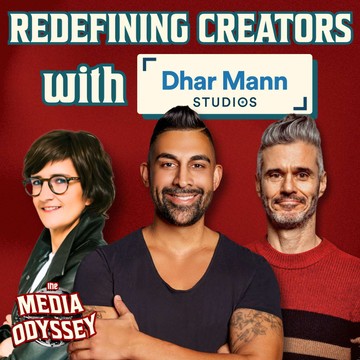
REDEFINING CREATORS with Dhar Mann
Dhar Mann, an innovative entrepreneur and creator behind Dhar Mann Studios, shares his journey of building a content empire from the ground up. He dives into the emotional depth of storytelling, explaining how vulnerability influences his scripts. Dhar discusses the importance of data-driven production, A/B testing, and scaling a creative team while retaining a scrappy mindset. He also explores the benefits of multi-platform distribution and offers valuable advice for creators to embrace their struggles and approach their work like a business.

