

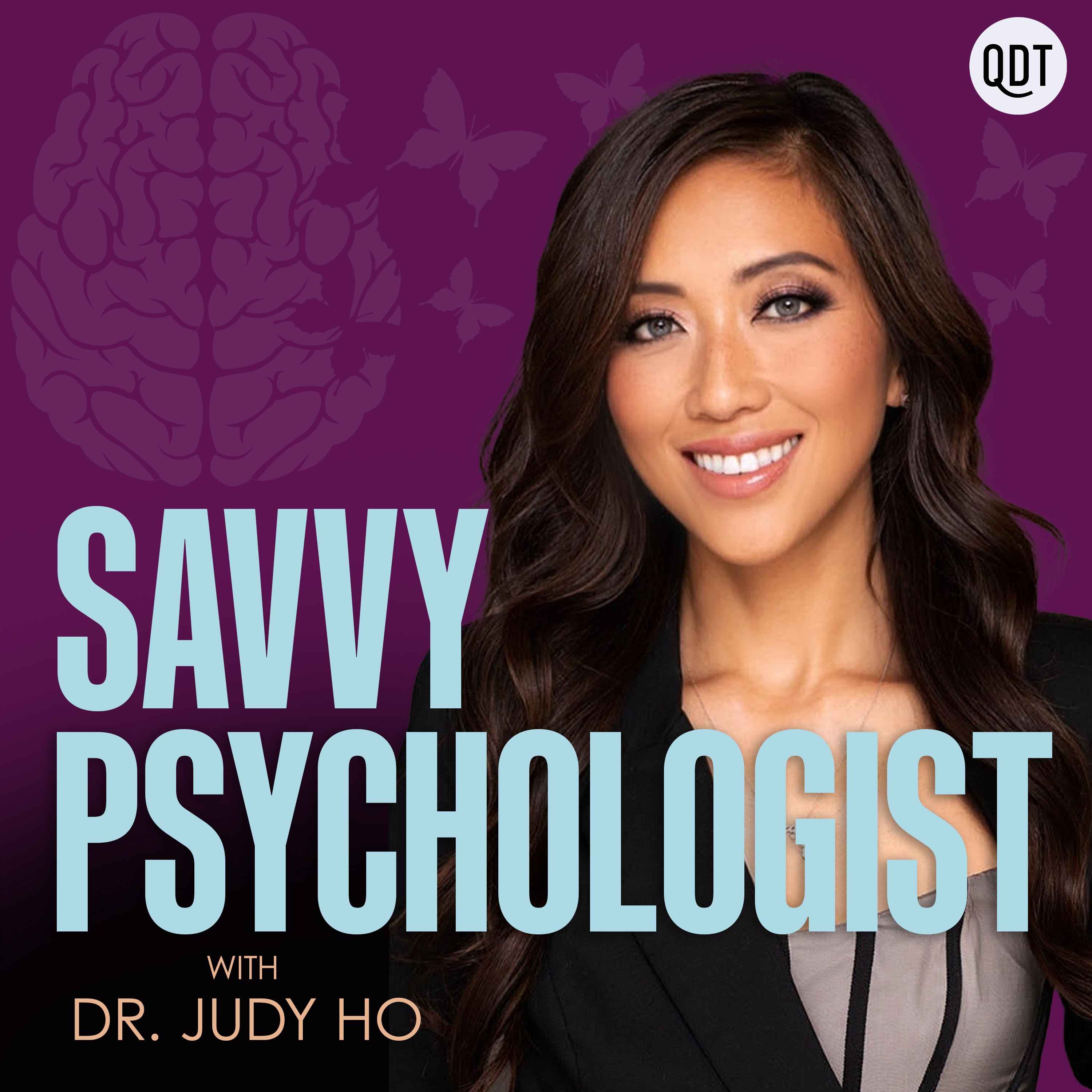
Savvy Psychologist
QuickAndDirtyTips.com
Seeking a healthier emotional life? It’s time to bring a trained psychologist and mental health expert along for the ride. Dr. Judy Ho explains the why behind complex emotions, helps you form better relationships, and guides you down the path of self-understanding. Hosted on Acast. See acast.com/privacy for more information.
Episodes
Mentioned books

Oct 6, 2026 • 12min
Brain rot is real. What scrolling is actually doing to your brain
Why can 45 minutes of scrolling vanish in an instant? This discussion explores the science behind “brain rot,” including attention fatigue, cognitive fog, variable rewards, and why everyday activities can start to feel dull. It also examines how scrolling creates a self-reinforcing cycle and highlights flow, conversation, and challenging hobbies as pathways back to sustained focus.

Sep 29, 2026 • 19min
Existential Depression: Why do I feel empty when nothing is wrong?
Functioning, achieving, and seemingly fine, yet feeling hollow? This conversation explores existential depression, the big questions behind it, and why it can surface after major milestones or life transitions. It delves into mortality, freedom, isolation, and meaning, drawing on Frankl, Yalom, and ACT. Three practical reflections offer ways to reconnect with what makes life feel alive.

Sep 22, 2026 • 25min
The love that controls you: Understanding coercive control
Coercive control rarely begins with obvious violence. This conversation explores love bombing, isolation, surveillance, financial abuse, spiritual authority, trauma bonding, and the gradual loss of identity. It also examines why control can affect anyone, why couples therapy may be unsafe, and how loved ones can offer support without taking away autonomy.

Sep 15, 2026 • 19min
Why do I feel lonely even when my life is full?
Feeling lonely despite a packed calendar and loving relationships can be confusing and painful. This discussion explores the difference between social isolation and emotional disconnection, three forms of loneliness, and how loneliness can affect sleep, stress, inflammation, heart health, and cognition. It also examines why digital contact may feel hollow and ways to build more genuine connection through small conversations, reaching out, and deeper vulnerability.

Sep 8, 2026 • 18min
Have you always been "a lot"? You might be a highly sensitive person
572. If you were ever told you were too sensitive, too intense, or that you feel things too much — this episode is for you. The Highly Sensitive Person trait affects 15–30% of the population, shows up in over 100 animal species, and has measurable differences on brain scans. It is not a flaw. This week Dr. Judy Ho breaks down what HSP actually is, what makes the HSP brain genuinely different, the strengths that almost never get named, and three tools for thriving as an HSP rather than just surviving.Have a mental health question? Email Dr. Judy's team at [email protected] Savvy Psychologist on Facebook and subscribe to the newsletter for more psychology tips.Watch on YouTube: www.youtube.com/@SavvyPsychologistMore from Dr. Ho on her other channels:Dr. Ho's website, Substack, LinkedIn.Savvy Psychologist is a part of Quick and Dirty Tips. Find a transcript at QuickandDirtyTips.com. Hosted on Acast. See acast.com/privacy for more information.

Sep 1, 2026 • 18min
What the Lindsay Clancy trial gets wrong about postpartum psychosis — and what every parent needs to know
The Lindsay Clancy trial has reignited confusion about postpartum mental health. This discussion separates baby blues, postpartum depression, anxiety, and postpartum psychosis, while exploring missed warning signs, healthcare gaps, risk factors, and the urgent symptoms that demand action. It also examines how severe mental illness intersects with criminal responsibility and how loved ones can respond.

Aug 25, 2026 • 34min
Billy Eichner on how to be fearless without trauma or shame
570. People constantly tell Billy Eichner he's fearless, and they always want to know how he does it. In Savvy Psychologist's first-ever interview episode, Dr. Judy Ho sits down with the comedian behind "Billy on the Street" and "Parks and Recreation" to trace that boldness back to its source, and it isn't the one you'd expect. There's a stubborn myth that artists have to suffer to be great, but Billy's story is the opposite: two middle-class parents in a small Queens apartment who never instilled an ounce of shame in him and leaned all the way into who he was. His new audio memoir, "Billy on Billy," reveals how feeling completely safe and accepted as a kid is what gave him permission to take risks and become fully himself. The reframe at the heart of it: real confidence is built by love, not forged through pain. Listen to "Billy on Billy: An Audio Memoir" Have a mental health question? Email Dr. Judy's team at [email protected] Savvy Psychologist on Facebook and subscribe to the newsletter for more psychology tips.Watch on YouTube: www.youtube.com/@SavvyPsychologistMore from Dr. Ho on her other channels:Dr. Ho's website, Substack, LinkedIn.Savvy Psychologist is a part of Quick and Dirty Tips. Find a transcript at QuickandDirtyTips.com. Hosted on Acast. See acast.com/privacy for more information.

9 snips
Aug 18, 2026 • 17min
Why you stay up way too late even when you’re exhausted: The psychology of revenge bedtime procrastination
You learn why late-night wakefulness is not laziness but a reaction to feeling robbed of daytime choice. The conversation traces the term’s origins and who is most vulnerable. It explores a cortisol rebound that can tack 60–90 extra minutes onto sleeplessness. Practical fixes include tiny autonomy wins, honoring your first wave of tiredness, and creating a transition ritual to close the day.

11 snips
Aug 11, 2026 • 18min
Why do certain people leave you completely drained?
They unpack why some conversations leave you emotionally drained and what happens in your brain and body during those interactions. The difference between unintentional drainers and manipulative people is explored. Who is most vulnerable is discussed, including empathic and attachment factors. Three simple tools to protect your energy without cutting people off are presented.

Aug 4, 2026 • 20min
Why your inner critic is so loud (and three ways to change that)
567. There’s a voice in your head that has opinions about everything you do — and most of them are unkind. It replays your mistakes. It pre-edits your ideas before you even say them. It tells you that you’re too much, not enough, or both at once. This week Dr. Judy Ho unpacks the inner critic: where it comes from, why it’s louder for some people than others, what the neuroscience says about why it’s so hard to shut up — and three evidence-based tools to change your relationship with it for good.Have a mental health question? Email Dr. Judy's team at [email protected] Savvy Psychologist on Facebook and subscribe to the newsletter for more psychology tips.Watch on YouTube: www.youtube.com/@SavvyPsychologistMore from Dr. Ho on her other channels:Dr. Ho's website, Substack, LinkedIn.Savvy Psychologist is a part of Quick and Dirty Tips. Find a transcript at QuickandDirtyTips.com. Hosted on Acast. See acast.com/privacy for more information.

