

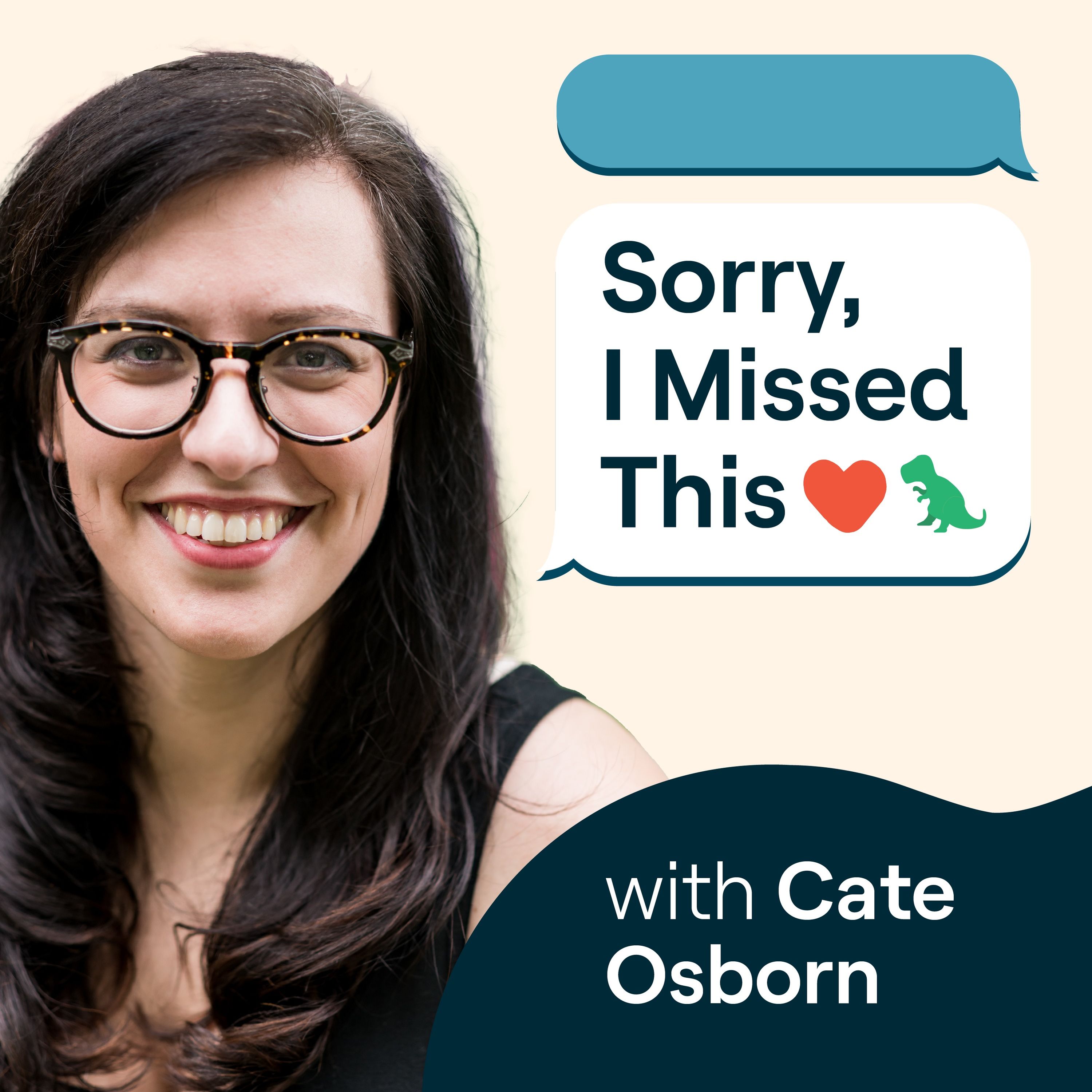
Sorry, I Missed This: The Everything Guide to ADHD and Relationships with Cate Osborn
Cate Osborn, Understood.org
It can be hard to navigate relationships when you have ADHD. Host Cate Osborn has ADHD, a background in sex education, and a whole lot of questions like “How do I know what I want out of a relationship? How do I remember my friends exist? What can I do to handle conflict better?”
Tune in to Sorry, I Missed This to learn about topics like social skills, boundaries, communication, intimacy, and sex. Join Cate in unpacking the taboo, painful, and often hilarious challenges of being in a relationship when you have ADHD.
Tune in to Sorry, I Missed This to learn about topics like social skills, boundaries, communication, intimacy, and sex. Join Cate in unpacking the taboo, painful, and often hilarious challenges of being in a relationship when you have ADHD.
Episodes
Mentioned books

Mar 11, 2025 • 27min
Building ADHD community
Without community, ADHD can feel isolating and shameful. Like you’re the only one facing these challenges and “can’t get it together.” Community provides a space to share the wins and the embarrassing moments. And it can be especially helpful for women processing late diagnoses.Host of the ADHDAF podcast and UK ADHD community builder, Laura Mears-Reynolds, visits the show to talk about how sharing experiences with others can ease shame, and create support. Related resourcesadhdasfemales.comThe ADHD Women subredditADHD Support for Women by Understood.org’s Facebook groupTimestamps(00:57) How do we find value in a community with ADHD?(03:58) How did Laura get started building the ADHDAF community?(09:39) Feeling alone in what you’re facing without community(14:36) Being compassionate with others helps us be compassionate with ourselves(18:14) Feeling isolated with ADHD(19:56) How do I find community? How do I build it myself?For a transcript and more resources, visit the Sorry, I Missed This page on Understood.orgWe love hearing from our listeners. Email us at sorryimissedthis@understood.org.
Understood.org is a nonprofit organization dedicated to empowering people with learning and thinking differences, like ADHD and dyslexia. If you want to help us continue this work, donate at understood.org/give Hosted by Simplecast, an AdsWizz company. See pcm.adswizz.com for information about our collection and use of personal data for advertising.

Feb 25, 2025 • 28min
The ADHD shame spiral from making mistakes in relationships
A lot of shame can come up when a person with ADHD is confronted about a mistake they’ve made. They might start to spiral into bad feelings, and negative self-talk, when really the person bringing up the mistake most likely wants to repair their relationship, and even strengthen their bond.Host Cate Osborn chats to ADHD coach Jaye Lin about why this happens, and what we can do to “reverse the train” to stop the spiral. Jaye is the host of another show on the MissUnderstood podcast channel, Tips from an ADHD Coach. Related resourcesThe MissUnderstood podcast channel (where you can find Jaye’s podcast, Tips from an ADHD Coach)ADHD and: ShameADHD and emotionsTimestamps(00:41) Being scared of making mistakes or showing ADHD traits(04:38) “Reversing the train” instead of spiraling when someone brings up a mistake we’ve made(08:23) Slipping into the shame spiral easily(11:28) Directly addressing the damage caused by your actions, intentional or not(15:51) The element of repair(16:30) Perfectionism and internalized judgement(20:28) Rejection sensitivity and how we react to things(23:19) The “scary moment” when someone brings up your mistake(25:55) Jaye’s last piece of adviceFor a transcript and more resources, visit the Sorry, I Missed This page on Understood.We love hearing from our listeners. Email us at sorryimissedthis@understood.org.
Understood.org is a nonprofit organization dedicated to empowering people with learning and thinking differences, like ADHD and dyslexia. If you want to help us continue this work, donate at understood.org/give Hosted by Simplecast, an AdsWizz company. See pcm.adswizz.com for information about our collection and use of personal data for advertising.

Feb 11, 2025 • 32min
Navigating emotional intimacy with ADHD
Emotional intimacy is about sharing an emotional connection and presence with yourself and other people. But a lot of ADHD traits, and lived experiences, can get in the way. This could be due to trouble with emotional regulation, the emotional labor it takes to feel believed, masking, and more.Michelle Frank is a clinical psychologist and the co-author of A Radical Guide for Women with ADHD. Listen to this conversation exploring how shame can be a roadblock to emotional intimacy, and how this intimacy can look different within every relationship.Related resourcesMichelle’s book, A Radical Guide for Women with ADHD by Sari Solden and Michelle FrankTimestamps(02:46) What is emotional intimacy?(04:14) Barriers to emotional intimacy with ADHD(09:33) Shame and ADHD(15:29) What steps can we take to build emotional intimacy?(17:28) Sitting in uncomfortable feelings, and rejection sensitivity(20:48) People pleasing versus building authentic connections(22:36) What about when we’re in a relationship without emotional intimacy?(28:41) Where can you find Michelle? For a transcript and more resources, visit the Sorry, I Missed This page on Understood.We love hearing from our listeners. Email us at sorryimissedthis@understood.org.
Understood.org is a nonprofit organization dedicated to empowering people with learning and thinking differences, like ADHD and dyslexia. If you want to help us continue this work, donate at understood.org/give Hosted by Simplecast, an AdsWizz company. See pcm.adswizz.com for information about our collection and use of personal data for advertising.

Jan 28, 2025 • 35min
Help! I’m in a parentified relationship!
Romantic partners often support and help each other out with different things. And with ADHD in the relationship, there might be some extra support needed here and there. But what happens when that support crosses the line into parentification, or taking care of your partner like they’re your child? Or the other way around, where your partner is responsible for taking care of you?Psychologist Lesley Cook (@lesleypsyd) visits the podcast to talk about how to notice parentification happening in your relationship, and the resentment that can build when it goes unnoticed. Related resourcesLesley’s TikTok, @lesleypsydA Radical Guide for Women with ADHD by Sari Solden and Michelle FrankTimestamps(03:03) What is a parentified relationship?(05:37) When an ADHD partner is the “parent” in the relationship or takes on too much responsibility(07:33) Are parentified relationships typically gendered?(08:48) Fairness versus equity in relationships(11:44) Weaponized incompetence(14:49) What happens to a relationship when it’s parentified for too long?(17:19) Notice, shift, repair(18:45) What to do when you notice yourself taking on too much responsibility for your partner(21:08) People pleasing, and the need to fix things(22:46) How to ask the right questions to your partner(24:07) Noticing your ADHD at play, and using it as an explanation, not an excuse(28:02) Setting an example as a parent to kids(32:24) Lesley’s parting advice(33:00) Where you can find Lesley and creditsFor a transcript and more resources, visit the Sorry, I Missed This page on Understood.We love hearing from our listeners. Email us at sorryimissedthis@understood.org.
Understood.org is a nonprofit organization dedicated to empowering people with learning and thinking differences, like ADHD and dyslexia. If you want to help us continue this work, donate at understood.org/give Hosted by Simplecast, an AdsWizz company. See pcm.adswizz.com for information about our collection and use of personal data for advertising.

Jan 14, 2025 • 35min
Consensual non-monogamy and ADHD relationships
Monogamous romantic relationships have been seen as the norm for a long time. They’re the kind most commonly represented in the media, often as the only “right” kind of relationship. However, open relationships, polyamory, and other consensual non-monogamous relationships are more common than you might think. People with ADHD often find ways of living life outside of the typical standard. This could include being non-monogamous!Martha Kauppi is a marriage and family therapist and sex therapist. She is the author of the book Polyamory: A Clinical Toolkit for Therapists (And Their Clients). Listen to this conversation on jealousy, reaching agreements with your partner, and what consensual non-monogamy really is.Related resourcesPolyamory: A Clinical Toolkit for Therapists (And Their Clients) by Martha Kauppi8 Steps To Opening Up: Starting The Conversation About Non-Monogamy, a Free eBook by Martha KauppiMartha Kauppi’s website, www.instituteforrelationalintimacy.comTimestamps(00:55) Why learn about consensual non-monogamy?(04:04) What is consensual non-monogamy?(05:36) What is the biggest misconception about non-monogamy?(08:40) Building a relationship that works for you, not just what you see in the media(11:46) Viewing non-monogamy as an option in life(15:42) Moving toward consensual non-monogamy in a relational way(21:03) How would you start a conversation about opening your currently monogamous relationship?(24:20) Tips for working through jealousy (25:35) What is compersion?(30:13) It’s OK if non-monogamy isn’t for you! (32:10) Where can you find Martha? For a transcript and more resources, visit the Sorry, I Missed This page on Understood.We love hearing from our listeners. Email us at sorryimissedthis@understood.org.
Understood.org is a nonprofit organization dedicated to empowering people with learning and thinking differences, like ADHD and dyslexia. If you want to help us continue this work, donate at understood.org/give Hosted by Simplecast, an AdsWizz company. See pcm.adswizz.com for information about our collection and use of personal data for advertising.

Dec 31, 2024 • 11min
ADHD and: Rejection sensitivity (From the “ADHD and” podcast)
This week, host Cate Osborn shares an episode from ADHD and, another podcast on the MissUnderstood podcast channel. Imagine receiving a “no” to an idea you’ve shared in a meeting. Instead of brushing it off, you become overwhelmed with thoughts of self-doubt and a deep sense of rejection. This intense emotional reaction is known as rejection sensitivity. And many women with ADHD experience it. In this episode, Dr. J explains how ADHD can amplify fears of rejection. Listen in to learn strategies women with ADHD can use to navigate these feelings.Related resourcesADHD and rejection sensitive dysphoria (RSD)Emotion sunburn: What rejection sensitive dysphoria feels like to meRejection sensitivity, ADHD drain, and the power of failure (Weston’s story)Timestamps(00:00) Introduction from Cate(01:43) Start of ADHD and episode(02:32) What is rejection sensitivity?(04:33) How can rejection sensitivity impact women with ADHD?(05:14) Helpful ways to manage rejection(06:31) What is cognitive reframing?For a transcript and more resources, visit the MissUnderstood page on Understood.orgWe love hearing from our listeners. Email us at sorryimissedthis@understood.org.
Understood.org is a nonprofit organization dedicated to empowering people with learning and thinking differences, like ADHD and dyslexia. If you want to help us continue this work, donate at understood.org/give Hosted by Simplecast, an AdsWizz company. See pcm.adswizz.com for information about our collection and use of personal data for advertising.

Dec 17, 2024 • 37min
Reddit reactions: ADHD and romantic relationships!
Have you ever been called a “manic pixie dream girl” by someone you were dating? Is it hard to remember your partner when they’re not with you? ADHD can bring its own set of challenges to dating, and romantic relationships.Producer Margie visits the podcast to share what she’s found on the ADHD Women subreddit, where women with ADHD ask questions and share their challenges and wins. Listen for Cate’s reactions and a chat about common romantic dilemmas for women with ADHD!Related resourcesThe ADHD Women subredditADHD Support for Women by Understood.org’s Facebook groupTimestamps(00:00) Women with ADHD communities, and common dating tropes(03:46) Post #1 “I was too much for him”(06:37) Post #2 “I did 12 loads of laundry to avoid writing a dating profile”(11:56) Post #3 “Anyone else chronically feel like they’re not in a place where they’re ready to date?”(16:27) Post #4 “Having ADHD as a woman and still having to carry the mental load”(22:20) Post #5 “The ADHD struggle of falling in love after every good date”(27:04) Post #6 “Does anyone else struggle with accidentally ignoring their partner or friends?”(34:28) Talking about what gives us shame helps everyoneFor a transcript and more resources, visit the Sorry, I Missed This page on Understood.orgWe love hearing from our listeners. Email us at sorryimissedthis@understood.org.
Understood.org is a nonprofit organization dedicated to empowering people with learning and thinking differences, like ADHD and dyslexia. If you want to help us continue this work, donate at understood.org/give Hosted by Simplecast, an AdsWizz company. See pcm.adswizz.com for information about our collection and use of personal data for advertising.

Dec 3, 2024 • 35min
Oh, Baby! It’s an ADHD pregnancy!
ADHD can impact pregnancy in a number of ways: Higher rate of postpartum depression, hormone surges that affect the brain’s functioning, increased demands on our executive function, and so much more. Our guest this week, Dusty Chipura, is an ADHD and pregnancy expert, ADHD coach, and doula in training. Dusty takes us through pregnancy with ADHD, what you might expect, and what conversations are important to have with your support network ahead of welcoming a baby. Related resourcesA guide to hormones and ADHDADHD and pregnancy workbook by Alix Bacon and Dusty ChipuraDusty’s website, vancouveradhdcoaching.comTimestamps(01:27) Some ways ADHD affects pregnancy(02:25) How did Dusty become an expert in ADHD and pregnancy?(04:21) First trimester/early pregnancy and ADHD(05:57) Sensory sensitivities and pregnancy(08:44) Second trimester(13:23) What conversations should we be having with our support system during this time?(17:20) Third trimester(20:04) What happens after the baby is born?(22:33) ADHD and the postpartum period(25:55) Best practices and tools(28:41) Dusty’s top tips(30:35) Dealing with parental guilt(31:59) Where you can find DustyFor a transcript and more resources visit the Sorry, I Missed This page on Understood.orgWe love hearing from our listeners. Email us at sorryimissedthis@understood.org.
Understood.org is a nonprofit organization dedicated to empowering people with learning and thinking differences, like ADHD and dyslexia. If you want to help us continue this work, donate at understood.org/give Hosted by Simplecast, an AdsWizz company. See pcm.adswizz.com for information about our collection and use of personal data for advertising.

Nov 19, 2024 • 31min
ADHD breakups: Impulsive texts and overthinking regrets
Sometimes, romantic relationships just don’t work out. And breaking up with someone can be really tough — including having the breakup conversation. With ADHD, overthinking, people-pleasing, and rejection sensitivity can make it even harder. This week, ADHD coach and author of I Don’t Hate My Ex-Husband Jess DuBose visits Sorry, I Missed This. Listen to learn how to check in with yourself about your relationship, and some tips to help you through a breakup conversation. Related resourcesADHD and rejection sensitive dysphoria (RSD)Jess’ website, jessdubose.comI Don’t Hate My Ex-Husband by Jess DuBoseNational Domestic Violence HotlineRainn.orgTimestamps(02:08) Why did Jess write her book?(04:13) How does ADHD impact breaking up?(05:19) Staying in a relationship because of people-pleasing(07:42) Jess’ growth process: ASPIRE(10:22) Guided meditation exercise about whether or not to break up with someone(14:08) What can help you through a breakup(19:32) Initiating the conversation to end a relationship(24:10) How to avoid the impulse to backpedal during the breakup conversation(27:37) Jess’ parting advice(29:14) Where you can find JessTo get a transcript of this show and check out more episodes, visit the Sorry, I Missed This podcast page at Understood.org.We love hearing from our listeners. Email us at sorryimissedthis@understood.org.
Understood.org is a nonprofit organization dedicated to empowering people with learning and thinking differences, like ADHD and dyslexia. If you want to help us continue this work, donate at understood.org/give Hosted by Simplecast, an AdsWizz company. See pcm.adswizz.com for information about our collection and use of personal data for advertising.

Nov 5, 2024 • 30min
ADHD and self-advocacy at work
Self-advocacy and ADHD workplace disclosure come together in a package. It’s important to know yourself and your values in order to be the best self-advocate you can be. In this week’s episode, ADHD at Work founder Meghan Brown-Enyia answers the question: What is a good self-advocate? And, gives her recipe for advocating for yourself. Related resourcesWhat is self-advocacy?Pros and cons of disclosing a disability to employersAccommodations: What they are and how they workMeghan’s website, ADHDatwork.coTimestamps(03:05) Why did Meghan create ADHD at Work?(06:59) Am I ready to be an ADHD self-advocate?(09:37) Meghan’s recipe for self-advocacy(13:19) Self-advocacy and emotional regulation(16:08) How do you figure out your ADHD needs in the workplace?(19:33) Best practices for asking for supports(24:00) Am I a bad self-advocate if I choose not to disclose my ADHD?(26:36) Where you can find MeghanTo get a transcript of this show and check out more episodes, visit the Sorry, I Missed This podcast page at Understood.orgWe love hearing from our listeners. Email us at sorryimissedthis@understood.org.
Understood.org is a nonprofit organization dedicated to empowering people with learning and thinking differences, like ADHD and dyslexia. If you want to help us continue this work, donate at understood.org/give Hosted by Simplecast, an AdsWizz company. See pcm.adswizz.com for information about our collection and use of personal data for advertising.

