

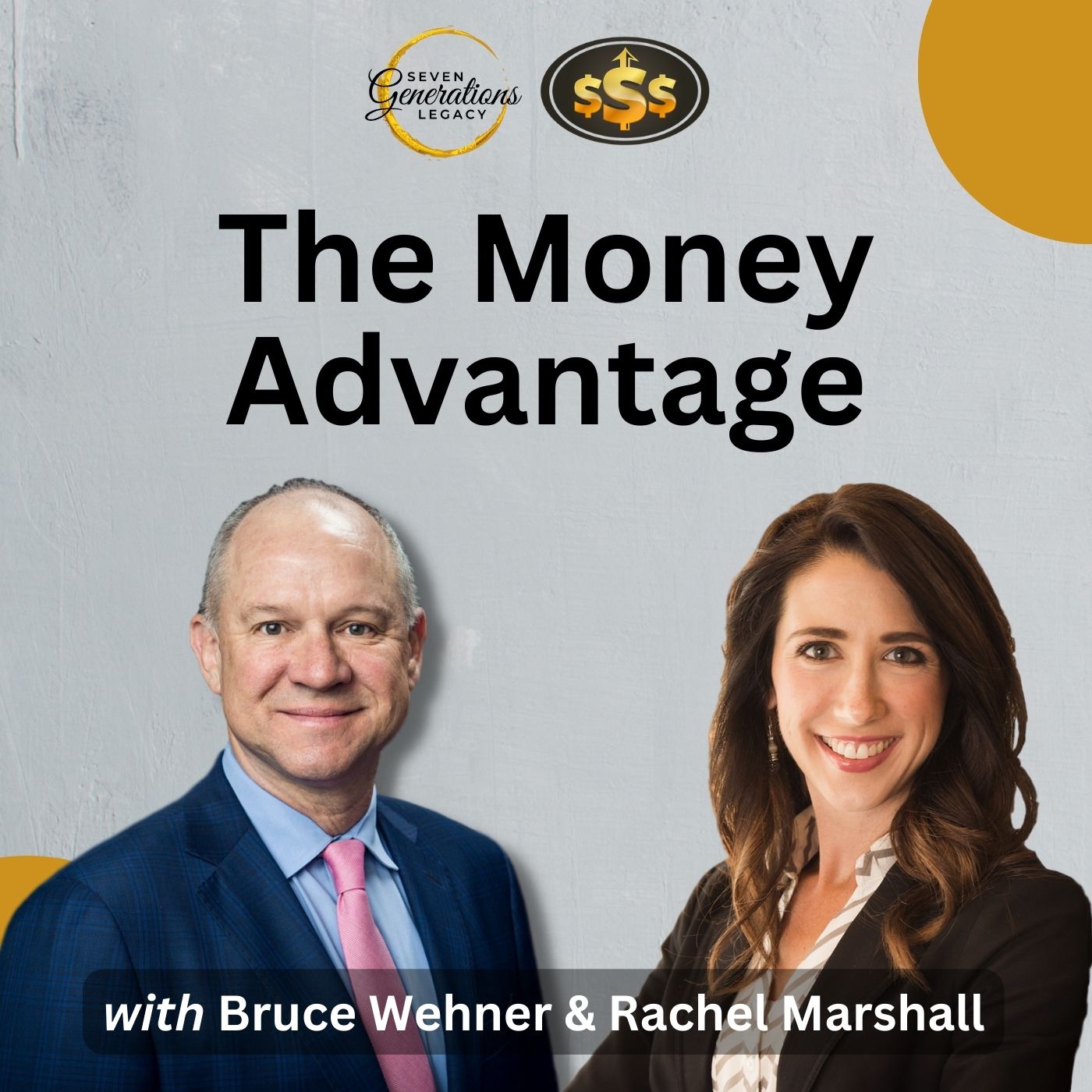
The Money Advantage Podcast
Bruce Wehner & Rachel Marshall
Personal Finance for the Entrepreneurially-Minded!
Episodes
Mentioned books

Nov 3, 2025 • 58min
Increase Your Savings Without Reducing Your Lifestyle
If you want to increase your savings, don’t start with your budget—start with your lifestyle.Your lifestyle isn’t about how much you spend.It’s about what you prioritize.It’s the visible result of invisible decisions—what you say yes to, what you say no to, and what you're building quietly behind the scenes.
https://www.youtube.com/live/wZIJnteQW-g
Too many people let lifestyle be the engine of their money—chasing comfort, appearances, or upgrades without ever asking:
Does this reflect the values I want to pass on?Does this build up my family or just maintain an image?
You don’t need a bigger house or fancier car.You need a bigger vision.You need a coordinated plan that reflects your values in how you live today—and what you leave behind tomorrow.
The quiet thief of financial progress: lifestyle creep.
We don’t see it coming. It’s the subtle shift that happens every time our income rises. We eat out a little more, upgrade our phone, take an extra trip, and before we know it, our expenses grow in lockstep with our income.
We think we’ve moved forward—but our savings tell a different story.
And that’s why Bruce and I recorded an entire podcast about this topic: how to increase your savings without reducing your lifestyle. Because true wealth isn’t about deprivation—it’s about design.
Why You Can’t Save Your Way to Wealth—Without a PlanWhat Is Lifestyle Creep—And Why Is It So Dangerous?Why We Overspend—And How the Mind Tricks UsThe Savings Crisis—And What It Means for YouThe Secret Weapon—Your Wealth Coordination AccountHow to Increase Your Savings Without Reducing Your LifestyleThe Compounding Effect of Intentional SavingWhy Simplicity Beats ComplexityMargin Is the Measure of StewardshipBook A Strategy CallFAQWhat is lifestyle creep?How can I increase my savings without reducing my lifestyle?What is a Wealth Coordination Account?Why is lifestyle creep harmful?What savings rate should I aim for?
Why You Can’t Save Your Way to Wealth—Without a Plan
Most people try to willpower their way to saving more money. They cut lattes, cancel subscriptions, and create color-coded budgets that last about two weeks.
But here’s the truth: you can’t build lasting wealth on discipline alone.
You need a system—one that helps you automatically grow your savings while maintaining the lifestyle you love.
In this article, Bruce and I will show you:
What lifestyle creep really is and why it sabotages your wealth
How Parkinson’s Law explains your struggle to save
The practical tool we use with clients called a Wealth Coordination Account
How to rewire your habits to save more—without cutting joy out of your life
When you finish this article, you’ll see that increasing your savings doesn’t mean living smaller. It means living smarter.
What Is Lifestyle Creep—And Why Is It So Dangerous?
We live in a consumption-driven world. Everywhere we look, there’s an ad convincing us we need something new.
Apple doesn’t ask what we want—they tell us what we didn’t know we needed. The next iPhone, the next upgrade, the next experience.
That’s lifestyle creep. It’s the pattern of spending more simply because we earn more.
Bruce calls it “the hidden drain on your future.” Because when every new dollar gets consumed by an upgraded lifestyle, none of it turns into wealth.
And here’s the sneaky part: it doesn’t feel reckless. It feels normal. Everyone around us does the same thing. We raise our standard of living instead of our standard of saving—and we end up with more stuff but no margin.
Lifestyle creep makes you rich on the outside but broke on the inside.
Why We Overspend—And How the Mind Tricks Us
Our culture makes spending effortless. Credit cards, one-click shopping, social media retargeting—these are all designed to bypass logic and hit emotion.
As I said on the show, “It’s the sea we swim in.”
Most people don’t realize how much marketing is shaping their sense of “need.” A simple scroll through Instagram can make you feel behind—like you’re missing something everyone else has.
That emotional gap drives impulsive spending. But here’s the truth: spending more rarely fills what’s missing.
Bruce said it best: “Stores are designed to make your brain react. That’s why milk and eggs are at the back of the store—you walk past temptation twice.”
To overcome this, you need something external to your willpower—a structure that makes intentional spending the easy choice.
The Savings Crisis—And What It Means for You
Let’s look at the numbers. The U.S. personal savings rate has hovered between 4–5% for years. During COVID, it spiked, but as soon as the economy reopened, savings plummeted again.
The average American spends nearly everything they earn.
That means if you save 5% of your income, you’re already ahead of the national average. But if you want to build real wealth, 5% won’t cut it.
In our experience, families who save 25–30% of their cash flow are the ones who move from financial stress to financial freedom.
And the good news? You don’t have to cut your lifestyle to get there. You just need a plan that directs your dollars intentionally.
The Secret Weapon—Your Wealth Coordination Account
Here’s the system we use and teach: The Wealth Coordination Account (WCA).
Think of it as a savings autopilot—a separate account designed to catch your money before you can spend it.
When your income hits your main account, a set percentage automatically flows into your WCA. You don’t see it, you don’t touch it, and you don’t rely on willpower.
This isn’t about deprivation—it’s about direction.
Bruce shared his personal setup: he uses a separate bank for this account, no debit card, no online transfer, and he even keeps the checks locked away. That friction creates intention.
In our household, Lucas and I treat our life insurance cash value the same way—it’s our long-term wealth coordination system. Money flows there automatically, ready to fund investments, opportunities, and family goals.
The point isn’t where you store it. The point is that it’s untouchable for spending. This is not your “rainy day fund.” This is your future wealth account.
How to Increase Your Savings Without Reducing Your Lifestyle
Here’s the part most people get wrong: they think saving more means cutting back. But that’s a scarcity mindset.
Instead, focus on widening the gap between what you earn and what you spend—intentionally.
Here’s how to do it:
Track where your money is flowing.Awareness is the first step. Use a simple spreadsheet or even a notebook to see where every dollar goes.
Decide your “enough.”Be honest about what truly adds value to your life—and what’s just noise.
Automate your savings.Set up a recurring transfer into your Wealth Coordination Account right after every paycheck.
Increase your savings rate gradually.Every time your income rises, increase your savings by at least 1% more than your spending.
Protect your progress.Avoid raiding your savings for convenience or impulse. Money in your WCA should serve one purpose: to grow your family’s wealth and stability.
You’ll be amazed at how much freedom comes from structure.
The Compounding Effect of Intentional Saving
Bruce said something in the episode that stuck with me:
“Every dollar you spend is a dollar that will never earn another dollar for you.”
Think about that. When you spend $500 on a television, you don’t just lose the $500—you lose what that $500 could have earned over time.
If you had saved that same amount monthly and earned even 3% annually, you could have built over $1.6 million in 20 years.
That’s the cost of lifestyle creep. It’s not just today’s purchase—it’s tomorrow’s potential.
Saving isn’t about restriction. It’s about redemption—redeeming the future you’re called to build.
Why Simplicity Beats Complexity
You don’t need fancy software or complex budgets.
Simple works.
Your Wealth Coordination Account can be:
A savings account at a separate bank
A money market account at a brokerage
The cash value of a whole life insurance policy
The form doesn’t matter. What matters is the discipline of separation—keeping your wealth creation money apart from your spending money.
When you make saving invisible and automatic, you build wealth without effort.
That’s how you increase your savings without reducing your lifestyle.
Margin Is the Measure of Stewardship
You don’t have to cut joy to build wealth.You don’t have to live smaller to create more impact.
By designing a system that honors your values and automates your savings, you’ll create margin—and margin is the measure of true financial stewardship.
Because lifestyle is not about what you own.It’s about what you prioritize.
And when you prioritize increasing your savings first, you don’t just build wealth. You build freedom—for yourself, your family, and generations to come.
Book A Strategy Call
This article has given you a framework for how to choose the right life insurance agent—one who will guide you, educate you, and help you build a financial legacy. If you’re ready to explore working with an advisor who understands Infinite Banking and multigenerational planning, I invite you to book a call with our team at The Money Advantage.
We offer two powerful ways to help you create lasting impact:
Legacy Strategy Call – If you want to uncover your family values, mission, and vision, and create a legacy that’s about more than just money, we can guide you through the process of financial stewardship and family leadership. Save time coordinating your family’s finances while building a legacy that lasts for generations. Book a Legacy Strategy Call to learn more about how we can help.
Financial Strategy Call – Discover how Privatized Banking, alternative investments, tax-mitigation,
24 snips
Oct 27, 2025 • 52min
Premium Financing Life Insurance: Could Be Right, Sometimes Smart
Bruce Wehner, an experienced financial strategist specializing in life insurance and estate planning, joins to explore the complexities of premium financing life insurance. They discuss when it can be beneficial for high-net-worth individuals facing estate tax issues and how it can preserve liquidity without tapping into personal funds. Bruce outlines potential risks—like performance and interest-rate risks—and factors to consider before diving in, making this a must-listen for anyone curious about sophisticated financial strategies.
9 snips
Oct 20, 2025 • 43min
Hidden Money Traps: How to Recognize and Overcome the Sabotage Blocking Your Wealth
Explore the concept of hidden money traps that quietly sabotage financial well-being. Hear a cautionary tale about emotional spending, featuring an $80,000 Corvette purchase post-divorce. Understand the dangers of immediate gratification versus long-term gains. Discover how human behavior and mindset shape financial strategies even more than external factors. Unpack principles like Parkinson’s Law and the risks of lifestyle creep. Learn about the importance of saving habits, the impact of divorce on wealth, and the necessity of continuous learning in money management.
Oct 13, 2025 • 0sec
Infinite Banking vs Index Funds: Why You’re Asking the Wrong Question
The Gas Station Story That Reveals a Common Money Mistake
Let me paint a picture for you.
https://www.youtube.com/live/uqGN5Sz9tJg
You’re driving down the highway and see gas at $3.00 a gallon. Three miles later, you spot it for $2.97. You think, "Yes! A deal!" So you turn around, drive the extra six miles, and save... 30 cents.
Except you used 40 cents of gas to get there.
This is the kind of logic many people use when comparing Infinite Banking vs Index Funds. It’s a hyper-focus on rate of return, while missing the bigger picture of financial control, access, and long-term strategy.
So let’s talk about it.
The Gas Station Story That Reveals a Common Money MistakeRate of Return Isn’t the Whole StoryInfinite Banking vs Index Funds: What Are We Actually Comparing?Why Rate of Return Isn’t the Only FactorUnderstanding the Purpose of Your DollarsInfinite Banking Is About Ownership and LeverageInterrupting Compounding Is the Real CostControl vs Performance: What Matters Most?Infinite Banking vs Index Funds Is the Wrong ComparisonListen to the Full Podcast EpisodeBook A Strategy CallFAQ: Infinite Banking vs Index FundsQ: Are index funds better than Infinite Banking?Q: Can I use both Infinite Banking and index funds?Q: Does Infinite Banking have a good rate of return?Q: Is Infinite Banking risky?
Rate of Return Isn’t the Whole Story
There’s a conversation happening everywhere in the financial world: Should I use Infinite Banking or just invest in an index fund?
Maybe you've asked this question yourself. You’ve heard someone say, "Wouldn’t I make more money if I just put it in an S&P 500 index fund?"
This comparison sounds reasonable — until you realize it’s like comparing a hammer to a screwdriver and asking, "Which one builds a better house?"
The truth? You're asking the wrong question.
In this article, you’ll learn:
Why comparing Infinite Banking to index funds is fundamentally flawed
The purpose and role of each strategy
How to think like a wealth creator, not just a rate chaser
Why long-term control beats short-term returns
Let’s flip the script and empower you to take control of your financial life—with clarity, confidence, and a legacy mindset.
Infinite Banking vs Index Funds: What Are We Actually Comparing?
Here’s where we start: Infinite Banking is not an investment.
It’s a cash flow system, a capital control strategy, a way to reclaim the banking function in your life. It uses a specially designed, dividend-paying whole life insurance policy as the tool—but Infinite Banking is the process.
Index funds, on the other hand, are investments. They're baskets of stocks that mirror the market—the S&P 500, the Russell 2000, etc. The goal of an index fund is growth through market performance.
So when someone says, "But the market earns more than whole life insurance," they’re missing the point. We’re not solving the same problem.
Infinite Banking solves for control of capital. Index funds solve for growth.
Why Rate of Return Isn’t the Only Factor
We get it. Everyone wants to know their ROI. But when that becomes your only filter, you lose sight of what really matters.
Consider this: When you access money from an index fund, you sell shares. You interrupt compounding. You lose growth potential.
With Infinite Banking, you borrow against your cash value—without interrupting growth. That means your money continues to earn even while you're using it.
"You’re always paying interest. Either to someone else, or by giving up what you could have earned on your own capital." — Bruce Wehner
When you control the banking function, you stop giving away the opportunity to earn. And that’s where legacy wealth starts.
Understanding the Purpose of Your Dollars
All money has a job. We teach our clients to classify money into three roles:
Safety
Liquidity
Growth
Most people try to make every dollar do all three. That never works. Instead, we need to clarify: What is the purpose of these dollars?
If it's for safe storage, liquidity, and access: Infinite Banking.
If it’s for long-term market-based growth: Index funds.
Think of your personal economy as a water system. There’s a “risk tank” and a “safe tank.” Investments like index funds go into the risk tank. Infinite Banking fills the safe tank.
You need both—but you need to know what each is really for.
Infinite Banking Is About Ownership and Leverage
What do banks do? They:
Collect deposits
Control the capital
Lend it out
Earn interest
Infinite Banking lets you do the same thing.
When you use a mutual whole life insurance policy, you become a part owner of the insurance company. You earn dividends. You have contractual guarantees. And you can borrow against your policy without applying for a loan, without credit checks, and on your terms.
That’s financial leverage. And it's a game-changer.
"You're either renting your banking function from someone else, or you own it. Infinite Banking puts you in the ownership seat."
Interrupting Compounding Is the Real Cost
People say, "I don’t want to pay interest to borrow against my policy."
But here’s the flip side: If you take that money and invest it directly into an index fund, and you need to pull it out, you’re interrupting the compounding. That’s the cost most people never calculate.
Infinite Banking = uninterrupted growth
Index funds = interrupted growth whenever you withdraw
Which would you rather have over the next 40 years?
Control vs Performance: What Matters Most?
It’s time to stop looking at investments as the only way to build wealth.
Control is more important than performance.
If you can access your capital, use it for strategic opportunities, and know it’s growing even while you use it—that puts you in a position of power.
This is about legacy. Stewardship. Being the banker in your own life.
Infinite Banking vs Index Funds Is the Wrong Comparison
If you've been wondering whether Infinite Banking or index funds are "better," the answer is: You're asking the wrong question.
They serve different purposes.
Index funds are for growth (with risk).
Infinite Banking is for control (with guarantees).
One is not better than the other—but using the wrong tool for the job is a guaranteed way to lose time, money, and peace of mind.
Infinite Banking is not a replacement for investing. It’s the foundation that lets you invest from a place of strength and control.
Listen to the Full Podcast Episode
Want to hear the full conversation?
Bruce and I go deep on this topic in our podcast episode: "Infinite Banking vs Index Funds". We cover:
Why comparing rate of return is a distraction
The unseen cost of interrupting compounding
How Infinite Banking creates financial leverage
Why legacy-minded wealth creators think differently
Book A Strategy Call
Are you ready to take control of your finances and legacy? We offer two powerful ways to help you create lasting impact:
Financial Strategy Call – Discover how Privatized Banking, alternative investments, tax-mitigation, and cash flow strategies can accelerate your time and money freedom while improving your life today. Let us show you how to align your financial resources for maximum growth and efficiency. Book a Strategy Call with our team today.
Legacy Strategy Call – If you want to uncover your family values, mission, and vision, and create a legacy that’s about more than just money, we can guide you through the process of financial stewardship and family leadership. Save time coordinating your family’s finances while building a legacy that lasts for generations. Book a Legacy Strategy Call to learn more about how we can help.
FAQ: Infinite Banking vs Index Funds
Q: Are index funds better than Infinite Banking?A: It depends on your financial goals. Index funds aim for market-based growth with risk. Infinite Banking provides control, safety, and access to capital. They serve different purposes.Q: Can I use both Infinite Banking and index funds?A: Yes. Many of our clients use Infinite Banking as the foundation and then invest in other investments from their policy loans, giving them both growth and control.Q: Does Infinite Banking have a good rate of return?A: While the internal rate of return is lower than some investments, Infinite Banking is not designed to compete on return alone. Its value is in uninterrupted growth, liquidity, and leverage.Q: Is Infinite Banking risky?A: No. When structured properly with a mutual whole life insurance company, it offers contractual guarantees, stable growth, and full control over your capital.
Oct 6, 2025 • 43min
How to Choose the Right Life Insurance Agent for Your Financial Future
When Bruce came back from recording this episode of The Money Advantage podcast, he told me something that hit hard:
https://www.youtube.com/live/r5oyEytzj1w
He shared how frustrated he feels every time he hears about a family who loses a loved one without proper life insurance. Suddenly, their friends and community are scrambling to create a GoFundMe page just to cover funeral expenses and basic needs.
Life insurance is more than numbers—it’s a financial hug that wraps around your family when they need it most. And the person who helps you design and implement it—your insurance agent—has an enormous impact on whether your family experiences peace of mind or financial devastation.
Why the Right Life Insurance Agent MattersWhy Learning How to Choose the Right Life Insurance Agent MattersNeeds vs. Wants: A Modern Approach to InsuranceTop Qualities To Look For When Choosing the Right Insurance Agent1. Integrity and Trust2. Longevity and Commitment3. Education4. Process and Personalization5. A Network and Legacy MindsetRed Flags When Deciding How to Choose the Right Life Insurance AgentWhy Infinite Banking Requires the Right Insurance AgentQuestions to Ask Before Hiring an Insurance AgentWhy This MattersBook A Strategy CallFAQ SectionQ1: Why is choosing the right insurance agent so important?Q2: What qualities should I look for in an insurance agent?Q3: What are the red flags of a bad insurance agent?Q4: Do I need a special agent for Infinite Banking?Q5: Should I replace my existing whole life insurance policy?
Why the Right Life Insurance Agent Matters
Most people don’t realize how choosing the right insurance agent can impact their family’s entire financial future. The right agent will walk with you for decades, guiding you through life insurance decisions and strategies like Infinite Banking. The wrong one? They may sell you a policy you don’t understand, disappear within a year, and leave your family unprotected. In this article, I’ll share insights from Bruce Wehner and his guests Rob Brayton and Jesse Durham on what to look for, red flags to avoid, and exactly how to choose the right life insurance agent for your needs.
In this article, I want to share the insights Bruce and his guests, Rob Brayton and Jesse Durham, discussed on the podcast. Together, their combined decades of experience in life insurance highlight exactly what you should look for in an insurance agent—and the red flags to avoid.
By the end of this article, you’ll know:
Why your choice of insurance agent matters so much.
The difference between traditional “needs analysis” and a modern, values-based approach.
The top qualities that separate a great insurance agent from a mediocre one.
Red flags that should make you pause before signing on the dotted line.
Why Infinite Banking requires a very specific kind of agent.
The key questions you should ask before choosing your advisor.
This isn’t just about buying a product—it’s about choosing the right partner for your family’s financial future and legacy.
Why Learning How to Choose the Right Life Insurance Agent Matters
Too often, people see life insurance as a commodity. They Google “cheapest life insurance” and buy the lowest-priced option, thinking they’ve checked the box. But life insurance is not about buying the cheapest product.
As Bruce said, that would be like asking, “What’s the lowest price I can get cancer removed from my body?” No one in their right mind would ask that! You’d ask, “Who’s the best doctor? Who will walk with me through treatment? Who will actually care for my life?”
That’s the role of a great insurance agent. They’re not just selling coverage. They’re protecting your family’s future, guiding you through complex financial decisions, and ensuring your strategy works not just today, but decades from now.
Needs vs. Wants: A Modern Approach to Insurance
In the old days, insurance was sold through a “needs analysis.” An agent would sit down with a calculator, run the numbers, and tell you exactly how much coverage you “needed.”
But as Bruce explained, he’s changed his thinking. It’s not just about what you need. It’s about what you want.
Do you want your spouse to never have to work again if you pass away?Do you want your kids’ education fully funded, no matter what?Do you want your family to live debt-free, with breathing room to grieve without financial stress?
A great insurance agent doesn’t just run numbers—they ask questions about your values, dreams, and goals. They help you design insurance that fits your life, not just a formula.
Top Qualities To Look For When Choosing the Right Insurance Agent
So what separates a great agent from the rest? Rob and Jesse identified several qualities:
1. Integrity and Trust
Is this person in it for the long haul—or just the commission? A great agent genuinely wants to serve your family, not just close a sale.
2. Longevity and Commitment
Will they be there when you need them most? Too many agents leave the industry after a year or two. A true advisor stays for the long run, serving clients for decades.
3. Education
Are they willing to teach you? Infinite Banking, in particular, requires ongoing learning. A strong agent is patient, clear, and committed to making sure you understand what you own.
4. Process and Personalization
Do they follow a clear process to understand your financial picture? The best agents ask thoughtful questions about your cash flow, assets, goals, and family dynamics.
5. A Network and Legacy Mindset
Great agents don’t work as lone wolves. They connect you with a team and think generationally—helping you design a system your children and grandchildren can build on.
Red Flags When Deciding How to Choose the Right Life Insurance Agent
Just as important as what to look for is what to avoid. Here are the biggest red flags Bruce highlighted:
Downplaying the death benefit. Some agents treat it like an afterthought. Don’t fall for it. Your death benefit is crucial for protecting your family.
Trying to replace your policy unnecessarily. If an agent’s first move is to “compare your policy” and convince you to switch, be cautious. Policy replacement often benefits the agent more than you.
Selling Infinite Banking without being upfront about insurance. If someone markets IBC as just a “banking system” and hides the fact that it’s built on whole life insurance, that’s a red flag.
Focusing only on price. Cheap isn’t always better. The wrong policy can cost you far more in the long run.
Why Infinite Banking Requires the Right Insurance Agent
Not every insurance agent understands Infinite Banking. In fact, many dismiss it outright or don’t know how to properly design policies for it.
As Jesse pointed out, you should ask one critical question: “Does this agent practice Infinite Banking themselves?” If they can’t show you the policies they personally fund, be cautious.
Implementing Infinite Banking correctly requires expertise in policy design, education, and long-term strategy. The right agent doesn’t just sell you a policy—they coach you through becoming your own banker and building a multigenerational wealth system.
Questions to Ask Before Hiring an Insurance Agent
Here are four powerful questions to vet your agent:
What experience do you have with Infinite Banking and whole life insurance?
How do you help clients build financial legacy?
What is your process for ongoing education and annual reviews?
Do you personally own policies you use for Infinite Banking?
These questions reveal not just competence, but also character, alignment, and commitment.
Why This Matters
At the end of the day, choosing an insurance agent is not just a financial decision—it’s a legacy decision.
The right agent will:
Help you protect your family.
Teach you how to build and use your life insurance as a wealth-building tool.
Walk with you for decades, ensuring your strategy adapts as life changes.
The wrong agent could leave you with an inadequate policy, broken promises, or a strategy that fails when your family needs it most.
Your financial future—and your family’s security—deserve more than that.
Book A Strategy Call
This article has given you a framework for how to choose the right life insurance agent—one who will guide you, educate you, and help you build a financial legacy. If you’re ready to explore working with an advisor who understands Infinite Banking and multigenerational planning, I invite you to book a call with our team at The Money Advantage.
We offer two powerful ways to help you create lasting impact:
Legacy Strategy Call – If you want to uncover your family values, mission, and vision, and create a legacy that’s about more than just money, we can guide you through the process of financial stewardship and family leadership. Save time coordinating your family’s finances while building a legacy that lasts for generations. Book a Legacy Strategy Call to learn more about how we can help.
Financial Strategy Call – Discover how Privatized Banking, alternative investments, tax-mitigation, and cash flow strategies can accelerate your time and money freedom while improving your life today. Let us show you how to align your financial resources for maximum growth and efficiency. Book a Strategy Call with our team today.
FAQ Section
Q1: Why is choosing the right insurance agent so important?The right agent helps you protect your family, design policies correctly, and provide guidance for decades. The wrong agent may leave you underinsured or confused.Q2: What qualities should I look for in an insurance agent?Look for integrity, long-term commitment, a clear process, educational support, and experience with whole life insurance and Infinite Banking.Q3: What are the red flags of a bad insurance agent?
18 snips
Sep 29, 2025 • 0sec
Can You Use IUL for Infinite Banking
Bruce Wehner, an experienced life insurance professional, discusses the pitfalls of using Indexed Universal Life (IUL) policies for Infinite Banking. He highlights the misleading promises of IULs, showcasing how they can collapse under rising costs and shifting assumptions. Bruce emphasizes the importance of guarantees and certainty in financial planning, contrasting IULs with whole life policies that offer consistent dividends. His real-world examples reveal the substantial risks involved when relying on IULs for financial stability.
Sep 22, 2025 • 1h 10min
What Are the Risks of Infinite Banking? The Myths, Truths, and Real Concerns
When most people first hear about Infinite Banking, one of the first questions that comes up is: “But what are the risks of Infinite Banking?”
It’s a fair question. We live in a financial world where we’ve been conditioned to look for the fine print, the hidden traps, and the potential downsides of anything that sounds “too good to be true.”
https://www.youtube.com/live/7JHmm5jEfQ0
I get it. When you first hear the concept of becoming your own banker through whole life insurance, the mind immediately goes to skepticism: Are the premiums too high? Is whole life a bad investment? What if I can’t afford it later?
Here’s the truth: most of what people call the risks of Infinite Banking aren’t really risks at all. They’re misconceptions, misunderstandings, or simply the result of looking at Infinite Banking through the wrong lens.
In this blog, we'll pull back the curtain and unpack the myths, expose the real risks, and help you see why Infinite Banking—when understood and implemented correctly—is not risky, but rather one of the most powerful financial strategies you can use to take control of your wealth.
Common Misconceptions About Infinite BankingMyth #1: Whole Life Insurance is a Bad InvestmentMyth #2: The Premiums are Too HighMyth #3: Infinite Banking = Life InsuranceThe Real Risks of Infinite BankingRisk #1: Not Understanding the Problem You’re SolvingRisk #2: Poorly Designed PoliciesRisk #3: Dipping Your Toe InRisk #4: Wrong Perspective (Consumer vs. Owner)Why Infinite Banking Works When Done RightControl vs. DependencyRecapturing Opportunity CostMutual Companies Align With OwnersShould You Be Worried About the Risks?The Bottom Line on Infinite Banking RisksBook A Strategy CallFAQ: What Are the Risks of Infinite Banking?Is Infinite Banking risky?What are the downsides of Infinite Banking?Is Infinite Banking a scam?Can I lose money with Infinite Banking?
Common Misconceptions About Infinite Banking
Myth #1: Whole Life Insurance is a Bad Investment
This is the first thing most people say when they hear about Infinite Banking. They’ve been told for years by financial gurus that whole life insurance has a low rate of return and is therefore “a bad investment.”
But here’s the problem: Infinite Banking is not an investment. It’s a system. It’s about controlling the flow of your money, not chasing the next hot stock. Whole life insurance is simply the tool that makes Infinite Banking possible—it provides the guarantees, safety, and contractual structure you need to run your own banking system.
So when someone says Infinite Banking is risky because life insurance is a “bad investment,” they’re comparing apples to oranges.
Myth #2: The Premiums are Too High
Another common objection: “What if I can’t afford the premiums long term?”
Here’s what most people miss. Premiums are not a bill—they are a way of paying yourself first. Every premium dollar you pay is a contribution to your own financial system. Unlike money you pay to a bank, that premium isn’t lost—it builds guaranteed cash value that you can use for opportunities, emergencies, or expenses.
The real risk isn’t paying premiums. The real risk is not valuing your own capital and continuing to let someone else profit from your money.
Myth #3: Infinite Banking = Life Insurance
This is one of the biggest misconceptions. People hear Infinite Banking and immediately equate it with whole life insurance. But Infinite Banking is bigger. It’s about a process—the flow of money, storing it, using it, replenishing it. Life insurance is just the storage tank that makes the process efficient.
Confusing the two is like saying “banking equals a vault.” The vault is just the tool. The banking process is much bigger.
The Real Risks of Infinite Banking
Now let’s get into the real question: What are the actual risks of Infinite Banking?
Risk #1: Not Understanding the Problem You’re Solving
The biggest risk isn’t the product—it’s starting with the wrong perspective. If you think Infinite Banking is just about getting a higher rate of return, you’ll miss the point.
Infinite Banking is about taking control of the banking function in your life. Every dollar you earn flows through someone’s bank. If it’s not yours, it’s theirs. If you don’t understand that problem, you won’t value the solution.
Risk #2: Poorly Designed Policies
Yes, there is risk in design. A policy can be built to maximize early cash value at the expense of long-term efficiency. Or it can be set up with the wrong company—one that doesn’t prioritize policyholders.
This is why working with the right advisor matters. A properly designed policy with a mutual company keeps you, the policyholder, in control. A poorly designed policy can cause frustration, disappointment, or even lapse if you don’t know how to manage it.
Risk #3: Dipping Your Toe In
Bruce often says this: “If you try to dabble in Infinite Banking, that’s risky.”
Here’s why. If you treat Infinite Banking like a side experiment—something you “try out” without fully understanding—you’ll add unnecessary complexity to your financial life. You’ll have one more account to track without truly seeing the benefits.
Worse, you might give up too soon. Infinite Banking is not a get-rich-quick scheme. It’s a way of life. The risk is half-committing and then walking away before the long-term benefits show up.
Risk #4: Wrong Perspective (Consumer vs. Owner)
One of the biggest mindset shifts in Infinite Banking is moving from a consumer mindset to an ownership mindset.
Consumers ask: “What’s the rate of return?” Owners ask: “How do I control the banking system in my life?”
If you approach Infinite Banking as a consumer, you’ll fixate on short-term numbers. But if you embrace it as an owner, you’ll see the long-term impact—control, security, and legacy.
The risk isn’t in the system itself—it’s in approaching it with the wrong mindset.
Why Infinite Banking Works When Done Right
When Infinite Banking is understood and applied correctly, it doesn’t increase risk—it reduces it.
Control vs. Dependency
When your money sits in someone else’s bank, they control it. They earn interest, they make decisions, they take the profits.
When you practice Infinite Banking, you flip the script. You control the capital. You decide when and how to use it. You earn the growth. That’s not risky—that’s empowering.
Recapturing Opportunity Cost
Nelson Nash, the founder of Infinite Banking, often said: “You finance everything you buy.”
You either pay interest to someone else, or you give up the interest you could have earned by paying cash. Either way, there’s a cost.
The beauty of Infinite Banking is that it helps you recapture that cost. Every dollar you use from your system can be replenished—with interest—so you’re no longer losing money to someone else’s bank.
Mutual Companies Align With Owners
One of the reasons Infinite Banking works so well is that we use participating whole life insurance from mutual companies.
In a stock company, the shareholders are the owners. Their goal is profit. In a mutual company, the policyholders are the owners. That means every decision is made in your best interest. Dividends, profits, and growth flow back to you—not Wall Street.
Should You Be Worried About the Risks?
So, back to the original question: What are the risks of Infinite Banking?
The truth is, the risks aren’t in the system itself. The risks are in misunderstanding it, misusing it, or half-committing to it.
The bigger risk, in my opinion, is doing nothing—continuing to hand over control of your money to someone else’s bank, year after year, and letting them profit while you stay stuck in the consumer role.
As Nelson Nash said: “If you know what’s happening, you’ll know what to do.”
When you understand banking as a principle—not just a product—you’ll see that Infinite Banking is not a risk. It’s the solution.
The Bottom Line on Infinite Banking Risks
The next time someone asks you, “What are the risks of Infinite Banking?” here’s the real answer:
The risks people talk about are usually myths (whole life is bad, premiums are too high).
The real risks are misunderstanding the concept, working with poorly designed policies, or treating Infinite Banking like a dabble instead of a commitment.
When done right, Infinite Banking gives you control, recaptures lost dollars, and aligns your money with your values.
The question isn’t “Is Infinite Banking risky?” The real question is: “Are you ready to take control of the banking function in your life—or will you continue to let someone else profit from your capital?”
Friend, the time to act is now. Don’t wait until later. Don’t stay in confusion. Learn, decide, and take control of your financial system.
Book A Strategy Call
Are you ready to take control of your finances and legacy? We offer two powerful ways to help you create lasting impact:
Financial Strategy Call – Discover how Privatized Banking, alternative investments, tax-mitigation, and cash flow strategies can accelerate your time and money freedom while improving your life today. Let us show you how to align your financial resources for maximum growth and efficiency. Book a Strategy Call with our team today.
Legacy Strategy Call – If you want to uncover your family values, mission, and vision, and create a legacy that’s about more than just money, we can guide you through the process of financial stewardship and family leadership. Save time coordinating your family’s finances while building a legacy that lasts for generations. Book a Legacy Strategy Call to learn more about how we can help.
FAQ: What Are the Risks of Infinite Banking?
Is Infinite Banking risky?Not when it's done right. The main risk is misinterpreting the concept or dealing with poorly designed policies.
16 snips
Sep 15, 2025 • 1h
Is Infinite Banking a Sales Tactic? The Truth About Taking Back Control of Your Money
Becca Wilhite, co-author of Beaver Bankers and a frequent guest, discusses the often-misunderstood concept of infinite banking. She dives into its potential as a transformative financial tool rather than just a sales tactic. Becca shares the metaphor of a beaver building a dam to illustrate how this system can provide security and control over one’s finances. The conversation challenges conventional banking views and encourages a mindset shift from scarcity to abundance, empowering listeners to manage their resources effectively.
Sep 8, 2025 • 41min
Michael Cole on Wealth, Legacy, and the True Impact of Money
A Story That Changes the Way You See Wealth
When Bruce and I sat down with Michael Cole for The Money Advantage Podcast, the conversation didn’t just scratch the surface of wealth management—it went straight to the heart of what wealth really means. Here’s a man who has advised families with an average net worth of more than $500 million, co-founded the largest network of centimillionaires in the U.S., and written the bestselling book More Than Money.
https://www.youtube.com/live/DTWacmQHhSU
And yet, when we asked him about retirement, he smiled and said, “I don’t plan on retiring. I’m finally doing the work that’s closest to my life purpose.”
That one statement reframed everything. Because if someone with Michael Cole’s track record and access to the ultra-wealthy believes that life purpose—not just money—is the real destination, then we all have something to learn.
A Story That Changes the Way You See WealthWhy This Matters to YouMichael Cole’s Journey to the Top of Wealth ManagementWealth Is More Than Money – The Six Forms of CapitalThe Impact of Wealth – Purpose Over PossessionsBuilding a Culture That Outlasts YouWhat the Ultra-Wealthy Invest in Right NowOvercoming Cultural Narratives About WealthWhat Michael Cole Teaches Us About WealthBook A Strategy Call
Why This Matters to You
Whether you’re just starting to build wealth, sitting on a successful business, or thinking about how to transfer assets to the next generation, the insights from Michael Cole matter to you.
Here’s why: Michael has spent decades inside family offices, helping entrepreneurs, centimillionaires, and billionaires not only grow their capital but also grow their impact. He’s seen firsthand what works—and what fails—when it comes to preserving wealth and legacy.
In this article, Bruce and I want to unpack the conversation we had with Michael Cole so you can walk away with:
A clear understanding of why wealth is more than money
How to think about the impact of wealth on your family and community
Practical insights into what the ultra-wealthy are investing in right now
How to create a family culture that outlives you
Most importantly, you’ll see how Michael Cole’s perspective can empower you to stop chasing money as the end goal and start building a legacy that truly matters.
Michael Cole’s Journey to the Top of Wealth Management
Michael’s resume reads like a roadmap of the private wealth industry: Merrill Interest Trust Company, Wells Fargo’s Abbott Downing, Ascent Private Capital Management, and Crescent Capital Management. At each stage, he wasn’t just managing billions in assets—he was rethinking what it means to be a steward of wealth.
And eventually, he co-founded R360, a peer-to-peer community of centimillionaires and billionaires built on one core belief: Wealth is more than money.
That perspective didn’t just come from financial spreadsheets. It came from listening. Michael Cole is the kind of leader who pauses before he answers, considers both sides, and responds with wisdom. That’s why Bruce said during the episode, “Talking with you is like talking to my little brother. You think deeply, you listen, and you answer with both intellect and empathy.”
Wealth Is More Than Money – The Six Forms of Capital
Michael Cole teaches that wealth stewardship requires diversification beyond just financial assets. His model highlights six forms of capital:
Financial capital – the money itself
Intellectual capital – the knowledge and learning culture of a family
Social capital – networks, relationships, and giving back
Human capital – the character, skills, and wellbeing of family members
Emotional capital – resilience, connection, and healthy communication
Spiritual capital – purpose, values, and meaning
Just as investors diversify portfolios, families must diversify their approach to legacy. As Michael told us, “If you’re only focused on the money, you’re not going to succeed.”
This philosophy isn’t reserved for the ultra-wealthy. Whether you’re building your first business or stewarding a family fortune, the same truth applies: your legacy lives or dies by culture, not by cash alone.
The Impact of Wealth – Purpose Over Possessions
We asked Michael what he meant by the impact of wealth. His response hit home:
“It’s not just what the money is—it’s what the money does.”
For the ultra-wealthy, retirement isn’t about golf courses or endless vacations. They already have enough. The bigger question becomes: What is my life purpose now?
Michael described a shift he’s seen again and again: wealth creators move from making money to stewarding money. That means asking:
How do I use my wealth to create impact in my family?
How do I mentor the next generation to be wealth recreators rather than entitled heirs?
How do I use my influence to serve my community and society?
Rachel summed it up perfectly: “Responsibility is a weight of something good that calls you higher. It’s not a ticket to coast—it’s an invitation to expand.”
Building a Culture That Outlasts You
The conversation turned practical when we asked Michael how to actually build that kind of culture. His answer: family meetings.
He shared a story of a family who began meetings when their son was just seven years old. They let him chair the meeting with a gavel. His agenda? “More hot dogs.”
The point wasn’t the menu—it was the habit. When kids grow up in a family that regularly gathers, communicates, and sets shared goals, they inherit more than money. They inherit a culture of stewardship.
Bruce added: “If you can get the 14-year-olds to want to come back, you’ve done a good family meeting.”
Michael reminded us that culture is a journey, not an event. Don’t expect one perfect meeting to fix everything. Instead, build consistent rhythms of communication, fun, and shared purpose.
What the Ultra-Wealthy Invest in Right Now
Of course, we couldn’t resist asking Michael Cole what the ultra-wealthy are actually investing in. His answer: a balance sheet built on liquidity for opportunities, alternatives, and patient capital.
Here are some of the trends he highlighted:
Private equity and private real estate – long-term holdings with stability
Direct investments – hands-on opportunities aligned with passion or expertise
Cryptocurrency (Bitcoin in particular) – but only as a small slice of the portfolio
AI and robotics – companies positioned for long-term secular innovation
The key difference between the ultra-wealthy and the average investor is patience. They don’t need fast liquidity for retirement. They can ride out volatility for decades. That’s a mindset worth adopting, even if you’re not investing billions.
Overcoming Cultural Narratives About Wealth
One of the most thought-provoking parts of our conversation was addressing the cultural narrative that wealth is evil.
Michael was clear: “Money isn’t good or bad. Stewardship is what makes the difference.”
He argued that wealth, when stewarded well, allows families to live well, do well, and give well. It enables mentorship, entrepreneurship, and philanthropy. Without responsible stewards, history shows societies crumble into revolution.
Rachel echoed this point: “Business and entrepreneurship are giving. They’re about serving others and solving problems. Dollars flow as a result of the value you create.”
In other words: wealth done right is a force for good.
What Michael Cole Teaches Us About Wealth
When you boil it down, here’s what Bruce and I want you to take away from our conversation with Michael Cole:
Wealth is more than money. True legacy requires financial, intellectual, social, human, emotional, and spiritual capital.
Impact matters. The question isn’t how much you make, but what your wealth enables you to do for your family and the world.
Culture sustains legacy. Family meetings, communication, and shared purpose are more important than trust documents.
Invest with patience. Focus on long-term secular innovations, not quick wins.
Stewardship is noble. Wealth, when managed with responsibility, can make the world better.
Book A Strategy Call
Are you ready to take control of your finances and legacy? We offer two powerful ways to help you create lasting impact:
Financial Strategy Call – Discover how Privatized Banking, alternative investments, tax-mitigation, and cash flow strategies can accelerate your time and money freedom while improving your life today. Let us show you how to align your financial resources for maximum growth and efficiency. Book a Strategy Call with our team today.
Legacy Strategy Call – If you want to uncover your family values, mission, and vision, and create a legacy that’s about more than just money, we can guide you through the process of financial stewardship and family leadership. Save time coordinating your family’s finances while building a legacy that lasts for generations. Book a Legacy Strategy Call to learn more about how we can help.
Sep 1, 2025 • 1h 2min
400 Episodes: Top Lessons About Wealth, Legacy, and Serving Families
How a Campfire Call Sparked a Financial Movement
It started with a campfire.
Lucas and I were out camping when I made a phone call that would unknowingly change the course of our lives and the lives of thousands of families:“Bruce, want to start a podcast?”
https://www.youtube.com/live/GKrk_LOMwI4
As we looked back over the years, a theme emerged. The conversations that mattered most weren’t about rates of return, product comparisons, or clever tax tricks.
That single conversation planted the seed for what is now 400 episodes of The Money Advantage Podcast—a platform that’s helped people understand how to take control of their financial lives through Infinite Banking and smart stewardship. We had no idea what it would become, but we knew we were called to do more than just manage money. We were building a mission.
And here we are today, looking back on eight years of podcasting, thousands of conversations, and one shared belief: You are your greatest financial asset.
How a Campfire Call Sparked a Financial MovementA Look Back: Why 400 Episodes MatterThe Power of Podcasting: Why We Started and What It’s DoneFinancial Influence Starts with CharacterJeff’s Story: It’s Not About Life Insurance—It’s About BankingWhy You’re Always Borrowing—Whether You Realize It or NotSimplicity Over Complexity: Becca’s InsightLucas’s Principle: Save Before You InvestBruce’s Wisdom: Behavior Beats DesignRachel’s Realization: It’s Not Just About the MoneyWhat This Episode Really Taught UsReady to Learn the Top Lessons About Wealth, Legacy, and Serving Families?Book A Strategy Call
A Look Back: Why 400 Episodes Matter
You’re constantly being sold financial products—mutual funds, IRAs, 401(k)s, high-yield savings accounts. But what if the real question isn’t “What should I invest in?” but “How do I control my money?”
That’s where Infinite Banking comes in.
In this blog (and podcast), Bruce and I are reflecting on the top lessons about wealth, legacy, and serving families that we’ve learned after 400 episodes. We’ll cover:
Why saving before investing matters more than flashy returns
What really makes Infinite Banking work (hint: it’s not just the policy)
The difference between debt and liability
How to build a family-centered financial system that creates freedom for generations
This isn’t just about strategies—it’s about empowering you to think differently, behave differently, and lead your family with clarity.
The Power of Podcasting: Why We Started and What It’s Done
We didn’t start podcasting to build a platform. We started to create a space for truth in finance—real conversations without the fluff. From day one, we set out to talk to you like a friend who’s learned the hard lessons, found a better way, and wants you to have access to it too.
Podcasting gave us the ability to educate, build trust, and invite people into the deeper work of financial stewardship—not just financial performance.
Financial Influence Starts with Character
Bruce hit the nail on the head: “High competence without high character is dangerous.”
It’s not enough to be an expert. You’ve got to care more about helping people than making a sale. That’s the standard we’ve held ourselves to—and what we believe every financial guide should strive for.
If you’re listening to someone online or in your life, ask yourself:Do they have both competence and character? Are they searching for truth or just selling a tactic?
Jeff’s Story: It’s Not About Life Insurance—It’s About Banking
When Jeff Jessee joined our team, we got more than a brilliant mind—we got someone who sees money like a game. And he’s right: life is a financial game, and banking is the rulebook.
Jeff was already successful in the traditional financial world. But after reading Becoming Your Own Banker—twice in one night—he saw the problem: most people focus on products instead of systems.
He said it best:
“If you don’t understand the problem, you’re just adding complexity. You’re not solving anything.”
Infinite Banking works because it addresses the real issue—money flowing out of your control. The solution? Store capital in a way that gives you access, use, and uninterrupted growth.
Why You’re Always Borrowing—Whether You Realize It or Not
This was a mind-bender for many listeners:
“You are always borrowing. The only question is, who are you borrowing from?”
If you pay cash, you’re borrowing from your own reserves and losing future interest. If you use the bank, you’re borrowing with strings attached. Either way, money has a cost. Infinite Banking gives you the choice to be your own source of capital—and recapture that cost.
When people say, “I don’t want to be in debt,” we challenge that thinking. A policy loan isn’t debt in the traditional sense. It’s a liability backed by an asset you own. It’s fully under your control. And it’s covered in the worst-case scenario.
That’s not debt. That’s strategy.
Simplicity Over Complexity: Becca’s Insight
Becca Wilhite joined our team after being one of those people who wanted to “know how the watch works.” She was drawn to Infinite Banking, not for the hype, but for the way it taught her to think.
She realized the power lies not in complicated structures, but in simple systems. It comes down to one question:
“Where is your money flowing? Is it working for you, or someone else?”
And once you redirect that flow through your own family banking system—capitalizing, deploying, and recapitalizing—it’s not only simpler, it’s exponentially more powerful.
Lucas’s Principle: Save Before You Invest
Lucas reminded us of a basic truth from The Richest Man in Babylon:
“Set thy purse to fattening.”
In modern language: Pay yourself first.
You need capital before you invest. You need savings before you scale. That’s what Infinite Banking gives you—a growing reservoir of capital you can access with peace and intentionality.
It’s not savings or investing. It’s savings before investing. That’s how you build with stability and sleep well at night.
Bruce’s Wisdom: Behavior Beats Design
One of the most powerful takeaways Bruce shared was this:
“Behavior is more important than design.”
The best policy in the world can’t help you if you don’t change your habits. Infinite Banking isn’t a magic product. It’s a tool that works when paired with disciplined behavior—saving consistently, thinking long-term, and honoring your commitments.
Too many people chase the “perfect policy design” and miss the real work: becoming someone who stewards their money well. You are the system. You are the key. The tool just helps you go further.
Rachel’s Realization: It’s Not Just About the Money
For me, the moment of conviction came after Olivia’s birth, when I almost didn’t make it. We had life insurance. We had a financial plan. But we realized none of that would matter if our kids didn’t know how to use it.
Legacy isn’t just about passing on money. It’s about passing on wisdom, stewardship, and a value system that keeps growing long after you’re gone.
You can build the best financial tools, but if your kids don’t know how to use them, the impact ends with you. That’s why we’re so passionate about legacy planning. It’s the how and the why that allow the what—the policies, the structures—to matter.
What This Episode Really Taught Us
Looking back on 400 episodes, the top lessons about wealth, legacy, and serving families boil down to this:
Infinite Banking is about control, not just insurance.
It starts with how you think, then how you behave—before any product ever enters the picture.
You’re already in the banking business. The only question is whether you’re the one in control.
The right strategy can create multi-generational impact—but only if it’s coupled with the right mindset and stewardship.
You don’t need to be a financial genius. You just need to be someone willing to learn, lead, and live on purpose.
Ready to Learn the Top Lessons About Wealth, Legacy, and Serving Families?
If this blog has sparked something in you—whether a deeper curiosity about Infinite Banking or a hunger to build a better system for your family—don’t let it stop here.
🎧 Listen to the podcast episode: 400 Episodes: Top Lessons About Wealth, Legacy, and Serving FamiliesYou’ll hear the full stories, insights, and conversations that brought these lessons to life.
Book A Strategy Call
Are you ready to take control of your finances and legacy? We offer two powerful ways to help you create lasting impact:
Financial Strategy Call – Discover how Privatized Banking, alternative investments, tax-mitigation, and cash flow strategies can accelerate your time and money freedom while improving your life today. Let us show you how to align your financial resources for maximum growth and efficiency. Book a Strategy Call with our team today.
Legacy Strategy Call – If you want to uncover your family values, mission, and vision, and create a legacy that’s about more than just money, we can guide you through the process of financial stewardship and family leadership. Save time coordinating your family’s finances while building a legacy that lasts for generations. Book a Legacy Strategy Call to learn more about how we can help.
We specialize in working with wealth creators and their families to unlock their potential and build a meaningful, multigenerational legacy.

