


Curiosity Chronicle
Sahil Bloom
Delivering curiosity-inducing content every single week.
This is the audio version of my newsletter. Sign up at the bottom of the page!
This is the audio version of my newsletter. Sign up at the bottom of the page!
Episodes
Mentioned books
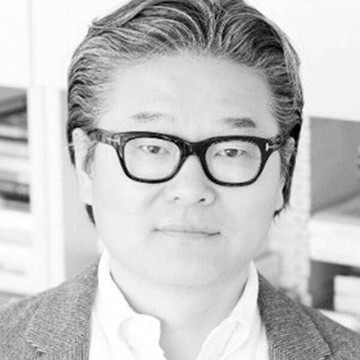
Apr 13, 2021 • 6min
The Archegos Saga
The story of the last few weeks in finance has been the secretive rise and rapid downfall of Archegos Capital Management.A thread on the underlying mechanics of the Archegos saga and how a $20 billion fortune vanished into thin air... First, let’s set the stage.Archegos Capital Management is the family office of Bill Hwang, a former prodigy of hedge fund legend Julian Robertson.Hwang previously built Tiger Asia Management - a so-called “Tiger Cub” fund due to its lineage from Robertson’s Tiger Management.Bill Hwang grew Tiger Asia Management into a highly successful hedge fund, reaching ~$10 billion in assets under management in the 2000s.He was a bit of an anomaly in the world of high finance - known as a devout Christian with simple tastes (seriously, he drives a Hyundai!).After winding down Tiger Asia Management following a few bad bets and a run-in with regulators, Hwang opened Archegos (a Greek word for “one who leads the way”) in 2013 with ~$200 million in personal capital.He began doing what he does best - trading and investing.Going long innovation, he scored big wins on stocks like Netflix and Amazon.Soon, Archegos’ capital had grown to $4 billion.But Hwang, a private and deeply religious man, was not one for the spotlight. He just appears to have genuinely enjoyed his work.Fortunately, there were features of the strategy that allowed the firm to remain anonymous.As a family office, it was not required to disclose its holdings on a 13F filing (as with all hedge funds).It used swap contracts to quietly amass large, leveraged positions.The 13F loophole is self-explanatory: Archegos was a family office with a specific structure, so it did not have to file quarterly 13Fs disclosing its holdings.Swap contracts (“swaps”) are a bit more complicated. Let’s simplify them here for everyone to understand...In simple terms, a swap contract is an agreement between two parties to exchange (swap!) the values or cash flows of one asset for another.Archegos entered swap contracts with banks to gain exposure to stocks without holding them.This is not an uncommon practice for funds.My banker buys $100 of Apple on my behalf but holds it on the bank B/S.I post $20 as “margin” (see my primer on margin) and agree to pay interest on the borrowed money ($80).I “own” $100 of Apple, but only had to put up $20 and no one knows I own it.At the end of every day, we settle up on the account.If the value of the Apple stock in my account rises, my banker pays me in cash the value of that rise.If the value of the Apple stock in my account falls, I have to post additional margin (to make my banker feel safe!).Note: I am definitely simplifying the mechanics of a swap contract for illustrative purposes. There are many types and flavors of swaps, but most follow the basic structure laid out above.Back to Archegos...Bill Hwang used swaps to amass large long positions (again, not an uncommon practice for hedge funds!).He built positions in stocks like ViacomCBS, Baidu, and GSX.He had accounts with many banks, including Goldman, Morgan Stanley, and Credit Suisse.As the stocks rose rapidly in early 2021, he used the cash his swap contracts were paying him to enter new swaps, increase his leverage, and buy even more.It was a self-fulfilling prophecy: rising prices enabled more leverage and more buying, further accelerating the rise.At its peak, Archegos had built a ~$100 billion portfolio and Bill Hwang was worth ~$30 billion.Importantly, as the positions were held at banks and not disclosed on 13F filings, the extent of the positions and leverage was largely unknown.But then it all came crashing down.On March 22, ViacomCBS, which had seen its stock 3x in the prior months (perhaps from Archegos’ aggressive buying) announced a $3 billion stock sale.Its share price tumbled 30% in the two days that followed the announcement.Suddenly, Archegos’ levered bets were underwater.This meant that the value of the stock being held on the bank balance sheets was lower than the amount that was loaned to buy the positions.The banks would be able to seize a portion of Archegos’ collateral in order to make themselves whole.The banks allegedly asked Archegos to sell its positions and close the contracts.This would mean Hwang would take a small loss but the banks would be whole.The problem was that if the stocks dropped much more, Archegos would be wiped out and even the banks might take a loss.The bankers from the different banks convened a meeting to discuss what to do.Some believed the best path was to wait - the stocks would recover and everything would be fine.Others weren’t so sure and began offloading large blocks of Archegos’ stock to mitigate their risk.A classic deleveraging spiral was set in motion.As the banks seized Archegos’ collateral and sold large blocks of the stock, the stock prices began to drop.Seeing the further stock price drops, Archegos’ other bankers, who had been inclined to wait, began doing the same.With the dust settled, it was time to assess the damage.Archegos’ banks had offloaded ~$100 billion of stock.Several (the late movers who had tried to wait) had lost billions in the process.And Archegos had seen its estimated $20 billion capital base vanish into thin air...The details of the Archegos saga are still unfolding.It has many markers of a classic tale of Wall Street collapse, including excessive leverage, esoteric contracts, and epic losses.But what may make the story more interesting is its lack of another classic marker: greed.Bill Hwang does not appear to have been motivated by the accumulation of wealth or status.His religious, charitable, frugal life is in direct conflict with the archetype of the Wall Street villain.The complexity of his character adds to the mystique of this crazy story.So that is the story of Archegos Capital Management, Bill Hwang, and how $20 billion was made and lost in the blink of an eye.For more on Archegos and the dangers of leverage, check out this article from Bloomberg.Enjoy this and want to share it with family and friends? You can find the original thread below. Subscribe now and follow me on Twitter so you never miss a thread.Until next time, stay curious, friends! This is a public episode. If you would like to discuss this with other subscribers or get access to bonus episodes, visit sahilbloom.substack.com

Apr 12, 2021 • 2min
The Magic of Continuous Improvement
Kaizen is a powerful concept for unlocking growth in your career, startup, business, writing, or life.A short thread on what it means and the magic of continuous improvement...Kaizen is a Japanese word meaning “improvement.”In practice, the term is used to convey continuous improvement.It is a dynamic process - ongoing, incremental, compounding daily improvements.The origin of the concept of Kaizen is long, winding, and global in nature.In the 1930s, Walter Shewhart - a Bell Labs engineer - had developed the Plan-Do-Study-Act System (PDSA) to assess the effectiveness of organizational changes in driving continued business improvement.Shewhart had mentored a young engineer named W. Edwards Deming, who went to Japan after WWII as part of the post-war recovery efforts.Deming implemented and improved upon his mentor’s ideas and helped to drive the remarkable post-war economic growth in Japan.But the concept of Kaizen began to build a mainstream following with the works of Masaaki Imai, a Japanese organizational theorist and consultant.In 1986, he published a best-seller, entitled “Kaizen: The Key to Japan’s Competitive Success” and founded The Kaizen Institute.Kaizen prioritizes small, daily improvements (rather than large, step-function leaps).It teaches that progress and growth are the result of daily actions to drive the small improvements.It teaches that progress and growth are achievable for anyone willing to put in the work.The great James Clear shared a powerful visualization of the magic of Kaizen.“If you get one percent better each day for one year, you'll end up thirty-seven times better by the time you’re done.”The math doesn’t lie. Kaizen - continuous improvement - is the way.“The journey of a thousand miles begins with a single step.” - Lao TzuAs you embark on your own thousand-mile journey - whether in your career or life - always remember the incredible power of small, consistent, daily progress.Always remember the power of Kaizen.Enjoy this and want to share it with family and friends? You can find the original thread below. Subscribe now and follow me on Twitter so you never miss a thread.Until next time, stay curious, friends! This is a public episode. If you would like to discuss this with other subscribers or get access to bonus episodes, visit sahilbloom.substack.com

Apr 5, 2021 • 2min
Focus as a Competitive Advantage
Focus is a competitive advantage.But in a noisy world, it is increasingly difficult to find.5 tactics for finding focus in your career, startup, or life:#1 - Eliminate Low-Value DecisionsMark Zuckerberg is famous for having only one outfit in his closet.While an extreme example, there is a lesson here: Eliminate decisions that require energy but do not create commensurate value.Redeploy that energy into high-value decisions.#2 - Sprint Then RestThe human mind is not designed to be on at all times.It needs rest.Work in short blocks (1-2 hours).You can schedule the blocks - I call it "deep work" on my calendar - or leave yourself more flexibility.Use biology to your advantage: sprint then rest.#3 - Noise CancellationThe world is noisy. We are constantly being hit by stimuli competing for our attention.Learn to tune out and zone in.Noise-canceling headphones can be an unimaginably helpful tool.Find your "in the zone" soundtrack and play it on repeat.#4 - Sleep TightIt may seem contrarian in the hustle culture era, but deep, restful sleep is critical to finding focus.I am a culprit. I used to say I would "sleep when I was dead" - I've changed my mind.Better sleep is perhaps the single greatest unlock for your performance.#5 - Train Your MindWe train our bodies, why not our minds?Practice meditation - start with 5 minutes a day and build up from there. There are plenty of great apps to help you get started.You'll find yourself better able to process daily stressors and focus on the task at hand. These are 5 tactics for finding focus. What are some others you would add to the list?Additionally, here are a few high ROI tools and resources related to these tactics that I have personally found useful:For better sleep and performance: White Noise Maker & Athletic GreensFor a powerful mind: Meditation AppFor tuning out the noise: Noise Canceling HeadphonesEnjoy this and want to share it with family and friends? You can find the original thread below. Subscribe now and follow me on Twitter so you never miss a thread.Until next time, stay curious, friends! This is a public episode. If you would like to discuss this with other subscribers or get access to bonus episodes, visit sahilbloom.substack.com

Mar 30, 2021 • 2min
The Power of Ikigai
Ikigai is a powerful concept for finding purpose and clarity to unlock growth in your career, startup, business, writing, or relationships.A thread on its meaning and how it can change your life...Ikigai is a combination of the Japanese words “iki” (or “life”) and “gai” (a term to describe value or worth).It roughly translates to “reason for being.”It is all-encompassing - it is not simply about work, money, or success - it is about the full scope of your existence.Ikigai is the point of balance and harmony in your life and work.It is found at the intersection of:What you love to doWhat you are good atWhat the world needsWhat you can be paid forImportantly, it is at the nexus of passion and practicality.The concept of Ikigai can be traced back to 12th century Japan, but its exact genesis is unknown.It gained a mainstream following after Dan Buettner’s famous 2009 Ted Talk on his research on Blue Zones (regions where people live longer than average).In his research, Dan Buettner found that purpose and fulfillment led to improved longevity.Put simply, embracing the concept of Ikigai contributed to enhanced health (mental and physical) and longer lifespans.To implement the concept of Ikigai in your life, create your personal Ikigai Venn diagram.Start with the passions: What do you truly love to do? What are you really good at? What can you become good at?Now get practical: What does the world need? What will it pay you for?The elegance of the concept of Ikigai is in its blend of passion and practicality.Life is a multivariate problem. Simple, uniplanar solutions and one-size-fits-all mantras fall short.Ikigai recognizes this and forces a dynamic, systems approach to finding purpose.Separately, for those of you who are interested in growing your audience on Twitter, I will be co-hosting a cohort-based course with my good friend Julian Shapiro that will teach you tactics for building an audience. You can sign up here to be on the list and learn more. Stay tuned - it’s going to be great.Subscribe now and follow me on Twitter so you never miss a thread.Until next time, stay curious, friends! This is a public episode. If you would like to discuss this with other subscribers or get access to bonus episodes, visit sahilbloom.substack.com

Mar 28, 2021 • 5min
The Containerization of the World
The story of the week in the business world is the blockage of the Suez Canal by a massive container ship. Weighing 200,000 metric tons, dislodging the ship is no easy problem to solve.But while it happened in 2021, the roots of this problem date back to 1937, when a truck driver from North Carolina had a simple idea that would completely change the world.Malcolm Purcell McLean was born in 1913 in Maxton, North Carolina.The son of a farmer, McLean learned the value of hard work from a young age.Unable to afford college, he went to work at a gas station. By age 21, he had saved enough money to buy a used truck.It was from these humble beginnings that Malcolm McLean founded McLean Trucking Co. in 1934.The business focused on transporting empty tobacco barrels, livestock feed, and produce. Originally confined to the Mid-Atlantic, McLean Trucking quickly expanded its reach.In 1937, after completing a haul from Fayetteville to Hoboken, McLean was forced to wait for hours in his hot truck while the stevedores worked their way to his load.He realized there had to be a more efficient way to do all of this.The current method - with individual crates unloaded by stevedores, placed into a sling, and lifted into the ship's hold - was time consuming, expensive, and inefficient.As he continued to build a trucking empire over the next decade, the idea constantly gnawed at him.By 1955, Malcolm McLean had built McLean Trucking Co. into one of the largest trucking operations in the country, with >1,700 trucks and locations.But the future he envisioned went well beyond trucking, so he set out to build a new reality.McLean dreamed up a standardized truck trailer that could be easily loaded and stacked onto ships or trains.In his mind, "containerized cargo" was to be the future of shipping and logistics.Efficient logistics would mean improved commerce and a thriving economy.In 1955, to expand his reach, he sought to acquire Pan-Atlantic Steamship Company - a cargo and passenger operation with docking rights at key port cities.But when railroad executives attempted to block the deal on anti-trust grounds, McLean was forced to make a decision.Malcolm McLean decided to bet on himself and his big idea. He sold his ownership stake in McLean Trucking for $6 million (~$58 million today) and used it to purchase Pan-Atlantic.He quickly set about to make his vision for the future of logistics into a reality.Renaming it Sea-Land Industries, in 1956, he purchased two World War II tankers and retrofitted them to carry his newly designed standardized containers.The SS Ideal X set sail on its maiden voyage in April 1956, carrying 58 of McLean's containers from New Jersey to Houston.With the initial success, McLean kicked off a marketing tour to convince key players to rethink their operations.With 25% lower transportation costs, safer storage, and cheaper insurance, he won over customers.With lower port labor costs, he won over port authorities.McLean's big idea for "containerization" took the shipping and logistics world by storm.By the late-1960s, Sea-Land Industries had 27,000+ containers, 36 ships, and covered 30 major ports.McLean had built the single largest cargo shipping business in the world.In 1969, R.J. Reynolds purchased Sea-Land Industries for $530 million (~$3.8 billion today).Malcolm McLean personally made $160 million (~$1.1 billion today) on the sale.His transformation from truck driver to global shipping magnate was officially complete.The legend of Malcolm McLean's innovation extends well-beyond his personal success."Containerization" enabled the rapid expansion of global trade. Without it, our global economy would simply not be possible, and the Suez Canal blockage may never have occurred.Malcolm McLean died in 2001 at age 87, but his legacy lives on.For more on the amazing story of Malcolm McLean and the containerization of the world, I highly recommend reading The Box by Marc Levinson.For those of you who are interested in growing your audience on Twitter or your newsletter, I will be co-hosting a cohort-based course with my good friend Julian Shapiro that will teach you tactics for building an audience. You can sign up here to be on the list and learn more. Stay tuned - it’s going to be great.Subscribe now and follow me on Twitter so you never miss a thread.Until next time, stay curious, friends! This is a public episode. If you would like to discuss this with other subscribers or get access to bonus episodes, visit sahilbloom.substack.com

Mar 21, 2021 • 4min
On Competitive Advantage
To outperform, you need serious competitive advantages.But contrary to what you have been told, most of them don't require talent.10 competitive advantages that you can start developing today:1. Intellectual CuriosityIntellectual curiosity is a real-world superpower.We all have it, but most will never embrace it.For the curious mind, anything is possible.Fortune favors the curious mind.2. Comfort with DiscomfortWe are conditioned to avoid discomfort, so most of us do.The problem?Discomfort leads to growth. It is an absolute necessity.If you train yourself to accept and embrace discomfort, you will always have an edge.3. Simplify Where Others Complicate"The definition of genius is taking the complex and making it simple."Complexity and jargon are often used to mask a lack of deep understanding.Learn to convey extremely complex ideas in simple, digestible ways.Find beauty in simplicity.4. High Tolerance for FailureWe fear failure, so most of us play it safe to avoid it.But our greatest moments of growth often stem directly from our greatest failures.Do not accept failure, but do not fear it either.You will fail. Embrace it. Learn to fail smart and fast.5. Low Time PreferenceLife is a long game.Those with low time preference play it more effectively - they happily delay gratification to build real value.In a world of people seeking instant gratification, this is a meaningful edge.6. AntifragilityIn Greek mythology, the Hydra is a creature that has multiple heads. Every time one head is cut off, two grow back in its place.Life is random and chaotic.Do not be broken by this chaos and disorder; rather, adopt a mentality that you will benefit from it.7. PresenceWith the rise of technology - and the instant access to millions of people and things that it has provided - the ability to be truly present has become a rarity.When you are with someone - whether a new business contact, friend, or partner - be WITH them.Be present.8. Relentless ConsistencyMany people are able to produce bursts of energy. Few people are able to produce consistent, steady flows of energy.The former might be flashy, but the latter is relentless.Take pride in punching the clock - in showing up - day in, day out.9. Noise CancellationThe world is a noisy place. We are constantly hammered by stimuli competing for our attention.The ability to cancel out the noise - to truly focus on the task at hand - is both broadly applicable and extremely powerful.10. Be YourselfThe most important competitive advantage.Always be yourself.No one can compete with you, at being you.These are 10 competitive advantages that do not require talent. What are some others that you would add to the list?Enjoy this and want to share it with family and friends? You can find the original thread below. Subscribe now and follow me on Twitter so you never miss a thread.Until next time, stay curious, friends! This is a public episode. If you would like to discuss this with other subscribers or get access to bonus episodes, visit sahilbloom.substack.com

