


Curiosity Chronicle
Sahil Bloom
Delivering curiosity-inducing content every single week.
This is the audio version of my newsletter. Sign up at the bottom of the page!
This is the audio version of my newsletter. Sign up at the bottom of the page!
Episodes
Mentioned books

Jun 21, 2021 • 6min
Paradoxes of Life
Welcome to the 500+ new members of the curiosity tribe who have joined us since Friday. Join the 19,000+ others who are receiving high-signal, curiosity-inducing content every single week!Today’s newsletter is brought to you by Fundrise!Fundrise is the future of real estate investing - a platform that allows anyone to invest in a low-cost, diversified portfolio of institutional-quality real estate. With low minimums and no accreditation requirements, Fundrise is democratizing access to a historically exclusive asset class.You can join 150,000+ other investors and start investing in real estate today!Powerful ParadoxesFrom a young age, we are taught to view the world as black and white. But many of life’s most important truths appear contradictory on the surface.15 powerful paradoxes (on growth, business, careers, and life):Sprezzatura (“Studied Carelessness”)You have to put in more effort to make something appear effortless. Effortless, elegant performances are often the result of a large volume of effortful, gritty practice. Simple is not simple.Slow Down to Speed UpWant to speed up? Try slowing down. Slowing down gives you the time to be deliberate with your actions. You can focus, gather energy, and deploy your resources more efficiently. It allows you to focus on leverage and ROI. Move slow to move fast.Learn More to Know LessThe wisdom paradox - the more you learn, the more you are exposed to the immense unknown. This should be empowering, not frightening.“The more I learn, the more I realize how much I don't know.” - Albert EinsteinEmbrace lifelong learning.Shrink to GrowGrowth is never linear. In order to grow, sometimes you need to shrink. Shedding deadweight may feel like a step back, but it is a necessity for long-term growth. This principle applies to your career, startup, or life. One step back for two steps forward.Fail More to Succeed MoreWe fear failure, so most of us play it safe to avoid it. But our greatest moments of growth often stem directly from our greatest failures. Don’t fear failure, just learn to fail smart and fast. Fail more - you’ll learn, adapt, and grow.Take On Less, Accomplish MoreSuccess doesn’t come from taking on everything that comes your way. It comes from focus - deep, disciplined focus on the tasks that really matter. Say yes to what matters, say no to what doesn’t. Protect your time. It is a gift to be cherished.Memento MoriA favorite of Stoic philosophy, it is a reminder of the certainty and inescapability of death. It is not intended to be morbid or dark; rather, to clarify, illuminate, and inspire. You must know your death in order to truly live your life.Talk Less to Be Heard MoreFriday Night Lights (the movie) has a famous scene where a notoriously quiet player gives a riveting speech that turns around a game. He rarely spoke up, so when he did, it hit. Hard. If you want to be heard, talk less. You’ll find more power in your words.The Only Constant is ChangeEntropy is reality. The world is in a continuous state of change. It’s the one thing you can always count on - the only constant. Embrace it - be dynamic, be adaptable.“When you are finished changing, you are finished.” - Benjamin FranklinStop Looking to Find MoreHave you ever noticed that when you are looking for something, you rarely find it? Stop looking. What you’re looking for may just find you.More Choices, Less SatisfactionWe assume a positive linear relationship between choice and satisfaction. But is this wrong? “Choice paralysis” is a very real phenomenon. The relationship between choice and satisfaction is much more nuanced than you’ve been led to believe.Argue Less to Persuade MoreHave you ever noticed that the most argumentative people rarely persuade anyone of anything? The most persuasive people don’t argue more - they observe, listen, and ask questions. Persuasion is an art that requires a paintbrush, not a sledgehammer.Face Your FearsIf something scares you, you should probably go do it. Fears, when avoided, become limiters on our growth and life. Make a habit of getting closer to your fears. Then take the leap (metaphorically!) - you may just find growth on the other side.Get Vulnerable to Become StrongThe stigma of vulnerability has been broken. It’s ok to admit we aren’t ok. Strength comes from opening up to our vulnerabilities - embracing them, owning them, and growing through them. Want to get strong? Get vulnerable first.Nothing is Certain“The only certainty is that nothing is certain.” - Pliny the ElderUncertainty and randomness are features, not bugs. Embrace them.“It ain’t what you don’t know that gets you into trouble. It’s what you know for sure that just ain’t so.” - Mark TwainThose are 15 powerful paradoxes on growth and life. What are your favorites? What paradoxes am I missing?If you’ve been following along, you know that I write a lot about growth. It’s what I’m passionate about. I want to help you grow in your career. Check out my job board, where I curate amazing roles in finance and tech every week!Some amazing new roles up this week, including at Avicado, Atreides Management, Beyond Protocol, Commonstock, and more!If you’re a growing company in finance or technology, use the “Post a Job” button to have your roles posted and featured today.Join the 19,000+ others who are receiving high-signal, curiosity-inducing content every single week! Until next time, stay curious, friends!(P.S. a note from Fundrise: here's all the legal jargon we know you love reading) This is a public episode. If you would like to discuss this with other subscribers or get access to bonus episodes, visit sahilbloom.substack.com
Jun 17, 2021 • 5min
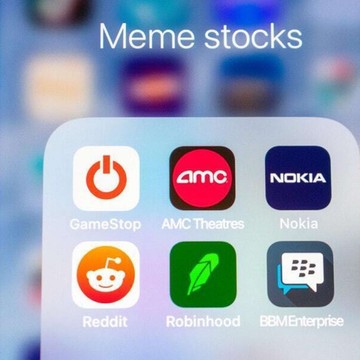
The Mechanics of a Meme Stock Rally
Welcome to all of the new subscribers who have joined this growing tribe since Monday. If you’re not a subscriber, join the 18,500+ others and subscribe today!The Mechanics of a Meme Stock Rally“Meme stocks” like AMC and GameStop have captured the attention of the financial world. But few understand what is actually driving these furious price rallies. Let’s dive into the mechanics of a meme stock rally…First off, what is a meme stock? There is no single definition, but meme stocks can be understood as stocks that experience rapid upward price movements as a result of collective social media evangelism. The price movements are typically not related to business fundamentals.AMC and GameStop are the two most salient examples of meme stocks from recent memory. Both experienced furious, Reddit-fueled rallies that left the financial establishment scratching their heads. Heroes emerged, like fearless leader Roaring Kitty (who is not, in fact, a cat!). But how did it happen? Emotion (FOMO!) and the power of crowds played a role, but I’ll leave those to the sociologists and psychologists to analyze. There are two underlying financial dynamics at play: a short squeeze and a gamma squeeze.Let’s cover the mechanics of each…The Short SqueezeFirst, a short squeeze. The "short" in "short squeeze" refers to the concept of short selling. The basics are covered in my thread below. TL;DR - short selling is a way of betting against a stock - i.e. betting that its price will decline. "Short interest" is a measure of how heavily an asset is shorted by the market. It is the total number of shares that have been sold short (borrowed and sold), but have not yet been covered (bought and returned). It is usually measured as a % of the # of shares outstanding.A "short squeeze" occurs when a heavily-shorted asset experiences a rapid upward price movement. When this happens, short sellers may be forced to close their short positions (i.e. buy the stock and return it to the broker), further accelerating the upward price movement.In the case of the recent meme stocks, as AMC or GameStop stock rose, short sellers were forced to close their shorts all at once. This created a surge of buying (to return the borrowed shares) and drove the price up further. It created an accelerating upward price movement.The Gamma SqueezeSo that’s a short squeeze, but what about a gamma squeeze? It’s a bit more complicated, but let's attempt to simplify it here...A gamma squeeze is all about options contracts and their indirect impact on the underlying stock. For a primer on options, see my thread below.When you buy a call option on AMC, someone has to sell you that option contract. You pay them a bit of money (the premium) and they make a commitment to deliver you the underlying stock at a future date for the strike price of the option. It's a pretty simple transaction.But in the background, the seller (often called a "market maker") has to think about their risk exposure. If AMC rises above your strike price, they will have to buy the stock at the market price and sell it to you for the strike price, incurring a (potentially large!) loss.To hedge this risk, when the market maker sells you the option, she also goes into the market and buys a bit of the underlying stock. The amount of stock she buys is based on the "Delta" - a ratio of how much the option price moves relative to a $1 move in the stock."Gamma" is the rate of change of the "Delta" of the option. As Delta and Gamma rise, the market maker gets more and more nervous! She has to buy more stock to hedge the risk of the option being exercised in the money (i.e. with the underlying price above the strike price).So here we have the (simplified!) makings of the gamma squeeze. As call option purchasing volumes on AMC suddenly surged, market makers had to purchase a lot of AMC stock to hedge. This set in motion a self-fulfilling prophecy...Market makers rushed to purchase AMC stock to hedge exposure. This drove the price of AMC up! As the price of AMC went up, the Delta and Gamma of AMC call options rose. This meant market makers had to buy more stock, further driving up the AMC price! Reflexivity.So to summarize: With AMC and GameStop (and other meme stocks!), we had both (1) a short squeeze - short-sellers frantically buying the stock to close/cover their shorts and (2) a gamma squeeze - call option market makers frantically buying the stock to hedge their exposure.The result? Check the charts…I hope this piece was helpful and makes you feel more well-informed on what is happening under the surface with meme stocks!Enjoy this and want to share it with family and friends? You can find the original thread below. Subscribe now and follow me on Twitter so you never miss a beat.Until next time, stay curious, friends! This is a public episode. If you would like to discuss this with other subscribers or get access to bonus episodes, visit sahilbloom.substack.com

Jun 14, 2021 • 6min
Steve Jobs @ Stanford - 16 Years Later
Steve Jobs delivered the commencement speech at Stanford University on June 12, 2005. 16 years later, its wisdom remains.Lessons from Steve Jobs (on careers, startups, and life):Develop Independent ViewsTo carve your own path - in your career or life - you have to develop your own views. Steve Jobs originally went to college because it was what he was supposed to do after graduating high school. He dropped out when he couldn’t see the value in it.“I had no idea what I wanted to do with my life and no idea how college was going to help me figure it out. So I decided to drop out...it was one of the best decisions I ever made."Don't chart your course based on someone else's map for your life. Develop independent views.Let Curiosity Guide YouThere are no how-to books on life (or no good ones, at least). You have to develop your own guidebook that empowers you to navigate the endless, mysterious expanse. Curiosity can be that guide (if you embrace it).Steve Jobs experienced this when he began dropping in on random classes that sparked his interest."Much of what I stumbled into by following my curiosity and intuition turned out to be priceless later on."Curiosity is a mysterious and powerful force. Let curiosity guide you. Have Faith in the DotsIn following his curiosity, Steve Jobs dropped in on a calligraphy course for a semester."It was beautiful, historical, artistically subtle in a way that science can’t capture."But it had no practical relevance to his life...or so he thought."10 years later, when we were designing the first Macintosh computer, it all came back to me...It was the first computer with beautiful typography."You are just a series of "dots" - moments, decisions, successes, and failures. Your life is the line that connects them."You can’t connect the dots looking forward; you can only connect them looking backward. So you have to trust that the dots will somehow connect in your future...This approach has never let me down, and it has made all the difference in my life."Have faith in the dots.Go Back to the Starting LineAfter being fired from Apple, Steve Jobs felt the weight of tremendous public failure. He had been fired from the company he founded, after all. But through self-reflection, he came to see that this very public failure had freed him in a way.“The heaviness of being successful was replaced by the lightness of being a beginner again, less sure about everything. It freed me to enter one of the most creative periods of my life.”Don’t let the burden of external forces drain your life. Go back to the starting line.Never SettleIn your career, if you have the luxury of choice, never settle for less than love. Low tolerance for uncertainty often leads to this settling - we fear the uncertainty and settle to escape it. Resist this urge...“The only way to be truly satisfied is to do what you believe is great work. And the only way to do great work is to love what you do. If you haven’t found it yet, keep looking. Don’t settle.”Tolerate uncertainty for a bit longer. Never settle.Memento MoriOne year before his speech, Steve Jobs had survived a scare with pancreatic cancer. It was a very real reminder of his mortality and the inescapability of death. But rather than darkness, this experience brought light."Remembering that you are going to die is the best way I know to avoid the trap of thinking you have something to lose. You are already naked. There is no reason not to follow your heart."Remember that you must die. Memento Mori.Stay Hungry, Stay FoolishFight back against “fitting in” - fight back against normalcy.“Your time is limited, so don’t waste it living someone else’s life...Have the courage to follow your heart and intuition. They somehow already know what you truly want to become.”The world wants you to be normal and play by the rules. You have to fight - consistently and diligently - to maintain your uniqueness. Steve Jobs recognized this as well as anyone in the world. So it was that he closed with his most famous line:“Stay Hungry. Stay Foolish.”These were the powerful mental models and lessons from Steve Jobs, delivered during his commencement speech at Stanford University on June 12, 2005. The full text and video of the speech can be found here.If you are still looking to find that love in your career that Steve Jobs referenced, I want to help. Check out my job board for curated roles at high-growth companies in finance and technology that believe in open access recruiting.There are some amazing new roles on the board this week from companies like Commonstock, Beyond Protocol, and Mercury - check it out today!And if you are a growing company in finance or technology looking to access a unique pool of talent and have your roles promoted to my audience on Twitter or through the newsletter, post a job on the board or message me for additional information.Enjoy this and want to share it with family and friends? You can find the original thread below. Subscribe now and follow me on Twitter so you never miss a beat.Until next time, stay curious, friends! This is a public episode. If you would like to discuss this with other subscribers or get access to bonus episodes, visit sahilbloom.substack.com

Jun 7, 2021 • 7min
Lifelong Learning
Today’s newsletter is brought to you by Ascend’s Leadership Program!Ascend’s Leadership Program for women will empower you with the skills and frameworks required to influence at all levels, conquer imposter syndrome, and accelerate your career.You’ll leave the program confident and armed with the skills, tools, and support to have your ideas taken seriously, empower your team, and move up faster in your career. It’s the only program I’ve seen that teaches these practical skills in a safe space with an incredible community for aspiring and new women leaders - I am proud to support!Ascend’s Leadership Program’s upcoming cohort will run from June 28 to August 5 and spots are filling up quickly. Apply today to secure your place in this amazing program!Lifelong Learning HabitsLifelong learning is a competitive advantage. But contrary to what you’ve been told, lifelong learners are built, not born.20 lifelong learning habits you can start developing today:Stimulate DynamicallyThe mind is a muscle - it needs to be stimulated dynamically to continue to grow. Don’t rely on one “exercise” - develop a menu of options. Write, read, listen, watch. Solve puzzles, play games. Enjoy it! Stimulate dynamically, learn dynamically.Build Learning CirclesThe most powerful learning is communal, not individual. Build learning circles with other intellectually curious minds. Engage regularly with no set intention or goal. Community is everything. Embrace it.Keep Asking Why“Why?” is the most useful tool in our learning toolkit. But somewhere along the line, we are told to stop asking why and just accept “facts” as we are told them. Reject the norm. If you want to understand the world, take a cue from our kids - keep asking why! Adopt a Process OrientationPrioritize process. Learn for the sake of learning, not always for a specific goal. When you prioritize process, you become flexible in where you are headed. Life is a winding, confusing journey - forward progress is all that matters.Become a PolymathA polymath is a person with wide-ranging, multi-disciplinary knowledge. Lifelong learners tend to be polymaths - their curiosity naturally leads to knowledge accumulation in a variety of disciplines. Learn both horizontally and vertically. Become a polymath.Build a Learning EngineThe “learning engine” is at the core of every lifelong learner. It is comprised of all the learning “inputs” regularly consumed - books, newsletters, podcasts, videos, etc. The internet has opened access to it all. Build an unstoppable learning engine.Avoid Noise BottlenecksConsuming more does not equate to knowing more. As you consume more data, you may find the noise-to-signal ratio increases (a classic Taleb “noise bottleneck” appears). Consume less, but consume intelligently. More signal, less noise. Embrace All Types of LearningThere are two types of learning: surface and deep. Surface learning is quick and easy. Deep learning is more challenging. It requires a willingness to slow down and let ideas mature in the mind. Lifelong learners embrace both.Seek Mentors & Coaches“If I have seen further, it is by standing on the shoulders of giants.” You can’t do it alone. Seek out mentors and coaches to help you on your journey. Never be afraid to ask. You’ll be amazed by the kindness of strangers and their willingness to help.Embrace FailuresLifelong learners recognize that failures are learning opportunities. They don’t fear them. They embrace them. It’s easier said than done. Failures are painful - physically and emotionally. But stay the course and you’ll find learning on the other side.Follow Your CuriosityWhen you have a spark of curiosity, follow it. Moments of pure, unadulterated curiosity are fleeting, so you have to prioritize them when they come. Seek out curiosity-inducing content (like my Curiosity Chronicle newsletter!).Become a TeacherTeaching is often the most powerful path to learning. The Feynman Technique (explained below) is a foundational mental model for unlocking learning and growth through teaching. Use it! If you want to learn, teach.Take BreaksHumans were not made for constant motion. Learn to sprint, then rest. Taking breaks can be the easiest, most effective unlock for learning and growth. If you want to learn to grow, first learn to rest.Learn from StrangersEvery conversation with a stranger is an opportunity to learn something new. Be present in every conversation with everyone you meet. You never know what might come of it.Seek a Stimulating JobTry to find a job that is intellectually stimulating. I know this is a luxury - if you are lucky enough, take advantage. P.S. I want to help. Check out my job board for interesting roles at companies that believe in open access.Change Your MindLifelong learners are always willing to change their mind. Believe something to be true? Ok, but be sure to open your mind to counterarguments. Stubborn refusal to acknowledge alternative perspectives stalls progress. Strive for strong opinions, weakly held.Embrace Novel Formats2020 was a tough year, but it did bring an upswell of novel learning formats. Cohort-based courses - which foster community! - are a great innovation. Cool Example: Ascend - a program for women looking to accelerate their careers.Practice MindfulnessA healthy mind is a powerful mind. Set aside time for mindfulness. Practice meditation - start with 5 minutes a day and build up from there. There are plenty of great apps to help you get started. With a healthy mind, anything is possible. School as the Starting LineAll lifelong learners recognize that school is nothing but the starting line of our true education. Once you internalize this, you’ll start doing things differently.Play the Long GameThe greatest riches in life - personal or professional - come from compound interest. But it takes time. Lots of time. Knowledge is no different - it compounds. So lifelong learners play the long game. Let the magical power of compounding work for you.So those are 20 lifelong learning habits you can start developing today. What are some that I am missing?If you are a job seeker, check out The Bloomboard for unique roles at high-growth companies in finance and technology.Enjoy this and want to share it with family and friends? You can find the original thread below. Subscribe now and follow me on Twitter so you never miss a thread.Until next time, stay curious, friends! This is a public episode. If you would like to discuss this with other subscribers or get access to bonus episodes, visit sahilbloom.substack.com

Jun 1, 2021 • 7min
Standing Out in a Hiring Process
Special Announcement: The BloomboardI’m excited to announce the launch of my job board - The Bloomboard - where I will curate and share unique, exciting roles in finance and technology every single week.The goal? To foster open access to jobs for candidates and spread awareness of amazing, high-growth companies and roles.The board will be curated by me personally, meaning it will only include companies and roles I would recommend (i.e. roles I would be excited to take if I were qualified!).We have some incredible companies and roles up for the launch, including:Synthesis - EdTech for nurturing innovators - VP of Growth & Head of PeopleFaves - curation-focused social app - Head of Partnerships & Growth PMMetafy - 1x1 e-sports coaching platform - Senior Product DesignerVivian Health - healthcare job placement platform - Product ManagerFundrise - real estate investment platform - Director of Product, GrowthM1 Finance - personal investment super app - Lifecycle Marketing ManagerCapchase - non-dilutive funding platform - Capital Markets AnalystPesto Tech - remote developer matching platform - Account ExecutiveBlockworks - crypto and macro media platform - Editor & Software EngineerTitan - democratized investment platform - Crypto Investment Analystand more at IEQ Capital, First Round Capital, Gather, Athletic Greens, Avicado, ConvertKit, and many others!If you are a company in finance or technology looking to gain direct access to a large, growing talent pool, post a job to the board or email me to add your roles.20 Ways to Stand Out in a Hiring ProcessThe hiring process is ultra-competitive. But you’ve incorrectly been told that the only way to stand out is by having fancy degrees and credentials.20 ways to stand out in a hiring process (that don’t involve your resume):Do Your ResearchBefore an interview, spend a few hours researching the company and role. At a minimum, learn the company mission, read up on recent news on the company or its market, and study the backgrounds of the key leaders. Google is a powerful asset. Use it.Embrace “I Don’t Know”You can’t know the answer to every question. And you know what? That’s ok! Don’t be afraid to say “I don’t know” - but then follow it with a plan to acquire that information. “I don’t know, but I’ll dig in and follow up with an email.” Then follow up!Stop Fearing RejectionI’m not embarrassed to admit that I’ve been rejected for more jobs than I can count. It happens. You can’t be a fit for everything and everyone. Stop being afraid of rejection and put yourself out there. You miss 100% of the shots you don’t take. Prepare for “Why Us?”Interviewers inevitably ask, “Why us?” Make sure you are prepared for it. What attracted you to this company? The more specific, the better. Generic answers (“I love investing”) get minus points. Specific answers win. Stalk (Non-Creepily!)If you know who you will be interviewing with, spend time learning about their background and experience. Identify potential bonding areas (e.g. same alma mater, similar interests or hobbies, etc.). This prior knowledge may help you connect more deeply.Seek Warm IntrosWarm intros and references are the holy grail of a competitive hiring process. Scan your networks for any connections to a company (yes, LinkedIn is actually useful for something!). If you find any that are close enough, use them. The smallest edge can help! Blend Deference & ConfidenceShow deference to your interviewer, but not at the expense of confidence. The power dynamics of an interview are nuanced. Blending deference and confidence is how you manage them effectively and leave the interviewer with a positive impression.Play to Your StrengthsDon’t fight on an even playing field. If you have unique attributes or competitive advantages, use them. Played a team sport? Talk about it! Taught yourself to code? Hype that up! Humility is great, but make sure they know what makes you special! Show Your PassionShowing a genuine passion and excitement for the company and role is the easiest way to stand out from the crowd. People want to hire candidates that want to be there. So smile, express your excitement (calmly!), and let that passion shine through.Carry a NotebookWhen you go to an interview, always bring a notebook. It’s not just pageantry - use it. If something comes up that is interesting or requires a follow up, make a point of writing it down. It shows attentiveness. Interviewers notice these little things. Personalized Thank YousAfter an interview, always send a thank you note to the interviewer. Make them punchy (so that...

May 24, 2021 • 4min
Commencement Wisdom
A great commencement speech is filled with wisdom.10 powerful lessons from the best commencement speeches of all time:#1: Connecting the Dots"You can’t connect the dots looking forward; you can only connect them looking backward. So you have to trust that the dots will somehow connect in your future." - Steve Jobs, Stanford 2005Life is uncertain. Have faith that your dots will somehow connect.#2: Master the Rescue"The difference between triumph and defeat, you’ll find, isn’t about willingness to take risks. It’s about mastery of rescue." - Atul Gawande, Williams 2012Failures are a given. The greatest don't fail less, they just succeed in rescuing more.#3: Be a Doer"I think a lot of people dream. And while they are busy dreaming, the really happy people, the really successful people, the really interesting, engaged, powerful people, are busy doing." - Shonda Rhimes, Dartmouth 2014It's not enough to dream. You have to do.#4: Learn to Improvise"Life is an improvisation. You have no idea what's going to happen next and you are mostly just making things up as you go along." - Stephen Colbert, Northwestern 2011Life has a habit of laughing at your best-laid plans. Let it flow - learn to improvise!#5: Appreciate the Sweetness"When things are going sweetly and peacefully, please pause a moment, and then say out loud: 'If this isn't nice, what is?'" - Kurt Vonnegut, Rice 1998Life moves fast. Slow down, pause, and appreciate moments of sweetness. You'll be glad you did.#6: Run Toward the Storm"Whatever you choose for a career path, remember the struggles along the way are only meant to shape you for your purpose." - Chadwick Boseman, Howard 2018Your career will be filled with struggles. Don't hide. Run toward them! Let them shape you.#7: Embrace Imposter Syndrome"I just directed my first film. I was completely unprepared, but my own ignorance to my own limitations looked like confidence and got me into the director's chair." - Natalie Portman, Harvard 2015We are all imposters...until we aren't. Embrace it!#8: Check the Assumptions"A huge percentage of the stuff that I tend to be automatically certain of is, it turns out, totally wrong and deluded." - David Foster Wallace, Kenyon 2005It's what you know for sure that just ain't so...To avoid trouble, always check the assumptions.#9: Look Up"The answer to a lot of your life's questions is often in someone else's face. Try putting your iPhones down every once in a while and look at people's faces." - Amy Poehler, Harvard 2011Look up from your phone. Observe and listen to those around you. Be present.#10: Make Your Bed"Making your bed will also reinforce the fact that little things in life matter. If you can't do the little things right, you will never do the big things right." - Admiral McRaven, Texas 2014Little things become big things. Take pride in the little things.These are 10 powerful lessons learned from some of the greatest commencement speeches of all time. What are your favorites that weren't included in the list?Enjoy this and want to share it with family and friends? You can find the original thread below. Subscribe now and follow me on Twitter so you never miss a thread.Until next time, stay curious, friends! This is a public episode. If you would like to discuss this with other subscribers or get access to bonus episodes, visit sahilbloom.substack.com

May 19, 2021 • 5min
Ransomware-as-a-Service
The story of the last few weeks in business has been the ransomware attack that took down the Colonial Pipeline.On ransomware-as-a-service, DarkSide, and what happens when publicity becomes really bad for business:First, a few definitions...What is ransomware? Ransomware is a type of malware - a software designed to cause harm to a computer, server, or network. Ransomware is used to encrypt the files on your system and hold it “hostage” until the demanded ransom is paid.Ransomware is not new, but ransomware attacks are most definitely on the rise. With the world increasingly moving online, the cyber-attackers have experienced a windfall.Both the frequency of attacks and the size of the average ransom payments have increased dramatically.The way a ransomware attack works is really quite simple (even if the underlying technology is complicated).A would-be attacker scans for vulnerable companies. They often look for dated systems or weak infrastructure - like an animal looking for injured prey.When a target is acquired, the cyber-attacker looks for an entry point. This could be using a phishing scam or other method to gain access to the network or company data and servers.Once inside, the cyber-attacker launches a program that encrypts all of the company’s data.Once encrypted, the data and systems become completely unusable without a decryption key. The company is immobilized.While this sounds complex, given the range of cybersecurity sophistication at companies, hackers say breaching some companies is “so easy a kid could do it.”After the encryption is complete, the ransom negotiation begins.The cyber-attackers reach out to the company, offering to provide a decryption key that will return access to the hostage data. In exchange, the company has to pay a ransom (usually in the form of Bitcoin).If ransom isn’t paid, the data may continue to be held (leaving the company immobilized) or sensitive data (credit cards, health records, etc.) may be leaked.Generally speaking, the company negotiates and pays the ransom, with its cyber insurance footing the bill.The ransomware market has operated in the shadows for a long time...until recently. The story of a high-profile attack on the Colonial Pipeline - and the fascinating “ransomware-as-a-service” entity that enabled it - has shined a light on the industry.Let’s dive in…Colonial Pipeline is the largest gas pipeline in the U.S. On May 7, it announced it had been hit by a ransomware attack and had shut down operations. This ransomware attack was different. It wasn’t an attack on a medium-sized business. It was much, much bigger than that.With the pipeline out of commission, gas prices spiked, impacting millions and drawing the immediate, full attention of the press (and the FBI). Suddenly, ransomware attacks were in the spotlight. And the services group enabling the attacks - DarkSide - was at center stage.DarkSide is a so-called “ransomware-as-a-service” company. It doesn’t engage in the actual cyberattacks. Instead, it provides a suite of tools and services that enable would-be cyber-attackers to conduct their business.DarkSide provides the malware that encrypts the data, but also much more.A communication service - making calls to the victim companies for negotiations. A hosting site for stolen data. Customer service. It can even sell inside info to stock traders for extra profit.Think of DarkSide as a cloud services provider for the modern ransomware era. It appears to be the market leader in providing such services! And it has an impressive economic model: DarkSide takes a 10-25% cut of the proceeds from the ransom payment.Normally, startups with strong market traction love publicity. It helps with new customer acquisition and growth! But the difference here is that when you are a ransomware-as-a-service market leader, publicity can be really, really bad for business.With the authorities now focused on them, DarkSide issued a statement: “Our goal is to make money and not create problems for society. From today, we introduce moderation and check each company that our partners want to encrypt to avoid social consequences in the future.”DarkSide learned the hard way what banks learned long ago: you have to know your customer! The Colonial Pipeline shutdown lasted about a week. Operations were restored after a rumored ransom payment of ~$5m (75-100 BTC). DarkSide’s cut was hefty - but it came at a cost.In the months to come, with the spotlight shined on the sophistication of the ransomware market - as well as the devastating nature of the attacks - companies will step up their cybersecurity infrastructure to defend themselves. This may be bad for ransomware profits...So is this just a classic market cycle? The ransomware market had predictable, large profits. This led to a rush of activity to exploit them. Now the market gets squeezed, making it less attractive to do ransomware attacks. Free markets at work...?That is the story of DarkSide, the Colonial Pipeline hack, and the fascinating ransomware-as-a-service business model. For more, check out this article from Bloomberg.Enjoy this and want to share it with family and friends? You can find the original thread below. Subscribe now and follow me on Twitter so you never miss a thread.Until next time, stay curious, friends! This is a public episode. If you would like to discuss this with other subscribers or get access to bonus episodes, visit sahilbloom.substack.com

May 17, 2021 • 4min
Intellectual Curiosity
Intellectual curiosity is a competitive advantage.But contrary to what you’ve been told, it has nothing to do with intelligence.10 ways to start developing your intellectual curiosity today:#1: Scrub Your Windows“Your assumptions are your windows on the world. Scrub them off every once in a while, or the light won't come in.” - Isaac AsimovCuriosity is a light that can only enter when your mental windows are clean. Scrub them off now and then. Let the light in.#2: Embrace “I Don’t Know”“The only true wisdom is in knowing you know nothing.” - SocratesAvoid false confidence (and the people that display it!). Embracing what you do not know is a superpower. Recognize your gaps and blind spots. Slowly, methodically fill them in.#3: Go Down Rabbit HolesWhen you find a spark of curiosity, dive in and don’t look back. You cannot control when they come, so you must embrace them when they do.The rabbit hole is the amusement park of the intellectually curious mind. Enjoy it!#4: Ask “Dumb” QuestionsWhen we are young, we always ask “Why?” But over time, we develop a fear of asking the “dumb” question that may draw the ire of our peers.That fear stifles our intellectual curiosity. Fight it back. Face it. When in doubt, ask.#5: Build Curiosity CirclesCuriosity is communal. Find a group of friends who are motivated by learning and growth. Share ideas, learnings, and insights with each other.You’ll build bonds and have a constant source of stimulation for your intellectual curiosity.#6: Make Learning the GoalLearning with a specific end goal in mind often becomes a chore - it is a fast track to stifled curiosity. Focus on the learning itself - not other outcomes. Take pride in learning something new every single day.“Learn as if you were to live forever.”#7: Open Up to the WorldThe diversity of human experience in our world is one of the greatest gifts to the intellectually curious mind. When you meet someone new, take genuine interest in their life and experiences.The world opens up to you, when you open up to the world.#8: Focus on Your PassionsForced learning is for school. It doesn’t work in practice. It stifles curiosity. Find what you truly enjoy learning about. It doesn’t matter what it is. It doesn’t have to be “intellectual” or impressive.Remember: You are learning for you!#9: Read FlexiblyBooks are a life-changing investment that you can make for under $100.But to take advantage, you must read flexibly. Read what you love. Read what draws you in. When it stops doing so, put it down. Forced reading is the antidote to curiosity.#10: The Curiosity ChronicleAnd last - but certainly not least - sign up for this newsletter...A weekly short-form newsletter with five pieces of content curated to spark your intellectual curiosity.So those are 10 ways to start developing your intellectual curiosity today.For additional writing related to cultivating intellectual curiosity in your children, check out my friend Ana Fabrega at Synthesis, who is putting out incredible content. Synthesis is building something special disrupting traditional childhood education. Check them out here!Enjoy this and want to share it with family and friends? You can find the original thread below. Subscribe now and follow me on Twitter so you never miss a thread.Until next time, stay curious, friends! This is a public episode. If you would like to discuss this with other subscribers or get access to bonus episodes, visit sahilbloom.substack.com

May 3, 2021 • 4min
Warren Buffett’s Wisdom
Warren Buffett is a treasure trove of wisdom.But contrary to what you have been told, most of it has nothing to do with investing.10 powerful lessons for life from the Oracle of Omaha:#1 - Wait For A Juicy Pitch“You don't have to swing at everything - you can wait for your pitch."Life doesn’t reward you for the number of swings you take.Focus on identifying the juiciest pitch.When it comes, swing hard and don’t miss it.#2 - Just Stop Digging“The most important thing to do if you find yourself in a hole is to stop digging."When things aren’t working, change course and try something different.Be nimble. Be agile.When you find yourself at the bottom of a hole, stop digging and climb out of it.#3 - Exploit Disconnects“Price is what you pay. Value is what you get.”Seek out situations where there is a clear disconnect between price and value.This applies to investing, but it’s more broadly a mental model for life.Identify disconnects. Exploit them to your advantage.#4 - Be Contrarian“Be fearful when others are greedy and greedy when others are fearful.”Following the crowd is easy, but it can be a trap.Learn to think independently. Come to your own decisions. Develop your own mental models.Your unique perspectives are your superpower.#5 - Optimize Value Capture“Opportunities come infrequently. When it rains gold, put out the bucket, not the thimble."Create structures that enable you to capture more of the value you create.The most successful people have simply optimized their value capture mechanisms.#6 - Make Time Your Friend“Time is the friend of the wonderful business, the enemy of the mediocre.”Don’t be in a rush.Set up your life to compound value over the long-term.Play long-term games with long-term people.Make time work for - not against - you.#7 - Protect Your Circle of Competence“Risk comes from not knowing what you're doing.”Be ruthlessly honest about what you know (your circle of competence) and what you don’t.Focus on playing games within your circle - otherwise, you’re just gambling.#8 - Never Get Caught Naked“It's only when the tide goes out that you discover who's been swimming naked.”Find a balance between pushing yourself for growth and being completely out of your depth.Never put yourself in a high-stakes position to get caught swimming naked.#9 - Reputation Matters“It takes 20 years to build a reputation and five minutes to ruin it. If you think about that, you'll do things differently.”In every interaction - big or small - always act in accordance with strong principles and values.Your character is your fate.#10 - Invest In Yourself“The most important investment you can make is in yourself."There is no better investment than an investment in yourself.Find time to read, to think, to learn.Surround yourself with amazing people who push you to become better.Invest in you.These are 10 powerful lessons for life from Warren Buffett, but there are so many more.What are your favorite lessons from the Oracle of Omaha?I have to admit, I am still shaking from this moment at the Berkshire Hathaway Annual Meeting in 2019...Enjoy this and want to share it with family and friends? You can find the original thread below. Subscribe now and follow me on Twitter so you never miss a thread.Until next time, stay curious, friends! This is a public episode. If you would like to discuss this with other subscribers or get access to bonus episodes, visit sahilbloom.substack.com

Apr 25, 2021 • 3min
The Fight Against Normalcy
In his final Amazon shareholder letter, Jeff Bezos shared a powerful mental model on maintaining your distinctiveness.On the fight against normalcy (in your career, startup, writing, or life):Jeff Bezos founded Amazon in 1994.In 27 years at the helm, he grew it into one of the largest and most influential companies in the world. Today, it is worth almost $1.7 trillion.Each year since its 1997 IPO, Bezos has written an annual letter to Amazon shareholders.In February, Jeff Bezos announced he would step down as CEO.In his final annual shareholder letter, he covered his “create more than you consume” mantra and hit on climate and employee issues.But its closing - on the fight against normalcy - held the most powerful lessons.Bezos set the stage for his mental model with a quote from Richard Dawkins’ The Blind Watchmaker:“The body tends to revert to a state of equilibrium with its environment...if living things didn’t work actively to prevent it, they would eventually merge into their surroundings.”With the stage set, Bezos makes his point:“In what ways does the world pull at you in an attempt to make you normal? How much work does it take to maintain your distinctiveness?...You have to pay a price for your distinctiveness...don’t expect it to be easy or free.”This is a powerful mental model for thinking about distinctiveness.If equilibrium with our surroundings - normalcy - is our natural state, we must fight to maintain distinctiveness.Constantly, relentlessly.Distinctiveness isn’t free - you have to pay your dues every day.Once you internalize this framework, you will see it all around you. You will see all of the ways that our systems and institutions are designed to keep you normal. You will start to see how hard it is to be different - the true cost of distinctiveness.One perfect example: Education.Our traditional education systems look like the early Ford Model T assembly lines.Standardized, one-size-fits-all curriculum and arbitrary assessments of competency.We leave some kids behind, we hold back others. We fail to foster innovation, ingenuity, and creativity.Traditional education systems are designed to maintain equilibrium.Conventional wisdom said it would be too hard to foster creativity at scale. It will be hard, but that’s the point!Innovation is coming: Synthesis is building something special, for example.The world wants you to be normal. Our systems and institutions are all designed to make it easy to be normal.Maintaining your distinctiveness is possible, but it will require effort - painful, constant, relentless effort.But stay the course. You’ll find it’s worth it.Enjoy this and want to share it with family and friends? You can find the original thread below. Subscribe now and follow me on Twitter so you never miss a thread.Until next time, stay curious, friends! This is a public episode. If you would like to discuss this with other subscribers or get access to bonus episodes, visit sahilbloom.substack.com

