

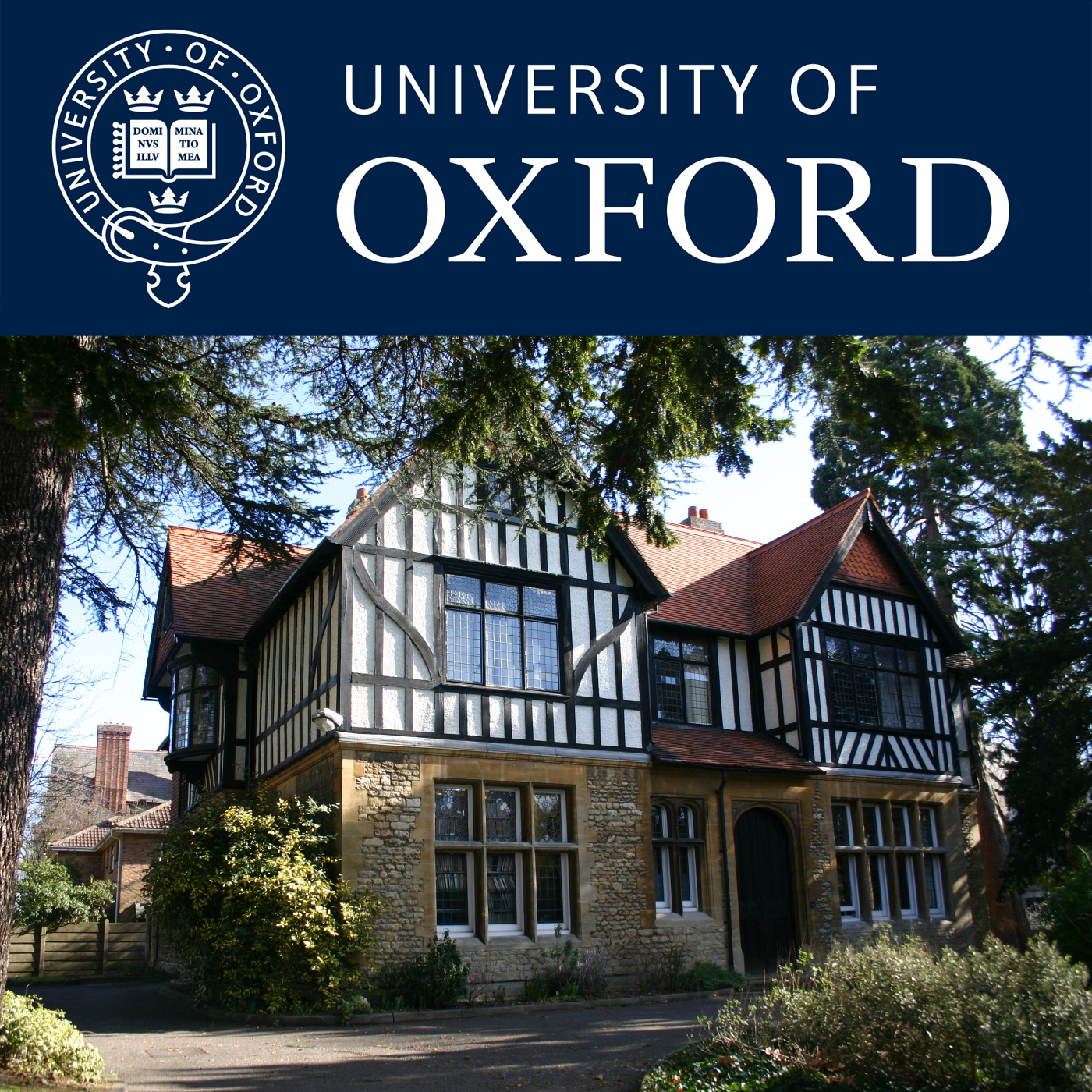
Middle East Centre
Oxford University
The Middle East Centre, founded in 1957 at St Antony’s College is the centre for the interdisciplinary study of the modern Middle East in the University of Oxford. Centre Fellows teach and conduct research in the humanities and social sciences with direct reference to the Arab world, Iran, Israel and Turkey, with particular emphasis on the nineteenth and twentieth centuries. However, during our regular Friday seminar series, attracting a wide audience, our distinguished speakers bring topics to light that touch on contemporary issues.
Episodes
Mentioned books

Feb 21, 2023 • 1h 3min
Resurrecting the Caliphate: The Creed of Abraham and ISIS’s Hermeneutics of Power
A talk with a focus on the contemporary militant group referred to by the acronym ISIS (or ISIL) and its views on the “caliphate.” As this group sees it, its so-called Islamic State represents the resurrection of the historical office of the caliph after its abrogation in 1923. ISIS anchors this position in the concept of “the creed of Abraham” (millat Ibrahim) mentioned in Qur’an 2:124 in order to derive a scriptural and theological mandate for their project. The lecture analyzes how credible this position is by resorting to a survey of the views of several influential Muslim exegetes on the concept of millat Ibrahim and explore whether their views align with those of ISIS. It concludes by reflecting on what the larger implications of this survey are for the contemporary period.
Biography: Asma Afsaruddin is Professor of Middle Eastern Languages and Cultures and Class of 1950 Herman B. Wells Endowed Professor in the Hamilton Lugar School of Global and International Studies at Indiana University, Bloomington, USA. She received her PhD in Arabic and Islamic Studies from Johns Hopkins University and previously taught at Harvard and Notre Dame universities. Her research interests include Islamic religious and political thought (both modern and pre-modern); Islamic intellectual history; Qur’an and hadith; and gender in Islam. She is the author and editor of eight books, including Jihad: What Everyone Needs to Know (Oxford University Press, 2021); Contemporary Issues in Islam (Edinburgh University Press, 2015); Striving in the Path of God: Jihad and Martyrdom in Islamic Thought (Oxford University Press, 2013), recently translated into Indonesian, which won the World Book Award in Islamic Studies from the Iranian government (2015) and was a runner-up for the British-Kuwaiti Friendship Society Book award (2014); and The First Muslims: History and Memory (OneWorld Publications 2008), which has been translated into Turkish and Malay. She has also written over fifty research articles and book chapters on topics as diverse as Qur’anic hermeneutics, hadith criticism, pluralism in Islamic thought, inter-faith relations, war and peace in the Islamic tradition; Islamic feminisms, and modern reform movements in Muslim-majority societies.
Professor Afsaruddin is currently a member of the academic council of the Prince al-Waleed Center for Muslim-Christian Understanding at Georgetown University and is a past member of the Board of Directors of the American Academy of Religion. She was previously the Kraemer Middle East Distinguished Scholar-in-Residence at the College of William and Mary (2012) and a visiting scholar at the Centre for Islamic Studies at the London School of Oriental and African Studies (2003). She has also been a fellow with the American Research Center in Egypt (ARCE) based in Cairo and the American Research Institute of Turkey (ARIT) based in Istanbul. Afsaruddin lectures widely on various aspects of Islamic thought in the US, Europe, and the Middle East and has served as a consultant for the Pew Forum on Religion and Public Life, the US Institute of Peace, and other governmental and non-governmental agencies. Her research has been funded by the Harry Frank Guggenheim Foundation and the Carnegie Corporation of New York, which named her a Carnegie Scholar in 2005. In 2019 she was inducted into the Johns Hopkins Society of Scholars in recognition of the scholarly and professional distinction she has achieved in her field.
Feb 7, 2023 • 44min
Jihad, Radicalism, and the New Atheism
Professor Mohammad Khalil scrutinises the claim by New Atheists like Richard Dawkins that Islam is a fundamentally violent religion Is Islam fundamentally violent? For influential New Atheists such as Sam Harris, Ayaan Hirsi Ali, and Richard Dawkins, the answer is an emphatic yes, largely because of the Islamic doctrine of jihad. According to this view, when al-Qaeda plotted 9/11 or ISIS planned any one of its recent terrorist attacks, they were acting in accord with Islamic scripture. In this presentation, Mohammad Hassan Khalil will scrutinize this claim by comparing the conflicting interpretations of jihad offered by mainstream Muslim scholars, violent Muslim radicals, and New Atheists.
Mohammad Hassan Khalil is a Professor of Religious Studies, an adjunct Professor of Law, and the Director of the Muslim Studies Program at Michigan State University. Before returning to his hometown of East Lansing, Michigan, he was an Assistant Professor of Religion and visiting professor of Law at the University of Illinois at Urbana-Champaign. He specializes in Islamic thought and is author of Islam and the Fate of Others: The Salvation Question (Oxford University Press, 2012; Indonesian translation published in 2016) and Jihad, Radicalism, and the New Atheism (Cambridge University Press, 2017); editor of Between Heaven and Hell: Islam, Salvation, and the Fate of Others (Oxford University Press, 2013) and Muslims and US Politics Today: A Defining Moment (ILEX and Harvard University Press, 2019); and lead investigator of the Muslims of the Midwest digital archive (muslimsofthemidwest.org). He has presented papers at various national and international conferences and has published peer-reviewed journal articles and book chapters on various topics, from early Islamic historiography to bioethics.
Speaker: Professor Mohammad Khalil (Michigan State University, USA)
Chair: Professor Eugene Rogan (University of Oxford)
Recorded Friday, 14 October 2022, Investcorp Lecture Theatre, St Antony's College
Dec 23, 2022 • 1h 8min
Centres, Peripheries and New Histories of the Left in Iran
How historians can gain new insights from global history, and how historians and histories of Iran can contribute Elahé Omidyar Mir-Djalali Annual Lecture - Centres, Peripheries and New Histories of the Left in Iran
What can historians working on Iran gain from new insights generated in sprawling fields associated with global history such as global urban history and global intellectual history; and what can historians and histories of Iran contribute to these fields? With examples from recent and ongoing work on the history of the Iranian Left, and in particular, the revolutionary organization Sazman-e Charik-ha-ye Fada’i-ye Khalq or Fadais, Rasmus Elling will present examples of such dialogues between global fields and Area Studies. In particular, Elling will discuss two cases from his research to show how theoretical and methodological prisms such as 'urban/rural' and 'center/periphery’ can illuminate understudied aspects of Iran’s modern social, political and ideological history. These cases raise two overall questions: What was ‘urban’ about a quintessential urban guerrilla movement of the 1970s such as the Fadais? And where did minorities on Iran’s geographical periphery fit into the Third-Worldist views of a movement such as the Fadais?
Tuesday, 29 November 2022 - 5:00pm to 6:30pm
Venue: Investcorp Lecture Theatre, St Antony's College
Speaker(s): Rasmus Christian Elling (University of Copenhagen)
Chair: Dr Stephanie Cronin (Faculty of Asian and Middle Eastern Studies)
Biography: Rasmus Elling is Associate Professor and Unit Coordinator of Middle East Studies at the University of Copenhagen, Denmark, where he teaches Iranian and Middle Eastern history as well as Cross-Cultural Studies. He is a social historian studying modern Iran through four attention points: urbanism, ethnicity, political movements and ideology. Elling has worked with Iranian society, culture and politics for more than 20 years and written extensively on minorities, nationalism, student movements, urban violence and the Iranian revolution.
May 19, 2022 • 33min
Women's Rights Research Seminar: Threatened motherhood in the Israeli welfare state: The discourse and the practice behind the disqualification of disadvantaged women's motherhood
Prof. Esther Hertzog gives a talk on the vulnerable situation of motherhood in the Israeli welfare state. This talk will examine the role of state authorities, especially the welfare system and the courts, in undermining disadvantaged women's motherhood. State authorities undermine mothers' custodial rights over their offspring, especially through the discourse on 'child's wellbeing' and 'parental capability', blaming mothers for physically endangering and neglecting their children. It will be argued that while the formal discourse emphasizes the value of biological motherhood, yet in practice underprivileged mothers' custody over their offspring can be easily expropriated. Single parent mothers are a susceptible group from which babies can be taken away to adoption and their children taken to welfare institutions.
The research on 'single parent mothers' ignores the phenomenon of expropriating disadvantaged mothers' parenthood by State authorities as well as the coercive means that are employed in the process. This talk will propose a critical analysis of the connection between "children at risk" discourse and disadvantaged women's motherhood.
Mar 29, 2022 • 37min
Yemen’s Enduring Crisis
Helen Lackner speaks about Yemen’s enduring crisis. Helen Lackner updates the seminar on the Yemeni war, providing a brief analysis of the origins of the conflict and addressing the main constraints and perspectives for the future. While focusing on the domestic aspects of the situation, she puts them in the regional context and also address the role of the international allies of the major parties involved.
Mar 24, 2022 • 1h 10min
The Global Merchants: The Enterprise and Extravagance of the Sassoon Dynasty
Professor Joseph Sassoon in conversation with Dr Michael Willis about his recent book, The Global Merchants: The Enterprise and Extravagance of the Sassoon Dynasty (Allen Lane, Penguin Group, 2022). Emeritus Professor Avi Shlaim joins them. Abstract: The influential merchants of the nineteenth and early twentieth centuries shaped the globalization of today. The Sassoons, a Baghdadi-Jewish trading family, built a global trading enterprise by taking advantage of major historical developments during the nineteenth century. Their story is not just one of an Arab Jewish family that settled in India, traded in China, and aspired to be British. It also presents an extraordinary vista into the world in which they lived and prospered economically, politically, and socially.
The Global Merchants is not only about their rise, but also about their decline: why it happened, how political and economic changes after the First World War adversely affected them, and finally, how realizing their aspirations to reach the upper echelons of British society led to their disengagement from business and prevented them from adapting to the new economic and political world order.
Professor Joseph Sassoon is Director of the Center for Contemporary Arab Studies and Professor of History and Political Economy at Georgetown University. He holds the al-Sabah Chair in Politics and Political Economy of the Arab World. He is also a Senior Associate Member at St Antony’s College, Oxford. In 2013, his book Saddam Hussein’s Ba‘th Party: Inside an Authoritarian Regime (Cambridge University Press, 2012) won the prestigious British-Kuwait Prize for the best book on the Middle East.
Professor Sassoon completed his Ph.D at St Antony’s College, Oxford. He has published extensively on Iraq and its economy and on the Middle East. The Global Merchants is his fifth book.
Professor Avi Shlaim is Emeritus Fellow of St Antony's College and a former Professor of International Relations at the University of Oxford. He was elected Fellow of the British Academy in 2006. His main research interest is the Arab-Israeli conflict. He is author of Collusion across the Jordan: King Abdullah, the Zionist Movement, and the Partition of Palestine (1988); The Politics of Partition (1990 and 1998); War and Peace in the Middle East: A Concise History (1995); The Iron Wall: Israel and the Arab World (2000, second edition 2014); Lion of Jordan: King Hussein’s Life in War and Peace (2007); and Israel and Palestine: Reappraisals, Revisions, Refutations (2009). He is co-editor of The Cold War and the Middle East (1997); The War for Palestine: Rewriting the History of 1948 (2001, second edition 2007); and The 1967 Arab-Israeli War: Origins and Consequences (2012).
Professor Shlaim is a frequent contributor to the newspapers and commentator on radio and television on Middle Eastern affairs.
Dr Michael Willis is Director of the Middle East Centre at St Antony’s College, University of Oxford and King Mohammed VI Fellow in Moroccan and Mediterranean Studies. His research interests focus on the politics, modern history and international relations of the central Maghreb states (Algeria, Tunisia and Morocco). He is the author of Politics and Power in the Maghreb: Algeria, Tunisia and Morocco from Independence to the Arab Spring (Hurst and Oxford University Press, 2012) and The Islamist Challenge in Algeria: A Political History (Ithaca and New York University Press, 1997) and co-editor of Civil Resistance in the Arab Spring: Triumphs and Disasters (Oxford University Press, 2015).
Mar 16, 2022 • 58min
All Jihad Is Local: the Micro-Politics of Militant Islamism in 1980s Lebanon and Beyond
Dr Raphaël Lefèvre in conversation with Dr Neil Ketchley about his recent book, 'Jihad in the City: Militant Islamism and Contentious Politics in Tripoli' (Cambridge University Press, 2021). Militant Islamists are often assumed to be driven by global goals and transnational networks. But this narrative misses a crucial point: from Tawhid during the Lebanese civil war to Tahrir al-Sham in the current Syrian conflict, Islamist armed groups often seek to recruit and mobilize local communities not appealed by their religious ideology - certain tribes, social classes, and neighbourhoods. Why? How do they go about it? And to what extent, then, is all Islamist politics local?
Dr Raphaël Lefèvre is a Senior Fellow at the University of Oxford and Research Associate at the University of Aarhus. He investigates Islamist armed groups in the Middle East. His latest book is Jihad in the City: Militant Islamism and Contentious Politics in Tripoli (Cambridge University Press, 2021). He is also the author of Ashes of Hama, the Muslim Brotherhood in Syria (Oxford University Press, 2013). His PhD thesis which he did at the University of Cambridge was awarded the Bill Gates Sr Prize by the Gates Cambridge Trust and the Syrian Studies Association Prize.
Dr Neil Ketchley is Associate Professor in Politics in the Department of Politics and International Relations, the Oxford School of Global and Area Studies, and a Fellow of St Antony's College. He is a political scientist of the Arabic-speaking Middle East and North Africa working at the intersections of political sociology and comparative politics. Neil's book, Egypt in a Time of Revolution (Cambridge University Press, 2017), won the Charles Tilly Distinguished Contribution to Scholarship Award. His current research interests include episodes of mass protest in the MENA, the rise of political Islam in interwar Egypt, and the changing profiles of regional political elites.
Join us for our MEC live webinars – registration essential; details available from Middle East Centre Events, St Antony's College or subscribe to our weekly e-mailing newsletter by emailing mec@sant.ox.ac.uk and follow us on Twitter @OxfordMEC
Middle East Centre, St Antony's College, University of Oxford Middle East Centre | St Antony's College (ox.ac.uk)
https://www.sant.ox.ac.uk/research-centres/middle-east-centre
Mar 2, 2022 • 1h 9min
The Career and Communities of Zaynab Fawwaz: Feminist Thinking in Fin-de-siècle Egypt
Marilyn Booth speaking on her new book. This book is an intellectual biography of early Arabic feminist Zaynab Fawwaz (c.1850-1914) and a study of her life in Ottoman Syria and Egypt, in the context of Arabophone debates on gender, modernity and the good society, 1890s-1910. Chapters take up her writing and debates in which she participated, concerning social justice, girls’ education, marriage, divorce and polygyny, the question of ‘Nature’ and Darwinist notions of male/female, and intersections of nationalism, anti-imperialism, and feminism. Fawwaz’s two novels and play are analysed in the context of fiction rewriting history, and on theatre as a reformist tool of public education. The book also comprises a study of some important periodical venues for public debate in Egypt in this period, particularly the nationalist press and one early women’s journal, and it highlights the writings of lesser-studied journalists and other intellectuals, within the context of the Arab/ic Nahda or intellectual revival. The talk will focus particularly on a central argument: that Fawwaz’s feminism, based on an Islamic ethical worldview, was distinct from prevailing ‘modernist’ views in posing a non-essentialist, open-ended notion of gender that did not (for instance) highlight maternalist discourses and that rejected fixed notions of sex-gender identity. Fawwaz’s background was Shi’i, an element that is quietly present in her work.
Biography:
Marilyn Booth is Khalid bin Abdallah Al Saud Professor for the Study of the Contemporary Arab World, University of Oxford. Her most recent monograph, The Career and Communities of Zaynab Fawwaz: Feminist Thinking in Fin-de-siècle Egypt (2021), is amongst numerous publications on early feminism, translation, and Arabophone women’s writing in Egypt and Ottoman Syria. Translator of eighteen works of fiction and memoir from the Arabic, she was co-winner of the 2019 Man Booker International Prize for her translation of Jokha Alharthi’s Celestial Bodies.
Feb 3, 2022 • 57min
The Fate of Colonial Elites in Post-Colonial Regimes: Evidence from the 1952 Egyptian Revolution
Dr Neil Ketchley in conversation with Professor Walter Armbrust about his current research. The post-WWII era saw coups and “revolutions from above” break out across the Middle East and North Africa. How did these events transform colonial-era state elites? We theorize that post-colonial regimes had to choose between purging perceived opponents and delivering key state functions, leading to important variation in individual turnover and survival. To illustrate our argument, we trace the careers of 674 colonial-era ministers and civil servants in Egypt following the 1952 Revolution. Our analysis shows that individuals connected to Egypt's deposed monarch, very senior officials, and those with military backgrounds were more likely to be purged. Experienced officials and those with advanced university degrees were more likely to be retained. Residual workplace effects suggest that the logics of purging threats and retaining experienced officials also operated at the institutional level. The findings point to important instances of elite-level continuity during episodes of radical political change.
Dr Neil Ketchley is Associate Professor in Politics in the Department of Politics and International Relations, the Oxford School of Global and Area Studies, and a Fellow of St Antony's College. He is a political scientist of the Arabic-speaking Middle East and North Africa working at the intersections of political sociology and comparative politics. Neil's book, Egypt in a Time of Revolution (Cambridge University Press, 2017), won the Charles Tilly Distinguished Contribution to Scholarship Award. His current research interests include episodes of mass protest in the MENA, the rise of political Islam in interwar Egypt, and the changing profiles of regional political elites.
Professor Walter Armbrust is a Hourani Fellow and Professor in Modern Middle Eastern Studies. He is a cultural anthropologist, and author of Mass Culture and Modernism in Egypt (1996); Martyrs and Tricksters: An Ethnography of the Egyptian Revolution (2019); and various other works focusing on popular culture, politics and mass media in Egypt. He is editor of Mass Mediations: New Approaches to Popular Culture in the Middle East and Beyond (2000).
Additional contributor, Mr Gilad Wenig, PhD student, UCLA.
Jan 31, 2022 • 56min
Islam and the Arab Revolutions – the Ulama between Democracy and Autocracy
Join us as we listen to Dr Usaama al-Azami (Faculty of Oriental Studies, University of Oxford) in conversation about his new book, 'Islam and the Arab Revolutions, the Ulama between Democracy and Autocracy'. Dr Michael Willis (St Antony’s College) is chairing the webinar. The live webinar took place on 21st January 2022 as part of the Middle East Centre webinar series.
The book is available for purchase in the UK from Hurst Publishers, quote the discount code ISLAMARAB35 at check-out for 35% discount; and to purchase outside the UK, from Oxford University Press, quote ADISTA5 for your discount.
This video is also available with accessibility features as a podcast at http://podcasts.ox.ac.uk/series/middle-east-centre
The Arab revolutions of 2011 were a transformative moment in the modern history of the Middle East, as people rose up against long-standing autocrats throughout the region to call for ‘bread, freedom and dignity’. With the passage of time, results have been decidedly mixed, with abortive success stories like Tunisia contrasting with the emergence of even more repressive dictatorships in places like Egypt, with the backing of several Gulf states.
Focusing primarily on Egypt, this book considers a relatively understudied dimension of these revolutions: the role of prominent religious scholars. While pro-revolutionary ulama have justified activism against authoritarian regimes, counter-revolutionary scholars have provided religious backing for repression, and in some cases the mass murder of unarmed protestors.
Usaama al-Azami traces the public engagements and religious pronouncements of several prominent ulama in the region, including Yusuf al-Qaradawi, Ali Gomaa and Abdallah bin Bayyah, to explore their role in either championing the Arab revolutions or supporting their repression. He concludes that while a minority of noted scholars have enthusiastically endorsed the counter-revolutions, their approach is attributable less to premodern theology and more to their distinctly modern commitment to the authoritarian state.
Biographies
Dr Usaama al-Azami read his BA in Arabic and Islamic Studies at the University of Oxford, and his MA and PhD in Near Eastern Studies at Princeton University. Alongside his university career, he also pursued Islamic studies in seminarial settings in which he has also subsequently taught. He has travelled extensively throughout the Middle East, living for five years in the region. He is also an enthusiastic teacher who is very eager to support the formation of research scholars, and always welcomes students with such aspirations to get in touch with him.
Usaama al-Azami is primarily interested in the interaction between Islam and modernity with a special interest in modern developments in Islamic political philosophy. His first book, Islam and the Arab Revolutions looks at the way in which influential Islamic scholars responded to the Arab uprisings of 2011 through 2013. His PhD, which is a separate project which he hopes to develop into a monograph in the near future, is entitled "Modern Islamic Political Thought: Islamism in the Arab World from the Late Twentieth to the Early Twenty-first Centuries". In it, he explores how Arab ulama of a mainstream "Islamist" orientation have engaged Western political concepts such as democracy, secularism and the nation-state, selectively adapting and assimilating aspects of these ideas into their understanding of Islam. His broader interests extend to a range of disciplines from the Islamic scholarly tradition from the earliest period of Islam down to the present.
Dr Michael J. Willis is Director of the Middle East Centre at St Antony’s College, University of Oxford and King Mohammed VI Fellow in Moroccan and Mediterranean Studies. His research interests focus on the politics, modern history and international relations of the central Maghreb states (Algeria, Tunisia and Morocco). He is the author of Politics and Power in the Maghreb: Algeria, Tunisia and Morocco from Independence to the Arab Spring (Hurst and Oxford University Press, 2012) and The Islamist Challenge in Algeria: A Political History (Ithaca and New York University Press, 1997) and co-editor of Civil Resistance in the Arab Spring: Triumphs and Disasters (Oxford University Press, 2015).
Join us for the live webinar next time – registration essential; details available from Middle East Centre Events | St Antony's College (ox.ac.uk) (https://www.sant.ox.ac.uk/research-centres/middle-east-centre/events)
or subscribe to our weekly e-mailing newsletter by emailing mec@sant.ox.ac.uk or follow us on Twitter @OxfordMEC
Middle East Centre, St Antony's College, University of Oxford Middle East Centre | St Antony's College (ox.ac.uk)
https://www.sant.ox.ac.uk/research-centres/middle-east-centre

