

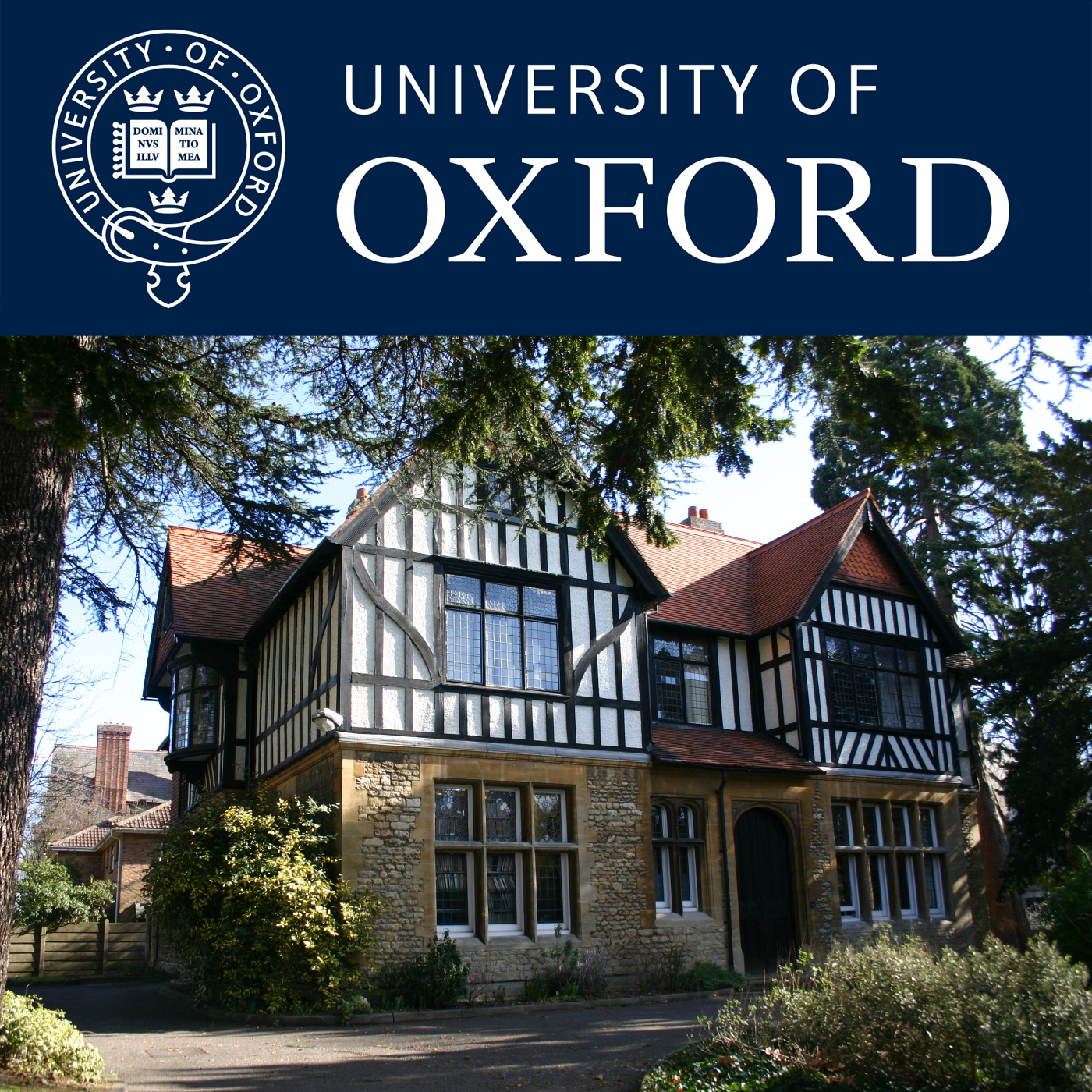
Middle East Centre
Oxford University
The Middle East Centre, founded in 1957 at St Antony’s College is the centre for the interdisciplinary study of the modern Middle East in the University of Oxford. Centre Fellows teach and conduct research in the humanities and social sciences with direct reference to the Arab world, Iran, Israel and Turkey, with particular emphasis on the nineteenth and twentieth centuries. However, during our regular Friday seminar series, attracting a wide audience, our distinguished speakers bring topics to light that touch on contemporary issues.
Episodes
Mentioned books

Feb 14, 2024 • 1h 6min
Genocide and Accountability in Gaza: The Limits and Potential of International Law
Prof Noura Erakat explores the significance of South Africa's application of the Convention on the Prevention and Punishment of the Crime of Genocide in the Gaza Strip before the International Court of Justice, and the Court's decision to hear the case. The Middle East Centre convenes its Hilary Term 2024 seminar each Monday night in term around the theme of 'Political Options Following the Gaza War.' The aim is to bring primarily Palestinian and Israeli speakers each week to discuss the different options facing policy makers in the aftermath of the 7 October 2023 attacks in Israel and the 2023-2024 War in Gaza. While some in the Israeli government call for continued security control over all Palestinian territories, many in the international community believe Palestinian statehood and the end of occupation the only sustainable course of action. In one session, speakers from Britain, Spain, and Israel will consider European proposals for recognizing Palestinian statehood. However, Palestinian independence is not the only option. Others continue to argue that a binational state, in which Palestinians and Israelis would enjoy citizenship, is the most feasible option, given the fragmentation of the West Bank by Israeli settlements. Yet all recognize that the political environment for substantive change has become far more difficult as a result of the 7 October attack and the Gaza War.
Feb 12, 2024 • 50min
The Settler Movement, Political Impasses, and Beyond
Dr Hagar Kotef from SOAS examines the current situation of Israeli settlers both in the West Bank and in the Cabinet to assess the impact of the settler movement in political options following the Gaza War. The Middle East Centre convenes its Hilary Term 2024 seminar each Monday night in term around the theme of ‘Political Options Following the Gaza War.’ The aim is to bring primarily Palestinian and Israeli speakers each week to discuss the different options facing policy makers in the aftermath of the 7 October 2023 attacks in Israel and the 2023-2024 War in Gaza. While some in the Israeli government call for continued security control over all Palestinian territories, many in the international community believe Palestinian statehood and the end of occupation the only sustainable course of action. In one session, speakers from Britain, Spain, and Israel will consider European proposals for recognizing Palestinian statehood. However, Palestinian independence is not the only option. Others continue to argue that a binational state, in which Palestinians and Israelis would enjoy citizenship, is the most feasible option, given the fragmentation of the West Bank by Israeli settlements. Yet all recognize that the political environment for substantive change has become far more difficult as a result of the 7 October attack and the Gaza War.
Feb 5, 2024 • 1h 4min
Considering the Political Options in Gaza After Three Months of War
In the opening meeting of the Middle East Centre’s Hilary Term seminar series, the Fellows of the Centre led a panel discussion to set out the agenda for the series examining the political options following the Gaza War. The Middle East Centre convenes its Hilary Term 2024 seminar each Monday night in term around the theme of ‘Political Options Following the Gaza War.’ The aim is to bring primarily Palestinian and Israeli speakers each week to discuss the different options facing policy makers in the aftermath of the 7 October 2023 attacks in Israel and the 2023-2024 War in Gaza. While some in the Israeli government call for continued security control over all Palestinian territories, many in the international community believe Palestinian statehood and the end of occupation the only sustainable course of action. In one session, speakers from Britain, Spain, and Israel will consider European proposals for recognizing Palestinian statehood. However, Palestinian independence is not the only option. Others continue to argue that a binational state, in which Palestinians and Israelis would enjoy citizenship, is the most feasible option, given the fragmentation of the West Bank by Israeli settlements. Yet all recognize that the political environment for substantive change has become far more difficult as a result of the 7 October attack and the Gaza War.
With presentations by Eugene Rogan, Raihan Ismail, Maryam Alemzadeh and Walter Armbrust, the opening panel set the stage for the next seven sessions to follow. The session attracted an overflow audience that filled the lecture theatre to capacity.
Jan 30, 2024 • 49min
Israeli Public Opinion and Political Options after 7 October
Professor Yuli Tamir considers Israeli public opinion following the 7 October 2023 attack and the constraints that public opinion imposes on the political options moving forward. The Middle East Centre convenes its Hilary Term 2024 seminar each Monday night in term around the theme of ‘Political Options Following the Gaza War.’ The aim is to bring primarily Palestinian and Israeli speakers each week to discuss the different options facing policy makers in the aftermath of the 7 October 2023 attacks in Israel and the 2023-2024 War in Gaza. While some in the Israeli government call for continued security control over all Palestinian territories, many in the international community believe Palestinian statehood and the end of occupation the only sustainable course of action. In one session, speakers from Britain, Spain, and Israel will consider European proposals for recognizing Palestinian statehood. However, Palestinian independence is not the only option. Others continue to argue that a binational state, in which Palestinians and Israelis would enjoy citizenship, is the most feasible option, given the fragmentation of the West Bank by Israeli settlements. Yet all recognize that the political environment for substantive change has become far more difficult as a result of the 7 October attack and the Gaza War.
In the second seminar in the Hilary Term series, ‘Political Options Following the Gaza War,’ the Centre welcomed Professor Yael (Yuli) Tamir, President of Beit Berl College, former Member of the Knesset, and former Cabinet Minister, to consider Israeli public opinion following the 7 October 2023 attack and the constraints that public opinion imposes on the political options moving forward. Once again, the lecture theatre was filled to overflow and generated extensive exchange between the audience and the speaker.
Jan 25, 2024 • 59min
Modern Arab Kingship - Remaking the Ottoman Political Order in the Interwar Middle East
Adam Mestyan argues that post-Ottoman Arab political orders were not, as many historians believe, products of European colonialism but of the process of "recycling empire." Adam Mestyan is Associate Professor of History at Duke University. His works include Modern Arab Kingship - Remaking the Ottoman Political Order in the Interwar Middle East (Princeton University Press, 2023), Primordial History, Print Capitalism, and Egyptology in Nineteenth-Century Cairo (Ifao, 2021); and Arab Patriotism: The Ideology and Culture of Power in Late Ottoman Egypt (Princeton University Press, 2017). He is the PI of the collaborative Islamic digital humanities project, Digital Cairo - Studying Urban Transformation through a TEI XML Database, 1828-1914, supported by the National Endowment for the Humanities (NEH) and L'Institut français d'archéologie orientale du Caire (Ifao).
In this groundbreaking book, Adam Mestyan argues that post-Ottoman Arab political orders were not, as many historians believe, products of European colonialism but of the process of "recycling empire." Mestyan shows that in the post-World War I Middle East, Allied Powers officials and ex-Ottoman patricians collaborated to remake imperial institutions, recycling earlier Ottoman uses of genealogy and religion in the creation of new polities, with the exception of colonized Palestine. These polities, he contends, should be understood not in terms of colonies and nation-states but as subordinated sovereign local states-localized regimes of religious, ethnic, and dynastic sources of imperial authority. Meanwhile, governance without sovereignty became the new form of Western domination.
Jan 23, 2024 • 1h 20min
Stories to Connect: The Reza Hosseini Memorial Lecture Series on the past and present of the Middle East
Join Professor Ghassan Salamé for his Lecture on 'Lessons from 2003 Iraq: Twenty Years Later.' Jointly organised by Invisible East and St Antony's College, University of Oxford, with the generous support of the Middle East Centre, the Reza Hosseini Memorial Lecture Series connects individual stories to larger questions on the history and contemporary issues of the Middle East. The series aims to recognise and promote, in particular, micro-histories, oral and documentary history, and fieldwork analysis.
The series honours the life and work of Reza Hosseini (1960-2003) who last served as Humanitarian Officer in Iraq. The series is launched on the 20th anniversary of the attack on the United Nations Headquarters in Baghdad on 19 August 2003 which killed Reza and 21 colleagues.
Guest Speaker: Ghassan Salamé (Professor of International Relations at Sciences-Po)
Jan 23, 2024 • 1h 13min
Reconsidering the 60s generation in the Arab world and beyond
Professor Yoav di Capua offers a comprehensive empirical, theoretical, and methodological reassessment of the Arab 60s as a global pursuit with lessons that transcend the geography of the Middle East - the fruit of a decade of research on Arab thought. A common understanding of the 1960s is that of an integrated global era marked by a revolutionary quest for self-liberation, transnational solidarity, sexual revolution, radical self-fashioning, anti-imperialism, a renewed understanding of gender and race relationships as well as an intellectual drive to articulate universal ethics of emancipation. But in the Arab world, with few exceptions, most narratives portray a radically different image: one of a failed revolutionary project marked by ideological bigotry, political messianism, personality cults, ethnocentric particularism, economic ruin, and an overall sense of a cultural defeat. Are these two images reconcilable?
Jan 23, 2024 • 58min
What have the Arab Uprisings done to "Contemporary Arab Thought"?
Professor Elizabeth Suzanne Kassab offers some reflections on the challenges that a post-2011 Arab critique might be facing. What have the Arab Uprisings done to "Contemporary Arab Thought"? It is an undisputable fact that the Arab uprisings since 2011 have been a most dramatic turn in the Arab region since the founding of the modern Arab states: an unexpected and explainable event that continues to impact Arab life on all levels, including the intellectual. In my talk I look at the new light that that event might have shed on was/is known as "contemporary Arab thought," the aspects of continuity and discontinuity that it might have revealed about that thought? I ask to what extent we, inhabitants of that region, are still contemporaries of that thought? And to what extent that "contemporary Arab thought" was contemporaneous to the societies it came from?
Guest Speaker: Professor Elizabeth Suzanne Kassab (Doha Institute for Graduate Studies, Qatar)
Sep 19, 2023 • 58min
Zionism and the Jews of Iraq: A Personal Perspective
Professor Avi Shlaim gives the George Antonius Memorial Lecture 2023, examining the Jewish exodus from Iraq in the aftermath of the 1948 Arab-Israeli war, and arguing the Zionist movement played an active part in the uprooting of Iraqi Jews. This annual lecture is also a launch for Avi Shlaim’s new book, 'Three Worlds: Memoir of an Arab-Jew' which will be published by Oneworld on 8 June. The three worlds of the title are Baghdad to the age of 5, Ramat Gan, Israel, 10 to 15, and school in London, 15 to 18. The book uses a family history to tell the bigger story of the Jewish community in Iraq, its rich culture, its integration into Iraqi society, and its contribution to nation-building at various levels. The lecture revolves round the central concept of the Arab-Jew. It examines the circumstances surrounding the Jewish exodus from Iraq in the aftermath of the 1948 Arab-Israeli war. It challenges the Zionist narrative which claims that antisemitism was the main driver of the exodus. It argues that the Zionist movement played an active part in the uprooting of Iraqi Jews, and it presents new evidence to support this argument.
Avi Shlaim is an Emeritus Professor of International Relations at the University of Oxford and a Fellow of the British Academy. His books include Collusion across the Jordan: King Abdullah, the Zionist Movement, and the Partition of Palestine (1988); War and Peace in the Middle East: A Concise History (1995); The Iron Wall: Israel and the Arab World (2000, updated edition 2014); Lion of Jordan: The Life of King Hussein in War and Peace (2007); and Israel and Palestine: Reappraisals, Revisions, Refutations (2009).
Speakers:
Emeritus Professor Avi Shlaim, FBA (University of Oxford)
Chair: Professor Eugene Rogan (St Antony's College)
Recorded Thursday, 15 June 2023
Aug 22, 2023 • 1h 32min
Memorial in honour of Derek Hopwood OBE and Celia Kerslake
The Director and Fellows of the Middle East Centre, St Antony’s College convened a memorial in honour of Derek Hopwood OBE, Emeritus Fellow in Middle Eastern Studies (1933-2020) and Celia Kerslake, Emeritus Fellow in Turkish (1946-2023). Guest Speakers and times:
0:00 - 4:17 Eugene Rogan, Middle East Centre Director (moderator and opening remarks)
4:17 - 15:30 Roger Goodman, Warden of St Antony's College
15:30 - 21:40 Rosie MacGregor, sister of Celia Kerslake
21:40 - 32.33 Michael Willis, Muhammad VI Fellow in Moroccan and Mediterranean Studies, tribute to Derek Hopwood
32:33 - 42:29 Laurent Mignon, Professor of Turkish, tribute to Celia Kerslake
42:29 - 55:20 Linda Schilcher ('69 Antonian), tribute to Derek Hopwood
55.20 - 1:12:18 Ahmed Al-Shahi ('65 Antonian), tribute to Derek and Celia
1:12:18 - 1:21:43 Dimitris Antoniou ('03 Antonian), student of Celia Kerslake
1:21:43 - 1:29:44 Gina Rowland ('85 Antonian), student of Derek Hopwood
Closing remarks by Eugene Rogan

