

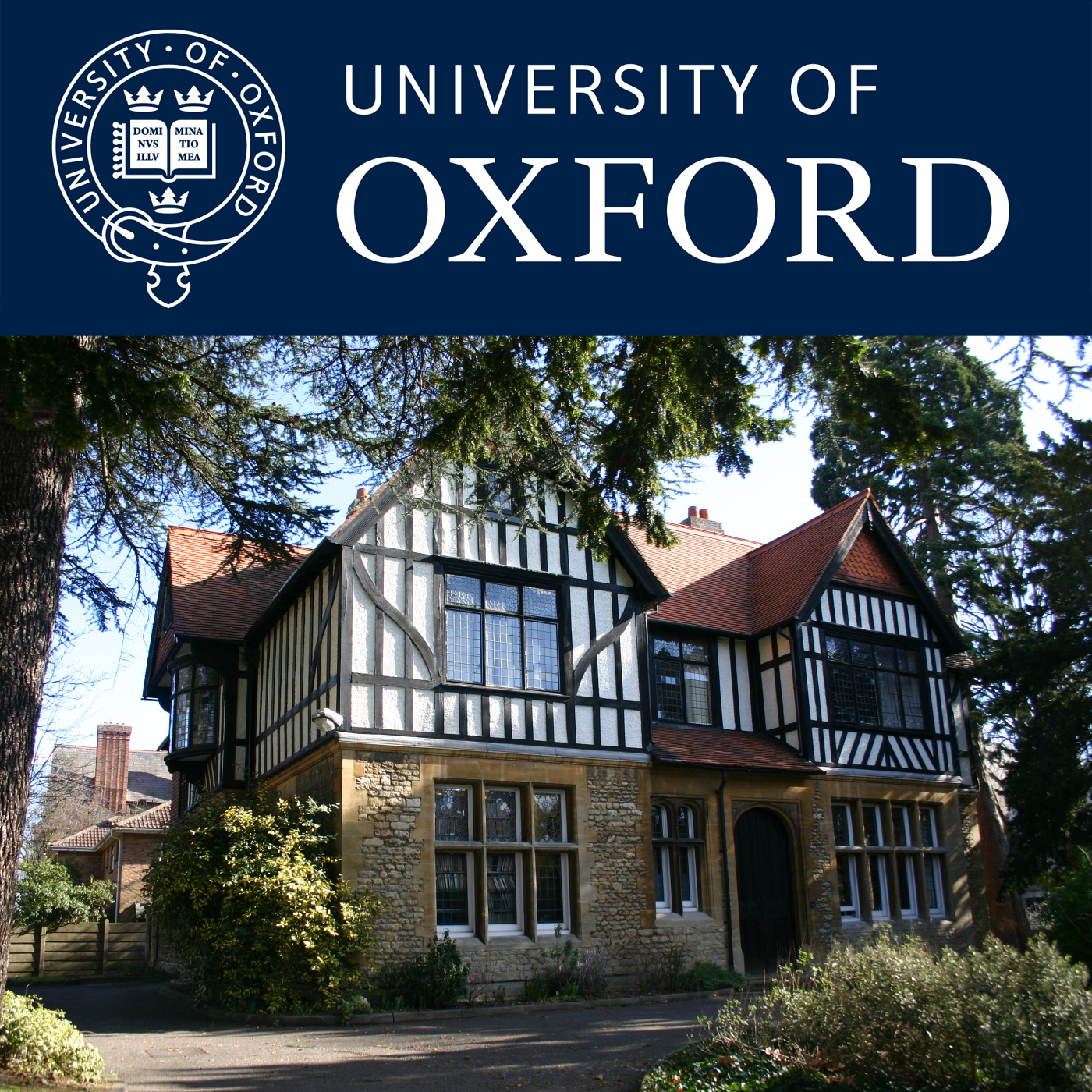
Middle East Centre
Oxford University
The Middle East Centre, founded in 1957 at St Antony’s College is the centre for the interdisciplinary study of the modern Middle East in the University of Oxford. Centre Fellows teach and conduct research in the humanities and social sciences with direct reference to the Arab world, Iran, Israel and Turkey, with particular emphasis on the nineteenth and twentieth centuries. However, during our regular Friday seminar series, attracting a wide audience, our distinguished speakers bring topics to light that touch on contemporary issues.
Episodes
Mentioned books

Jun 12, 2017 • 32min
Book Launch: Islam: The Essentials
Professor Tariq Ramadan (St Antony's College) launches his new book; Islam: The Essentials on May 9th 2017. Hardly a day goes by without mention of Islam. And yet, for most people, and in much of the world, Islam remains a little-known religion. Whether the issue is violence, terrorism, women's rights or slavery, Muslims are today expected to provide answers and to justify what Islam is - or is not. But little opportunity exists, either in the media or in society as a whole, to describe Islam: precisely the question this short and extremely accessible book sets out to answer. In simple, direct language it will introduce readers to Islam, to its spirituality, its principles, its rituals, its diversity and its evolution.
May 30, 2017 • 52min
The Emergence of Iranian Nationalism: Race and the Politics of Dislocation
Dr Reza Zia-Ebrahimi (King's College London) gives a lecture on Iranian nationalis, this is a joint event with the Oxford University Iranian Society. Reza Zia-Ebrahimi revisits the work of Fath-Ali Akhundzadeh and Mirza Aqa Khan Kermani, two Qajar-era intellectuals who founded modern Iranian nationalism. In their efforts to make sense of a difficult historical situation, these thinkers advanced an appealing ideology Zia-Ebrahimi calls "dislocative nationalism," in which pre-Islamic Iran is cast as a golden age, Islam is reinterpreted as an alien religion, and Arabs become implacable others. Dislodging Iran from its empirical reality and tying it to Europe and the Aryan race, this ideology remains the most politically potent form of identity in Iran.
Akhundzadeh and Kermani's nationalist reading of Iranian history has been drilled into the minds of Iranians since its adoption by the Pahlavi state in the early twentieth century. Spread through mass schooling, historical narratives, and official statements of support, their ideological perspective has come to define Iranian culture and domestic and foreign policy. Zia-Ebrahimi follows the development of dislocative nationalism through a range of cultural and historical materials, and he captures its incorporation of European ideas about Iranian history, the Aryan race, and a primordial nation. His work emphasizes the agency of Iranian intellectuals in translating European ideas for Iranian audiences, impressing Western conceptions of race onto Iranian identity.
May 16, 2017 • 29min
Panel Discussion: Prospects of Iraqi Kurdistan's Independence Amid Regional Turbulences
Hemin Hawrami (Senior Adviser to President Masoud Barzani) and Ceng Sagnic (Moshe Dayan Centre, Israel), discuss the prospect of Kurdistan independence. Chaired by Eugene Rogan (St Antony’s College). Moderatorated by Ari Aziz Mamshae (Blavatnik School of Government)
May 9, 2017 • 43min
Writing an Arab Officer into the 1948 War for Palestine
Professor Laila Parsons (McGill University), gives a talk for the Middle East seminar series. Chaired by Eugene Rogan (St Antony's College, Oxford). Laila Parsons is a historian specializing in the modern Middle East. She received her D.Phil. from Oxford in 1996, and taught at Harvard and Yale before moving in 2004 to McGill University, where she is currently Associate Professor of History and Islamic Studies. Parsons’ research focuses on the history of the Israeli-Palestinian conflict and on the role of narrative and biography in the field of modern Middle Eastern History. She has published widely in this area, including her books The Druze between Palestine and Israel, 1947–1949 (St Antony’s/Macmillan, 2000) and The Commander: Fawzi al-Qawuqji and the Fight for Arab Liberation, 1914-1948 (Hill & Wang/Farrar Straus & Giroux, 2016), which uses the life-story of an Arab officer and anti-colonial rebel as a prism through which to tell the story of the Eastern Arab World in the first half of the 20th Century. She is currently writing a new book on Palestinian participation in the Peel Commission (1936-1937), with a focus on how the procedures of the commission were determined, and on whether or not the Commission was a space of real political possibility for the Palestinians.
Mar 27, 2017 • 50min
Tunisia
Rory McCarthy (Magdalen College, Oxford) and Fabio Merone (Ghent University) give a talk for the Middle East Centre seminar series. Chaired by Michael Willis (St Antony's College).
Mar 27, 2017 • 37min
Free Expression in the Gulf
Maryam al-Khawaja and Nicholas McGeehan (Middle East Researcher, Human Rights Watch) give a seminar for the MIddle East Centre. The discussant is Toby Matthiesen (St Antony's College). Chaired bt Timothy Garton Ash (St Antony's College).
Mar 10, 2017 • 36min
Jews, Muslims, and Law in Nineteenth-Century Morocco
Jessica Maya Marglin (University of Southern California) gives a talk for the Middle East Centre on 2nd March 2017. Through the experiences of a single Jewish family, this lecture charts how the law helped Jews to integrate into Muslim society. Drawing on previously untapped documents in Hebrew, Arabic, and European languages, Marglin offers a new perspective on Jewish-Muslim relations in the modern Islamic world.
Feb 28, 2017 • 45min
Islam in Europe
Part of the Middle East Centre Seminar Series, with Nilüfer Göle, Tariq Modood and Tariq Ramadan (chair). Held on 17th February 2017. Nilüfer Göle is Professor of Sociology, Ecole des Hautes Etudes en Sciences Sociales (EHESS), Paris, Tariq Modood is Professor of Sociology, Politics and Public Policy, University of Bristol and founding Director, Centre for the Study of Ethnicity and Citizenship and Tariq Ramadan isProfessor of Contemporary Islamic Studies, St Antony's College.
Feb 1, 2017 • 1h 5min
The Conflict in Libya
Lydia Sizer (Libya Analyst MENAS), Mary Fitzgerald (Journalist and Author) and John Hamilton (Cross Border Information) discuss the conflict in Libya on 27th January 2017.
Feb 1, 2017 • 32min
The Syrian Conflict
Raphael Lefevre (New College, Oxford) and Kevin Mazur (Nuffield College, Oxford) discuss the ongoing Syrian conflict on 20th January 2017.

