

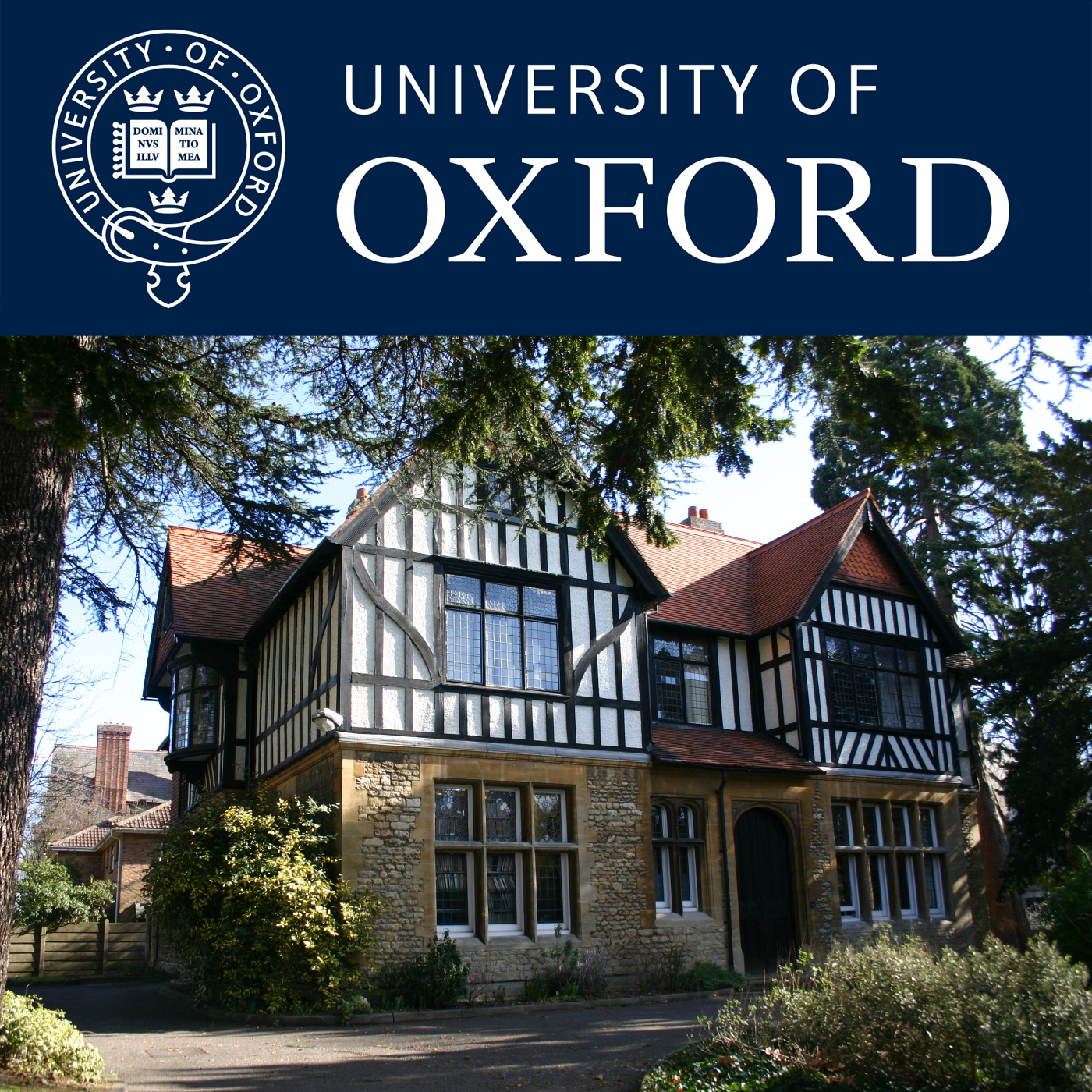
Middle East Centre
Oxford University
The Middle East Centre, founded in 1957 at St Antony’s College is the centre for the interdisciplinary study of the modern Middle East in the University of Oxford. Centre Fellows teach and conduct research in the humanities and social sciences with direct reference to the Arab world, Iran, Israel and Turkey, with particular emphasis on the nineteenth and twentieth centuries. However, during our regular Friday seminar series, attracting a wide audience, our distinguished speakers bring topics to light that touch on contemporary issues.
Episodes
Mentioned books

9 snips
Nov 26, 2018 • 34min
Reconsidering Marshall Hodgson
In a thought-provoking discussion, Professor Edmund Burke III delves into the life and legacy of Marshall Hodgson, a pioneering figure in the study of Islamic history. He highlights Hodgson's innovative approaches, such as integrating Islamic history into global narratives and promoting an inclusive worldview. Burke also discusses Hodgson's influences, his work's worldwide impact, and how his ideas resonate amid rising nationalism and Islamophobia. The conversation emphasizes the importance of revisiting Hodgson's work to foster understanding across cultures.
Nov 26, 2018 • 33min
Book Launch: Christian Martyrs under Islam
Dr Christian C Sahner (Associate Professor of Islamic History, Faculty of Oriental Studies), talks about his new book, the discussants are Phil Booth (Faculty of Theology) and Professor Julia Bray (Oriental Institute). Chaired by Professor Bryan Ward-Perkins (Faculty History, Oxford).
How did the medieval Middle East transform from a majority-Christian world to a majority-Muslim world, and what role did violence play in this process? Christian Martyrs under Islam explains how Christians across the early Islamic caliphate slowly converted to the faith of the Arab conquerors and how small groups of individuals rejected this faith through dramatic acts of resistance, including apostasy and blasphemy.
Using previously untapped sources in a range of Middle Eastern languages, Christian Sahner introduces an unknown group of martyrs who were executed at the hands of Muslim officials between the seventh and ninth centuries CE. Found in places as diverse as Syria, Spain, Egypt, and Armenia, they include an alleged descendant of Muhammad who converted to Christianity, high-ranking Christian secretaries of the Muslim state who viciously insulted the Prophet, and the children of mixed marriages between Muslims and Christians. Sahner argues that Christians never experienced systematic persecution under the early caliphs, and indeed, they remained the largest portion of the population in the greater Middle East for centuries after the Arab conquest. Still, episodes of ferocious violence contributed to the spread of Islam within Christian societies, and memories of this bloodshed played a key role in shaping Christian identity in the new Islamic empire.
Christian Martyrs under Islam examines how violence against Christians ended the age of porous religious boundaries and laid the foundations for more antagonistic Muslim-Christian relations in the centuries to come (Princeton University Press).
Nov 26, 2018 • 56min
Preventing Palestine: A Political History from Camp David to Oslo
Dr Seth Anziska (Mohamed S. Farsi-Polonsky Lecturer in Jewish-Muslim Relations, University College London), gives a talk for the Middle East Studies Centre. Based on newly declassified international sources, Preventing Palestine charts the emergence of the Middle East peace process, including the establishment of a separate track to deal with the issue of Palestine. At the very start of this process, Anziska argues, Egyptian-Israeli peace came at the expense of the sovereignty of the Palestinians, whose aspirations for a homeland alongside Israel faced crippling challenges. With the introduction of the idea of restrictive autonomy, Israeli settlement expansion, and Israel's 1982 invasion of Lebanon, the chances for Palestinian statehood narrowed even further. The first Intifada in 1987 and the end of the Cold War brought new opportunities for a Palestinian state, but many players, refusing to see Palestinians as a nation or a people, continued to steer international diplomacy away from their cause (Princeton University Press).
Nov 26, 2018 • 40min
Between Love and Lineage: Elopement, Rights and Violence in an Afghan Valley
Dr Naysan Adlparvar (Yale University), gives a talk for the Middle East Studies Centre. Marriage, in Afghanistan, is a highly strategic affair. In most cases, Afghan parents carefully manage who their children marry. This is done to forge alliances and accrue financial benefits. At the same time, marriage also serves to maintain community boundaries - be they familial, religious or ethnic. These boundaries are often stark; with prolonged conflict making interethnic and intersectarian marriage uncommon. Yet, since the US-led intervention in Afghanistan, intergenerational modes of control have begun to falter and marriage patterns have begun to shift.
In the Bamyan Valley - deep in the mountainous Central Highlands of the country - 'escape marriage' or elopement has become increasingly common, as has the retaliatory violence it engenders. A series of high-profile elopement cases, between members of two ethnic communities, have captivated the local media. Hazarah men are 'escaping' with Sayid women; which is being met with mounting violence and growing ethnic tensions. Young women and men in Bamyan are caught between familial/ethnic expectations and their personal desire - backed by Human Rights institutions-to marry those they choose.
Based on extended ethnographic research in Afghanistan’s Bamyan Valley, this lecture will discuss the emerging phenomenon of 'escape marriage' and the underlying mechanisms that foster it. It will do this by exposing the shifting social landscape in Afghanistan and by drawing linkages between the formation of the new Afghan State, the emergence of educational opportunities for women, the action of Human Rights institutions and, ultimately, the changing nature of marriage and elopement. This lecture will explore how and why young Bamyani men and women navigate the treacherous ground between love and lineage.
Nov 13, 2018 • 20min
Book launch: Khalil Maleki -The Human Face of Iranian Socialism
Dr Homa Katouzian (Iran Heritage Foundation Research Fellow, St Antony's) gives a talk for the Middle East Centre. Chaired by Stephanie Cronin (St Antony's College). Khalil Maleki (1901-1969) was a selfless campaigner for democracy and social welfare in twentieth-century Iran. His was a unique approach to politics, prioritising the criticism of policies detrimental to his country's development over the pursuit of power itself. An influential figure, he was at the centre of such formative events as the split of the communist Tudeh party, and the 1953 coup and its aftermath.In an age of intolerance and uncompromising confrontation, Maleki remained an indefatigable advocate for open discussion and peaceful reform - a stance that saw him jailed several times. This work makes a compelling case for him to be regarded among the foremost thinkers of his generation.
Nov 13, 2018 • 32min
A Rope from the Sky: The Making and Unmaking of the World's Newest State (South Sudan)
Zach Vertin (Princeton University) on a joint event with Sudanese Programme, African Studies Centre and the Centre for International Studies. Chaired by Dr Ahmed Al-Shahi (Sudanese Programme).
Nov 13, 2018 • 51min
Lords of the Desert: Britain’s struggle with America to dominate the Middle East
James Barr (King's College London) gives a talk for the Middle East Centre, chaired by Eugene Rogan (St Antony's College). Thanks to the now-infamous 1953 conspiracy to oust Iran’s prime minister, Mohammed Mosaddeq, the prevailing wisdom is that Britain and America colluded in the Middle East. In his talk James Barr will challenge this assumption, arguing the opposite was in fact the case: in the quarter century following the battle of El Alamein in 1942, Britain and America were invariably competitors and often outright rivals.
Aug 28, 2018 • 1h 15min
Book Event: On the Arab Jew, Palestine, and Other Displacements
Jacqueline Rose (Birkbeck), Kfir Cohen (Van Leer Jerusalem Institute), Moshe Behar (The University of Manchester), Hakem Al-Rustom (Michigan), Ella Shohat (New York University) discuss at the book event. Chaired by Eugene Rogan (St Antony's College).
Aug 28, 2018 • 48min
Workshop: Memory, Memoirs, and History part 2
Ella Shohat (New York University) and Avi Shlaim (St Antony's College) give the second of two workshops for the middle east centre.
Aug 28, 2018 • 33min
Workshop: Memory, Memoirs, and History Part 1
Ella Shohat (New York University) and Avi Shlaim (St Antony's College) give the first of two workshops for the middle east centre.

