

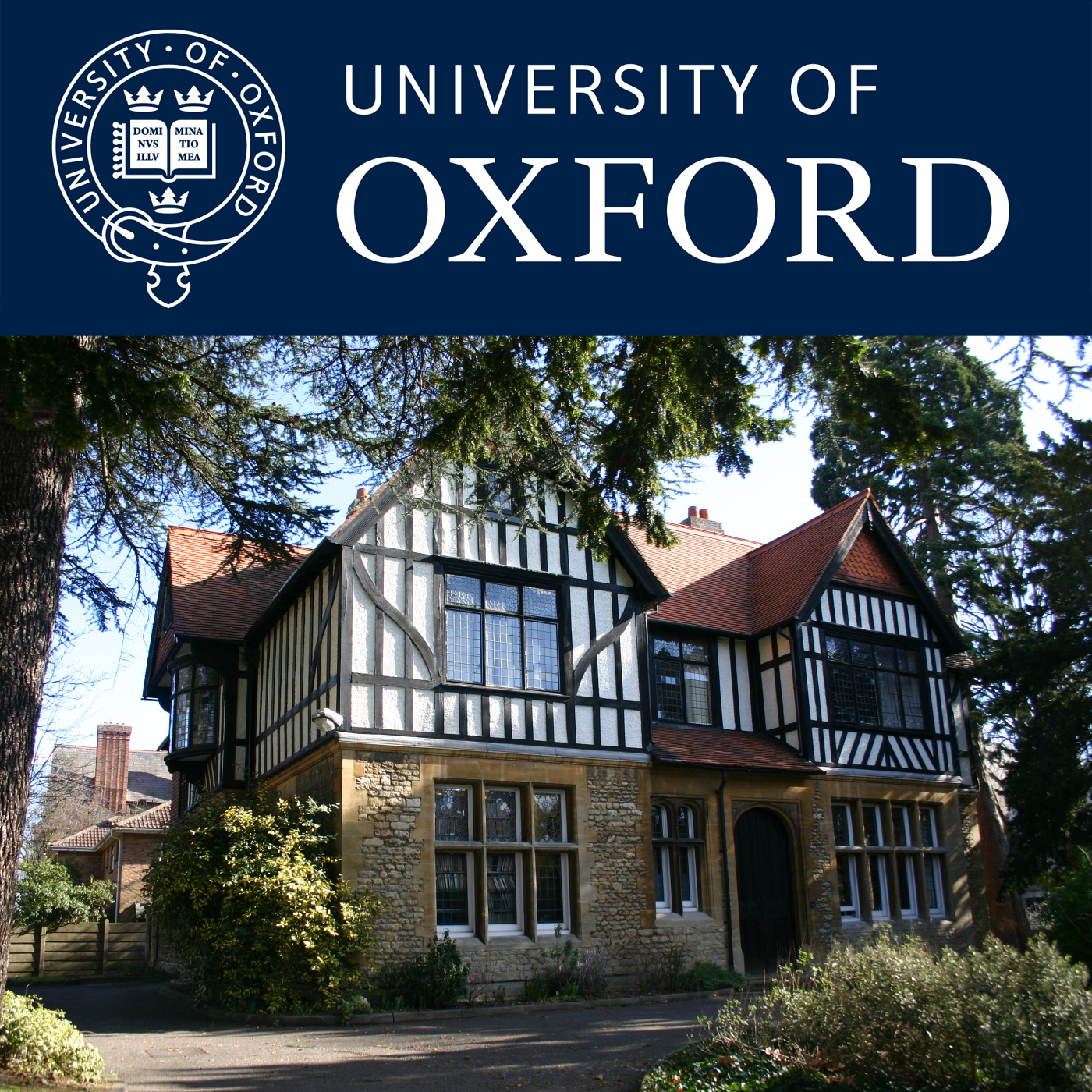
Middle East Centre
Oxford University
The Middle East Centre, founded in 1957 at St Antony’s College is the centre for the interdisciplinary study of the modern Middle East in the University of Oxford. Centre Fellows teach and conduct research in the humanities and social sciences with direct reference to the Arab world, Iran, Israel and Turkey, with particular emphasis on the nineteenth and twentieth centuries. However, during our regular Friday seminar series, attracting a wide audience, our distinguished speakers bring topics to light that touch on contemporary issues.
Episodes
Mentioned books

Nov 25, 2025 • 1h 5min
Seeds in the Rubble: Cultural Vitality in the Arab World
This seminar was delivered at the Middle East Centre on Thursday 20 November by Sultan Sooud Al-Qassemi, founder of the Barjeel Art Foundation, and was chaired by Professor Eugene Rogan, St Antony’s College. This seminar was delivered at the Middle East Centre on Thursday 20 November by Sultan Sooud Al-Qassemi and was chaired by Professor Eugene Rogan, St Antony’s College.
Sultan Sooud Al-Qassemi is an Emirati columnist and researcher on social, political and cultural affairs in the Arab Gulf States. He is also the founder of the Barjeel Art Foundation, an independent initiative established in 2010 to contribute to the intellectual development of the art scene in the Arab region. He has taught 'Politics of Modern Middle Eastern Art' at New York University, Yale University, Georgetown University, Boston College, The American University of Paris, Brandeis University, Harvard Kennedy School, Columbia University and Bard College Berlin. In 2023, Sultan completed a Fellowship at Wissenschaftskolleg zu Berlin and in 2024, Sultan was a Research Associate at SOAS Middle East Institute, London. Sultan is currently an Instructor at the American University of Sharjah.
The past century has been a time of great turmoil in much of the world. Europe, perhaps, bore the brunt of this turmoil, with millions killed and entire cities, such as Rotterdam, Dresden, and Warsaw largely reduced to rubble along with their museums, and cultural institutions. The Arab World has also suffered its share of conflicts, compounding the adverse impact of colonialism on everyday life and culture. Events such as the Nakba in Palestine, and conflicts such as the Lebanese Civil War and the 2003 American invasion of Iraq have left a string of structural and cultural devastation in addition to the toll on human life. However, the Arab World has also seen attempts to rebuild, both in lives and livelihoods, some more successful than others. These fragile steps forward can be derailed as conflicts arise such as in Gaza. Even in such dark cases there are some triumphs of humanity. This talk will attempt to shed light on these sparks of inspiration that reflect the vitality of the Arab World.
The presentation slides for this episode can be downloaded here: https://media.podcasts.ox.ac.uk/sant/middle_east_studies/2025-11-25-sant-mec-alqassemi-slides.pdf
Nov 21, 2025 • 35min
Egypt’s Role, Identity, and Foreign Policy in a River of De-Nile
This MENA Politics Series Seminar was delivered on Tuesday 18 November in the MEC’s Boardroom by Dr May Darwich (University of Birmingham) and was chaired by Professor Neil Ketchley (St Antony’s College). This paper explains Egypt’s foreign policy stagnation, with a novel argument building on role and identity theories. Egypt’s foreign policy exhibits a case where its regional leadership role has changed (and declined), but its identity emphasising Egyptian leadership persists, thus leading to foreign policy that is widely seen as ineffective. This paper examines the theoretical link — and distinction — between national roles and identities. Drawing on previous role research, we argue that, compared to identities, roles are more behaviourally prescriptive, necessarily relational, and are dependent on others’ expectations and acceptance of them. We also discuss the distinct sources of role change and identity change, setting up the possibility that one may change while the other remains stable. We examine the implications of when roles and identities become out of sync with the case of Egypt’s role decay. While Egypt’s leadership role at the regional role has retreated, the leadership identity persists. For Egyptians, Egypt is a ‘natural’ leader of the Arab world and a pivotal state in regional affairs. Herein, we argue, lays the explanations for why Egypt’s foreign policy has suffered from contradictions and ineffectiveness. Empirically, this paper draws upon historical evidence, official statements, memoirs of Egyptian foreign policy makers, and observation of public debates in Egypt’s public sphere.
Nov 21, 2025 • 1h 38min
Morocco’s Party of Justice and Development in Government: The Experience and the Future
This seminar was delivered on Thursday 13 November in the MEC’s Investcorp Lecture Theatre by Mustapha El Khalfi (Former Minister of Communications, Morocco) and was chaired by Professor Michael Willis (St Antony’s College).
Oct 31, 2025 • 1h 6min
NGOization of the Palestinian civil society post-Oslo: our community-based ways out
Dr. Amal Nazzal, an expert in NGOization and feminist organizing, joins Soheir Asaad, a Palestinian political organizer at Rawa, for an insightful discussion on the impact of NGOization on Palestinian civil society. They explore the ways funding alters activism, examining how donor conditions often depoliticize grassroots efforts. Soheir underscores the detrimental effects of humanitarianism in the context of Gaza and critiques traditional philanthropy's fragmentation of movements. Together, they propose community-driven alternatives that aim to restore power and self-determination.
4 snips
Oct 20, 2025 • 1h 1min
Gaza Genocide as a Symptom: Fragile World Order and Regional Impacts
Ahmet Davutoğlu, former Prime Minister of Türkiye and expert on international relations, shares his insights on the Gaza crisis and its implications for global order. He discusses the concept of a 'systemic earthquake' in geopolitics and critiques Western complicity in the situation. Davutoğlu elaborates on the shift in U.S. foreign policy post-9/11 and how recent trends in neoconservatism influence current dynamics. He warns that Gaza symbolizes a new colonial phase, emphasizing the urgent need for inclusive governance to counter regional unrest.
Sep 30, 2025 • 1h 2min
Big Tech and the Automation of Genocide in Gaza
Dr. Samer Abdelnour, a senior lecturer at the University of Edinburgh Business School and co-founder of the Palestinian policy network Shadaka, dives deep into the chilling intersection of Big Tech and warfare. He unveils how companies like Google and Amazon contribute to Israel's surveillance state through projects like Nimbus, which utilize AI for automated targeting. Abdelnour discusses the alarming implications of data collection on Palestinians, arguing that these technologies effectively turn data into deadly weapons, thus normalizing violence and mass killings in Gaza.
May 30, 2025 • 1h 5min
The Devaki Jain Lecture - Empowered voices: Jordanian women shaping their future
The Middle East Centre was honoured to host the 2025 Devaki Jain Lecture. This year’s lecture was delivered by Rana Husseini, Jordanian activist, journalist and author. The Middle East Centre was honoured to host the 2025 Devaki Jain Lecture. This year’s lecture was delivered by Rana Husseini, Jordanian activist, journalist and author.
The Devaki Jain lecture series, established in 2015 by Devaki Jain, welcomes esteemed women speakers from the South. Past speakers have included Dr Graça Machel, Professor Eudine Barriteau, and Dr Noeleen Heyzer.
Rana Husseini is an internationally recognized human rights activist, gender trainer and a senior journalist with more than 25 years’ experience in the Middle East and North Africa. She has published two books, ‘Murder in the Name of Honour’ and ‘Years of Struggle – The Women’s Movement in Jordan’.
This lecture was chaired by Professor Eugene Rogan.
May 27, 2025 • 17min
Liberation Theology in Palestine
A paper delivered by Rev. Dr Mitri Alraheb at the Palestine Research Centre symposium held at the MEC on Friday 9 May 2025. This paper was part of a panel chaired by Professor Eugene Rogan. A paper delivered by Rev. Dr Mitri Alraheb at the Palestine Research Centre symposium held at the Middle East Centre on Friday 9 May 2025. The symposium was entitled ‘Toward an Inclusive Archaeological and Historical Narrative of Palestine: The Archaeology and History of Palestine’. This paper was part of a panel chaired by Professor Eugene Rogan.
May 27, 2025 • 15min
Towards an Inclusive Narrative, History, and Methodology
A paper delivered by Dr Hamdan Taha at the Palestine Research Centre symposium held at the MEC on Friday 9 May 2025. This paper was part of a panel chaired by Professor Eugene Rogan. A paper delivered by Dr Hamdan Taha at the Palestine Research Centre symposium held at the Middle East Centre on Friday 9 May 2025. The symposium was entitled ‘Toward an Inclusive Archaeological and Historical Narrative of Palestine: The Archaeology and History of Palestine’. This paper was part of a panel chaired by Professor Eugene Rogan.
May 23, 2025 • 56min
After the End of the World: Another Season of War in South Lebanon
Munira Khayyat, a Clinical Associate Professor at NYU Abu Dhabi and an anthropologist with deep ties to the South Lebanon borderland, shares her insights on the aftermath of conflict in the region. She discusses the profound emotional and ecological consequences of war, weaving personal stories with historical context. The talk highlights the resilience of communities that adapt through agriculture, despite ongoing military challenges, and reflects on collective identity and the fierce spirit of survival in the face of destruction.

