

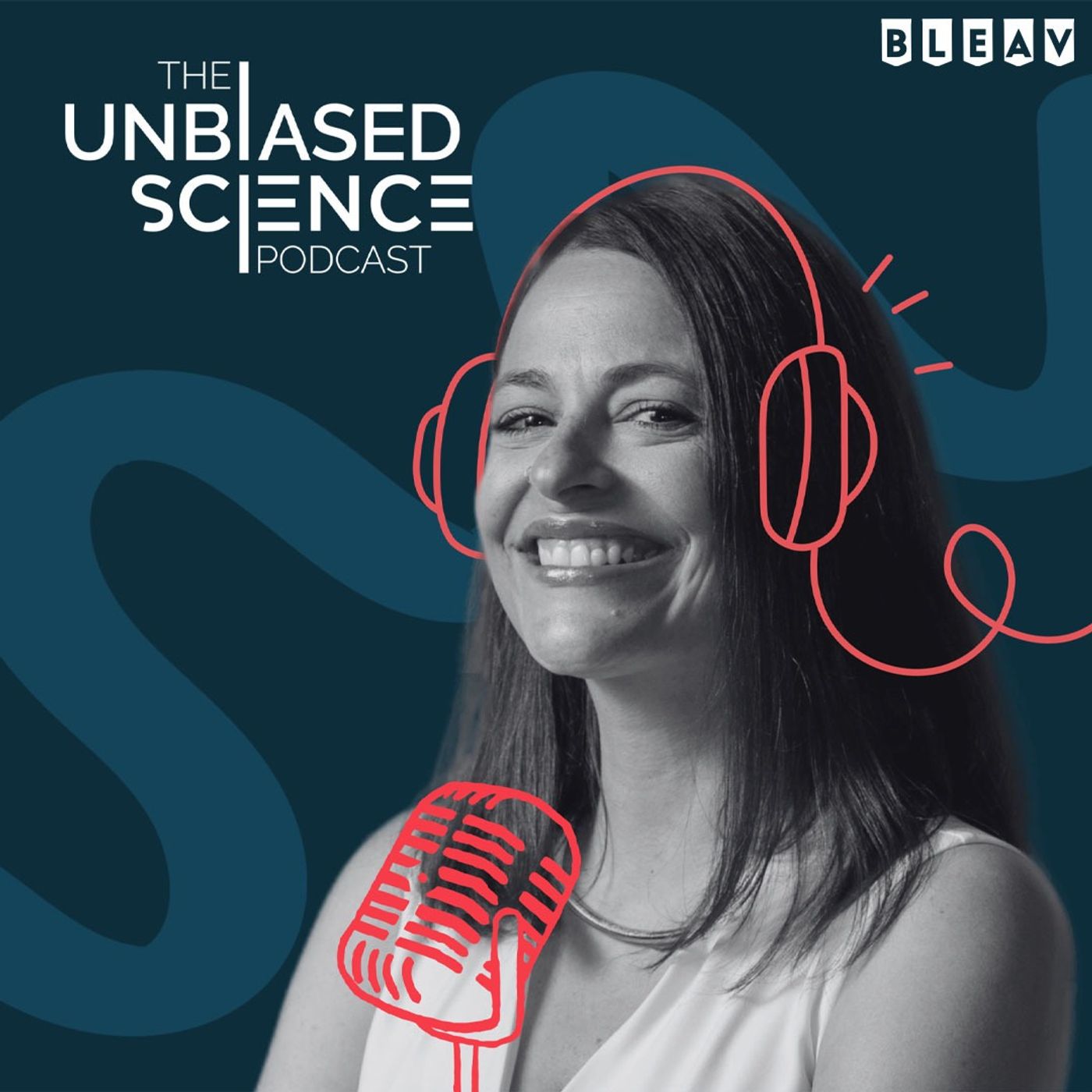
Unbiased Science
@unbiasedscipod
Is that viral health claim true? Public health scientist Dr. Jess Steier and expert guests answer the questions people are asking, walk through the evidence, and leave you with talking points for your next conversation.
Episodes
Mentioned books

Feb 26, 2025 • 40min
Extra, Extra Science: Asteroids, Ozempic And Bird Flu Vaccines!
In this episode, Dr. Jessica Steier and Dr. Sarah Scheinman examine several current public health challenges and scientific developments. The scientists explore emerging research on Ozempic's potential role in treating alcohol use disorder, while addressing ongoing infectious disease concerns including tuberculosis and measles outbreaks. They also discuss broader public health issues such as marijuana advertising's impact on youth and progress in bird flu vaccine development. The conversation provides listeners with context and insights into these diverse health challenges while emphasizing the importance of preventive measures and public health interventions.All our sources from this episode are available at: https://www.unbiasedscipod.com/episodes/(00:00) Intro(09:15) Kansas City Tuberculosis Outbreak(14:31) Texas Measles Outbreak(24:02) Asteroid 2024 YRW: No Cause for Alarm(35:13) Final Thoughts: Bird Flu Vaccine DevelopmentInterested in advertising with us? Please reach out to [email protected], with “Unbiased Science” in the subject line.PLEASE NOTE: The discussion and information provided in this podcast are for general educational, scientific, and informational purposes only and are not intended as, and should not be treated as, medical or other professional advice for any particular individual or individuals. Every person and medical issue is different, and diagnosis and treatment requires consideration of specific facts often unique to the individual. As such, the information contained in this podcast should not be used as a substitute for consultation with and/or treatment by a doctor or other medical professional. If you are experiencing any medical issue or have any medical concern, you should consult with a doctor or other medical professional.Further, due to the inherent limitations of a podcast such as this as well as ongoing scientific developments, we do not guarantee the completeness or accuracy of the information or analysis provided in this podcast, although, of course we always endeavor to provide comprehensive information and analysis. In no event may Unbiased Science or any of the participants in this podcast be held liable to the listener or anyone else for any decision allegedly made or action allegedly taken or not taken allegedly in reliance on the discussion or information in this podcast or for any damages allegedly resulting from such reliance. The information provided herein do not represent the views of our employers. Hosted by Simplecast, an AdsWizz company. See pcm.adswizz.com for information about our collection and use of personal data for advertising.
Feb 19, 2025 • 40min
We are Tee-Totally Obsessed with the Science of Alcohol
In this episode, Dr. Jessica Steier and Dr. Sarah Scheinman explore the complex relationship between alcohol and public health. The scientists examine alcohol's biological effects, its links to various health risks including cancer, and current policy debates around alcohol labeling and blood alcohol content limits. They discuss the growing awareness of alcohol-related health concerns while addressing the emergence of alcohol-free alternatives. The conversation balances personal experiences with scientific evidence, offering listeners a comprehensive understanding of alcohol's impact on individual and public health, while emphasizing the importance of informed decision-making around alcohol consumption.All our sources from this episode are available at: https://www.unbiasedscipod.com/episodes/(00:00) Intro(02:15) Personal Perspectives on Alcohol Consumption(03:54) Statistics and Public Health Concerns(06:41) Cancer Risks Associated with Alcohol(12:00) How Alcohol is Absorbed in the Body(17:44) Understanding Blood Alcohol Concentration (BAC)(19:49) The Impact of Alcohol Legislation(21:15) Alcohol Consumption and Public Health(23:00) Cultural Perspectives on Alcohol(23:41) Alcohol as a Carcinogen(25:51) Alcohol's Effects on the Brain(30:11) Understanding Alcohol Withdrawal(33:27) Navigating Alcohol Consumption in Society(36:32) Final Thoughts: The Rise of Alcohol-Free AlternativesInterested in advertising with us? Please reach out to [email protected], with “Unbiased Science” in the subject line.PLEASE NOTE: The discussion and information provided in this podcast are for general educational, scientific, and informational purposes only and are not intended as, and should not be treated as, medical or other professional advice for any particular individual or individuals. Every person and medical issue is different, and diagnosis and treatment requires consideration of specific facts often unique to the individual. As such, the information contained in this podcast should not be used as a substitute for consultation with and/or treatment by a doctor or other medical professional. If you are experiencing any medical issue or have any medical concern, you should consult with a doctor or other medical professional.Further, due to the inherent limitations of a podcast such as this as well as ongoing scientific developments, we do not guarantee the completeness or accuracy of the information or analysis provided in this podcast, although, of course we always endeavor to provide comprehensive information and analysis. In no event may Unbiased Science or any of the participants in this podcast be held liable to the listener or anyone else for any decision allegedly made or action allegedly taken or not taken allegedly in reliance on the discussion or information in this podcast or for any damages allegedly resulting from such reliance. The information provided herein do not represent the views of our employers. Hosted by Simplecast, an AdsWizz company. See pcm.adswizz.com for information about our collection and use of personal data for advertising.
Feb 12, 2025 • 47min
Needles To Say, RSV And Pneumo Vaccines Are Worth A Shot
In this episode, Dr. Jessica Steier and Dr. Sarah Scheinman welcome Dr. Margot Savoy to discuss the changing landscape of vaccine recommendations. The scientists explore risk-based vaccination approaches, focusing particularly on RSV and pneumococcal vaccines, while examining how factors like age and immunosenescence influence vaccine effectiveness. Dr. Savoy provides insights into how pandemic experiences have shaped vaccine strategies and emphasizes the importance of personalized vaccination discussions between healthcare providers and patients. The conversation offers listeners valuable understanding of current vaccine recommendations and their public health implications.All our sources from this episode are available at: https://www.unbiasedscipod.com/episodes/(00:00) Intro(02:37) Understanding Risk-Based Vaccine Recommendations(06:47) Safety vs. Efficacy in Vaccines(08:56) Dynamic Nature of Vaccine Recommendations(12:50) Types of Vaccine Recommendations(20:11) Impact of Recommendations on Insurance Coverage(22:13) Recent Changes in RSV Recommendations(22:43) Understanding RSV and Its Impact(29:01) Immunosenescence: Aging and Immune Response(34:32) Pneumococcal Disease and Vaccination Recommendations(42:08) Final Thoughts: The Future of Vaccination: Innovations and ConversationsInterested in advertising with us? Please reach out to [email protected], with “Unbiased Science” in the subject line.PLEASE NOTE: The discussion and information provided in this podcast are for general educational, scientific, and informational purposes only and are not intended as, and should not be treated as, medical or other professional advice for any particular individual or individuals. Every person and medical issue is different, and diagnosis and treatment requires consideration of specific facts often unique to the individual. As such, the information contained in this podcast should not be used as a substitute for consultation with and/or treatment by a doctor or other medical professional. If you are experiencing any medical issue or have any medical concern, you should consult with a doctor or other medical professional.Further, due to the inherent limitations of a podcast such as this as well as ongoing scientific developments, we do not guarantee the completeness or accuracy of the information or analysis provided in this podcast, although, of course we always endeavor to provide comprehensive information and analysis. In no event may Unbiased Science or any of the participants in this podcast be held liable to the listener or anyone else for any decision allegedly made or action allegedly taken or not taken allegedly in reliance on the discussion or information in this podcast or for any damages allegedly resulting from such reliance. The information provided herein do not represent the views of our employers. Hosted by Simplecast, an AdsWizz company. See pcm.adswizz.com for information about our collection and use of personal data for advertising.
Feb 5, 2025 • 39min
We've Got A Nose For News And A Heart For Science
In this episode, Dr. Jessica Steier and Dr. Sarah Scheinman examine several pressing scientific and public health topics. The scientists explore recent findings on dementia prevention, the emerging technology of cultivated meat, and concerns surrounding nicotine products, particularly their impact on youth. They also discuss critical public health issues including the tuberculosis outbreak in Kansas and emerging avian flu threats. The conversation provides context for recent headlines while offering listeners insights into these diverse health challenges and their broader implications for public health.All our sources from this episode are available at: https://www.unbiasedscipod.com/episodes/(00:00) Intro(02:15) Dementia Risk and Prevention(11:14) Cultivated Meat: The Future of Food(16:17) Nicotine Pouches: Risks and Benefits(23:31) The Impact of Nicotine on the Developing Brain(24:47) The Controversy of Menthol Cigarettes(29:27) Understanding the Kansas Tuberculosis Outbreak(35:59) Final Thoughts: Bird Flu and Public Health ConcernsInterested in advertising with us? Please reach out to [email protected], with “Unbiased Science” in the subject line.PLEASE NOTE: The discussion and information provided in this podcast are for general educational, scientific, and informational purposes only and are not intended as, and should not be treated as, medical or other professional advice for any particular individual or individuals. Every person and medical issue is different, and diagnosis and treatment requires consideration of specific facts often unique to the individual. As such, the information contained in this podcast should not be used as a substitute for consultation with and/or treatment by a doctor or other medical professional. If you are experiencing any medical issue or have any medical concern, you should consult with a doctor or other medical professional.Further, due to the inherent limitations of a podcast such as this as well as ongoing scientific developments, we do not guarantee the completeness or accuracy of the information or analysis provided in this podcast, although, of course we always endeavor to provide comprehensive information and analysis. In no event may Unbiased Science or any of the participants in this podcast be held liable to the listener or anyone else for any decision allegedly made or action allegedly taken or not taken allegedly in reliance on the discussion or information in this podcast or for any damages allegedly resulting from such reliance. The information provided herein do not represent the views of our employers. Hosted by Simplecast, an AdsWizz company. See pcm.adswizz.com for information about our collection and use of personal data for advertising.
Jan 29, 2025 • 50min
What's The Mooove? An Udderly Honest Discussion About Raw Milk
In this episode, Dr. Jessica Steier and Dr. Sarah Scheinman are joined by Katharine Lotspeich and Valene Cauhorn from the Millennial Ag Podcast to explore the complex topic of raw milk. The scientists examine the historical context of milk and pasteurization, delving into the scientific principles behind milk safety, public health concerns, and nutritional misconceptions. They discuss the critical role of pasteurization in protecting public health, while also exploring personal experiences and perspectives on raw milk consumption, offering listeners a comprehensive overview of this controversial subject.All our sources from this episode are available at: https://www.unbiasedscipod.com/episodes/(00:00) Intro Music(00:20) Introduction to Raw Milk and Its Controversies(03:23) Historical Context of Milk and Pasteurization(06:15) Personal Experiences with Raw Milk(09:14) The Science Behind Pasteurization(12:16) Public Health Perspectives on Milk Safety(15:18) Louis Pasteur and His Impact on Dairy(18:31) Practical Considerations of Pasteurization(24:54) The Truth About Pasteurization(27:18) Understanding the Costs of Food Processing(30:04) The Risks of Raw Milk Consumption(31:37) Navigating Raw Milk Regulations(34:40) Nutritional Myths Surrounding Milk(38:34) The Dangers of Raw Milk and Foodborne Illness(40:36) Avian Influenza and Its Impact on Dairy(45:38) Final Thoughts: The Importance of Pasteurization in Public HealthInterested in advertising with us? Please reach out to [email protected], with “Unbiased Science” in the subject line.PLEASE NOTE: The discussion and information provided in this podcast are for general educational, scientific, and informational purposes only and are not intended as, and should not be treated as, medical or other professional advice for any particular individual or individuals. Every person and medical issue is different, and diagnosis and treatment requires consideration of specific facts often unique to the individual. As such, the information contained in this podcast should not be used as a substitute for consultation with and/or treatment by a doctor or other medical professional. If you are experiencing any medical issue or have any medical concern, you should consult with a doctor or other medical professional.Further, due to the inherent limitations of a podcast such as this as well as ongoing scientific developments, we do not guarantee the completeness or accuracy of the information or analysis provided in this podcast, although, of course we always endeavor to provide comprehensive information and analysis. In no event may Unbiased Science or any of the participants in this podcast be held liable to the listener or anyone else for any decision allegedly made or action allegedly taken or not taken allegedly in reliance on the discussion or information in this podcast or for any damages allegedly resulting from such reliance. The information provided herein do not represent the views of our employers. Hosted by Simplecast, an AdsWizz company. See pcm.adswizz.com for information about our collection and use of personal data for advertising.
Jan 22, 2025 • 38min
Sugar, We're Goin' Down (A Diabetes Rabbit Hole)!
In this episode, Dr. Jessica Steier and Dr. Sarah Scheinman welcome Dr. Sam Scott to explore diabetes, a condition affecting millions globally. The scientists examine different types of diabetes, current management approaches, and technological innovations in diabetes care. They discuss the crucial role of exercise in diabetes management while addressing the everyday challenges faced by individuals living with the condition, offering listeners valuable insights into both traditional and emerging strategies for diabetes care.All our sources from this episode are available at: https://www.unbiasedscipod.com/episodes/(00:00) Intro and Understanding Diabetes: A Global Perspective(10:32) Types of Diabetes: Definitions and Differences(20:14) The Role of Exercise in Diabetes Management(30:09) Technology and Diabetes: Continuous Glucose Monitoring(40:11) Final Thoughts: Innovations in Diabetes Care: Enhanced and Community SupportInterested in advertising with us? Please reach out to [email protected], with “Unbiased Science” in the subject line.PLEASE NOTE: The discussion and information provided in this podcast are for general educational, scientific, and informational purposes only and are not intended as, and should not be treated as, medical or other professional advice for any particular individual or individuals. Every person and medical issue is different, and diagnosis and treatment requires consideration of specific facts often unique to the individual. As such, the information contained in this podcast should not be used as a substitute for consultation with and/or treatment by a doctor or other medical professional. If you are experiencing any medical issue or have any medical concern, you should consult with a doctor or other medical professional.Further, due to the inherent limitations of a podcast such as this as well as ongoing scientific developments, we do not guarantee the completeness or accuracy of the information or analysis provided in this podcast, although, of course we always endeavor to provide comprehensive information and analysis. In no event may Unbiased Science or any of the participants in this podcast be held liable to the listener or anyone else for any decision allegedly made or action allegedly taken or not taken allegedly in reliance on the discussion or information in this podcast or for any damages allegedly resulting from such reliance. The information provided herein do not represent the views of our employers. Hosted by Simplecast, an AdsWizz company. See pcm.adswizz.com for information about our collection and use of personal data for advertising.
Jan 15, 2025 • 42min
Not To Poo-Poo Microbiome Research, Butt We're Just Getting To The Bottom Of It
In this episode, Dr. Jessica Steier and Dr. Sarah Scheinman welcome Dr. Kristen Panthagani to explore the complex world of the human microbiome. The scientists discuss the fundamental concepts of gut health, examining the roles of beneficial and harmful bacteria, as well as the effects of probiotics, prebiotics, and antibiotics. They investigate the emerging research on the gut-brain connection and its implications for mental health, while addressing the effectiveness of various interventions including dietary changes and supplements. Throughout the conversation, they emphasize the importance of evidence-based approaches to microbiome health and discuss future directions in this rapidly evolving field of research. All our sources from this episode are available at: https://www.unbiasedscipod.com/episodes/(00:00) Intro(00:20) Introduction to the Microbiome and Its Importance(03:20) Understanding the Microbiome: Definitions and Types(06:21) Good vs. Bad Bacteria: Simplifications and Realities(09:20) Probiotics, Prebiotics, and Antibiotics: Key Differences(12:22) The Role of Diet in Microbiome Health(15:15) The Microbiome's Connection to Health and Disease(18:20) Advancements in Microbiome Research(21:22) The Fluid Nature of the Microbiome(24:09) At-Home Microbiome Testing: Insights and Critiques(25:06) The Importance of Fiber for Gut Health(25:25) Probiotics: Are They Worth It?(30:49) Antibiotics and Their Impact on the Microbiome(32:41) Understanding the Gut-Brain Axis(38:26) Final Thoughts: The Future of Microbiome ResearchInterested in advertising with us? Please reach out to [email protected], with “Unbiased Science” in the subject line.PLEASE NOTE: The discussion and information provided in this podcast are for general educational, scientific, and informational purposes only and are not intended as, and should not be treated as, medical or other professional advice for any particular individual or individuals. Every person and medical issue is different, and diagnosis and treatment requires consideration of specific facts often unique to the individual. As such, the information contained in this podcast should not be used as a substitute for consultation with and/or treatment by a doctor or other medical professional. If you are experiencing any medical issue or have any medical concern, you should consult with a doctor or other medical professional.Further, due to the inherent limitations of a podcast such as this as well as ongoing scientific developments, we do not guarantee the completeness or accuracy of the information or analysis provided in this podcast, although, of course we always endeavor to provide comprehensive information and analysis. In no event may Unbiased Science or any of the participants in this podcast be held liable to the listener or anyone else for any decision allegedly made or action allegedly taken or not taken allegedly in reliance on the discussion or information in this podcast or for any damages allegedly resulting from such reliance. The information provided herein do not represent the views of our employers. Hosted by Simplecast, an AdsWizz company. See pcm.adswizz.com for information about our collection and use of personal data for advertising.
Jan 8, 2025 • 39min
News Year, Who Dis? 2025's First Health and Science Stories
In this episode, Dr. Jessica Steier and Dr. Sarah Scheinman explore a diverse range of current scientific topics, from seasonal illnesses to cutting-edge biotechnology. The scientists discuss the mechanisms behind winter disease outbreaks, particularly focusing on colds and norovirus. They examine recent developments in xenotransplantation and gene editing technology, while also addressing emerging public health concerns such as HMPV and the relationship between alcohol and cancer. The conversation covers innovative medical approaches including psychedelic therapy, offering listeners a comprehensive overview of various contemporary health and scientific developments.All our sources from this episode are available at: https://www.unbiasedscipod.com/episodes/(00:00) Intro(02:35) Holiday Chaos and New Beginnings(04:45) Exploring Seasonal Illnesses(09:46) The Rise of Norovirus Outbreaks(15:53) Advancements in Xenotransplantation(19:57) Future of Biotechnology and Research(20:51) Xenotransplantation: A New Frontier(22:38) Understanding HMPV and Public Health Concerns(27:27) Psychedelic Therapy: Controversies and Potential(32:32) Final Thoughts: Alcohol and Cancer: A Call for AwarenessInterested in advertising with us? Please reach out to [email protected], with “Unbiased Science” in the subject line.PLEASE NOTE: The discussion and information provided in this podcast are for general educational, scientific, and informational purposes only and are not intended as, and should not be treated as, medical or other professional advice for any particular individual or individuals. Every person and medical issue is different, and diagnosis and treatment requires consideration of specific facts often unique to the individual. As such, the information contained in this podcast should not be used as a substitute for consultation with and/or treatment by a doctor or other medical professional. If you are experiencing any medical issue or have any medical concern, you should consult with a doctor or other medical professional.Further, due to the inherent limitations of a podcast such as this as well as ongoing scientific developments, we do not guarantee the completeness or accuracy of the information or analysis provided in this podcast, although, of course we always endeavor to provide comprehensive information and analysis. In no event may Unbiased Science or any of the participants in this podcast be held liable to the listener or anyone else for any decision allegedly made or action allegedly taken or not taken allegedly in reliance on the discussion or information in this podcast or for any damages allegedly resulting from such reliance. The information provided herein do not represent the views of our employers. Hosted by Simplecast, an AdsWizz company. See pcm.adswizz.com for information about our collection and use of personal data for advertising.
Dec 18, 2024 • 40min
That's So Meta: Your Brain On Social Media
In this episode, Dr. Jessica Steier and Dr. Sarah Scheinman are joined by Dr. Hansa Bhargava to explore the complex relationship between social media and health, with a particular focus on its impact on children and adolescents. The scientists examine the nuanced differences between screen time and social media, discussing the potential mental health consequences of excessive digital engagement. Dr. Bhargava provides expert insights on the psychological effects of social media and offers practical guidance for parents navigating this challenging landscape. The conversation highlights the importance of communication, potential addiction risks, and the need for supportive strategies to help young people develop healthy digital habits.All our sources from this episode are available at: https://www.unbiasedscipod.com/episodes/(00:00) Intro Music(00:20) Introduction & The Impact of Social Media on Health(04:49) Defining Social Media vs. Screen Time(10:24) The Effects of Social Media on Mental Health(16:59) Legislation and Parental Guidance on Social Media(21:28) Understanding Addiction and Dopamine(29:11) Practical Tips for Parents(38:04) Final Thoughts: Wellness and ConnectionInterested in advertising with us? Please reach out to [email protected], with “Unbiased Science” in the subject line.PLEASE NOTE: The discussion and information provided in this podcast are for general educational, scientific, and informational purposes only and are not intended as, and should not be treated as, medical or other professional advice for any particular individual or individuals. Every person and medical issue is different, and diagnosis and treatment requires consideration of specific facts often unique to the individual. As such, the information contained in this podcast should not be used as a substitute for consultation with and/or treatment by a doctor or other medical professional. If you are experiencing any medical issue or have any medical concern, you should consult with a doctor or other medical professional.Further, due to the inherent limitations of a podcast such as this as well as ongoing scientific developments, we do not guarantee the completeness or accuracy of the information or analysis provided in this podcast, although, of course we always endeavor to provide comprehensive information and analysis. In no event may Unbiased Science or any of the participants in this podcast be held liable to the listener or anyone else for any decision allegedly made or action allegedly taken or not taken allegedly in reliance on the discussion or information in this podcast or for any damages allegedly resulting from such reliance. The information provided herein do not represent the views of our employers. Hosted by Simplecast, an AdsWizz company. See pcm.adswizz.com for information about our collection and use of personal data for advertising.
Dec 11, 2024 • 38min
Fluoride and Prejudice: Getting To The Root of This Controversial Mineral
In this episode, Dr. Jessica Steier and Dr. Sarah Scheinman explore the complex and controversial topic of fluoride in public health. The scientists examine the recent National Toxicology Program report linking fluoride to potential cognitive impacts, discussing its historical significance and the ongoing debates about its use in water supplies. They delve into the nuanced considerations of fluoride's benefits and risks, addressing concerns about dental health, potential cognitive effects, and health equity. The conversation provides a balanced perspective on fluoride, highlighting the importance of scientific evidence in understanding its role in public health and dental care.All our sources from this episode are available at: https://www.unbiasedscipod.com/episodes/(00:00) Introduction (03:29) Understanding Fluoride: Definition and Function(06:19) Historical Context of Fluoride and Dental Health(09:21) Recent Controversies: NTP Report and IQ Concerns(12:13) Fluoride: Benefits vs. Risks(15:22) Health Equity and Access to Dental Care(18:30) Fluorosis: Understanding the Condition(21:06) IQ: What It Is and Its Measurement Challenges(24:20) The Connection Between Dental Health and Cognitive Function(27:20) Consequences of Removing Fluoride from Water(30:21) Hydroxyapatite as an Alternative to Fluoride(33:20) Final Thoughts: Conclusion on FluorideInterested in advertising with us? Please reach out to [email protected], with “Unbiased Science” in the subject line.PLEASE NOTE: The discussion and information provided in this podcast are for general educational, scientific, and informational purposes only and are not intended as, and should not be treated as, medical or other professional advice for any particular individual or individuals. Every person and medical issue is different, and diagnosis and treatment requires consideration of specific facts often unique to the individual. As such, the information contained in this podcast should not be used as a substitute for consultation with and/or treatment by a doctor or other medical professional. If you are experiencing any medical issue or have any medical concern, you should consult with a doctor or other medical professional.Further, due to the inherent limitations of a podcast such as this as well as ongoing scientific developments, we do not guarantee the completeness or accuracy of the information or analysis provided in this podcast, although, of course we always endeavor to provide comprehensive information and analysis. In no event may Unbiased Science or any of the participants in this podcast be held liable to the listener or anyone else for any decision allegedly made or action allegedly taken or not taken allegedly in reliance on the discussion or information in this podcast or for any damages allegedly resulting from such reliance. The information provided herein do not represent the views of our employers. Hosted by Simplecast, an AdsWizz company. See pcm.adswizz.com for information about our collection and use of personal data for advertising.

