

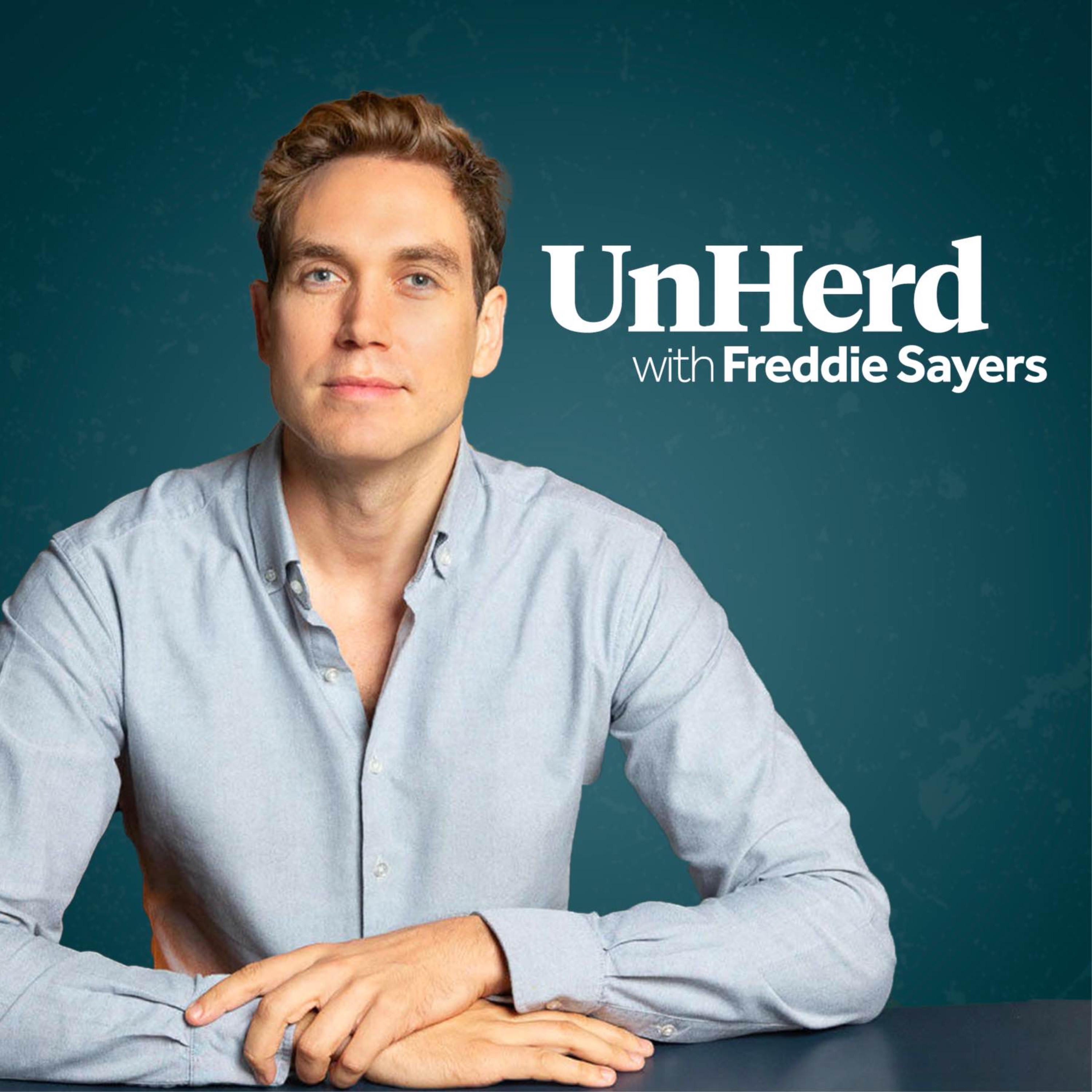
UnHerd with Freddie Sayers
UnHerd
Freddie Sayers from online magazine UnHerd seeks out top scientists, writers, politicians and thinkers for in-depth interviews to try and help us work out what’s really going on. What started as an inquiry into the pandemic has broadened into a fascinating look at free speech, science, meaning and the ideas shaping our world.Due to popular demand here is a podcast version of our YouTube — available to watch, for free here or by searching ‘LockdownTV’.Enjoy! And don't forget to rate, like and subscribe wherever you get your podcasts. Hosted on Acast. See acast.com/privacy for more information.
Episodes
Mentioned books

Feb 5, 2026 • 55min
Can Reform win in Manchester?
Shahbaz Sarwar, Workers' Party councillor representing Longsight and community advocate; Allan Hopwood, Reform councillor in Greater Manchester focused on local campaigning; Joshi Herrmann, founding editor of the Manchester Mill and local reporter; Rob Ford, University of Manchester political scientist and author. They discuss voter makeup across Gorton and Denton, the clash between cultural and economic issues, coalition dynamics between diverse communities, and what a Reform breakthrough would signal nationally.

Jan 30, 2026 • 27min
Glenn Loury: Elon Musk’s apartheid politics
Glenn Loury, economist and Brown professor who was Harvard’s first tenured Black professor, critiques a new strain of Right-wing identity politics. He argues Elon Musk misapplies South African racial frames to the US. Loury warns this adoption of racial essentialism reshapes political alliances and strains institutions. He closes by urging a principled, non-identitarian response.

37 snips
Jan 22, 2026 • 51min
John Bew: The Davos world is over
In a thought-provoking discussion, John Bew, a historian and former chief foreign policy advisor, dives into the precarious state of Western alliances. He critiques the myths surrounding the 'rules-based order' while emphasizing its historical importance. Bew tackles rising tensions, especially regarding the UK’s cautious diplomatic stance amid Trump's push for Greenland. He suggests that middle powers must adapt as the U.S. reverts to pre-1945 behaviors and explores the potential of a Northern European alliance to fortify national interests in an increasingly bipolar world.

22 snips
Jan 15, 2026 • 54min
The ICE debate: Sohrab Ahmari vs Jenin Younes
Jenin Younes, a civil liberties attorney known for her First Amendment advocacy, debates with Sohrab Ahmari, a political commentator, on the controversial killing of Renee Good by an ICE agent. They explore sharply contrasting views: was it a tragic civil liberties violation or justified law enforcement? Younes criticizes ICE tactics and argues for restraint, while Ahmari defends the officer's actions, linking them to obstruction laws. David Montgomery adds insights from polling, revealing a polarized public reaction to the incident.

38 snips
Jan 7, 2026 • 44min
Why Trump will get Greenland
Join Henrik Dahl, a Danish MEP, Helen Thompson, a Cambridge political economist, and economist Pippa Malmgren as they dive deep into the geopolitical drama surrounding Greenland. They unravel the historical ties and legal basis for Danish sovereignty while examining the modern implications of U.S. ambitions. Discussions include Arctic militarization, the strategic importance of rare earth resources, and the U.S. distrust towards European allies. Discover how Greenland's future may shape global power dynamics in the new space race.

Dec 30, 2025 • 25min
Yanis Varoufakis: The most deepfaked man on YouTube!
Yanis Varoufakis, former Greek finance minister and co-host of the Econoclasts podcast, dives into the alarming world of AI-generated deepfakes, using his own experience as a striking example. He discusses the distressing rise of misinformation fueled by Big Tech's algorithms prioritizing engagement over truth. Varoufakis critiques the slow responses from platforms like Google and Meta, and highlights the risks of losing trusted voices in society. He proposes solutions such as digital commons and political action to reclaim our identities in this increasingly confusing digital landscape.

27 snips
Dec 26, 2025 • 45min
Prof. James Hankins: The return of Western civilisation
Prof. James Hankins, a Harvard historian and Renaissance scholar, dives into the troubled legacy of Western civilization and classical education. He highlights the profound contributions of Greek thought and Roman law, emphasizing reason's role in shaping democracy. Hankins critiques the modern neglect of these traditions, lamenting the cultural amnesia in elite institutions. Yet, he offers a glimmer of hope, likening today's revival of classical education to the early Renaissance, suggesting that a cultural renaissance is within reach.

Dec 22, 2025 • 47min
Greg Lukianoff: America's new free speech crisis
In a riveting discussion, Greg Lukianoff, president of FIRE and constitutional lawyer, reveals alarming trends in academic freedom and censorship. He highlights how 2025 is the worst year for campus censorship, driven by both left and right political pressures. Lukianoff recounts the chilling aftermath of Charlie Kirk's assassination and discusses the repressive actions against students for controversial speech, including visa threats for noncitizens. He argues for the necessity of defending all speech, critiquing those who selectively advocate for free expression.

Dec 16, 2025 • 36min
Ex-prisoner: The Islamist gangs inside our prisons
Steve Gallant, a former prisoner and national hero, shares his remarkable journey from a murder conviction to aiding in the 2019 London Bridge attack. He candidly discusses the realities of prison life, the rise of Islamist gangs, and their influence over inmates. Gallant offers a critical look at the failures in rehabilitation and the deception within the system. He argues for the necessity of isolating hardliners and addresses the complexities of genuine reform, sharing insights on what truly fosters change among long-term prisoners.

9 snips
Dec 2, 2025 • 32min
The truth about net immigration
Madeleine Sumption, Director at the Migration Observatory, dissects the recent sharp decline in UK net migration. She challenges the narrative of a British exodus, clarifying that many emigrants are former immigrants returning home. Analyzing ONS data, Madeleine explains the surge and fall in migration numbers and the impact of recent policy changes. She also delves into the demographics of who is leaving and highlights potential flaws in migration measurement, calling for better data tracking to understand these shifts.

