


Commons Church Podcast
Commons Church
Sermons from Commons Church. Intellectually honest. Spiritually passionate. Jesus at the centre. Since 2014.
Episodes
Mentioned books

Jun 25, 2017 • 34min
Anxiety: Control
The most common Biblical command is “do not be afraid”. Search your Bible and you will find it repeated dozens of times. It began when God told Abraham, the first man of faith, not to be afraid (Genesis 15:1). And actually, the command could be translated, “stop being afraid!” In other words, Abraham was told to stop fearing as a way of life. And that is the issue, isn’t it. The lingering fears, the constant low-level dread. While momentary fears can come and go, if there is something we are all too familiar with, it’s the anxious life as a way of being. Anxiety is a kind of low-grade fear, the constant gnawing of uncertainty, the constant dread that doesn’t go away. Anxiety can stay with us. Jesus had something to say about this very practical area of our existence, painting a picture about how anxiety happens, and how the un-anxious life is actually possible. In his famous temptations Jesus faces head-on three of our most powerful latent anxieties: security, esteem, and control. Let’s face them as well.
★ Support this podcast ★

Jun 18, 2017 • 31min
Anxiety: Esteem
The most common Biblical command is “do not be afraid”. Search your Bible and you will find it repeated dozens of times. It began when God told Abraham, the first man of faith, not to be afraid (Genesis 15:1). And actually, the command could be translated, “stop being afraid!” In other words, Abraham was told to stop fearing as a way of life. And that is the issue, isn’t it. The lingering fears, the constant low-level dread. While momentary fears can come and go, if there is something we are all too familiar with, it’s the anxious life as a way of being. Anxiety is a kind of low-grade fear, the constant gnawing of uncertainty, the constant dread that doesn’t go away. Anxiety can stay with us. Jesus had something to say about this very practical area of our existence, painting a picture about how anxiety happens, and how the un-anxious life is actually possible. In his famous temptations Jesus faces head-on three of our most powerful latent anxieties: security, esteem, and control. Let’s face them as well.
★ Support this podcast ★

Jun 11, 2017 • 33min
Anxiety: Security
The most common Biblical command is “do not be afraid”. Search your Bible and you will find it repeated dozens of times. It began when God told Abraham, the first man of faith, not to be afraid (Genesis 15:1). And actually, the command could be translated, “stop being afraid!” In other words, Abraham was told to stop fearing as a way of life. And that is the issue, isn’t it. The lingering fears, the constant low-level dread. While momentary fears can come and go, if there is something we are all too familiar with, it’s the anxious life as a way of being. Anxiety is a kind of low-grade fear, the constant gnawing of uncertainty, the constant dread that doesn’t go away. Anxiety can stay with us. Jesus had something to say about this very practical area of our existence, painting a picture about how anxiety happens, and how the un-anxious life is actually possible. In his famous temptations Jesus faces head-on three of our most powerful latent anxieties: security, esteem, and control. Let’s face them as well.
★ Support this podcast ★
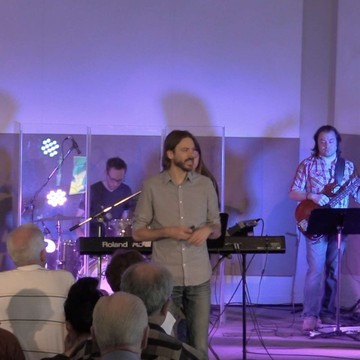
Jun 11, 2017 • 3min
Trinity Sunday - Bonus
excerpt from the Nicene Creed: I believe in one God, the Father Almighty, Maker of heaven and earth, and of all things visible and invisible. And in one Lord Jesus Christ, the only-begotten Son of God, begotten of the Father before all worlds; God of God, Light of Light, very God of very God; begotten, not made, being of one substance with the Father, by whom all things were made. And I believe in the Holy Ghost, the Lord and Giver of Life; who proceeds from the Father; who with the Father and the Son together is worshipped and glorified; and who spoke by the prophets. Amen.
★ Support this podcast ★

Jun 4, 2017 • 34min
Romans (12 of 28): A Case Study
“What is the “good news” of Jesus Christ? Why do people need to hear it? How can they experience it? What will it mean for their future? And what does the good news have to do with everyday life? These large and basic questions form Paul’s agenda in Romans—an agenda dictated by a combination of audiences, circumstances and purposes. Last year we started into the book of Romans and worked our way–verse by verse–through the opening two chapters. This year, we pick up where we left off and keep moving forward.
★ Support this podcast ★

May 28, 2017 • 34min
Romans (11 of 28): Upholding the Law
“What is the “good news” of Jesus Christ? Why do people need to hear it? How can they experience it? What will it mean for their future? And what does the good news have to do with everyday life? These large and basic questions form Paul’s agenda in Romans—an agenda dictated by a combination of audiences, circumstances and purposes. Last year we started into the book of Romans and worked our way–verse by verse–through the opening two chapters. This year, we pick up where we left off and keep moving forward.
★ Support this podcast ★

May 21, 2017 • 34min
Romans (10 of 28): How To Talk About Atonement
“What is the “good news” of Jesus Christ? Why do people need to hear it? How can they experience it? What will it mean for their future? And what does the good news have to do with everyday life? These large and basic questions form Paul’s agenda in Romans—an agenda dictated by a combination of audiences, circumstances and purposes. Last year we started into the book of Romans and worked our way–verse by verse–through the opening two chapters. This year, we pick up where we left off and keep moving forward.
★ Support this podcast ★

May 14, 2017 • 31min
Romans (09 of 28): Where do Rules Get Me?
“What is the “good news” of Jesus Christ? Why do people need to hear it? How can they experience it? What will it mean for their future? And what does the good news have to do with everyday life? These large and basic questions form Paul’s agenda in Romans—an agenda dictated by a combination of audiences, circumstances and purposes. Last year we started into the book of Romans and worked our way–verse by verse–through the opening two chapters. This year, we pick up where we left off and keep moving forward.
★ Support this podcast ★

May 7, 2017 • 29min
Romans (08 of 28): Who's got the upper hand?
“What is the “good news” of Jesus Christ? Why do people need to hear it? How can they experience it? What will it mean for their future? And what does the good news have to do with everyday life? These large and basic questions form Paul’s agenda in Romans—an agenda dictated by a combination of audiences, circumstances and purposes. Last year we started into the book of Romans and worked our way–verse by verse–through the opening two chapters. This year, we pick up where we left off and keep moving forward.
★ Support this podcast ★

May 1, 2017 • 34min
Romans (07 of 28): Ch 1+2 recap
“What is the “good news” of Jesus Christ? Why do people need to hear it? How can they experience it? What will it mean for their future? And what does the good news have to do with everyday life? These large and basic questions form Paul’s agenda in Romans—an agenda dictated by a combination of audiences, circumstances and purposes. Last year we started into the book of Romans and worked our way–verse by verse–through the opening two chapters. This year, we pick up where we left off and keep moving forward. As Luther said: [Romans] is worthy not only that every Christian should know it word for word, by heart, but occupy himself with it every day, as the daily bread of the soul. It can never be read or pondered too much, and the more it is dealt with the more precious it becomes, and the better it tastes”
★ Support this podcast ★

