

Human Intelligence
BBC Radio 4
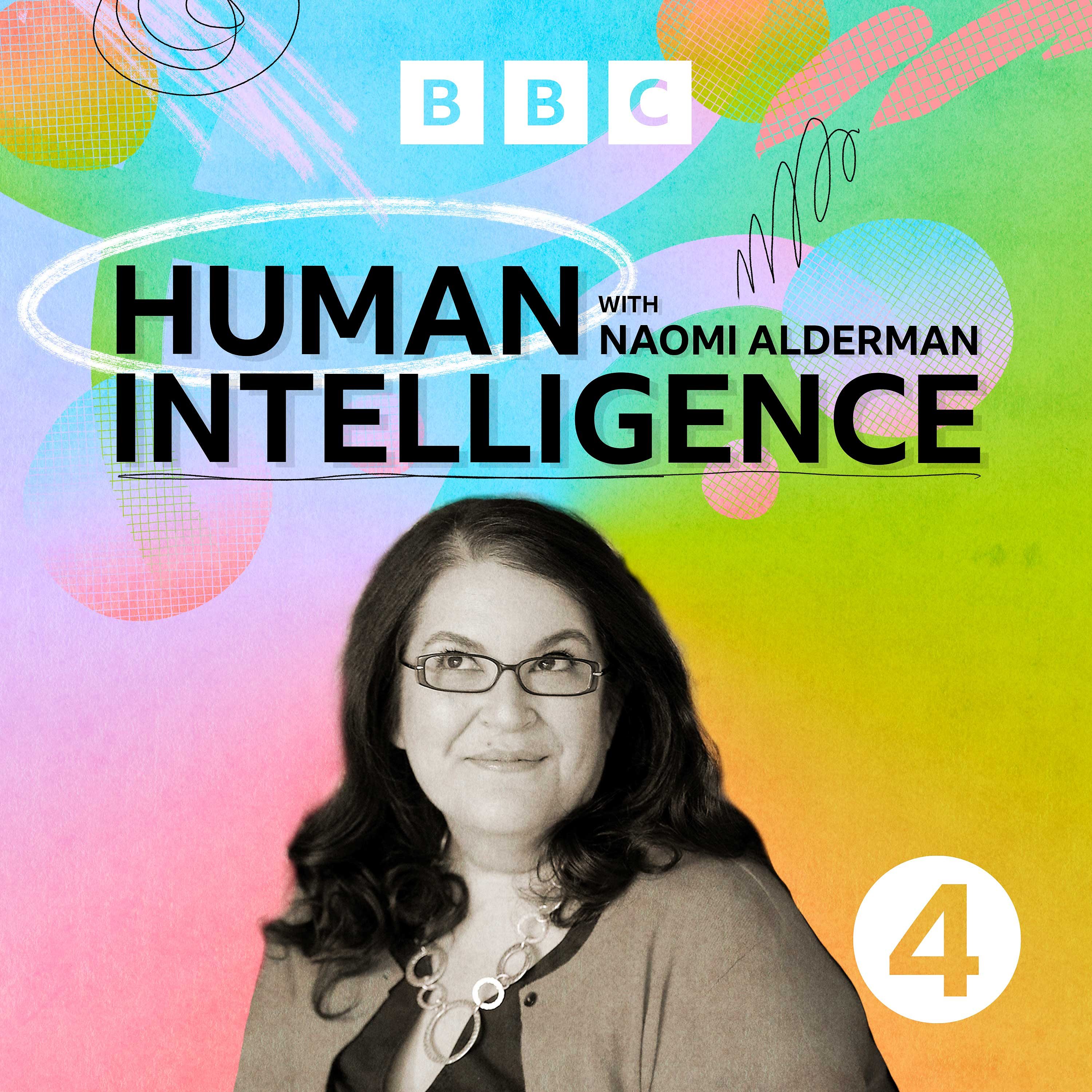
In Human Intelligence, Naomi Alderman dissects the minds of brilliant thinkers from the past; examining the myriad ways in which humans think and realising that great minds don't, in fact, think alike.
Episodes
Mentioned books

Jan 5, 2026 • 14min
Perfectionists: Martha Graham
Naomi Alderman returns with her series that explores the minds of the greatest thinkers in history. From political theorists to scientists to inventors, authors and artists. Our world is based on their ideas and innovations. How did they do their work, what did they struggle with, where did they find their dedication, creativity and inspiration?Against the wishes of her family, American dancer and choreographer Martha Graham pursued a career on the stage, touring the United States as a vaudeville star, even making it to Broadway. But the classic traditions of dance weren’t enough for her. She sought perfection – the perfect encapsulation of the human experience, in movement. Modernist ideals were changing artistic expression across mediums, and the Graham technique distilled those ideals for dance. Her visceral work catapulted her to fame. As her reputation grew she never stopped exploring, looking to everything from Greek myth to Jungian psychology for inspiration, pushing to explore the passions and pains of the human experience.Special thanks to Paul Jackson, Reader in Choreography and Dance at the University of Winchester and Choreography Instructor at the Central School of Ballet.Produced by BBC Studios in partnership with The Open University.Presenter: Naomi Alderman
Executive Editor: Philip Sellars
Production Co-ordinator: Amelia Paul
Researchers: Harry Burton, Martha Owen and Victoria Brignell
Mix Engineer: Nigel Appleton
Series Producer: Anishka Sharma
Production Manager: Jo Kyle
Jan 5, 2026 • 15min
Perfectionists: Leonardo Da Vinci
Naomi Alderman returns with her series that explores the minds of the greatest thinkers in history. From political theorists to scientists to inventors, authors and artists. Our world is based on their ideas and innovations. How did they do their work, what did they struggle with, where did they find their dedication, creativity and inspiration?Da Vinci had insatiable curiosity, a deep desire to observe and understand the world around him. The curiosity that drove him to learn everything he could and brought a depth of understanding to the works he produced. His obvious genius put him in high demand – but Da Vinci was a careful man, taking years to complete each commission and frequently never finishing them at all. He was looking for perfection and seemed not to mind taking years to achieve it. Special thanks to Catherine Fletcher, Professor of History at Manchester Metropolitan University.Produced by BBC Studios in partnership with The Open University.Presenter: Naomi Alderman
Executive Editor: Philip Sellars
Production Co-ordinator: Amelia Paul
Researchers: Harry Burton, Martha Owen and Victoria Brignell
Mix Engineer: Nigel Appleton
Series Producer: Anishka Sharma
Production Manager: Jo Kyle
Jan 5, 2026 • 14min
Perfectionists: Al-Khwarizmi
Naomi Alderman returns with her series that explores the minds of the greatest thinkers in history. From political theorists to scientists to inventors, authors and artists. Our world is based on their ideas and innovations. How did they do their work, what did they struggle with, where did they find their dedication, creativity and inspiration? In the early 9th century Baghdad was the centre of the world, and within Baghdad the Bayt al-Hikma – the House of Wisdom – was the centre of scholarship. And in that centre, the Al-Khawarizmi was working to revolutionise our understanding of mathematics. This revolution would be outlined in his book, Al-Jabr, from which we get the word algebra. While arithmetic and geometry date back to the ancient Greeks and Babylonians, Al-Khawarizmi sought to outline a recipe that could be applied to multiple situations. A formula that would unlock a greater understanding of calculation.In his own lifetime his impact was immense, from popularising the use of Hindu numerals, to large infrastructure projects. But his impact today is even greater. He laid the foundations on which we all walk.Special thanks to Jim Al-Khalili, professor of theoretical physics and chair in public engagement in science at the University of Surrey.Produced by BBC Studios in partnership with The Open University.Presenter: Naomi Alderman
Executive Editor: Philip Sellars
Production Co-ordinator: Amelia Paul
Researchers: Harry Burton, Martha Owen and Victoria Brignell
Mix Engineer: Nigel Appleton
Series Producer: Anishka Sharma
Production Manager: Jo Kyle
Jan 5, 2026 • 14min
Perfectionists: Simone Weil
Naomi Alderman returns with her series that explores the minds of the greatest thinkers in history. From political theorists to scientists to inventors, authors and artists. Our world is based on their ideas and innovations. How did they do their work, what did they struggle with, where did they find their dedication, creativity and inspiration?Raised in an environment of deep, committed learning, Weil studied Marx and Descartes. But by adulthood she was frustrated with the intellectualisation of the plight of the poor. It was not enough, for Weil, to learn about or to discuss the lives of factory workers – she felt it was crucial to experience their lives first-hand. Weil’s was a perfectionism of the spirit, a demand to understand every human life in the ways in which it is unlike every other. But did her perfectionism lead her astray? Special thanks to Professor Anna Rowlands at the Department of Theology and Religion at Durham University.Produced by BBC Studios in partnership with The Open University.Presenter: Naomi Alderman
Executive Editor: Philip Sellars
Production Co-ordinator: Amelia Paul
Researchers: Harry Burton, Martha Owen and Victoria Brignell
Mix Engineer: Nigel Appleton
Series Producer: Anishka Sharma
Production Manager: Jo Kyle
Jan 5, 2026 • 15min
Perfectionists: Isambard Kingdom Brunel
Naomi Alderman returns with her series that explores the minds of the greatest thinkers in history. From political theorists to scientists to inventors, authors and artists. Our world is based on their ideas and innovations. How did they do their work, what did they struggle with, where did they find their dedication, creativity and inspiration?A highly skilled engineer, Isambard Kingdom Brunel was driven by a desire to be the best, to achieve perfection in everything he built. From the Clifton Suspension Bridge to Paddington Station, Brunel’s work left indelible stamps on Britain. Unconcerned with cost and willing to put himself and his workers at risk to achieve his goals, his need for perfection perhaps went too far, by today’s standards. He had a vision for a future that, in his own time, seemed impossible: one where people could travel by smooth, comfortable, fast railways.Special thanks to Tim Bryan Brunel curator at the SS Great Britain in Bristol.Produced by BBC Studios in partnership with The Open University.Presenter: Naomi Alderman
Executive Editor: Philip Sellars
Production Co-Ordinator: Amelia Paul
Researchers: Harry Burton, Martha Owen and Victoria Brignell
Mix Engineer: Nigel Appleton
Series Producer: Anishka Sharma
Production Manager: Jo Kyle
Jan 5, 2026 • 14min
Exiles: Ishi
Naomi Alderman returns with her series that explores the minds of the greatest thinkers in history. From political theorists to scientists to inventors, authors and artists. Our world is based on their ideas and innovations. How did they do their work, what did they struggle with, where did they find their dedication, creativity and inspiration?When Ishi walked from the Californian wilderness into one of the settler’s towns, he became known as “the last wild Indian”. He was the last survivor of the Yahi people, who had been massacred by white settlers during the Gold Rush in about as complete a genocide as mankind had ever inflicted. But Ishi was resourceful and intelligent - he fought for ways to preserve his people’s ways of life, language and culture. So that it wouldn’t die with him. Special thanks to Dr Cutcha Risling Baldy, Associate Professor of Native American Studies and department chair of Native American studies at Cal Poly Humboldt.Produced by BBC Studios in partnership with The Open University.Presenter: Naomi Alderman
Executive Editor: Philip Sellars
Production Co-ordinator: Amelia Paul
Researchers: Harry Burton, Martha Owen and Victoria Brignell
Mix Engineer: Nigel Appleton
Series Producer: Anishka Sharma
Production Manager: Jo Kyle
Jan 5, 2026 • 14min
Exiles: Sor Juana Inés De La Cruz
Naomi Alderman returns with her series that explores the minds of the greatest thinkers in history. From political theorists to scientists to inventors, authors and artists. Our world is based on their ideas and innovations. How did they do their work, what did they struggle with, where did they find their dedication, creativity and inspiration?In a world that held few spaces for women, Sor Juana found her own. Born in 1648 near the town of Nepantla, she was the daughter of a Spanish coloniser and an indigenous mother. A woman of considerable intelligence, she yearned for a university education, but that was a privilege reserved for men.She learned all she could, and poured forth her learning in plays, in poetry, and in prose, exploring theological thought and questioning the hypocrisy of the male thinkers who claimed that, as a woman, she had no right to think at all. Special thanks to a Elisa Sampson Vera Tudela, reader in Latin American culture at King's College London.Produced by BBC Studios in partnership with The Open University.Presenter: Naomi Alderman
Executive Editor: Philip Sellars
Production Co-ordinator: Amelia Paul
Researchers: Harry Burton, Martha Owen and Victoria Brignell
Mix Engineer: Nigel Appleton
Series Producer: Anishka Sharma
Production Manager: Jo Kyle
Jan 5, 2026 • 15min
Exiles: Ovid
Naomi Alderman returns with her series that explores the minds of the greatest thinkers in history. From political theorists to scientists to inventors, authors and artists. Our world is based on their ideas and innovations. How did they do their work, what did they struggle with, where did they find their dedication, creativity and inspiration?The poet Ovid was a brilliant thinker. His masterwork, the Metamorphoses, effortlessly weaves together hundreds of myths into a coherent narrative - it’s because of Ovid that we know of these myths, and we wouldn’t have the mythological richness in later writers including Shakespeare without him. But Ovid’s life contains a mystery and a tragedy. Without warning, the Emperor Augustus decided to send him into exile - to Tomis on the Black Sea, in modern-day Romania. And it changed Ovid’s thinking. Ovid turned his image into one that has endured: a man who was martyred for free speech. Special thanks to Gail Trimble Fellow in Classics at Trinity College Oxford.Produced by BBC Studios in partnership with The Open University.Presenter: Naomi Alderman
Executive Editor: Philip Sellars
Production Co-ordinator: Amelia Paul
Researchers: Harry Burton, Martha Owen and Victoria Brignell
Mix Engineer: Nigel Appleton
Series Producer: Anishka Sharma
Production Manager: Jo Kyle
Jan 5, 2026 • 13min
Exiles: Marie Curie
Naomi Alderman returns with her series that explores the minds of the greatest thinkers in history. From political theorists to scientists to inventors, authors and artists. Our world is based on their ideas and innovations. How did they do their work, what did they struggle with, where did they find their dedication, creativity and inspiration?For Marie Curie, understanding was everything. It was her drive for understanding that saw her seeking an illegal education in Russian occupied Warsaw, attending classes held in apartments and shop rooms. And it was her drive for understanding that ultimately drove her into exile. Her legacy includes untold lives saved by radiation therapy; it is a legacy made possible by her unceasing need to explore and understand the world in which she lived. Special thanks to award-winning science writer and journalist, Dava Sobel.Produced by BBC Studios in partnership with The Open University.Presenter: Naomi Alderman
Executive Editor: Philip Sellars
Production Co-ordinator: Amelia Paul
Researchers: Harry Burton, Martha Owen and Victoria Brignell
Mix Engineer: Nigel Appleton
Series Producer: Anishka Sharma
Production Manager: Jo Kyle
Jan 5, 2026 • 15min
Exiles: Karl Marx
Naomi Alderman returns with her series that explores the minds of the greatest thinkers in history. From political theorists to scientists to inventors, authors and artists. Our world is based on their ideas and innovations. How did they do their work, what did they struggle with, where did they find their dedication, creativity, and inspiration? Karl Marx’s ideas caused revolutions, toppled governments, and re-made the political map of the world. He was exiled again and again - fleeing Prussia for France, then to Brussels, eventually living in London where he completed his masterwork Capital. How did exile influence his thinking?Special thanks to Bruno Leipold Assistant Professor of Political Theory at the London School of Economics and Political Science.Produced by BBC Studios in partnership with The Open University.Presenter: Naomi Alderman
Executive Editor: Philip Sellars
Production Co-ordinator: Amelia Paul
Researchers: Harry Burton, Martha Owen and Victoria Brignell
Mix Engineer: Nigel Appleton
Series Producer: Anishka Sharma
Production Manager: Jo Kyle

