

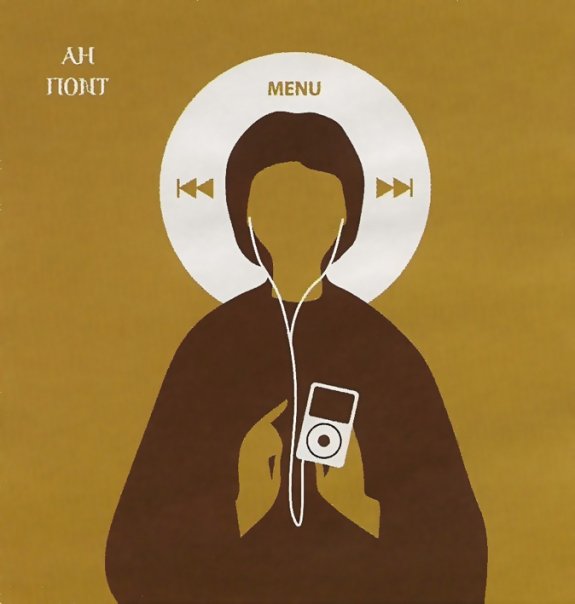
Byzantium & Friends
Byzantium & Friends
Conversations with experts in the history of Byzantium and surrounding fields, hosted by Anthony Kaldellis.
Episodes
Mentioned books

Dec 3, 2020 • 1h 7min
38. Manuscripts, databases, and the joys of Byzantine literature, with Dave Jenkins
A conversation with Dave Jenkins (Princeton University Library) about how we read (and how to enjoy) Byzantine literature, from digitized manuscripts and online databases to the pleasures of Byzantine prose. Dave is a philosopher, a philologist, and a librarian. You may also know him as the creator of a database of translations of Byzantine texts in modern languages and a database of digitized manuscripts.
Nov 19, 2020 • 1h
37. The study of Byzantine skeletons, with Chryssa Bourbou
A conversation with Chryssa Bourbou (Hellenic Ministry of Culture) on what we learn from health and society in Byzantium from the study of skeletal remains. What infectious conditions or effects of accidents can we detect? What can we learn about the lives of children (apart, grimly, from the fact that they were all too often short)? How are human remains handled? The conversation is based on Chryssa's many publications, including Health and Disease in Byzantine Crete (7th-12th Centuries AD) (Ashgate 2010).
Nov 5, 2020 • 1h 11min
36. Slavery in late antiquity and Byzantium, with Noel Lenski
A conversation with Noel Lenski (Yale University) on "slave societies" and how the institution of slavery changed in late antiquity and Byzantium. Were tasks performed by slaves in antiquity carried out by free people in late antiquity? What were the experiences of Byzantines who were themselves captured in raids and taken outside the empire? The conversation draws on many of Noel's publications, including 'Framing the Question: What is a Slave Society?,' in N. Lenski and C. Cameron, eds. What is a Slave Society? The Practice of Slavery in Global Perspective (Cambridge University Press 2018) 15-57; 'Searching for Slave Teachers in Late Antiquity,' Révue des études tardo-antiques 12, suppl. 8 (2018-2019) 127-191; 'Captivity and Slavery among the Saracens in Late Antiquity (ca. 250 - 630 CE),' Antiquité tardive 19 (2011) 237-266; and others (see here for more).
Oct 22, 2020 • 48min
35. Theophano: A Byzantine Tale, with Spyros Theocharis and Chrysa Sakel
A conversation with Spyros Theocharis and Chrysa Sakel, artists and creators of a graphic novel about a tenth-century Byzantine empress, Theophano: A Byzantine Tale. We talk about the period, characters, and creative choices, and how works in popular media can help to foster a new and richer image of Byzantium.
Oct 8, 2020 • 1h 5min
34. An antidote to toxic medievalism, with Amy Kaufman and Paul Sturtevant
A conversation with Amy Kaufman and Paul Sturtevant about their book The Devil's Historians: How Modern Extremists Abuse the Medieval Past (University of Toronto Press 2020). Extremists groups such as white supremacists and ISIS use the Middle Ages to advocate for specific racial, religious, or gender orders, and promote violence as a means for attaining them. We talk about the contours and goals of these groups, their conflicted views of modernity and the Middle Ages, how Byzantium does or does not fit into this picture, and generally go off on many tangents. Also check out their complementary conversation with Danièle Cybulskie on The Medieval Podcast.
Sep 24, 2020 • 1h 45min
33. The study of ethnic identities in Byzantium and beyond (Listener Questions II), with Brian Swain
This conversation with Brian Swain (Kennesaw State University) takes on listener questions about Byzantine identities. We start with the history of scholarly discussions of identity, especially ethnicity, comparing the study of barbarian (i.e., Germanic) ethnic groups with those in the Byzantine empire. How do groups change their identities? How are new identities born and old ones lost? How did the ancient Greeks become Romans and when did that become an ethnic identity? Where does genealogy and biology fit into all this? What happened to the Romans of the west? What did the Byzantines call their state and language? What does modern Romania have to do with Byzantine Romanía? And more!
Sep 10, 2020 • 59min
32. Anastasius the Librarian, the greatest enemy of Byzantium you probably haven't heard of, with Réka Forrai
Meet Anastasius the Librarian, one of the most fascinating controversialists of the ninth century. A native of Rome, scholar of Greek, and (probably) anti-pope for all of three days, he was no friend of Byzantium. He disliked and mistrusted "the Greeks" and argued that they were not Romans as they thought. His arguments have held sway in the west ever since. My guest is Réka Forrai (University of Southern Denmark), an expert on Anastasius' writings and thought; see especially her fascinating study ‘The Sacred Nectar of the Deceitful Greeks: Perceptions of Greekness in Ninth Century Rome,’ in A. Speer and P. Steinkrüger, eds., Knotenpunkt Byzanz: Wissensformen und kulturelle Wechselbeziehungen (Berlin 2012) 71-84.
Aug 27, 2020 • 1h 26min
31. Ethnicity and empire in China and Byzantium, with Shao-yun Yang and Ying Zhang
China and Byzantium both saw themselves as civilizations menaced by "barbarians," and periodically established empires that ruled over them. In this episode, Ying Zhang (Ohio State, an expert on Ming China) moderates a discussion between myself and Shao-yun Yang (Denison University), author of The Way of the Barbarians: Redrawing Ethnic Boundaries in Tang and Song China (University of Washington Press, 2019). How do imperial societies talk about barbarian or ethnic groups? How might we identify those groups, when they are used so often in the rhetorical construction of Chinese / Roman "orthodox" identities? Can our two fields find a common language in which to discuss these questions? My heartfelt gratitude to Shao-yun and Ying: you have been wonderful guides for your fascinating fields.
Aug 13, 2020 • 1h 15min
30. Byzantium in modern Greek life (Listener Questions I), with Dimitris Krallis
Where and how does one experience Byzantium in modern Greece today? This conversation with Dimitris Krallis (Simon Fraser University: see episode 10) ranges widely, from statues and streets to politics and Church politics in particular, drawing on our own experiences and training as Byzantinists. There is a lot more that we could say about this fascinating topic, but we explore various domains where Byzantium is alive or long gone, or where it shambles on in zombie form.
Jul 30, 2020 • 1h 6min
29. The many identities of Hagia Sophia, past and present, with Bob Ousterhout
Hagia Sophia is back in the news. To understand what is happening, we need to know the complex history of this building as a church, mosque, and museum, and the many parties that have sought to claim it. In this episode, Bob Ousterhout (University of Pennsylvania) illuminates this rich history, with a focus on the last century and a half, the current political forces, and the priority to preserve the history of the monument for all who wish to study and experience it. He is the author of the magisterial survey Eastern Medieval Architecture: The Building Traditions of Byzantium and Neighboring Lands (Oxford 2019), and an article on the topic at hand: 'From Hagia Sophia to Ayasofya: Architecture and the Persistence of Memory,' İstanbul Araştırmaları Yıllığı 2 (2013) 1-8, which is available here. [Sidenote: you may want to check out my recent podcast interviews on The Medieval Podcast and the Dumbarton Oaks Byzantine Podcast.]

