

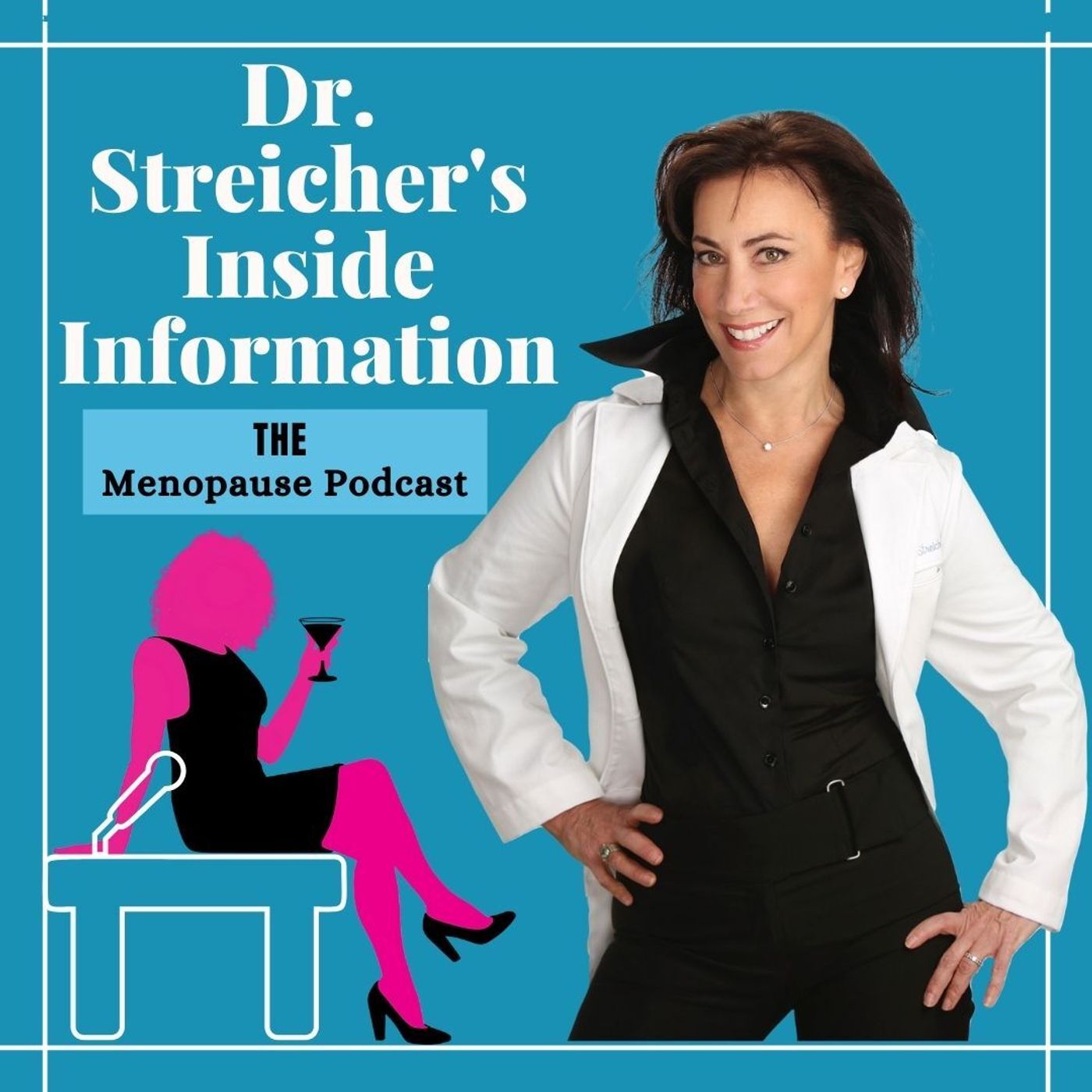
Dr. Streicher’s Inside Information: Menopause, Midlife, and More
Lauren Streicher, MD
Hot flashes, vaginal dryness, leaky bladders, weight gain, hair loss, inability to orgasm? Nothing is off limits in these fact filled, solution-driven and often surprisingly funny podcasts that address the specific symptoms women face as they navigate perimenopause and post-menopause. Each segment is like having an in-depth consultation with Dr. Lauren Streicher, a nationally recognized menopause expert and the founding Medical Director of the Northwestern Medicine Center for Sexual Medicine and Menopause. Guests will include other experts on all things menopause. So strap in- it’s going to be quite the ride! This is THE podcast for accurate information about menopause but is not meant to be personal medical advice.
Episodes
Mentioned books

Jan 29, 2026 • 51min
S4 Ep194: It’s All in the Family: BRCA and Other Hereditary Cancer Syndromes with Dr. Michelle Jacobson
One out of ninety women will develop ovarian cancer in her lifetime. It is the second most common gynecologic cancer and the fifth leading cause of death among women from cancer. Roughly 25% percent of ovarian cancer is hereditary. If a woman is a carrier of one of the gene mutations associated with ovarian cancer, her risk is strikingly higher than the risk of the general population. But most women who carry this genetic mutation…don’t know it. My guest is Dr. Michelle Jacobson, an internationally recognized expert in menopause and cancer survivorship who has dedicated her professional life to educating women about hereditary cancer syndromes- who should be screened, and what to do with that information. She is an assistant professor at the university of Toronto, the chief of OBGYN for Osler Health Systems and the lead author of The Society of Obstetricians and Gynaecologists of Canada Clinical Guidelines on menopause management after breast cancer and is also the host of the Hysterical Women’s Podcast.www.covenhealth.comInsta: @covenhealth We discuss how to know if you fall into a high-risk group, and if you do, what to do about it. We also discuss prevention and detection of ovarian cancer if you do not have a genetic predisposition. Link to study on use of hormone therapy with a BRCA mutationhttps://drstreicher.substack.com/p/can-women-at-the-highest-risk-ofFacing Our RiskNational Comprehensive Care NetworkDr. Michelle Jacobsonwww.covenhealth.comInsta: @covenhealth Facebook: coven women’s health https://www.facebook.com/share/1J4vcK2fie/?mibextid=wwXIfrLinked in: Dr. Michelle Jacobson OBGYN http://linkedin.com/in/dr-michelle-jacobson-obgyn-763028310 COME AGAIN is a 30-part audio series to address the biological, hormonal, and medical issues that can sabotage your sex life. This solution-driven, science-based guide will help get your libido to kick in and your clitoral nerve endings to wake up.For more information, go to DrStreicher.com/COMEAGAINDr. Streicher is on SUBSTACK DrStreicher.Substack.com
Articles
Monthly News Flash Reports on recent research
Monthly Zoom Ask Me Anything Webinar
Lauren Streicher MD, is a clinical professor of obstetrics and gynecology at Northwestern University’s Feinberg School of Medicine, the founding medical director of the Northwestern Medicine Center for Sexual Medicine and Menopause, and a Senior Research Fellow of The Kinsey Institute, Indiana University. She is a certified menopause practitioner of The Menopause Society. Dr. Streicher is the medical correspondent for Chicago’s top-rated news program, the WGN Morning News, and has been seen on The Today Show, Good Morning America, The Oprah Winfrey Show, CNN, NPR, Dr. Radio, Nightline, Fox and Friends, The Steve Harvey Show, CBS This Morning, ABC News Now, NBCNightlyNews,20/20, and World News Tonight. She is an expert source for many magazines and serves on the medical advisory board of The Kinsey Institute, Self Magazine, and Prevention Magazine. She writes a regular column for The Ethel by AARP and Prevention Magazine. LINKS
Subscribe To Dr. Streicher’s Substack
Information About COME AGAIN
Dr. Streicher’s CV and additional bio information
To Find a Menopause Clinician and Other Resources
Glossary Of Medical Terminology
Books by Lauren Streicher, MD
Slip Sliding Away: Turning Back the Clock on Your Vagina-A gynecologist’s guide to eliminating post-menopause dryness and pain
Hot Flash Hell: A Gynecologist's Guide to Turning Down the Heat
Sex Rx- Hormones, Health, and Your Best Sex Ever
The Essential Guide to Hysterectomy
Dr. Streicher’s Inside Information podcast is for education and information and is not intended to replace medical advice from your personal healthcare clinician. Dr. Streicher disclaims liability for any medical outcomes that may occur because of applying methods suggested or discussed in this podcast.

Jan 15, 2026 • 1h 1min
S4 Ep193: Esoteric Symptoms of Menopause with Dr. Makeba Williams
Women who are in the throes of menopause are never thrilled about having hot flashes, but they aren’t particularly surprised by them. It’s other symptoms that often blindside women, including symptoms that are not often associated with menopause.Esoteric symptoms are different than unusual symptoms. An unusual symptom is something that rarely occurs. An esoteric symptom, on the other hand, is one that occurs commonly, but is rarely discussed and often not well understood. My guest is Makeba Williams, MD, FACOG, MSCP a Professor of OB-GYN and the Director of the Center for Health Awareness and Research on Menopause at the University of IllinoisWe discuss:
Tingling Skin
Other Skin Changes
Ringing in the Ears
Hearing Loss
Dry, Burning Eyes
Dry Mouth
Facial Changes
Sleep Apnea
Voice Changes
Palpitations
Reflux, Bloating, Frequency of Bowel Movements
Arthritis/Joint Pain
Bladder Symptoms
For more information on post menopause hearing loss: Estrogen and Your Ears
For more information on post menopause dry mouth: Dry Mouth? I’m Doing Some Research
For more information on post menopause palpitations: Palpitations in Mid-life Women
For more information on post menopause gastrointestinal changes: Menopause and the Gut
COME AGAIN is a 30-part audio series to address the biological, hormonal, and medical issues that can sabotage your sex life. This solution-driven, science-based guide will help get your libido to kick in and your clitoral nerve endings to wake up.For more information, go to DrStreicher.com/COMEAGAIN
Dr. Streicher is on SUBSTACK DrStreicher.Substack.com
Articles
Monthly News Flash Reports on recent research
Monthly Zoom Ask Me Anything Webinar
Lauren Streicher MD, is a clinical professor of obstetrics and gynecology at Northwestern University’s Feinberg School of Medicine, the founding medical director of the Northwestern Medicine Center for Sexual Medicine and Menopause, and a Senior Research Fellow of The Kinsey Institute, Indiana University. She is a certified menopause practitioner of The Menopause Society. Dr. Streicher is the medical correspondent for Chicago’s top-rated news program, the WGN Morning News, and has been seen on The Today Show, Good Morning America, The Oprah Winfrey Show, CNN, NPR, Dr. Radio, Nightline, Fox and Friends, The Steve Harvey Show, CBS This Morning, ABC News Now, NBCNightlyNews,20/20, and World News Tonight. She is an expert source for many magazines and serves on the medical advisory board of The Kinsey Institute, Self Magazine, and Prevention Magazine. She writes a regular column for The Ethel by AARP and Prevention Magazine. LINKS
Subscribe To Dr. Streicher’s Substack
Information About COME AGAIN
Dr. Streicher’s CV and additional bio information
To Find a Menopause Clinician and Other Resources
Glossary Of Medical Terminology
Books by Lauren Streicher, MD
Slip Sliding Away: Turning Back the Clock on Your Vagina-A gynecologist’s guide to eliminating post-menopause dryness and pain
Hot Flash Hell: A Gynecologist's Guide to Turning Down the Heat
Sex Rx- Hormones, Health, and Your Best Sex Ever
The Essential Guide to Hysterectomy
Dr. Streicher’s Inside Information podcast is for education and information and is not intended to replace medical advice from your personal healthcare clinician. Dr. Streicher disclaims liability for any medical outcomes that may occur because of applying methods suggested or discussed in this podcast. o

Jan 8, 2026 • 1h 3min
S4 Ep192: Love Your Age with Dr. Jen Ashton
Dr. Jen Ashton- you know her as the chief medical correspondent for ABC News and Good Morning America, who appeared in your home every morning, explaining the hot topics in health. Today, we talk about her pivot into her passion- fitness and wellness- and how to incorporate into the second half of your life..and love your age.
How Dr. Ashton ended up as an anchor on Good Morning America
How she has reinvented herself as a wellness and obesity expert
We revisit “The Reinvention Convention we participated in years ago
The key traits of women who “Love their Age.”
Why Dr. Ashton is learning to play Mah Jong
How to plan for the second half of life
For women who don’t love their age, what should they accept and… not accept
Dr. Ashton’s Wellness Experiment
The difference between wellness and longevity
What most doctors get wrong about nutrition
The concept of “nutritional gynecology”
“Super foods”
Menopause nutrition
Exercise after age 55- for the avid exerciser and the never excerciser
Why BAREFOOT Training is important
Dr. Jennifer Ashton is board-certified in OB-GYN and Obesity Medicine with a Master’s degree in Nutrition from Columbia University. She is the Founder and President of Ajenda, a multimedia health platform focused on science-driven metabolic and hormonal health for women. For 12 years, Dr. Ashton was seen by millions of people daily on national television as the Chief Medical Correspondent for ABC News and co-host of GMA3: What You Need to Know. She was the first woman and only the third physician to hold that role in network history. https://www.instagram.com/drjashton/?hl=enhttps://www.instagram.com/joinajenda/?hl=enhttps://www.joinajenda.com/experiment
COME AGAIN is a 30-part audio series to address the biological, hormonal, and medical issues that can sabotage your sex life. This solution-driven, science-based guide will help get your libido to kick in and your clitoral nerve endings to wake up.For more information, go to DrStreicher.com/COMEAGAINDr. Streicher is on SUBSTACK DrStreicher.Substack.com
Articles
Monthly News Flash Reports on recent research
Monthly Zoom Ask Me Anything Webinar
Lauren Streicher MD, is a clinical professor of obstetrics and gynecology at Northwestern University’s Feinberg School of Medicine, the founding medical director of the Northwestern Medicine Center for Sexual Medicine and Menopause, and a Senior Research Fellow of The Kinsey Institute, Indiana University. She is a certified menopause practitioner of The Menopause Society. Dr. Streicher is the medical correspondent for Chicago’s top-rated news program, the WGN Morning News, and has been seen on The Today Show, Good Morning America, The Oprah Winfrey Show, CNN, NPR, Dr. Radio, Nightline, Fox and Friends, The Steve Harvey Show, CBS This Morning, ABC News Now, NBCNightlyNews,20/20, and World News Tonight. She is an expert source for many magazines and serves on the medical advisory board of The Kinsey Institute, Self Magazine, and Prevention Magazine. She writes a regular column for The Ethel by AARP and Prevention Magazine. LINKS
Subscribe To Dr. Streicher’s Substack
Information About COME AGAIN
Dr. Streicher’s CV and additional bio information
To Find a Menopause Clinician and Other Resources
Glossary Of Medical Terminology
Books by Lauren Streicher, MD
Slip Sliding Away: Turning Back the Clock on Your Vagina-A gynecologist’s guide to eliminating post-menopause dryness and pain
Hot Flash Hell: A Gynecologist's Guide to Turning Down the Heat
Sex Rx- Hormones, Health, and Your Best Sex Ever
The Essential Guide to Hysterectomy
Dr. Streicher’s Inside Information podcast is for education and information and is not intended to replace medical advice from your personal healthcare clinician. Dr. Streicher disclaims liability for any medical outcomes that may occur because of applying methods suggested or discussed in this podcast.

Dec 18, 2025 • 41min
S4 Ep191: Say Yes to Testosterone? And Why Pellets are a Problem
Come Again: Sexuality and Orgasm, my solution-driven audio Series, for both non-healthcare professionals and healthcare professionals is now available on demand on drstreicher.com. Subscribers get loads of supplementary guides and resources. Health care professionals have an option to purchase additional material on incorporating sexual medicine into their practice. For a 25% discount to the COME AGAIN Series, use code PODCAST25. This discount code expires December 21.This episode is a free preview from COME AGAIN Episode 19When it comes to testosterone, hairy guys with round the clock virility come to mind, thanks to those non-stop ads warning men of the dire consequences of "Low T". Not as well known is that TESTOSTERONE is not just a male hormone but is a HUMAN hormone that is just as important for women. In this episode:· The ROLE of testosterone in women· WHERE testosterone is normally produced · The potential BENEFITS of taking testosterone · How well testosterone therapy WORKS and why it doesn’t work in everyone· How to PREDICT if you will respond to testosterone therapy· What TESTS you should have prior to starting testosterone therapy· Why is SEX HORMONE BINDING GLOBULIN important? · Why someone would have a HIGH SEX HORMONE BINDING GLOBULIN· Why the FDA has never approved testosterone for women· Why PELLETS are a PROBLEM· Why gels are the SAFEST and MOST EFFECTIVE form of testosterone for women · The potential SIDE EFFECTS of testosterone therapy

Dec 4, 2025 • 1h 3min
S4 Ep190: Ready, Set…. Start!, Stop! Switch! Hormone Therapy with Risa Kagan MD
At my monthly Ask Me Anything Webinars, I always get questions about hormone therapy- when to start, when to stop, if the dose should be changed as women get older, and what to do if someone continues to have symptoms or continues to bleed… In this episode, Dr. Risa Kagan and I answer submitted questions. We start by briefly running through the established indications for starting menopausal hormone therapy (MHT), and then Dr. Kagan and I discuss the “what ifs” of hormone therapy.
Do you have to wait for 12 months without a period before starting MHT?
If someone is taking birth control pills for control of perimenopause symptoms, at what point should they go off? And can they immediately transition to MHT or do they need to take a break and make sure they are no longer making estrogen?
A woman with severe hot flashes is having all day, all night hot flashes- how long is it going to take to get some relief?
Does it matter if it is oral or transdermal as far as the onset of action?
What are the chances of getting 100% relief?
If someone has started MHT but is still having flashes, how long should they wait before adjusting it?
What is the best starting dose if someone has severe flashes? High or low?
A woman wrote in that she has been using a 0.75 patch, but continues to have severe flashes. She got a serum level, and it is 10. Her doctor is reluctant to increase her dose. What would you tell her?
A woman has tried four different protocols and has nuisance bleeding with all. She had an ultrasound and biopsy, and it was all normal. She wants to continue MHT, but is tired of the bleeding. She wants to know which protocol is the least likely to cause bleeding
An internist told a woman that after 5 years, it is time to go off her MHT.
What about if she is primarily taking it for hot flashes- how likely is it that her hot flashes will return?
What about if she is primarily on it for bone health (known osteopenia) and joint pain-?
What about if she is primarily taking it for sexual benefits? (Libido, lubrication, orgasm) ?
What about if she is primarily taking it because she is worried about dementia
A woman decided to go off HT since she was only taking it for hot flashes and is now 10 years out. Her manicurist told her that she should taper; otherwise, her flashes will come back. Her gyne says, stop. What does Dr. Kagan say?
A 60 year old woman started estrogen when she had a hysterectomy and ovary removal. She was told by her internist that there is no way she will still be having hot flashes in her 60s, and therefore no reason to continue her estrogen. Is that correct? What is the likelihood that she will still be having hot flashes in her 60s or 70s?
The next question is from a woman who increased her oral estradiol to 2 mg to get rid of her flashes, but is still taking her original Prometrium dose 100 mg. Is that enough to protect the lining of her uterus? When do you increase it?
A question from a Substack reader- “I used estradiol gel for 8 years at the start of menopause. I decided to stop it and did so for 3 years; however, my hot flashes (sleep, mood, etc) were relentless and violent. I decided to start again after a 3-years hiatus and at the age of 65. I feel so much better. Is this a problem having stopped and then started again a few years later?”
How can you tell the effectiveness of the HRT you're taking (other than no more hot flashes?) I still feel lack of motivation, low libido, joint aches and I'm so much slower running (1 min+/mile). (What this really comes down to, is what are realistic expectations for what HT will do?)
How long can a postmenopausal woman stay on testosterone, estrogen and Progesterone?
Let’s say a woman has been using a .05 estradiol patch but her skin is really irritated and has decided to try the spray instead. What is the equivalent dose?
A woman with a hysterectomy who is taking estrogen alone has been taking a 1 mg estradiol pill. She has decided to switch to conjugated equine estrogen since she would like breast protection. Is that correct thinking? If she is going to make the switch, what is the equivalent dose?
A 51 year old is no longer having hot flashes but wants to continue her transdermal estrogen since she has low bone mass and is worried about progression to osteoporosis. What is the minimum dose of estradiol to ensure that she is getting maximum bone protection?
Many questions came in about initiating hormone therapy after age 65...
Dr. Risa Kagan is a Clinical Professor in the Department of Obstetrics, Gynecology, and Reproductive Sciences at the University of California, San Francisco, and a consulting gynecologist with Sutter Health. Other episodes with Dr. KaganEpisode 114- Is Duovee the Ideal Hormone Therapy? Episode 175 Your Bones On and Off EstrogenWhen an IUD is Your Post Menopause Plan

Nov 20, 2025 • 32min
S4 Ep189: The FDA Removes the Black Box Label for Hormone Therapy
In case you missed it, last week was quite the week in the menopause world. The FDA made a landmark decision to remove all black box warnings from estrogen products and to update the labels of individual products. I was in the room where it all happened and in this episode, I’m going to break it all down for you. But here’s the headline- this label change is overall, a good thing, a very good thing.A transcript of this podcast, along with photos and graphics, can be found on DrStreicher.Substack.comIn this episode:
A historical perspective of how the Black Box label came to be on all estrogen products
A review of the Women’s Health Initiative Study (WHI) that lead to the specific warnings on the label.
The fall out from the release of the WHI
The Problems with the Black Box label on estrogen products
Class Labeling
The difference between oral, transdermal and local vaginal estrogen.
How the required black box label influenced the likelihood of physicians writing a prescription for estrogen, and the likelihood that women would use hormone therapy.
Why I never stopped prescribing estrogen
Last week’s announcement from the FDA
If it is medically appropriate to remove the black box warning from local vaginal estrogen
If it is medically appropriate to remove the black box warning from systemic estrogen
The inaccurate messaging during the FDA press conference
The POLITICS of WHY the FDA removed the Black Box warnings
Related Podcasts:
Episode 124 All Hormones Are Not Created Equal with Dr. James Simon
Episode 164 Is Bioidentical Always Best?
Episode 181 The FDA Roundtable on Menopausal Hormone Therapy
Related Substack Articles
Top 20 Questions about Local Vaginal Estrogen
Is Bioidentical Always Best?
BLOOD CLOTS and ESTROGEN: The Facts
Crises at the FDA
Why RFK is a Scary Choice for HHS
Dr. Streicher is on SUBSTACK DrStreicher.Substack.com
Articles
Monthly newsletter
All COME AGAIN podcast episodes
Monthly News Flash Reports on recent research
Monthly Zoom Ask Me Anything Webinar
Information on Dr. Streicher's COME AGAIN Podcast- Sexuality and Orgasm Lauren Streicher MD, is a clinical professor of obstetrics and gynecology at Northwestern University’s Feinberg School of Medicine, the founding medical director of the Northwestern Medicine Center for Sexual Medicine and Menopause, and a Senior Research Fellow of The Kinsey Institute, Indiana University. She is a certified menopause practitioner of The Menopause Society. S Dr. Streicher is the medical correspondent for Chicago’s top-rated news program, the WGN Morning News, and has been seen on The Today Show, Good Morning America, The Oprah Winfrey Show, CNN, NPR, Dr. Radio, Nightline, Fox and Friends, The Steve Harvey Show, CBS This Morning, ABC News Now, NBCNightlyNews,20/20, and World News Tonight. She is an expert source for many magazines and serves on the medical advisory board of The Kinsey Institute, Self Magazine, and Prevention Magazine. She writes a regular column for The Ethel by AARP and Prevention Magazine. LINKS
Subscribe To Dr. Streicher’s Substack
Information About the COME AGAIN Podcast
Dr. Streicher’s CV and additional bio information
To Find a Menopause Clinician and Other Resources
Glossary Of Medical Terminology
Books by Lauren Streicher, MD
Slip Sliding Away: Turning Back the Clock on Your Vagina-A gynecologist’s guide to eliminating post-menopause dryness and pain
Hot Flash Hell: A Gynecologist's Guide to Turning Down the Heat
Sex Rx- Hormones, Health, and Your Best Sex Ever
The Essential Guide to Hysterectomy
Dr. Streicher’s Inside Information podcast is for education and information and is not intended to replace medical advice from your personal healthcare clinician. Dr. Streicher disclaims liability for any medical outcomes that may occur because of applying methods suggested or discussed in this podcast.

Nov 13, 2025 • 51min
S4 Ep188: The Case for HPV (and Other) Vaccinations in Women Over 45 with Vivien Brown
Human Papillomavirus, or HPV, is responsible for 6 different kinds of cancers…Cervical, anal, oral pharyngeal, vaginal, vulvar, and penile. So, it was a big deal when the HPV vaccine was approved in 2006 females between the ages of 9 and 26. In 2018, the age range was expanded to include adults up to the age of 45. But, what about women over 45? Shouldn’t they have the option of getting a vaccine that prevents 90% of HPV related cancers? My guest is Dr. Vivien Brown, an Assistant Professor at the University of Toronto with a special interest in Adult Immunization and Vaccine Preventable Illness. Dr. Brown presented HPV initiatives in Canada at the UN meetings for the Commission on the Status of Women.
Background on the Human Papilloma Virus (HPV) vaccine and HPV
Cancers associated with HPV
Who should get HPV vaccines
Why it is best to vaccinate young girls and boys
If women with cervical cancer should still get vaccinated
If people who got the original vaccine with 4 serotypes, should get the newer vaccine with 9 serotypes
How much the vaccine reduces the risk of cancer
Side effects of the vaccine
Why the vaccine was expanded from age 26 to age 45
Vaccine efficacy is less in older women
How HPV is transmitted in older women
Time of exposure of HPV to cancer
Reasons that women over the age of 45 are at risk of exposure to HPV
The case for universal vaccinations and STI screening
If MEN are (should) getting vaccinated over age 45
If women should get tested for previous infections before getting vaccinated
Why Canadian dentists are now counseling and administering HPV vaccinating
If single women in their 60s should get vaccinated if they are not sexually active and have no plans for sexual activity
Other vaccines recommended in older women
Tetanus
Pneumonia
Influenza
Shingles
RSV
Covid
If it’s OK to get tvaccines all at once or if dosing should be divided
The Case for Seeing a Gynecologist No Matter How Old You Are Vivien Brown MDCM,*CCFP, MSCPDr. Vivien Brown, is a family physician and Assistant Professor, Department of Family & Community Medicine, University of Toronto, is renowned for her expertise in women’s health, brain health, immunization, health promotion and healthy aging.*MDCM stands for Medicinae Doctorem et Chirurgiae Magistrum, which translates to "Doctor of Medicine and Master of Surgery" in Latin. It is a medical degree awarded by McGill University in Montreal, Canada. Dr. Streicher is on SUBSTACK DrStreicher.Substack.com
Articles
Monthly newsletter
All COME AGAIN podcast episodes
Monthly News Flash Reports on recent research
Monthly Zoom Ask Me Anything Webinar
Information on Dr. Streicher's COME AGAIN Podcast- Sexuality and Orgasm Lauren Streicher MD, is a clinical professor of obstetrics and gynecology at Northwestern University’s Feinberg School of Medicine, the founding medical director of the Northwestern Medicine Center for Sexual Medicine and Menopause, and a Senior Research Fellow of The Kinsey Institute, Indiana University. She is a certified menopause practitioner of The Menopause Society. Dr. Streicher is the medical correspondent for Chicago’s top-rated news program, the WGN Morning News, and has been seen on The Today Show, Good Morning America, The Oprah Winfrey Show, CNN, NPR, Dr. Radio, Nightline, Fox and Friends, The Steve Harvey Show, CBS This Morning, ABC News Now, NBCNightlyNews,20/20, and World News Tonight. She is an expert source for many magazines and serves on the medical advisory board of The Kinsey Institute, Self Magazine, and Prevention Magazine. She writes a regular column for The Ethel by AARP and Prevention Magazine. LINKS
Subscribe To Dr. Streicher’s Substack
Information About the COME AGAIN Podcast
Dr. Streicher’s CV and additional bio information
To Find a Menopause Clinician and Other Resources
Glossary Of Medical Terminology
Dr. Streicher’s Inside Information podcast is for education and information and is not intended to replace medical advice from your personal healthcare clinician. Dr. Streicher disclaims liability for any medical outcomes that may occur because of applying methods suggested or discussed in this podcast.

Oct 31, 2025 • 54min
S4 Ep187: A Nuanced Conversation About Hormone Therapy with Selene Yeager
Selene Yeager is not a doctor; she is a health reporter with an enormous following of women who count on her to provide evidence-based medical information.
Recently, we sat down to discuss challenges in prescribing hormone therapy for her podcast, "Hit Play, Not Pause." We had such a good conversation that I asked her if I could share her episode with my audience.
👉Hormone therapy research
👉The cardiovascular implications of hot flashes
👉Why formulations matter
👉Why the route of delivery (transdermal vs oral) matters
👉Why bio-identical is not always best (link to my article below)
👉Perimenopause versus postmenopausal therapy
👉Why hormone therapy needs to be personalized
👉How every woman should approach her own care.
Selene Yeager
Podcast: Hit Play Not Pause
Facebook: FitChick - Selene Yeager
Twitter: @FitChick3
Links
Subscribe to my Substack Newsletter
Cherry Picking-and why It’s a Problem
Is Bioidentical Always Best?
Rancho La Puerto Getaway
🎧Peri-menopause Problems with Dr. Steven Goldstein
Lauren Streicher MD, is a clinical professor of obstetrics and gynecology at Northwestern University’s Feinberg School of Medicine, the founding medical director of the Northwestern Medicine Center for Sexual Medicine and Menopause, and a Senior Research Fellow of The Kinsey Institute, Indiana University. She is a certified menopause practitioner of The Menopause Society.
Dr. Streicher is the medical correspondent for Chicago’s top-rated news program, the WGN Morning News, and has been seen on The Today Show, Good Morning America, The Oprah Winfrey Show, CNN, NPR, Dr. Radio, Nightline, Fox and Friends, The Steve Harvey Show, CBS This Morning, ABC News Now, NBCNightlyNews,20/20, and World News Tonight. She is an expert source for many magazines and serves on the medical advisory board of The Kinsey Institute, Self Magazine, and Prevention Magazine. She writes a regular column for The Ethel by AARP and Prevention Magazine.
Subscribe To Dr. Streicher’s Substack
Information About the COME AGAIN Podcast
Dr. Streicher’s CV and additional bio information
To Find a Menopause Clinician and Other Resources
Glossary Of Medical Terminology
Books by Lauren Streicher, MD
Slip Sliding Away: Turning Back the Clock on Your Vagina-A gynecologist’s guide to eliminating post-menopause dryness and pain
Hot Flash Hell: A Gynecologist's Guide to Turning Down the Heat
Sex Rx- Hormones, Health, and Your Best Sex Ever
The Essential Guide to Hysterectomy
Dr. Streicher’s Inside Information podcast is for education and information and is not intended to replace medical advice from your personal healthcare clinician. Dr. Streicher disclaims liability for any medical outcomes that may occur because of applying methods suggested or discussed in this podcast.

Oct 2, 2025 • 55min
S4 Ep186: Reframing the Obesity Conversation with Dr. Robyn Pashby
"The psychological aspects of having obesity are rarely recognized. The psychological burden that people carry outweighs the adipose tissue.” Robyn Pashby PhDThis episode is a must-listen for anyone struggling with obesity, or who knows someone with obesity, or a healthcare clinician who has patients with obesity. The complex biology of why some folks have excess weight is just beginning to be fully understood. Having obesity is a complex interplay of biology and psychology, and it is time to stop framing obesity as a personal failure. The solution is not as simple as “Eat less, move more”. Dr. Robyn Pashby is a health psychologist with expertise in the impact of obesity on mental health and the impact of mental health on obesity. Today, she is joining me for a discussion on why we need to reframe the obesity conversation and how to do it.
The training of a clinical health psychologist with expertise in obesity
The language of obesity as a chronic disease
The impact of repeated traumatic experiences and shame
Why “dieting” is not obesity treatment
Changing the internal narrative of “food noise” versus “shame noise”
Why an underwear upgrade is important
Sexual issues related to having obesity
Why telehealth obesity drugs can be problematic
What a scale represents to someone with obesity
Getting weighed in the doctor’s office- do you need to?
What to say to someone who has lost a lot of weight
How to respond to someone who asks about your weight
How to get emotional support when being treated for obesity
The New Food Fight book
Robyn Pashby, Ph.D.www.healthpsychologypartners.comLinkedIn
Atlantic Panel Weight, What? https://www.youtube.com/watch?v=nzGaetHGnSYWhat We Carryhttps://www.youtube.com/watch?v=8jP9puLTXNMBOOK: The New Food Fight https://a.co/d/fpoanrC
Obesity Action Coalition (OAC)https://www.obesityaction.org/
Your Weight Matters free regional conventionshttps://www.yourweightmatters.com/
Lauren Streicher MD, is a clinical professor of obstetrics and gynecology at Northwestern University’s Feinberg School of Medicine, the founding medical director of the Northwestern Medicine Center for Sexual Medicine and Menopause, and a Senior Research Fellow of The Kinsey Institute, Indiana University. She is a certified menopause practitioner of The Menopause Society. Dr. Streicher is the medical correspondent for Chicago’s top-rated news program, the WGN Morning News, and has been seen on The Today Show, Good Morning America, The Oprah Winfrey Show, CNN, NPR, Dr. Radio, Nightline, Fox and Friends, The Steve Harvey Show, CBS This Morning, ABC News Now, NBCNightlyNews,20/20, and World News Tonight. She is an expert source for many magazines and serves on the medical advisory board of The Kinsey Institute, Self Magazine, and Prevention Magazine. She writes a regular column for The Ethel by AARP and Prevention Magazine. LINKS
Subscribe To Dr. Streicher’s Substack
Information About the COME AGAIN Podcast
Dr. Streicher’s CV and additional bio information
To Find a Menopause Clinician and Other Resources
Glossary Of Medical Terminology
Books by Lauren Streicher, MD
Slip Sliding Away: Turning Back the Clock on Your Vagina-A gynecologist’s guide to eliminating post-menopause dryness and pain
Hot Flash Hell: A Gynecologist's Guide to Turning Down the Heat
Sex Rx- Hormones, Health, and Your Best Sex Ever
The Essential Guide to Hysterectomy
Dr. Streicher’s Inside Information podcast is for education and information and is not intended to replace medical advice from your personal healthcare clinician. Dr. Streicher disclaims liability for any medical outcomes that may occur because of applying methods suggested or discussed in this podcast.

Sep 18, 2025 • 1h 2min
S4 Ep185: The Science of Menopause and Mental Heath with Dr. Pauline Maki
Emotional lability, anxiety, crying jags. Welcome to perimenopause.70% of women experience depressive symptoms and alterations in mood when estrogen levels plunge or start to fluctuate. While many factors increase the risk, there is no denying that changes in hormone levels have something to do with anxiety, mood, and depression, even in people who never had issues before perimenopause. Dr. Pauline Maki is a world-renowned expert in menopause, mood, cognition, and the impact of menopause on the brain. She has authored hundreds of scientific articles and leads a National Institutes of Health (NIH) funded research program on women, cognition, mood, and dementia. In this episode, we take a deep dive into the science of why women have mood alterations and depression when estrogen levels start to fluctuate. In this episode: · What it was like to participate in Dr. Jill Biden’s White House Initiative on Women's Health Research· The difference between depressive symptoms, mood alteration and depression· The risk of recurrence if there is a history of depression during perimenopause· The risk of developing depression if there is no history of depression· The risk of developing mood alterations if there is no history of depression· Windows of vulnerability (pregnancy, post-partum, perimenopause) · What is occurring hormonally in the brain at the level of progesterone and estrogen receptors · The Science Behind Risk Factors for developing depressive symptoms or depression during perimenopauseo Early menopauseo BRCA mutationso History of major depressive disordero Hormone sensitivity in the braino Severe menopause symptoms o Childhood experienceso Current life stressors· Treatment Options for Perimenopausal Depressive Symptomso No treatment- when will it go away?o Cognitive Behavioral Therapyo SSRIso Hormone Therapyo NK3 Agonists o Progesterone?

