

The Modern Manager
Mamie Kanfer Stewart
Host Mamie Kanfer Stewart shares practical approaches to help you be a great manager. Learn more at: https://themodernmanager.com/
Solo episodes are like mini-courses, providing actionable tips based on experience and research. Guest episodes are engaging conversations that elicit insights and suggestions for how to apply the ideas.
Learn more about effective meeting practices, communication skills, managing conflict, team building, time management, group dynamics, goal setting and accountability, team competencies, productivity and collaboration technologies, organizational culture, and more.
Be sure to follow the podcast on your favorite platform so you never miss a new episode!
Solo episodes are like mini-courses, providing actionable tips based on experience and research. Guest episodes are engaging conversations that elicit insights and suggestions for how to apply the ideas.
Learn more about effective meeting practices, communication skills, managing conflict, team building, time management, group dynamics, goal setting and accountability, team competencies, productivity and collaboration technologies, organizational culture, and more.
Be sure to follow the podcast on your favorite platform so you never miss a new episode!
Episodes
Mentioned books
Jan 25, 2022 • 28min
188: How to Work Effectively With Freelancers with Matthew Mottola
Some managers worry that hiring a freelancer means you will have to take a leap of faith. You won’t know that person’s work ethic or professional personality. But in reality, hiring and managing a freelancer doesn’t need to be scary. Instead, it can transform your team’s work.
Today’s guest is Matthew Mottola. Matthew is a leader in ethically creating the remote freelance economy. He is CEO of Venture L, Author of The Human Cloud and a Forbes Contributor.
Matthew and I talk about working with freelancers - how the Pandemic has changed things, how to overcome common challenges of working with freelancers, and how to optimize the entire lifecycle of hiring, onboarding, collaborating and more.
Members of the Modern Manager community get Matthew’s Leadership Deck To Hire Freelancers and his Worksheets To Identify The Work And Hire Your First Freelancer. Get these bonuses when you join the Modern Manager community.
Subscribe to my newsletter to get episodes, articles and free mini-guides delivered to your inbox.
Read the related blog article: 6 Essential Things To Know About Managing Freelancers
KEEP UP WITH MATTHEW
LinkedIn:https://www.linkedin.com/in/matthewmottola/
Resources: https://humancloud.substack.com/
Book:https://www.amazon.com/Human-Cloud-Changemakers-Artificial-Intelligence/dp/1400219736
Twitter:https://twitter.com/matthewrmottola
Key Takeaways:
Freelancers are a good alternative to an expensive agency or hiring a full-time employee. They specialize in a specific skill set for a set amount of time.
Freelancers don’t have to be temporary. If you like them, you can take them on to future projects for years to come.
Because they don’t feel as fearful of losing their job, freelancers may be more forthright with critical, helpful feedback about your work culture.
Give freelancers feedback; everyone enjoys growth opportunities.
Involve them in your team; everyone benefits from a sense of belonging.
The number one mistake managers make with freelancers is micromanaging. They are the experts. Be honest about what you don’t know and give them space to do what they do best.
Begin with small projects first instead of everything at once, so you can check in early and ensure you’re on the same page.
Don’t spend as much time onboarding. Build trust and teach them the culture by working together.
Don’t worry if they don’t fit into the team culture. Innovation comes from the outside. Cherish their outside perspective.
Let them pitch ideas. Freelancers can bypass HR red tape that often slows down salaried employees and try out new roles and ideas.
mamie@mamieks.com
Jan 18, 2022 • 31min
187: Continuing to Develop Inclusive Leadership Skills with Perrine Farque
Like any field, Diversity, Equity and Inclusion continues to evolve. As managers, we need to continue to grow and develop our skills. While it may seem hard to keep up with the newest concepts, it may very well be one of the most important components to being a rockstar manager now and in the future.
Today’s guest is Perrine Farque. Perrine is an author, entrepreneur, keynote speaker and diversity and inclusion expert who empowers leaders to leverage diversity and inclusion as their competitive advantage. Nominated in the Top 50 Most Influential UK Tech Women, Perrine continues to be recognized for her contributions. Perrine drove the strategy at companies such as Facebook and is on a mission to make the workplace more inclusive and diverse.
Perrine and I talk about the experiences of feeling depreciated and rejected and what we can do to continue to develop our people management skills as the world of DEI continues to evolve. We get into the use of language, anti-bias training, and how to engage your team in the process of creating an inclusive culture so that all team members feel included and appreciated.
Members of the Modern Manager community get my 5 easy actions to become a more inclusive leader. Get it when you join the Modern Manager community.
Subscribe to my newsletter to get episodes, articles and free mini-guides delivered to your inbox.
Read the related blog article: Top Diversity Skills For A Rockstar Manager in 2022
KEEP UP WITH PERRINE
Personal
Twitter: https://twitter.com/PerrineFarqueUK
Personal LinkedIn: https://www.linkedin.com/in/perrinefarque/
Facebook: https://www.facebook.com/PerrineFarque
Instagram: https://www.instagram.com/perrinefarqueofficial/
YouTube: https://www.youtube.com/channel/UCmYKgD9mNq80PJshb8PZjsg
Business
Twitter: https://twitter.com/Iminspiredhuman
LinkedIn: https://www.linkedin.com/company/inspired-human/
Facebook: https://www.facebook.com/inspiredhumanconsulting
Key Takeaways:
Employees who feel devalued/depreciated are less productive/engaged.
Unconscious bias training can work when it’s part of a larger diversity, equity and inclusion program.
Begin explaining why D&I is important. Set goals for diversity and inclusions, and track progress.
Be cognizant of how you and your team use language. Use more inclusive gender terms and avoid ableist language that is insensitive to those with mental/physical disabilities.
Create a greater understanding of the cultures your colleagues come from. What communication and gender dynamics are they used to? How do they like to be addressed?
Small efforts make a big impact. Talk with your team about why D&I matters to you personally. Create a slack channel or email chain for your team to share relevant articles/podcasts/books.
Address those skeptical of the benefits of increasing diversity and inclusion. Share research on how diversity leads to more innovation and success. Explore their personal story of being excluded to understand their resistance.
Additional Resources:
Harvard Business Review: Why Diverse Teams Are Smarter
McKinsey: Diversity Wins: How Inclusion Matters
Episode 150: Diversity, Equity, Inclusion and Allyship
mamie@mamieks.com
Jan 11, 2022 • 13min
186: Create an Actionable Individual Development Plan
Great managers invest in growing their team members. But who is actually responsible for professional development? Surprise: it’s the individual, not the manager. Organizations take a wide variety of approaches to professional development ranging from none at all to reserving Individual Development Plans (IDPs) for only high potentials or those struggling the most. So where does that leave everyone else?
This episode is all about taking control over your individual development plan. I walk through the process of crafting an IDP for yourself and how to work with your team members so they can own their professional growth.
The full episode guide includes a detailed process for developing an IDP as well as how to work with your team members to create and manage their IDP. It also includes the template I use with my clients for documenting and tracking goals, measures of success and actions. Get it when you join the Modern Manager community or purchase the full guide at www.themodernmanager.com/shop.
Get the free mini-guide at themodernnmanager.com/miniguides.
Subscribe to my newsletter to get episodes, articles and free mini-guides delivered to your inbox.
Read the related blog article: Own Your Professional Development
Key Takeaways:
Individual Development Plans work for short and long term goals.
Make goals based on where you want to be in the future or what you need to feel more satisfied at work.
Figure out what knowledge, behavioral skills, or real life experience will help you achieve your goals.
Get feedback from colleagues about what could help you succeed.
Consider what measures of success would mean you’ve achieved your dreams. These are either externally-based from a colleague or through passing a test or internally-based on your sense of achievement.
Keep between 1-3 goals at a time. One goal often feels too slow and more than 3 goals can be distracting.
IDPs are living documents that should be revised and updated. Check in monthly to update actions taken, measure goals, and add new ones.
Your teammates need to take ownership of their success and make their own IDPs.
Brainstorm with your team about their goals and offer them feedback, accountability, and securing funds for these goals.
mamie@mamieks.com

Jan 4, 2022 • 31min
185: How to Avoid the Great Resignation with Christine Comaford
The summer of 2021 saw a staggering increase in resignations and the trend has remained. Management professor Anthony Klotz called this phenomenon the "Great Resignation." In response to the pandemic, people are rethinking their job, career, and lifestyle. What can we do, as managers, to keep our best people from leaving us?
Today’s guest is Christine Comaford. Christine is a Leadership and Culture Coach, Serial Entrepreneur, and New York Times bestselling author. For over 30 years Christine has helped leaders navigate growth and change. She specializes in applied neuroscience, which helps her clients achieve tremendous results in record time. As an entrepreneur she built and sold five companies with an average ROI of 700%, and she was a software engineer in the early days of Microsoft and Apple. Christine is a human behavior expert, a leadership columnist for Forbes.com, and the New York Times bestselling author of Power Your Tribe, SmartTribes, and Rules for Renegades.
Christine and I talk about this great migration that is happening and how to get your people to stay, how to help them know how to succeed and developing them in meaningful ways, how to conduct a “stay interview”, and more.
Christine is offering Members of the Modern Manager community her Leadership Tools Infographic and a discount for Coaching. Get both of these guest bonuses when you join the Modern Manager community.
Subscribe to my newsletter to get episodes, articles and free mini-guides delivered to your inbox.
Read the related blog article: How to Conduct “Stay Interviews”
KEEP UP WITH CHRISTINE:
Facebook: https://www.facebook.com/Comaford/
Twitter: https://twitter.com/comaford?lang=en
LinkedIn: https://www.linkedin.com/in/comaford/
Youtube: https://www.youtube.com/user/christinecomaford
Spotify Podcast: https://open.spotify.com/show/0cyyjQbIf4vK8tu8tLJuvB?si=-YuYbF7xQJSa1hJom8s88w&nd=1
Key Takeaways:
In response to the pandemic, many people are questioning what they want out of their job, career and life in general.We’re at a moment where you should assume everyone is looking for better job offers.
Don’t wait until the exit interview to find out what you could have done differently. Instead, conduct Stay Interviews to keep your staff and learn what they want.
Do Stay Interviews on a quarterly basis to find out what employees love/dread about their work and what they want changed.
Employees want opportunities to grow at work. Work with each person on their Individual Development Plan to guide their professional growth and track progress.
Chart how an employee shows up at work by using a system like Leadership Levels. Use this system to develop a common language of expectations and goals.
Have employees self-assess themselves, and discuss any inconsistencies with how you view them.
If an employee has another offer with better pay, discuss with them the pros and cons of the offer. Provide all the ways you offer benefits beyond compensation so the employee has a clear idea of everything you offer. This way, they can make a fully informed decision.
The decision to leave is not solely for better pay. Help guide them through a decision that will best benefit their life. Sometimes this means helping them move on from this role.
Additional Resources:
Book: Love 'Em or Lose 'Em: Getting Good People to Stay
Episode 186: Individual Development Plans (airing January 11, 2022)
mamie@mamieks.com
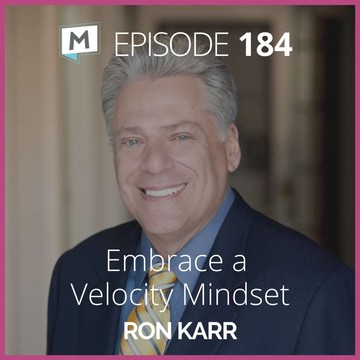
Dec 21, 2021 • 29min
184: Embrace a Velocity Mindset with Ron Karr
What do you think of when you hear the word velocity? Speed? Direction? While we’re busy running quickly from one thing to another, it's important that we always have a clear vision for where we’re headed. Working effectively isn’t just about getting to the future quickly. It’s knowing where you’re going so that your speed is meaningful.
Today’s guest is Ron Karr. Ron has worked with leaders on six continents to eliminate risk, gain buy-in and achieve better results faster with the Velocity Mindset®. His presentations and advisory services have generated over a billion dollars in incremental revenues for his clients. Ron is the author of five books including his latest, The Velocity Mindset® and the bestselling Lead, Sell or Get Out of the Way. Ron facilitates the Chief Revenue Officer Mastermind Group made up of CEO's and VP's building high-performance sales cultures.
Ron and I talk about lessons from his book Velocity Mindset. We talk about getting clarity, asking questions, engaging your team in the process, the importance of pausing and a whole lot more.
Members of the Modern Manager community can get one of three available audiobooks of The Velocity Mindset - How Leaders Eliminate Risk, Gain Buy-In, and Achieve Better Results-Faster!. Get it when you join the Modern Manager community.
Subscribe to my newsletter to get episodes, articles and free mini-guides delivered to your inbox.
Read the related blog article: Embrace a Velocity Mindset with Your Team
KEEP UP WITH RON
Instagram: https://www.instagram.com/rokarr/
Youtube: Youtube: https://www.youtube.com/user/ronkarr1
LinkedIn: https://www.linkedin.com/in/ronkarr/
Twitter: https://twitter.com/ronkarr
Facebook: https://www.facebook.com/ronkarr1
Key Takeaways:
Velocity, in physics, is multiplying speed with direction. In business, that means we need to have a purpose and a destination or else moving at high speeds will lead to burn out.
Instead of being tethered to old ideas, think about where you really want to go and envision a bold future.
You don’t need to be able to map out how you’re going to get there. Ruminate on ideas, ask questions, collect information, and experiment as you go.
Involve your team in co-creating the plan. Ask them to brainstorm ideas, strategies, and for getting to the goal as well as question-storm to identify questions that need to be answered in order to move forward.
Get buy-in by learning what each person on your team values. State the goal in context with what’s important to them.
Learn the ‘art of the pause’ by making time to stop and consider what’s not working. Set personal meetings with yourself and team meetings to reflect and recommit to future actions.
Starting with what’s not working in team meetings will lead to blaming and negativity. Instead, begin with what you want, where you are, what’s working and what you could do differently to reach your goal.
Additional Resources:
Book: The Science of Getting Rich
Book: Enlightened Leadership
mamie@mamieks.com

Dec 14, 2021 • 30min
183: Use Your Most Powerful Voice with Judy Weinman
Your voice is the most powerful tool you own! When you are confident in who you are and grounded in what you’re saying, the words flow with ease. But sometimes, without noticing, our voice betrays us. If we ignore how we speak, we may be undermining the message we’re trying so to hard to convey. Now, today’s guest is Judith Weinman. Judy is a speech, voice, and communications trainer who helps individuals and corporations cultivate personal and professional communication skills so that they function most optimally. She has provided individual and group programs to companies including Bloomberg, IBM, Ernst & Young, NYU Business School, Mt. Sinai Hospital, Bank of China, the U.N., and others. She has a background in speech/language pathology and also offers workshops that focus on empowering women's voices, non-native English speakers, and neurolinguistically diverse communicators. Judy and I talk about how to use your voice to more effectively communicate, including how to be more conscious of your voice, bring greater authenticity into your voice, and demonstrate greater executive presence through voice. Members of the Modern Manager community can get one of three available voice coaching sessions with Judy. Become a member by joining the Modern Manager community. Subscribe to my newsletter to get episodes, articles and free mini-guides delivered to your inbox. Read the related blog article: Why Your Speaking Style Might Be Limiting You At Work KEEP UP WITH JUDYWebsite: https://www.accentjweinman.com/LinkedIn: https://www.linkedin.com/in/judith-weinman-2625ab5b/ Key Takeaways:The voice should be grounded in the body for it to sound authentic and trustworthy. Breathing opens up constrictions in the body, making the person sound more relaxed. Keep your throat open when you speak. People often speak from the throat instead of the chest, making their voice sound strained or weak.Tone is primal and powerful; we hear tone before understanding words and therefore instinctually pick up meaning from it. To become aware of your tone, listen to feedback and notice how people respond to you. Develop a flexibility of voice to use in different circumstances. Explore how your voice can sound supportive vs directive.Humans think in phrases and clauses not perfect sentences. Pace yourself and breathe as you speak giving you time to craft your thoughts into words. When we’re nervous, we make ourselves smaller. Open up your chest rather than caving in. Be supportive by telling your team you believe in their potential while trying to build their communication skills. mamie@mamieks.com
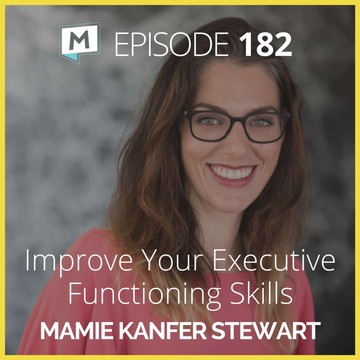
Dec 7, 2021 • 15min
182: Improve Your Executive Functioning Skills
Executive functioning is a set of cognitive skills that help us manage time, plan, prioritize, initiate and complete tasks, regulate emotions, and resist distractions. These skills impact how we perform at work and in life – it’s the foundation of self-management.
This is the second of two episodes on executive functioning skills. This episode reviews strategies to improve executive functioning skills so you can help yourself or support that colleague. The first episode (#178) explains what executive functioning skills are and how they show up in the workplace, as well as how you can assess yourself and your colleagues in each area.
The full episode guide includes an overview of the process and tips from today as well as specific suggested approaches for some of the most common executive functioning challenges people struggle with at work. Get it when you join the Modern Manager community or purchase the full guide at www.themodernmanager.com/shop.
Get the free mini-guide at themodernnmanager.com/miniguides.
Subscribe to my newsletter to get episodes, articles and free mini-guides delivered to your inbox.
Read the related blog article: Improve Performance by Improving Executive Functioning Skills
Key Takeaways:
There are eleven executive functioning skills our brains use to process and decide on an action.
Notice when the struggle is a combination of executive functioning skills that work together to compound a weakness.
Changing behavior is hard. Before trying to develop a skill, look for ways to reduce your reliance on that skill.
Try altering the environment in ways that minimize usage of a weaker skill.
Try adding motivation, both incentives or penalties, that could give you the extra push.
If neither of those are enough, look for ways to improve the weaker skill like finding a coach or practicing the skill.
Create a development plan to help you or a team member work more effectively.
Clarify the real problem, envision what success looks like, brainstorm solutions, decide on a plan, and track progress.
Additional Resources:
Book: Smart but Scattered
mamie@mamieks.com
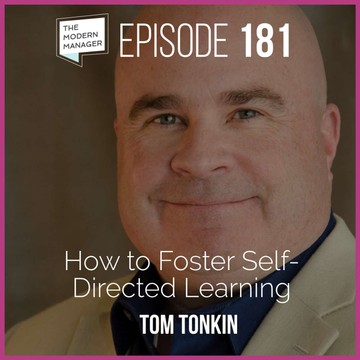
Nov 30, 2021 • 24min
181: How to Foster Self-Directed Learning with Tom Tonkin
From a young age, much of our lives have been directed by others. Our parents, teachers, and other adults tell us what to do and how to do it. In many cultures, it’s not until adulthood that we are truly able to be self-directed, and by that point, it can be difficult for some of us to know how to show up most effectively without the constant direction from others. Yet self-direction is an important, and often underutilized, skill in today’s workplace.
Today’s guest is Dr. Tom Tonkin. Tom is an award-winning researcher, author, and CEO and Founder of The Conservatory Group with 25 years of experience in corporate America under his belt. Tom’s organization provides high-touch services to business executives that want to improve themselves, their team, and their environment. Tom is also involved at an executive level in two organizations with DE&I at the forefront, SAMI and Diversity Equity Inclusion.
Tom and I talk about variations in how our brains work and different styles, how that impacts how we collaborate with our team members, how our brains like to learn, and a lot more.
Members of the Modern Manager community get the Self-Directed Learner Assessment. Updated with the latest research, this resource will help you improve your self-direction. Get it when you join the Modern Manager community.
Subscribe to my newsletter to get episodes, articles and free mini-guides delivered to your inbox.
Read the related blog article: How Managers Can Support More Effective Learning
KEEP UP WITH TOM:
LinkedIn: https://www.linkedin.com/in/drtomtonkin/
Twitter: @DrTomTonkin
The Conservatory Group: https://www.theconservatory.group
Key Takeaways:
There is a spectrum of preference from completely self-directed (independent) to completely directed (dependent) when it comes to learning and managing ourselves.
Managers who like to command, tend to work well with people who prefer to be directed. Managers who like to be hands-off, tend to work well with people who are highly independent.
Managers need to learn to work with all types of people regardless of style or preference.
We learn soft skills and hard skills differently because they live in different parts of the brain.
When we teach soft skills of dealing with people, we need to teach through roleplaying.
When roleplaying, it’s important the conditions be as real as possible e.g. no psychological safety, similar context, so people can learn through real practice.
Hard skills can be taught through more traditional learning methods and practice modes.
If we increase our desire, initiative, persistence, and resourcefulness, we can strengthen our conative brain and learn new skills.
mamie@mamieks.com
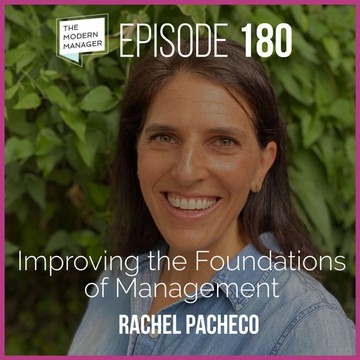
Nov 23, 2021 • 30min
180: Improving the Foundations of Management with Rachel Pacheco
For a first time manager, it can feel like a bait-and-switch: You were told you’re now a manager but what they should have said is you now have to lead meetings, give feedback, make hard decisions, manage conflict, set deadlines and hold people accountable, and about a million other things. Even for experienced managers, it can feel like we’ve never really developed all the skills needed to succeed at this part of our job.
Today’s guest is Rachel Pacheco. Rahel is the author of Bringing Up the Boss, a faculty member at the Wharton School in the Management Department and a Start-up advisor.
Rachel and I talk about what management actually is and then we get into some of the most common areas that managers - both new and seasoned - struggle with like setting clear expectations, giving constructive feedback, and motivating team members, and what you can do to develop these skills.
Members of the Modern Manager community get 35% off Rachel’s book Bringing Up The Boss. Get the discount code when you join the Modern Manager community.
Subscribe to my newsletter to get episodes, articles and free mini-guides delivered to your inbox.
Read the related blog article: Management Fundamentals Every Manager Should Excel In
KEEP UP WITH RACHEL:
Website: www.rachelpacheco.com
Book: https://www.amazon.com/Bringing-Up-Boss-Practical-Managers/dp/1953295010
Key Takeaways:
Management is the broad term for dozens of activities managers are responsible for. These activities can be categorized as (1) managing individuals, (2) managing a team collectively, and (3) managing yourself.
Managers who fear micromanaging end up not giving their team enough structure.
Keep goals simple and few so your team can prioritize. Don’t be too goal-focused that your team forgets other important tasks.
Give clear expectations for what “good” looks like.
Explain the impact of what you’re doing to increase motivation and big picture thinking.
Frequent feedback is one of a manager's most important jobs but we avoid it because it doesn't feel “nice”. Yet, withholding feedback harms our employees’ ability to get better, hurting their future success.
Employees feel anxious without feedback because they want to know how they’re doing.
We need to understand what motivates each employee, what gives them a sense of satisfaction at work.
We can learn individual motivations by asking what they enjoyed in their present/past job or doing a motivation survey.
mamie@mamieks.com
Nov 16, 2021 • 32min
179: Free Your Time For What Matters Most with Dorie Clark
It's easy to get caught up in the game of doing. There are so many opportunities in life. Saying no can be one of the most difficult things managers need to do to protect their time. We want to do it all, but at the end of the day, being so busy doesn’t make us happy or help us achieve our goals. Saying no forces you to figure out what's important, gives you more time to focus on the long term, makes you more deliberate with your decisions, and reminds you of what life is all about.
Today’s guest is Dorie Clark. Dorie has been named one of the Top 50 business thinkers in the world by Thinkers50. She is a keynote speaker and teaches for Duke University’s Fuqua School of Business. She is also the author of Entrepreneurial You, Reinventing You, and Stand Out, which was named the #1 Leadership Book of the year by Inc. magazine. A former presidential campaign spokeswoman, she writes frequently for the Harvard Business Review.
Dorie and I talk about lessons from her new book, The Long Game, about how to become a long-term thinker in a short-term world! Which, hint, is all about how we prioritize and spend our precious time
Members of the Modern Manager community get my Saying No cheat sheet to help you remember when to say no and how to say no in ways that still feel good. Get it when you join the Modern Manager community.
Subscribe to my newsletter to get episodes, articles and free mini-guides delivered to your inbox.
Read the related blog article: How To Stop Being So Busy
KEEP UP WITH DORIE
Twitter: https://twitter.com/dorieclarkLinkedIn: https://www.linkedin.com/in/doriec/Facebook: https://www.facebook.com/dorieclarkauthor/Instagram: https://www.instagram.com/dorieclark/YouTube: https://www.youtube.com/DorieClarkThe Long Game Free Self-Assessment: https://dorieclark.com/longgame/
Key Takeaways:
There are many reasons we continue to be “too busy” even when we say we don’t like it, including that we feel important when we’re busy and it’s uncomfortable to stop and rethink our strategy.
Take advantage of unexpected free time by having a plan. Identify your goals and know what your next step is for each.
Set aside time to strategize in order to be proactive not reactive.
Ask “Is this the best use of my time” when an opportunity arises, instead of “Can I do this?”
When an opportunity arises, it’s either a “Hell yes” or “no”. If it’s not a 9 or 10 for what you want to do, turn it down.
People usually only get offended when you delay responding to an offer or invitation. Say no quickly. It can be helpful to create scripts for turning down opportunities.
Stop overbooking your future self with unimportant things by asking, “Would I do that this week?”
Teach your team how to prioritize and say no.
Additional Resources:
Episode 8: Optimize Your Time with Dorie Clark
mamie@mamieks.com

