

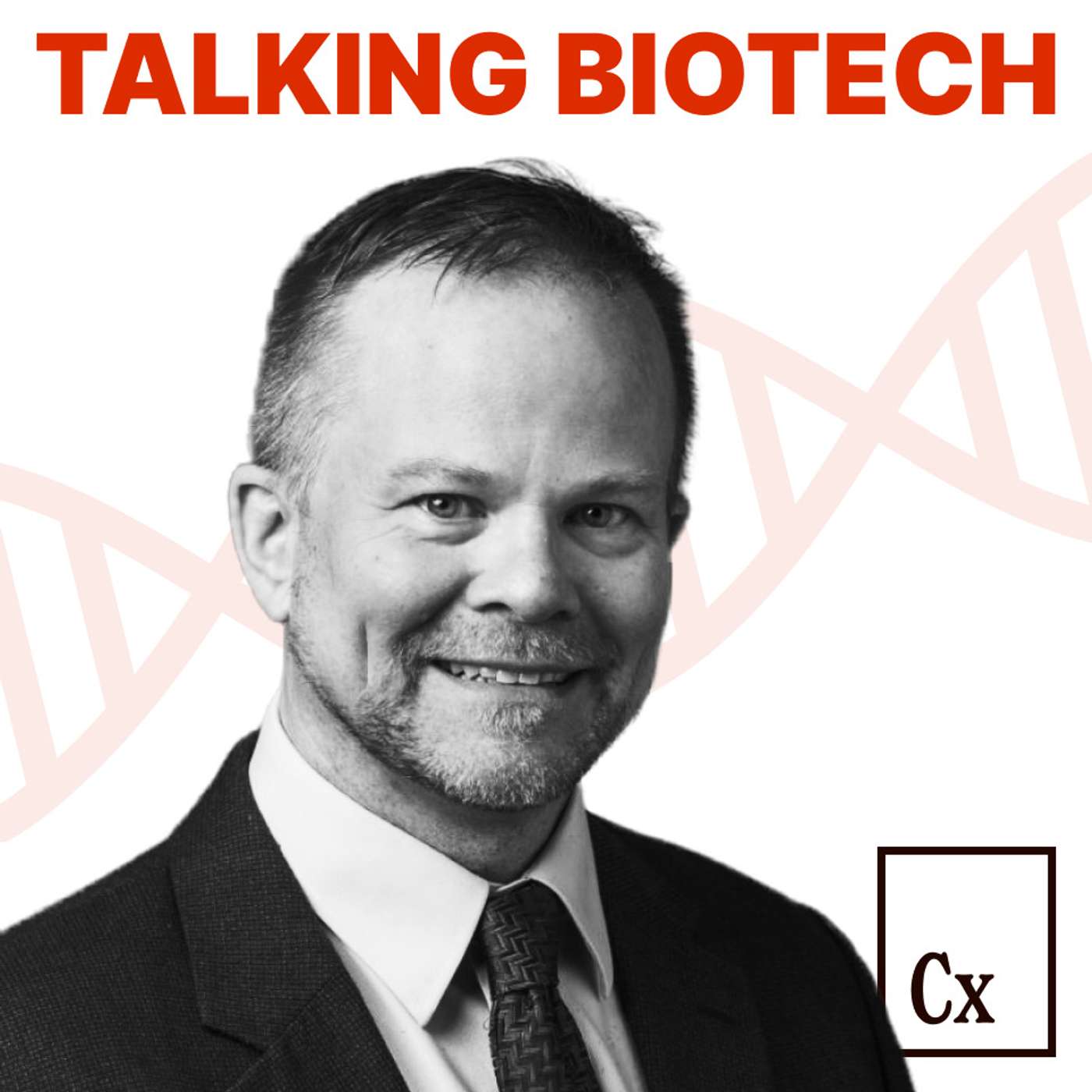
Talking Biotech with Dr. Kevin Folta
Colabra
Talking Biotech is a weekly podcast that uncovers the stories, ideas and research of people at the frontier of biology and engineering.
Each episode explores how science and technology will transform agriculture, protect the environment, and feed 10 billion people by 2050.
Interviews are led by Dr. Kevin Folta, a professor of molecular biology and genomics.
Each episode explores how science and technology will transform agriculture, protect the environment, and feed 10 billion people by 2050.
Interviews are led by Dr. Kevin Folta, a professor of molecular biology and genomics.
Episodes
Mentioned books

Feb 20, 2016 • 41min
Biotech & Tomato Breeding – Social Media on the Farm
Improving plants with biotechnology is not just genetic engineering, it is using tools of molecular biology and genomics to guide traditional breeding strategies. In this episode Dr. Harry Klee from the University of Florida discusses how the Plant Innovation Center utilizes such strategies to breed tomatoes with superior flavors. In part two, University of Manitoba student Chelsea Boonstra discusses how a classroom assignment turned into a social media sensation, and became the public face of her family’s dairy operation. We discuss the role of the farmer as a trusted source of ag information, and the importance of telling their stories using online media.Dr. Klee’s website – Here’s where you can get tomato seeds for a small donation to the breeding program! The Garden Gem Facebook Page On Twitter: @kleelab More Chelsea Boonstra: Chelsea’s Boonstra Farms Video on YouTube On Twitter: @cboon6 or @forevrfarmgirl# COLABRATalking Biotech is brought to you by Colabra – an R&D platform that brings your lab’s world-changing research together in one shared space. Learn more at https://www.colabra.app/# TALKING BIOTECHTwitter: https://twitter.com/talkingbiotechWebsite: https://www.colabra.app/podcasts/talking-biotech/Instagram: https://www.instagram.com/colabrahqThe Talking Biotech podcast is distinct from Dr. Kevin Folta's teaching and research roles at the University of Florida. The views expressed on the show are those of Dr. Folta and his guests, and do not reflect the opinions of the university or Colabra.
Oct 31, 2015 • 37min
Innovative Approaches of the Future Farm Project 2050
Several weeks ago there was a request for Talking Biotech Podcast to interview Prof Graeme Martin. Prof Martin has a long career in animal reproductive biology, and in recent times has had more focus on how to test new strategies in supporting livestock, crops and the nation’s resident biodiversity. His “Clean, Green and Ethical” approach to animal production dovetails with novel strategies to sustainably raise crops in no-till systems as part of the Future Farm 2050 Project. The discussion describes some simple, logical, low-cost techniques to increase crop production with less impact on the environment and in the context of minimal water resources. This was a wonderful interview that jogs out-of-the-traditional thinking to address key issues in farm sustainability going forward. Please visit (and Like!) the Future Farm 2050 Facebook Page# COLABRATalking Biotech is brought to you by Colabra – an R&D platform that brings your lab’s world-changing research together in one shared space. Learn more at https://www.colabra.app/# TALKING BIOTECHTwitter: https://twitter.com/talkingbiotechWebsite: https://www.colabra.app/podcasts/talking-biotech/Instagram: https://www.instagram.com/colabrahqThe Talking Biotech podcast is distinct from Dr. Kevin Folta's teaching and research roles at the University of Florida. The views expressed on the show are those of Dr. Folta and his guests, and do not reflect the opinions of the university or Colabra.
Oct 24, 2015 • 40min
Cassava 2, History, Domestication; Biotech Virus Resistance
Biotech innovation in cassava is necessary to speeding genetic improvement of this food staple. Together with breeding efforts, the new resources derived define new crops that primarily serve the developing world. Yet the Western world knows so little about cassava. This episode of Talking Biotech is part two of the series on cassava genetic improvement. Dr. Barbara Schaal speaks about its genetic origins, migration and domestication. Dr. Nigel Taylor describes the extensive work ongoing at the Danforth Center on cassava, and focuses on installation of virus resistance.# COLABRATalking Biotech is brought to you by Colabra – an R&D platform that brings your lab’s world-changing research together in one shared space. Learn more at https://www.colabra.app/# TALKING BIOTECHTwitter: https://twitter.com/talkingbiotechWebsite: https://www.colabra.app/podcasts/talking-biotech/Instagram: https://www.instagram.com/colabrahqThe Talking Biotech podcast is distinct from Dr. Kevin Folta's teaching and research roles at the University of Florida. The views expressed on the show are those of Dr. Folta and his guests, and do not reflect the opinions of the university or Colabra.
Oct 17, 2015 • 45min
Solutions for Cassava – Biofortification and Characterizing Disease Vectors
Cassava (Manihot esculentum) is a critical world food crop, the third most consumed staple outside of rice and maize. It is even more critical because it is a vigorous plant that grows well in challenging areas. The crop feeds close to 800,000 people worldwide, mostly in Africa, South America and Asia.Production is challenged by a number of biotic and abiotic factors. Viral diseases move quickly through growing regions, vectored by whiteflies. The starchy tuber also lacks key nutrients.This Talking Biotech episode features Prof. Herve Vanderschuren from the University of Leige. He is part of a team that has engineered key enzymes into cassava to enable the production of Vitamin B6, a key nutrient. The second part speaks to Dr. Laura Boykin, a scientist using bioinformatics tools to characterize the whitefly pest that spreads the devastating viral diseases. She also speaks passionately about the people of eastern Africa, and presents a palpable mission to bring them the technical tools and computational know-how to address their continent’s pressing food problems.# COLABRATalking Biotech is brought to you by Colabra – an R&D platform that brings your lab’s world-changing research together in one shared space. Learn more at https://www.colabra.app/# TALKING BIOTECHTwitter: https://twitter.com/talkingbiotechWebsite: https://www.colabra.app/podcasts/talking-biotech/Instagram: https://www.instagram.com/colabrahqThe Talking Biotech podcast is distinct from Dr. Kevin Folta's teaching and research roles at the University of Florida. The views expressed on the show are those of Dr. Folta and his guests, and do not reflect the opinions of the university or Colabra.
Oct 10, 2015 • 50min
An Experiment You can Do With Us; Sugar Beet Breeding and Biology
This eThis episode of Talking Biotech invites you to be the investigator and data collector. The internet is littered with images that claim animals will not eat GMO corn, which is curious because 80% of it goes to animal feed. We have arranged to test that hypothesis through Biology Fortified. If you visit this URL you can make a donation and receive a kit that you can use to generate data for this effort. The podcast discusses the experiment and the acquisition of 2000 lbs of corn to do it! The second part is Dr. Lee Panella talking about the domestication, biology and breeding of sugar beets. For such widely used, versatile and profitable crop, we know so little about it. Dr. Panella provides some new insights into this important agronomic crop.# COLABRATalking Biotech is brought to you by Colabra – an R&D platform that brings your lab’s world-changing research together in one shared space. Learn more at https://www.colabra.app/# TALKING BIOTECHTwitter: https://twitter.com/talkingbiotechWebsite: https://www.colabra.app/podcasts/talking-biotech/Instagram: https://www.instagram.com/colabrahqThe Talking Biotech podcast is distinct from Dr. Kevin Folta's teaching and research roles at the University of Florida. The views expressed on the show are those of Dr. Folta and his guests, and do not reflect the opinions of the university or Colabra.
Oct 3, 2015 • 1h
The SciBabe Talks Toxins; Your Questions Answered
Today chemophobia rules supreme. From fast-food establishments to farming critics, everyone seems to be an expert, except the experts!Talking Biotech #19 features The SciBabe, Yvette d’Entremont (@TheSciBabe). She has experience in the chemical industries and a background in applied toxicology. This is a light-hearted discussion of “toxic”, what it means, and what we really need to worry about. In the second part, Kevin Folta answers your questions, covering Dr. Don Huber, IARC and glyphosate, using his slides for your presentations, and student tracts in science communication.# COLABRATalking Biotech is brought to you by Colabra – an R&D platform that brings your lab’s world-changing research together in one shared space. Learn more at https://www.colabra.app/# TALKING BIOTECHTwitter: https://twitter.com/talkingbiotechWebsite: https://www.colabra.app/podcasts/talking-biotech/Instagram: https://www.instagram.com/colabrahqThe Talking Biotech podcast is distinct from Dr. Kevin Folta's teaching and research roles at the University of Florida. The views expressed on the show are those of Dr. Folta and his guests, and do not reflect the opinions of the university or Colabra.
Sep 26, 2015 • 56min
Insecticides, Herbicides, Organic and Conventional Ag
The topic of “pesticides” is the new frontier in the opposition to agricultural biotechnology. Opponents of the technology blame new genetic improvement methods for perceived increases in chemical controls for plant, animal and fungal pests. However, scientists argue that our pest control strategies are increasingly focused, less toxic, and work better. This episode features an interview with Dr. Steve Savage. He is a life-long expert in chemical control of insects and weeds, and has practical experience in evaluating both organic and conventional strategies.He joins us on Talking Biotech to clarify many of the concerns about pesticide usage.Dr. Savage on Twitter: @grapedocHis Blog: Applied Mythology # COLABRATalking Biotech is brought to you by Colabra – an R&D platform that brings your lab’s world-changing research together in one shared space. Learn more at https://www.colabra.app/# TALKING BIOTECHTwitter: https://twitter.com/talkingbiotechWebsite: https://www.colabra.app/podcasts/talking-biotech/Instagram: https://www.instagram.com/colabrahqThe Talking Biotech podcast is distinct from Dr. Kevin Folta's teaching and research roles at the University of Florida. The views expressed on the show are those of Dr. Folta and his guests, and do not reflect the opinions of the university or Colabra.
Sep 19, 2015 • 48min
Biotech, Ag and Insects; Promoting Art with Science; Barbara on the Bill
This week we’re joined by Richard Levine, communications director for the Entomological Society of America. We discuss bees, butterflies, insecticides and some of the current issues in crop protection from an entomological perspective. We then turn to the idea of promoting artwork using a science podcast, and the important effort to get Dr. Barbara McClintock on the ten dollar bill, replacing some guy. We discuss the barriers to her participation in science, and describe why she would be such a fitting presence on our currency– not just because she was a woman, not just because she was a scientist, but because she broken down barriers.# COLABRATalking Biotech is brought to you by Colabra – an R&D platform that brings your lab’s world-changing research together in one shared space. Learn more at https://www.colabra.app/# TALKING BIOTECHTwitter: https://twitter.com/talkingbiotechWebsite: https://www.colabra.app/podcasts/talking-biotech/Instagram: https://www.instagram.com/colabrahqThe Talking Biotech podcast is distinct from Dr. Kevin Folta's teaching and research roles at the University of Florida. The views expressed on the show are those of Dr. Folta and his guests, and do not reflect the opinions of the university or Colabra.
Sep 12, 2015 • 59min
Biotechnology in Uganda; Reflections on a Public Discussion
This week features two discussions with fellows serving in the Global Leadership Program of the Cornell Alliance for Science. The first part is a discussion with Nassib Mugwanya, Outreach Leader for the Ugandan Biosciences Information Center. He discusses the state of biotech solutions in Uganda, both in terms of critical needs and the current pipeline. The second part is a discussion about the public Ask Me Anything event that was held near the university where I served as a panelist. Jayson Merkley is another Fellow in the program. We discuss the surprises and the lessons learned in the event.# COLABRATalking Biotech is brought to you by Colabra – an R&D platform that brings your lab’s world-changing research together in one shared space. Learn more at https://www.colabra.app/# TALKING BIOTECHTwitter: https://twitter.com/talkingbiotechWebsite: https://www.colabra.app/podcasts/talking-biotech/Instagram: https://www.instagram.com/colabrahqThe Talking Biotech podcast is distinct from Dr. Kevin Folta's teaching and research roles at the University of Florida. The views expressed on the show are those of Dr. Folta and his guests, and do not reflect the opinions of the university or Colabra.
Sep 5, 2015 • 1h 8min
Tomatoes! Innovative Breeding and a Biotech Solution
This episode is an introduction to tomatoes, popular fruits that provide great variation to the eye and palate, as well as the foundation of many recipes. Surprisingly, tomatoes are fragile fruits and the plants can be difficult to grow. They are under constant attack from pests and pathogens, and new varieties must deliver profits for growers and beautiful, flavorful fruits for industry and the consumer.Tomato improvement is happening in several ways. Dr. Sam Hutton is an Assistant Professor at the University of Florida Gulf Coast Research and Education Center outside of Tampa, FL. Dr. Hutton is a traditional breeder that uses molecular tools to speed development of new cultivars for Florida growers. He talks about the origins of tomato, it’s domestication, and the current breeding priorities. He also discusses the challenges to the industry and future opportunities.The second part of the podcast is Dr. Diana Horvath form Two Blades Foundation. Dr. Horvath discusses the BS2 transgenic tomato. The plant has been engineered with a gene from pepper that confers resistance to bacterial diseases. These diseases profoundly affect yields, and require use of anti-microbial compounds in both conventional and organic production. Adoption of the BS2 tomato could increase yields for farmers, decrease production costs, and require fewer pesticides.# COLABRATalking Biotech is brought to you by Colabra – an R&D platform that brings your lab’s world-changing research together in one shared space. Learn more at https://www.colabra.app/# TALKING BIOTECHTwitter: https://twitter.com/talkingbiotechWebsite: https://www.colabra.app/podcasts/talking-biotech/Instagram: https://www.instagram.com/colabrahqThe Talking Biotech podcast is distinct from Dr. Kevin Folta's teaching and research roles at the University of Florida. The views expressed on the show are those of Dr. Folta and his guests, and do not reflect the opinions of the university or Colabra.

