

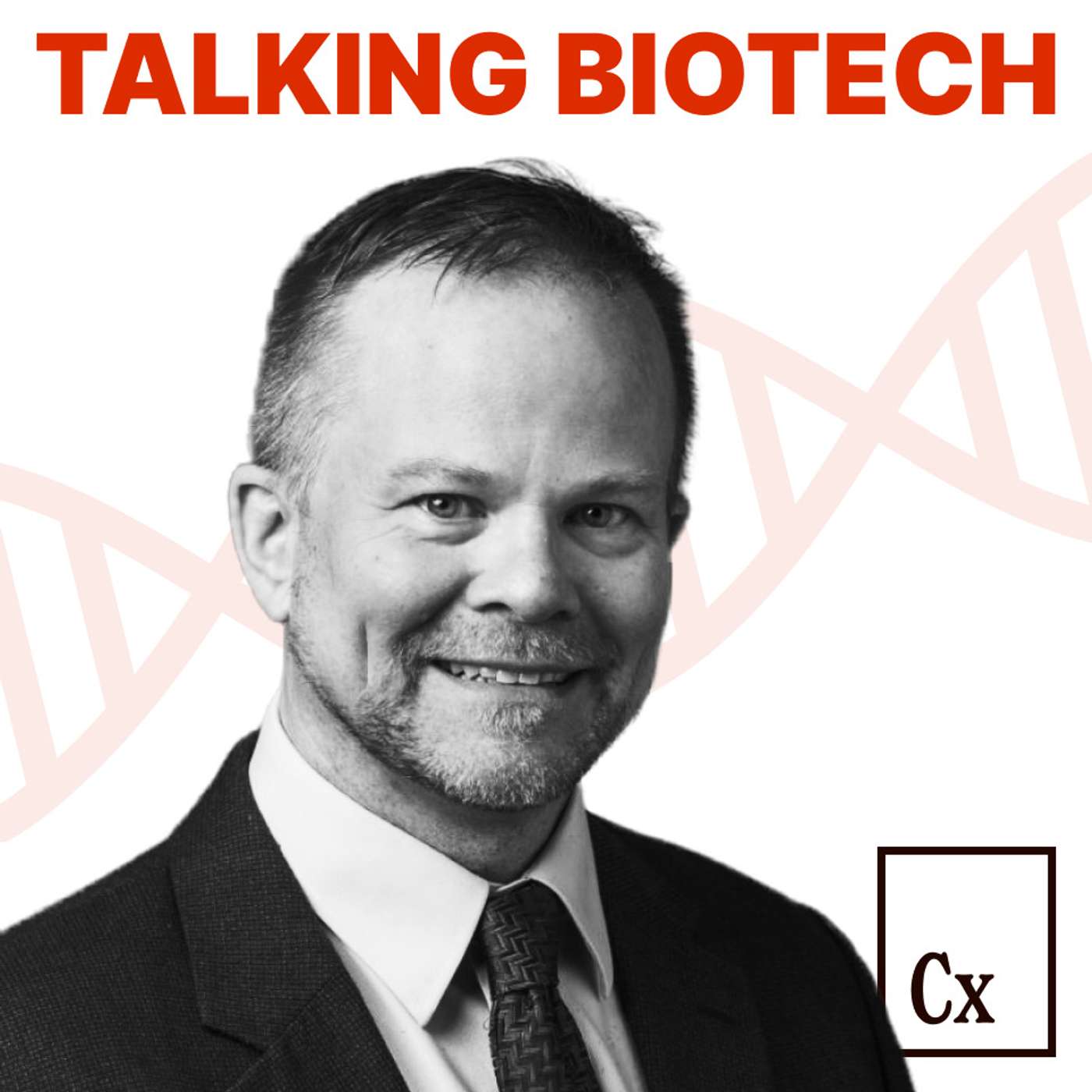
Talking Biotech with Dr. Kevin Folta
Colabra
Talking Biotech is a weekly podcast that uncovers the stories, ideas and research of people at the frontier of biology and engineering.
Each episode explores how science and technology will transform agriculture, protect the environment, and feed 10 billion people by 2050.
Interviews are led by Dr. Kevin Folta, a professor of molecular biology and genomics.
Each episode explores how science and technology will transform agriculture, protect the environment, and feed 10 billion people by 2050.
Interviews are led by Dr. Kevin Folta, a professor of molecular biology and genomics.
Episodes
Mentioned books

Oct 8, 2016 • 37min
Peanuts; Talking to Family about GMO
The peanut is a valuable crop for American farmers and is extensively cultivated worldwide. It is an important source of protein and healthy oils. At the same time the public is concerned about peanut allergies and aflatoxins. What is the reality, and how is technology coming to the rescue to address these problems? Dr. Peggy Ozias-Akins is a Professor and peanut expert at the University of Georgia’s Tifton campus, and she talks about past and contemporary issues in peanuts. In the second part of the podcast I talk about communicating concepts in genetic engineering with family and friends. How do we reach people we care about that have been tainted by non-scientific opinions? We can do that, but it takes following a strategy.# COLABRATalking Biotech is brought to you by Colabra – an R&D platform that brings your lab’s world-changing research together in one shared space. Learn more at https://www.colabra.app/# TALKING BIOTECHTwitter: https://twitter.com/talkingbiotechWebsite: https://www.colabra.app/podcasts/talking-biotech/Instagram: https://www.instagram.com/colabrahqThe Talking Biotech podcast is distinct from Dr. Kevin Folta's teaching and research roles at the University of Florida. The views expressed on the show are those of Dr. Folta and his guests, and do not reflect the opinions of the university or Colabra.
Oct 1, 2016 • 41min
Eggplant Origins and Diversity; Thoughts of Dr. Borlaug
The eggplant (brinjal, aubergine) is a curious fruit in western nations, but is an important staple for hundreds of millions of people worldwide. Today’s podcast discusses the eggplant with Dr. Mark Chapman from University of Southampton in the UK. Dr. Chapman has examined the domestication and evolution of the eggplant, discussing its natural variability and the use of molecular tools to study relatedness between the diverse land races. The second part of the podcast shares Dr. Indra Vasil’s remembrances of Dr. Norman Borlaug.# COLABRATalking Biotech is brought to you by Colabra – an R&D platform that brings your lab’s world-changing research together in one shared space. Learn more at https://www.colabra.app/# TALKING BIOTECHTwitter: https://twitter.com/talkingbiotechWebsite: https://www.colabra.app/podcasts/talking-biotech/Instagram: https://www.instagram.com/colabrahqThe Talking Biotech podcast is distinct from Dr. Kevin Folta's teaching and research roles at the University of Florida. The views expressed on the show are those of Dr. Folta and his guests, and do not reflect the opinions of the university or Colabra.
Sep 24, 2016 • 1h
17 Questions About Glyphosate
Talking Biotech #52 visits with Iida Ruishalme, cell biologist, author and blogger. Iida is a trained scientist that writes the blog Thoughtscapism. Recently she published a comprehensive assessment of the frequently-asked questions regarding the glyphosate herbicide. Her thoughtful discussion was the basis of today’s discussion. Follow Iida in all of her social media areas:Blog: thoughtscapism.com Facebook page: https://www.facebook.com/Thoughtscapism/ Twitter: Iida Ruishalme @Thoughtscapism, https://twitter.com/Thoughtscapism Pinterest: https://www.pinterest.com/iidadragon/thoughtscapism/ and Quora: https://www.quora.com/profile/Iida-Ruishalme # COLABRATalking Biotech is brought to you by Colabra – an R&D platform that brings your lab’s world-changing research together in one shared space. Learn more at https://www.colabra.app/# TALKING BIOTECHTwitter: https://twitter.com/talkingbiotechWebsite: https://www.colabra.app/podcasts/talking-biotech/Instagram: https://www.instagram.com/colabrahqThe Talking Biotech podcast is distinct from Dr. Kevin Folta's teaching and research roles at the University of Florida. The views expressed on the show are those of Dr. Folta and his guests, and do not reflect the opinions of the university or Colabra.
Sep 17, 2016 • 48min
Weed Killer in Vaccines?
Today’s episode is born of frustration. Fear-mongering non-experts are abusing improper interpretations from an available herbicide detection kit to make claims that herbicides are now found in vaccines. Namely, they seek to find glyphosate, the active ingredient in Roundup. They use a kit you can buy on the internet, but fail to use it in the way it is designed. Instead of using it on water, they use it on complex mixtures that yield false positives that are interpreted as legitimate signals.So to push back I want to provide you with the information you need to discuss these topics with confidence. This topic has no guests. I reached out to the folks making the claims as well as the company that makes the product, and nobody wants to join the conversation. It is simply me talking about the claims, the assay, and how you can help debunk the bad information that pollutes this important public discourse. # COLABRATalking Biotech is brought to you by Colabra – an R&D platform that brings your lab’s world-changing research together in one shared space. Learn more at https://www.colabra.app/# TALKING BIOTECHTwitter: https://twitter.com/talkingbiotechWebsite: https://www.colabra.app/podcasts/talking-biotech/Instagram: https://www.instagram.com/colabrahqThe Talking Biotech podcast is distinct from Dr. Kevin Folta's teaching and research roles at the University of Florida. The views expressed on the show are those of Dr. Folta and his guests, and do not reflect the opinions of the university or Colabra.
Sep 10, 2016 • 49min
How to Make a Plant from a Single Cell
One of the most important steps in genetic engineering a plant is the process of regenerating an entire new plant from a single cell that contains the new genetic instructions. The process is as much art as science. Dr. Indra Vasil was a pioneer in this area, especially in monocots, the plants we think of as our major grasses and grains. In this interview Dr. Vasil discusses the early days of plant tissue culture, and his contributions to the process that makes genetic engineering of crops possible. Dr. Vasil shares his experiences and talks fondly of the many scientists that supported his work, as well as the need to get students to think outside the box. # COLABRATalking Biotech is brought to you by Colabra – an R&D platform that brings your lab’s world-changing research together in one shared space. Learn more at https://www.colabra.app/# TALKING BIOTECHTwitter: https://twitter.com/talkingbiotechWebsite: https://www.colabra.app/podcasts/talking-biotech/Instagram: https://www.instagram.com/colabrahqThe Talking Biotech podcast is distinct from Dr. Kevin Folta's teaching and research roles at the University of Florida. The views expressed on the show are those of Dr. Folta and his guests, and do not reflect the opinions of the university or Colabra.
Sep 3, 2016 • 1h 1min
Watermelon Domestication, Breeding and Party Tricks; Your Questions
The dog-days of summer are a perfect match for watermelon. This podcast discusses domestication, breeding and interesting stories of where this magical fruit came from, and where it is going. Dr. Cecilia McGregor shares her knowledge of the origins of this important dessert crop, along with interesting facets of how it is used by other people around the world. She also ventures into “endless amusement” with watermelons. In the second half, I answer the many questions that came in over the internet this week! # COLABRATalking Biotech is brought to you by Colabra – an R&D platform that brings your lab’s world-changing research together in one shared space. Learn more at https://www.colabra.app/# TALKING BIOTECHTwitter: https://twitter.com/talkingbiotechWebsite: https://www.colabra.app/podcasts/talking-biotech/Instagram: https://www.instagram.com/colabrahqThe Talking Biotech podcast is distinct from Dr. Kevin Folta's teaching and research roles at the University of Florida. The views expressed on the show are those of Dr. Folta and his guests, and do not reflect the opinions of the university or Colabra.
Aug 27, 2016 • 1h 4min
Eggplants, Brinjals and Aubergines
One of the amazing success stories of genetic engineering is the eggplant, known as the “brinjal” in Asia and the “aubergine” in Europe. In the west it is occasional table fare, yet in many parts of Asia it is a daily staple. Farmers in Bangladesh and India rely on doses of old-school insecticides to protect their crop, up to eighty a season, and not always with appropriate protection equipment. The problem is insects that bore into the plant and into the fruit, destroying a crop.One solution has been the use of the bacterial protein known as “Bt”, only that the plant produces itself to protect it from insects. It is the same protein used in corn and cotton in other countries, including the USA. The new eggplant lines have been wonderfully accepted, and poor farmers in Bangladesh are making excellent profits from this technology, while making safer produce.The story is told by Dr. Tony Shelton, Professor of Entomology with Cornell University in Geneva, NY. The story has captured the interest of many, including science journalist and filmmaker Dr. Hidde Boersma. Dr. Boersma has a Ph.D. in microbiology, and appreciates the potential contributions of genetic engineering. He has captured the story of the eggplant in a beautiful documentary called Well Fed. The documentary tells the story of the farmers that grow the plant, and the well-fed Europeans that change their attitude toward the technology when they see the beautiful ways it can benefit people.Website for Dr. Tony Shelton here, but this is the website to the Bt Brinjal project. Website for Dr. Hidde Boersma here This link is Hidde Boersma’s beautiful prelude to the documentary, sharing much of the same footage.# COLABRATalking Biotech is brought to you by Colabra – an R&D platform that brings your lab’s world-changing research together in one shared space. Learn more at https://www.colabra.app/# TALKING BIOTECHTwitter: https://twitter.com/talkingbiotechWebsite: https://www.colabra.app/podcasts/talking-biotech/Instagram: https://www.instagram.com/colabrahqThe Talking Biotech podcast is distinct from Dr. Kevin Folta's teaching and research roles at the University of Florida. The views expressed on the show are those of Dr. Folta and his guests, and do not reflect the opinions of the university or Colabra.
Aug 20, 2016 • 54min
Genetic Engineering, Extension and Communication
Those of you that follow social media know Dr. Paul Vincelli. He’s a visible contributor to the discussion on genetic engineering, but also ventures into discussion of climate change. So how do scientists learn to rethink their approach to public hot-button topics to be effective? This has been a question for scientists for a long time, as we perennially fail to connect well with the public.Podcast Resources:* Genetic Engineering and Sustainable Crop Disease Management: Opportunities for Case-by-Case Decision-Making, http://www.mdpi.com/2071-1050/8/5/495* Are Biocontrols for Plant Diseases Safe to Humans?, https://vincelliblog.wordpress.com/2016/07/26/are-biocontrols-for-plant-diseases-safe-to-humans/ Follow Dr. Vincelli on Twitter (@Pvincell)# COLABRATalking Biotech is brought to you by Colabra – an R&D platform that brings your lab’s world-changing research together in one shared space. Learn more at https://www.colabra.app/# TALKING BIOTECHTwitter: https://twitter.com/talkingbiotechWebsite: https://www.colabra.app/podcasts/talking-biotech/Instagram: https://www.instagram.com/colabrahqThe Talking Biotech podcast is distinct from Dr. Kevin Folta's teaching and research roles at the University of Florida. The views expressed on the show are those of Dr. Folta and his guests, and do not reflect the opinions of the university or Colabra.
Aug 13, 2016 • 49min
Genetics of Depression; Women and Science
Talking Biotech Podcast #46 was a lot of fun. My co-host is the effervescent Kiona Elliott, a wonderful undergraduate student in my lab that not only is studying science, but she’s also studying how to communicate with public audiences. The main guest is Dr. Ashley Winslow, Director of Neurogenetics at the Orphan Disease Center at the University of Pennsylvania Medical School. We discuss the results from her recent paper in Nature Genetics that used voluntary public information from 23 and me to identify areas of the genome that may contain genetic markers of clinical depression.Dr. Winslow also discusses life as a driven woman scientist, and some of the unique challenges she faced in pursuit of her current position. She also provides excellent guidance for young scientists… and there’s a bit of a surprise!Co-hosted by University of Florida undergraduate Kiona Elliott (@kionaelliott)# COLABRATalking Biotech is brought to you by Colabra – an R&D platform that brings your lab’s world-changing research together in one shared space. Learn more at https://www.colabra.app/# TALKING BIOTECHTwitter: https://twitter.com/talkingbiotechWebsite: https://www.colabra.app/podcasts/talking-biotech/Instagram: https://www.instagram.com/colabrahqThe Talking Biotech podcast is distinct from Dr. Kevin Folta's teaching and research roles at the University of Florida. The views expressed on the show are those of Dr. Folta and his guests, and do not reflect the opinions of the university or Colabra.
Aug 6, 2016 • 56min
Viral Threats to Coffee
Talking Biotech #45 discusses the viral threats to coffee. We’re joined by Dr. Michael Goodin, Associate Professor of Plant Pathology from the University of Kentucky. Coffee viruses are important threats to sustainable production. They are spread by insects, so insect control is a critical aspect of their spread. Dr. Goodin talks about the unusual molecular aspects of the virus, plus the reasons he enjoys researching coffee, as it is a high-value crop that helps farmers in the developing world, and is a product enjoyed by people worldwide.Nat Graham is a Graduate Student in the University of Missouri Biology Department.# COLABRATalking Biotech is brought to you by Colabra – an R&D platform that brings your lab’s world-changing research together in one shared space. Learn more at https://www.colabra.app/# TALKING BIOTECHTwitter: https://twitter.com/talkingbiotechWebsite: https://www.colabra.app/podcasts/talking-biotech/Instagram: https://www.instagram.com/colabrahqThe Talking Biotech podcast is distinct from Dr. Kevin Folta's teaching and research roles at the University of Florida. The views expressed on the show are those of Dr. Folta and his guests, and do not reflect the opinions of the university or Colabra.

