

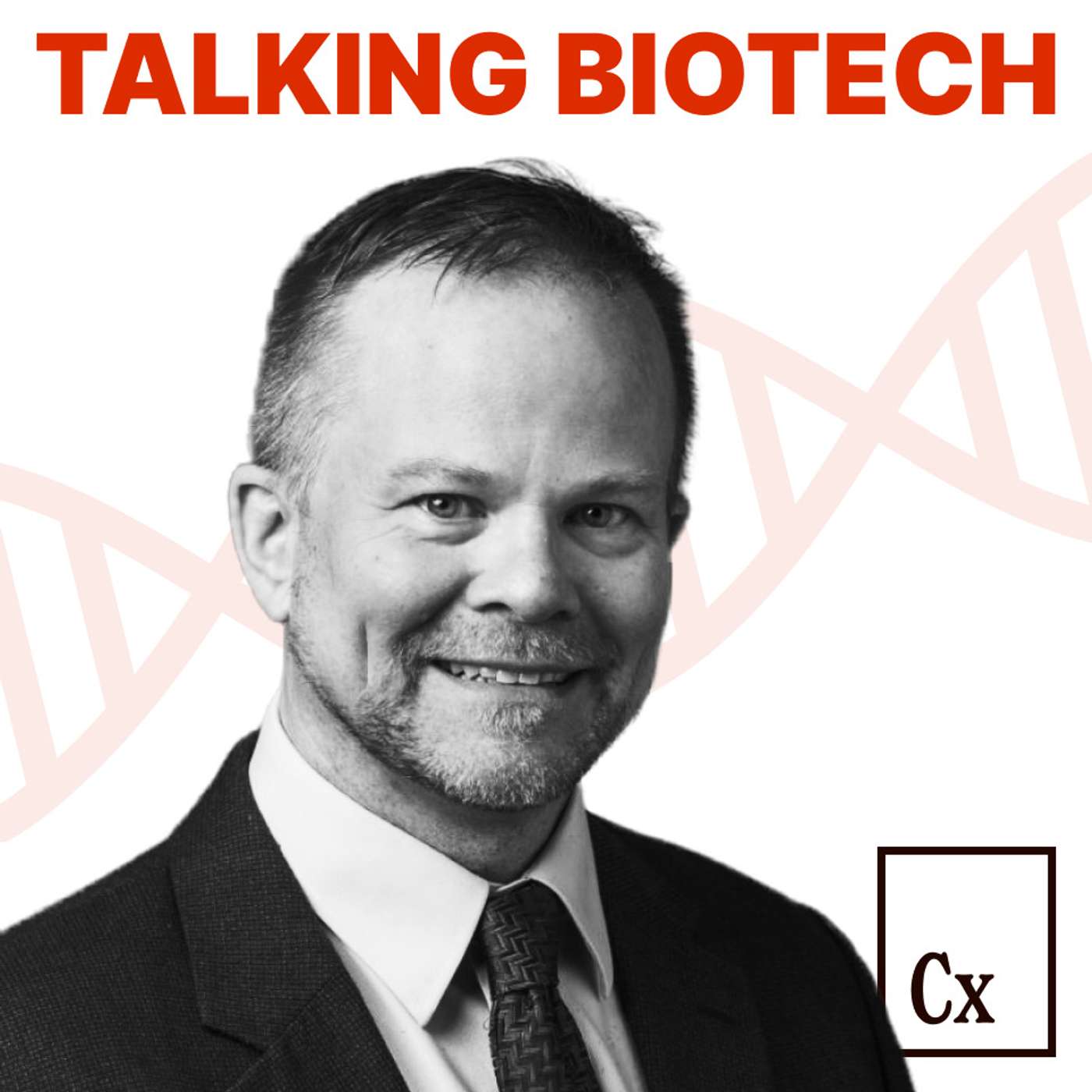
Talking Biotech with Dr. Kevin Folta
Colabra
Talking Biotech is a weekly podcast that uncovers the stories, ideas and research of people at the frontier of biology and engineering.
Each episode explores how science and technology will transform agriculture, protect the environment, and feed 10 billion people by 2050.
Interviews are led by Dr. Kevin Folta, a professor of molecular biology and genomics.
Each episode explores how science and technology will transform agriculture, protect the environment, and feed 10 billion people by 2050.
Interviews are led by Dr. Kevin Folta, a professor of molecular biology and genomics.
Episodes
Mentioned books

Feb 9, 2019 • 31min
The AAAS Glyphosate Award Controversy
This week the American Association for the Advancement of Science announced an award to two Sri Lankan researchers for their research showing that glyphosate was a “deadly herbicide” that was causing kidney disease in farmers. Of course, I remember some work they did in forming a hypothesis and eventually measuring heavy metals and farm chemicals in urine, but I never recall such a definitive conclusion. Because there was none. The research is what the research is, but AAAS made a huge blunder in allowing a completely incorrect interpretation of the current literature to hit their pages. Of course, now this has blossomed in to a claims of multinational corporate conspiracy of censorship and suppression, when it really was just an organization likely posting what they were told was the actual science.# COLABRATalking Biotech is brought to you by Colabra – an R&D platform that brings your lab’s world-changing research together in one shared space. Learn more at https://www.colabra.app/# TALKING BIOTECHTwitter: https://twitter.com/talkingbiotechWebsite: https://www.colabra.app/podcasts/talking-biotech/Instagram: https://www.instagram.com/colabrahqThe Talking Biotech podcast is distinct from Dr. Kevin Folta's teaching and research roles at the University of Florida. The views expressed on the show are those of Dr. Folta and his guests, and do not reflect the opinions of the university or Colabra.
Jan 30, 2019 • 28min
Bees Delivering Pesticides
The relationship between pollinators and crop protection strategies has always pitted them against each other, with concern about how insecticides and herbicides might affect charismatic non-target insects like bees. A new technology by the company Bee Vectoring Technologies rewrites the definition to the relationship. In this approach, bees exit the hive to deliver a fungicide to the flower, a biological control that competes against pathogenic fungi that start their damage early in fruit development. In this episode I speak with representatives from the company about the technology, its application, and its safety with regard to pollinators and the environment. Company website: BeeVt.com Follow BeeVT on Twitter: @BeeVTech# COLABRATalking Biotech is brought to you by Colabra – an R&D platform that brings your lab’s world-changing research together in one shared space. Learn more at https://www.colabra.app/# TALKING BIOTECHTwitter: https://twitter.com/talkingbiotechWebsite: https://www.colabra.app/podcasts/talking-biotech/Instagram: https://www.instagram.com/colabrahqThe Talking Biotech podcast is distinct from Dr. Kevin Folta's teaching and research roles at the University of Florida. The views expressed on the show are those of Dr. Folta and his guests, and do not reflect the opinions of the university or Colabra.
Jan 26, 2019 • 49min
Genetically Engineered Animals- Regulated as Drugs
The new techniques in gene editing have made rapid, precise genetic changes possible in animals. Some of the greatest benefits are genetic resistance to disease, generation of less waste, and more rapid growth on the farm. The world has adopted these new techniques and devised sensible and appropriate mechanisms of regulatory oversight. However, in the USA regulation of genetically-engineered animals is cumbersome, and arrests solutions from reaching the field. In short, a GE animal is regulated as a drug, whereas a GE plant is regulated as a GE plant. Dr. Alison Van Eenennaam sets out to correct this discrepancy. She points out the problems with burdensome regulation and how it will affect American scientists and ultimately the American farmer, rancher and economy. As a solution, she requests that you sign the petition below, as she will use your name and interest in changing the rules to bolster her efforts in supporting rigorous, thorough, yet reasonable regulation. Dr. Van Eenennaam on Twitter: @BioBeef HERE IS A LINK TO THE PETITION! PLEASE SIGN! # COLABRATalking Biotech is brought to you by Colabra – an R&D platform that brings your lab’s world-changing research together in one shared space. Learn more at https://www.colabra.app/# TALKING BIOTECHTwitter: https://twitter.com/talkingbiotechWebsite: https://www.colabra.app/podcasts/talking-biotech/Instagram: https://www.instagram.com/colabrahqThe Talking Biotech podcast is distinct from Dr. Kevin Folta's teaching and research roles at the University of Florida. The views expressed on the show are those of Dr. Folta and his guests, and do not reflect the opinions of the university or Colabra.
Jan 19, 2019 • 40min
What We Know vs. What We Think We Know
Researchers and communicators in biotechnology have experienced it for a long time– the people that oppose genetic engineering frequently know the least about it. This observation was studied formally by a group of cognitive and social psychologists. Their conclusion: The people with the most extreme attitudes about genetic engineering also have the least working knowledge about the science behind it. In this week’s podcast Dr. Philip Fernbach from the University of Colorado discusses the results of the study, along with a deeper discussion into the ramifications of these findings as they apply to science communication.Link to the paper discussed: Dr. Fernbach’s website: www.philipfernbach.com Website at University of Colorado: Here is his book: The Knowledge Illusion: Why we Never Think Alone# COLABRATalking Biotech is brought to you by Colabra – an R&D platform that brings your lab’s world-changing research together in one shared space. Learn more at https://www.colabra.app/# TALKING BIOTECHTwitter: https://twitter.com/talkingbiotechWebsite: https://www.colabra.app/podcasts/talking-biotech/Instagram: https://www.instagram.com/colabrahqThe Talking Biotech podcast is distinct from Dr. Kevin Folta's teaching and research roles at the University of Florida. The views expressed on the show are those of Dr. Folta and his guests, and do not reflect the opinions of the university or Colabra.
Jan 12, 2019 • 30min
Help Researchers Save Threatened Forests
Our forests are critical to ecology. They sequester carbon from human activity, and serve as great resources for renewable building materials, fuels and recreation. However, our forests are threatened like never before. Rapidly changing climates, human activity, and new pests and pathogens have caused massive change in forest populations over a very short time, with some species driven nearly to extinction. Scientists are poised to meet these problems with modern biotechnology. The problem is that the certification and regulatory bodies that govern the work have great restrictions on the kind of research that may be performed, and they all but forbid any types of genetic engineering. Ancient language installed by activist groups is difficult to overcome, and stops the best tools from being utilized in tree improvement. Dr. Steve Strauss discusses the recent National Academies Report on forests and technology, and introduces a petition for scientists and concerned citizens to sign. The hope is that regulators and certification bodies will maintain rigorous assessment, yet will allow new technologies to at least be considered and tested as scientists search for answers.Please click here to go to sign the petition. Read the full petition and related scientific background. View a press release on the petition here.# COLABRATalking Biotech is brought to you by Colabra – an R&D platform that brings your lab’s world-changing research together in one shared space. Learn more at https://www.colabra.app/# TALKING BIOTECHTwitter: https://twitter.com/talkingbiotechWebsite: https://www.colabra.app/podcasts/talking-biotech/Instagram: https://www.instagram.com/colabrahqThe Talking Biotech podcast is distinct from Dr. Kevin Folta's teaching and research roles at the University of Florida. The views expressed on the show are those of Dr. Folta and his guests, and do not reflect the opinions of the university or Colabra.
Jan 5, 2019 • 24min
Engineering Indoor Air Cleaning Plants
Indoor air is filled with hazardous trace compounds that arise from flooring, furniture, and even showering. While they pose a minor risk, they are present, and more so in our energy efficient homes. Dr. Stuart Strand has devised houseplants that express a detoxification gene from the human liver. The plants remove these compounds from the air, and may be important contributors to public health in the future.# COLABRATalking Biotech is brought to you by Colabra – an R&D platform that brings your lab’s world-changing research together in one shared space. Learn more at https://www.colabra.app/# TALKING BIOTECHTwitter: https://twitter.com/talkingbiotechWebsite: https://www.colabra.app/podcasts/talking-biotech/Instagram: https://www.instagram.com/colabrahqThe Talking Biotech podcast is distinct from Dr. Kevin Folta's teaching and research roles at the University of Florida. The views expressed on the show are those of Dr. Folta and his guests, and do not reflect the opinions of the university or Colabra.
Dec 29, 2018 • 33min
Two Critical Updates – Brinjals and Chestnuts
This week’s podcast features and update on two critical technologies– the Bt Brinjal (eggplant) in Bangladesh and the blight resistant American Chestnut. Both of these were covered in earlier episodes, and an update on their status is long overdue. Dr. Tony Shelton of Cornell University and Dr. Bill Powell from SUNY share their stories. Follow Dr. Powell on Twitter @ChestnutPowell Follow Dr. Tony Shelton’s Progress here and download the recent paper here. # COLABRATalking Biotech is brought to you by Colabra – an R&D platform that brings your lab’s world-changing research together in one shared space. Learn more at https://www.colabra.app/# TALKING BIOTECHTwitter: https://twitter.com/talkingbiotechWebsite: https://www.colabra.app/podcasts/talking-biotech/Instagram: https://www.instagram.com/colabrahqThe Talking Biotech podcast is distinct from Dr. Kevin Folta's teaching and research roles at the University of Florida. The views expressed on the show are those of Dr. Folta and his guests, and do not reflect the opinions of the university or Colabra.
Dec 22, 2018 • 22min
Evolution of Weed Resistance
Weed resistance is a complex problem with incredible ramifications for agricultural production. It also provides an outstanding opportunity to examine how resistance happens– is it continual development of new mutations, new mutations in the same genes, or is it simply spread of already resistant material? Genome sequencing and comparative genomics indicates that it is all of the above. A recent paper by Kreiner et al tells the story of Amaranth resistance and its origins, particularly with presence in Canadian agriculture. Follow Julia on Twitter @jmkreinz And here is Julia’s website # COLABRATalking Biotech is brought to you by Colabra – an R&D platform that brings your lab’s world-changing research together in one shared space. Learn more at https://www.colabra.app/# TALKING BIOTECHTwitter: https://twitter.com/talkingbiotechWebsite: https://www.colabra.app/podcasts/talking-biotech/Instagram: https://www.instagram.com/colabrahqThe Talking Biotech podcast is distinct from Dr. Kevin Folta's teaching and research roles at the University of Florida. The views expressed on the show are those of Dr. Folta and his guests, and do not reflect the opinions of the university or Colabra.
Dec 15, 2018 • 16min
Brockovich’s Deceptive Guardian Article
On December 6, 2018 environmental advocate Erin Brockovich published a high-profile opinion piece in The Guardian. The piece was laced with scientific inaccuracies and inflammatory rhetoric about glyphosate, indicating in no uncertain terms that it causes cancer and is present in just about all food. None of these claims are supported by peer-reviewed literature. Further examination shows that Brockovich is a consultant for the law firm that is managing the class action against one company that manufactures the compound. In this week’s podcast Rob Saik and Kevin Folta sit down and discuss the piece and the sad tale of a powerful voice for environment and consumer protection selling out to non-scientific interests. Follow Rob on Twitter @RSaik# COLABRATalking Biotech is brought to you by Colabra – an R&D platform that brings your lab’s world-changing research together in one shared space. Learn more at https://www.colabra.app/# TALKING BIOTECHTwitter: https://twitter.com/talkingbiotechWebsite: https://www.colabra.app/podcasts/talking-biotech/Instagram: https://www.instagram.com/colabrahqThe Talking Biotech podcast is distinct from Dr. Kevin Folta's teaching and research roles at the University of Florida. The views expressed on the show are those of Dr. Folta and his guests, and do not reflect the opinions of the university or Colabra.
Dec 8, 2018 • 50min
Biotechnology Outreach and Extension
Dr. Thomas Zinnen has worked with the University of Wisconsin Cooperative Extension Service for almost three decades. His principal job has been sharing information about technology with the state through creative programs and activities. He shares his thoughts on communication with the public, along with some excellent examples of how to get non-scientists to implement scientific reasoning. Follow Tom on Twitter @tmzinnen# COLABRATalking Biotech is brought to you by Colabra – an R&D platform that brings your lab’s world-changing research together in one shared space. Learn more at https://www.colabra.app/# TALKING BIOTECHTwitter: https://twitter.com/talkingbiotechWebsite: https://www.colabra.app/podcasts/talking-biotech/Instagram: https://www.instagram.com/colabrahqThe Talking Biotech podcast is distinct from Dr. Kevin Folta's teaching and research roles at the University of Florida. The views expressed on the show are those of Dr. Folta and his guests, and do not reflect the opinions of the university or Colabra.

