

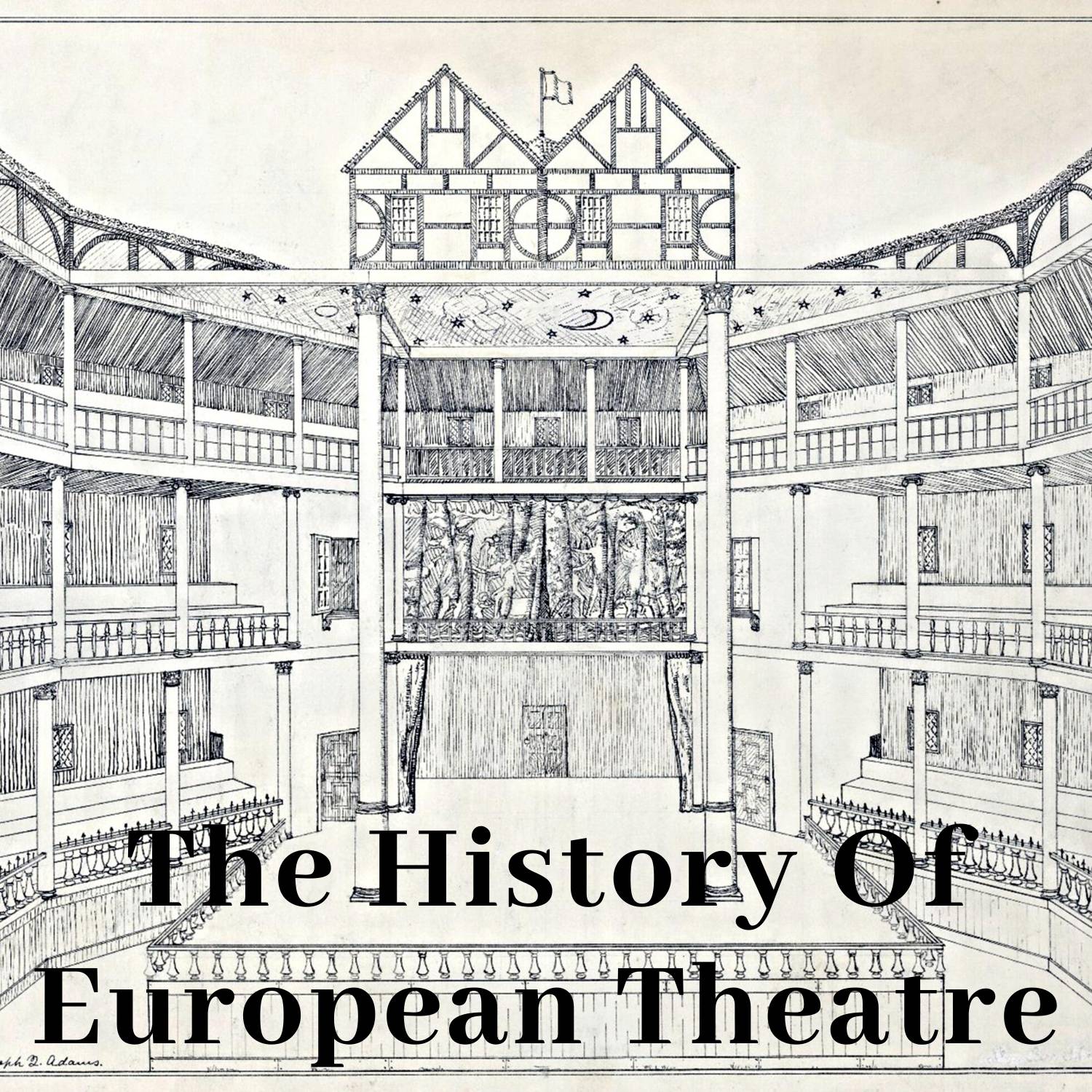
The History Of European Theatre
Philip Rowe
A podcast tracing the development of theatre from ancient Greece to the present day through the places and people who made theatre happen. More than just dates and lists of plays we'll learn about the social. political and historical context that fostered the creation of dramatic art.This podcast uses the following third-party services for analysis: Chartable - https://chartable.com/privacy Hosted on Acast. See acast.com/privacy for more information.
Episodes
Mentioned books

Jan 12, 2026 • 43min
Shakespeare and Brecht: A Conversation with Stephen Unwin
Episode 200For today’s guest episode it is a welcome return to the podcast for Stephen Unwin. I spoke to Stephen earlier in this Shakespeare and Jonson season to discuss his book ‘Poor Naked Wretches’ which examines the way Shakespeare portrayed working people and their significance in the plays. For his next published work Stephen has produced a work that examines Berthold Brecht’s lifelong obsession with Shakespeare and which makes the case for reading the two playwrights together. This is part of the Arden Performance Companion series so is slanted towards practical suggestions about how performance of Shakespeare can be achieved through Brechtian techniques.Link to Stephen’s website: www.stephenunwin.ukLink to online retailers for ‘Shakespeare and Brecht’:Bloomsbury UK: https://www.bloomsbury.com/uk/shakespeare-and-brecht-9781350419612/Bloomsbury US: https://www.bloomsbury.com/us/shakespeare-and-brecht-9781350419636/Amazon UK: https://www.amazon.co.uk/Shakespeare-Brecht-Practical-Performance-Companions/dp/1350419613/ref=asc_df_1350419613Amazon US: https://www.amazon.com/Shakespeare-Brecht-Practical-Performance-Companions/dp/1350419613/ref=sr_1_1Support the podcast at:www.thehistoryofeuropeantheatre.comwww.patreon.com/thoetpwww.ko-fi.com/thoetp Hosted on Acast. See acast.com/privacy for more information.
Jan 5, 2026 • 36min
Twelfth Night: ‘Foolery, sir, does walk about the orb like the sun: it shines everywhere’
Episode 199: The line I have used for the title of today’s episode is spoken by Feste the fool, a central character in ‘Twelfth Night’. Fools have already played significant roles in Shakespeare’s previous plays and as you will hear there are possible connections between them and Feste, but significant as he is, and fools will be in forthcoming Shakespeare plays, there is so much more to Twelfth Night than just that one character. It is a play where other Shakespearean comedic characteristics also feature – identical twins, empowered and quick-witted women, variants on the braggart soldier character, and an exotic, virtually mystical, setting, spring to mind. If ever there was a comedy where Shakespeare was completely in his stride then this, for me, is the one.The early performance history of the playThe dating of the playThe early print history of the playThe sources for the playThe establishing of social roles in the playThe positions of the knights Sir Toby and Sir AndrewThe role of Feste, the fool.The impact of Feste’s songsFeste as a portrait of Thomas NasheThe centrality of Malvolio to the themes of the playFeste’s sung epilogue to the playLove, desire and infatuation in the playThe play as a knowingly theatrical storyThe performance history of the playSome of the critical reaction to the play Link to Rachel Aanstad’s ‘A Bawdy Twelfth Night’ for UK customers:https://www.amazon.co.uk/Encyclopedia-Dramaturgical-Shakespearean-Encyclopedias-Handbooks/dp/B0BT2DZGTK/ref=sr_1_1Link to Rachel Aanstad’s ‘A Bawdy Twelfth Night’ for US customers:https://www.amazon.com/Encyclopedia-Dramaturgical-Shakespearean-Encyclopedias-Handbooks/dp/B0BT2DZGTK/ref=sr_1_1Support the podcast at:www.thehistoryofeuropeantheatre.comwww.patreon.com/thoetpwww.ko-fi.com/thoetp Hosted on Acast. See acast.com/privacy for more information.
Dec 22, 2025 • 34min
The Poetaster: ‘Good Ignorance, I’m Glad Thou Art Gone’
Episode 198:As Ben Jonson was writing ‘The Poetaster’ in 1601 the Elizabethan age was drawing to a close. Elizabeth would live until March 1603, but by 1601 any hope of a natural heir was long past and her court and councillors were playing a waiting game and with different degrees of secrecy were trying to manipulate the situation over the accession to their own advantage. Jonson, I’m sure, had an eye and an ear on those politics, but the comedy he was writing was more concerned with the politics of the theatre than those in the court. In the previous episode on ‘Cynthia’s Revels’ and in my episodes on Thomas Dekker, that you can still find on the podcast archive, I have touched on ‘the war of the poets’ and this episode on ‘The Poetaster’ will bring these matters to a close. Although it’s not essential you might find listening to those earlier episodes useful, if you have not done so already, before listening to this one.The early performance of the play and it’s place in the ‘war of the poets’The print history of the playThe theme of the role of the poetA short synopsis of the playThe caricature of John MarstonThe Poetaster and SatiromastixThe feud as fuelled by the rivalry between playing troupesThe poet as councillor and companion to the monarchThe exposing of the poetastersThe change in titleReference to the Essex rebellionThe attempted censoring of the playThe epilogueThe end of the ‘Poetomachia’Support the podcast at:www.thehistoryofeuropeantheatre.comwww.patreon.com/thoetpwww.ko-fi.com/thoetp Hosted on Acast. See acast.com/privacy for more information.
Dec 15, 2025 • 40min
Illustrated Tudors: A Conversation with Simon Sandys Winsch
Episode 197: For today’s guest episode I had the pleasure of talking to Simon Sandys Winsch, author of the Illustrated Tudor Dictionary. Given Simon’s broad knowledge of the period I took the opportunity to talk to him about some of the entries in the dictionary that give us a view of what life was like for the Elizabethan’s who went to the London theatres. We started by going back a few years into the reign of Henry 8th and discussed actions of his, the legacy of which the Elizabethans were still living with which led onto conversations about some of the struggles of the ordinary Elizabethan life.Simon Sandys Winsch graduated from Aberystwyth university with a degree in History and international politics and then became a history teacher working in various schools. It was during that career that he realised the importance of knowing topics in depth as well as the need to keep lessons informative and interesting as possible and he now puts those skills to use in writing history books.Link to the Tudor Illustrated Dictionary on Amazon UK: https://www.amazon.co.uk/Illustrated-Tudor-Dictionary-Simon-Sandys-Winsch/dp/1036101983/ref=sr_1_1?Link to the Tudor Illustrated Dictionary on Amazon US: https://www.amazon.com/Illustrated-Tudor-Dictionary-Simon-Sandys-Winsch/dp/1036101983/ref=sr_1_1?Support the podcast at:www.thehistoryofeuropeantheatre.comwww.patreon.com/thoetpwww.ko-fi.com/thoetp Hosted on Acast. See acast.com/privacy for more information.
Dec 8, 2025 • 37min
Cynthia’s Revels: ‘O That Joy So Soon Should Waste’
Episode 196:The origins of the play written for the court and the Children of the Chaple playing companyWhy this type of play is a fit for the child playing troupesThe print history of the playA brief synopsis of the playMyth, Satire and Masque - the complexities with getting an understanding of the playThe minor role of plot compared to words and music in the playThe performance style of the boy playing companies compared to the adult companiesThe verbal sketching of characters as part of the satiric intentThe play as part of the battle of the poetsUnpicking the satiric portraits in the playThe introduction of the PoetasterThe masque and it’s role in the playJonson’s coded support for the Earl of Essex in the playEarly responses to the play and the longer historical viewLink to European Review of History Podcast:https://podcasts.apple.com/gb/podcast/european-review-of-history-podcast/id1695812614Support the podcast at:www.thehistoryofeuropeantheatre.comwww.patreon.com/thoetpwww.ko-fi.com/thoetp Hosted on Acast. See acast.com/privacy for more information.
Nov 17, 2025 • 33min
Playing Polonius: A Conversation with Colin David Reese
Episode 195 Last time I completed my review of ‘Hamlet’, although it is probably wrong to say that one’s thoughts on Hamlet are ever complete. I am not alone in finding that every time I see the play, and it is I think, as it is for many, the Shakespeare play I have seen most often, I find something new in it to think on. To complete this quartet of episodes on the play we have the second part of my conversation with Colin David Reese about the play and in this segment, which is much shorter than the previous conversation, we focussed on the character of Polonius, although as you will near Colin also brought in other thoughts generated by the play and his knowledge of other Shakespeare plays. I certainly was not expecting to hear about ‘The Taming of the Shrew’ in the context of this conversation, but I’m glad we went there and it just illustrates how any Shakespeare conversation can lead you to all sorts of places. Before we get to Colin’s thoughts, I thought I would share with you some of the views of the play and Polonius from critics and commentators from the past. This is, of course, a tiny selection given the vast amount that has been written about Hamlet, but they are pieces that I have come across and found particularly interesting. If this piques your interest in Shakespeare criticism through time I have produced a series on that very subject for members on Patreon where I traced criticism and praise for Shakespeare from the praise poems in the First Folio to the 19th century romantics. To find out more about that just pop over to the website or to patreon.com.John DrydenSamuel JonsonSamuel Taylor ColeridgeWilliam HazlittA C BradleyColin Dave Reese on PoloniusColin’s Website and access to ‘Shakespeare Unbound: A Gift to the Future’: https://shakespeareunbound.orgSupport the podcast at:www.thehistoryofeuropeantheatre.comwww.patreon.com/thoetpwww.ko-fi.com/thoetp Hosted on Acast. See acast.com/privacy for more information.
Nov 10, 2025 • 35min
Hamlet Part 2: ‘Something is Rotten in the State of Denmark’
Episode 194: Last time I left things hanging for Hamlet as, having seen the ghost of his father and resolved on revenge, he had seen his planning go awry as he mistakenly killed the old councillor Polonius while he hid behind a wall hanging. We have seen his daughter Ophelia begin her descent into madness, school friends Rosencrantz and Guildenstern become embroiled in Hamlet’s feigned madness and Claudius prompted into a desire to pray, having seen the players perform a piece that replicated his actions in the matter of his brother’s murder. That quick summary in no way does the play any sort of justice so please do listen to the previous two episodes on ‘Hamlet’, my look at the first half of the play and my conversation with Colin David Reese about the language in the play, if you have not done so already. I’ll be here waiting for you when you get back.Continuing a summary of the play picking up from the murder of Polonius, with Hamlet leaving and dragging the body behind him.The Character of GertrudeThe female characters and the players who portrayed themThe rise of boy playing troupes reflected in ‘Hamlet’The political position of Claudius in the Danish nationThe character of Osric and his role in the playThe themes of death and decay The character and actions of HamletHamlet as a tragic heroThe graveyard sceneA brief overview of the performance history of the playSupport the podcast at:www.thehistoryofeuropeantheatre.comwww.patreon.com/thoetpwww.ko-fi.com/thoetp Hosted on Acast. See acast.com/privacy for more information.
Nov 3, 2025 • 57min
Speaking Hamlet: A Conversation with Colin David Reese
Episode 193For today’s guest episode it is a very welcome return to the podcast for Colin David Reese, who I last spoke to in early 2023, when we discussed his play ‘Shakespeare Unbound: A Gift to the Future’ and Shakespeare in general. If you missed those episodes you will find them as part of season five, first released in February and April 2023.On this occasion I asked Colin to discuss Shakespeare’s use of language, with particular reference to Hamlet, and how that language is used to create character. Colin goes in some depth into two of Hamlet’s most famous speeches from the play, so, although it is not essential you might find it useful to have a copy of the speeches to hand to follow along. You will need ‘To be or not to be’, from Act three scene one and ‘O what a rogue and peasant slave am I’ from act two scene two. We also spoke about the differences between the quarto and folio versions of the play with examples of the language from them, and as this have become a long, but very richly detailed episode, I have split it into two and will share the part dealing with characterisation and particularly Polonius after my second episode discussing the play.Colin David Reese has not only a lifetime of acting experience behind him, but a lifetime of Shakespeare study too. That started in his family life where his actor father had a Shakespeare quote for every occasion and continued with his first professional engagement when aged twelve, he played Shakespeare’s illegitimate son. Along with his many acting roles he has run his own acting company and undertaken in depth study of Shakespeare and the Commedia Dell’arteLink to RSC To Be Or Not to Be sketch on YouTube : https://www.youtube.com/watch?v=kEs8rK5Cqt8Link to Colin's website: https://shakespeareunbound.orgSupport the podcast at:www.thehistoryofeuropeantheatre.comwww.patreon.com/thoetpwww.ko-fi.com/thoetp Hosted on Acast. See acast.com/privacy for more information.
Oct 27, 2025 • 37min
Hamlet Part 1: ‘That One May Smile and Smile and Be a Villain’
Episode 192:And so, we come to perhaps the biggest challenge in all of Shakespeare's work, ‘The Tragedy of Hamlet Prince of Denmark’. Over the next two episodes and a special guest episode I hope I can get close to doing this monumental play justice.The dating of the play and the complication of the ‘ur-Hamlet’The early print history of the play and the three versionsThe possible sources for the playThe opening of the playThe character and significance of FortinbrasThe character of PoloniusThe ghost of Hamlet’s father and the responsibility of revengeThe position and character of OpheliaOphelia and the meaning of flowersRosencrantz and Guildenstern – appearances and honestyThe players and their play as an insight to acting genres and techniques of the timeThe success of ‘The Murger of Gonzago’The centrality and irony of Claudius at prayerHamlet, Gertrude and the ghostPart two of this review of ‘Hamlet’ will follow as episode 194 (season 6 episode 81) Support the podcast at:www.thehistoryofeuropeantheatre.comwww.patreon.com/thoetpwww.ko-fi.com/thoetp Hosted on Acast. See acast.com/privacy for more information.
Oct 20, 2025 • 33min
Staging Julius Caesar: A Conversation with Ricky Dukes
Episode 191:For today’s guest episode it is a welcome return to Ricky Dukes, artistic director of Lazarus Theatre Company. Following on from our conversation about ‘Henry V’ Ricky and I went on to discuss ‘Julius Caesar’. Not surprisingly our conversation pulled out some alternative points to those I raised in my episode on the play, especially when it came to talking about aspects of staging the play and the impact of the female roles in the play, which I did not mention in any detail previously. So, please see these two episodes as complimenting each other, but as long as you are familiar with the play you don’t need to have listened to my episode first, or, for that matter, our earlier discussion of ‘Heny V’, to enjoy this one. Ricky Dukes is an award-winning Director, Practitioner and Teacher based in the West Midlands and London. In 2007 he founded Lazarus Theatre Company and is the company’s current Artistic Director for which he won Best Artistic Director in the 2012 Fringe Report Awards. His work is ensemble led with actor detail at its heart creating large scale visual, visceral, and vibrant theatrical experiences. Ricky has gone on to direct over 40 productions for Lazarus Theatre Company including: The Changeling, Hamlet, Doctor Faustus, Oscar Wilde’s Salomé, Macbeth, Marlowe’s Edward II, The Caucasian Chalk Circle, Tis Pity She’s A Whore, and Dido, Queen of Carthage. Ricky also runs workshops for actors under the ‘Lazarus Gym’ banner, and I have put links in the show notes to his activities so you can follow that up further if you wish.Check out Lazarus Theatre here: https://www.lazarustheatrecompany.co.ukSupport the podcast at:www.thehistoryofeuropeantheatre.comwww.patreon.com/thoetpwww.ko-fi.com/thoetp Hosted on Acast. See acast.com/privacy for more information.

