

 Wealth Actually
 EP-119 (BONUS) GOLF LEGEND, JAY SIGEL on MENTORSHIP, DETERMINATION and GIVING BACK
Golf legend, JAY SIGEL joins us on this episode of “Wealth Actually.”
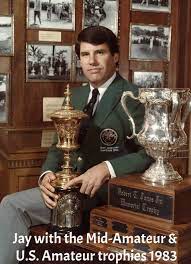
In United States Amateur Golf, there are three names: Bobby Jones, Tiger Woods and Jay Sigel. Jay is one of the most accomplished amateur golfers in American history.
After growing in Pennsylvania, Jay played his college golf at Wake Forest. Afterwards, he embarked on a successful career in insurance and focused on the amateur side of the game-
And focus on it he did . . .
Jay won:
The US Amateur twice (Including his win at the Country Club in Brookline in 1982)
The US Mid Amateur
The British Amateur
and he played in 9 Walker Cups (captaining two of them).
Jay later turned professional at age 50 and played on the Senior tour where he won 10 times.
While it’s an amazing story of golf accomplishment, many of the lessons from Jay’s life come from his insurance business, his lessons in mentorship from Arnold Palmer and Jack Nicklaus, his charity work and the importance of family.
OUTLINE (Transcript is below . . . .)
Jay’s early golf and rise to prominence,
-Junior Golf
-The role of Wake Forest
-His arm injury, the decision to forgo professional golf and the economics of the Tour “back then”
The start and story of Jay’s successful insurance business in Pennsylvania
-The factors that went into his long-term success in business (and golf’s role in business)
-The role of family
-The decision to compete on the Senior Tour (and the role of Jack Nicklaus)
-Winning as a pro
Jay’s charitable endeavors and what is happening now?
-THE JAY SIGEL INVITATIONAL
Golf questions
-What made Jay a terrific player?
-Was anything missing?
-What is the difference between the top .01% and the top .0001%?
-Mindset of Stroke vs Match Play
-The match with Rick Fehr at Brookline and the aftermath
-The great players and lessons learned in Jay’s career

The State of the Game
-What he thinks of the state of the game after a whirlwind of news in the world of golf:
-Impact of length and power on the game
-How did Brookline hold up with the modern game?
How Do We Stay In Touch?
THE 2022 JAY SIGEL INVITATIONAL
Jay’s Golf Resume
https://www.jaysigel.com/new-page
https://www.amateurgolf.com/golf-tournament-news/27871/Catching-up-with-Jay-Sigel
TRANSCRIPT
Intro:
Welcome back to the Wealth, Actually podcast. The show that features artists, entrepreneurs, experts, and commentators that will give you the right knowledge, planning, and guidance so you can preserve your assets and enjoy your wealth. Learn more and subscribe today at WealthActually.com. And now, here’s your host, Frazer Rice.
Frazer Rice:
Welcome back to the Wealth Actually podcast, I’m Frazer Rice. Today we have an extra special edition of the show. We get to speak with Jay Sigel, who’s one of the most accomplished amateur golfers in American history.
Frazer Rice:
After growing up in Pennsylvania, Jay played his college golf at Wake Forest. Soon afterwards, he embarked on a successful career in insurance and focused on the amateur side of the sport. And focus on it, he did.
Frazer Rice:
He won the US Amateur twice, the U.S. Mid-Amateur, the British Amateur and he played in nine Walker Cups, captaining the side twice. He later turned professional at age 50 and played on the Senior tour where he won 10 times.
Frazer Rice:
While it’s an amazing story of golf accomplishment, many of the lessons from Jay’s life come from his insurance business, mentorship, charity, and the importance of family. Welcome aboard, Jay.
Jay Sigel:
Thank you. Good to be here and good to be able to speak with you.
Frazer Rice:
Well, this is a real treat for me. I had Rob Labritz on before talking about his foray into the Senior Open and senior golf in general on the PGA Senior tour. But, what few people understand is that the golf career can take many directions. And, I think you’re the personification of that. Your career, and I talked a little bit about it in the opening, pretty iconic in terms of the direction that you took it. Maybe take us through a little bit about your early experiences, sort of where you came from and how you picked up the game.
Jay Sigel:
I grew up in the Narberth area, which is a suburb of Philadelphia and was active in all sports, but particularly in baseball. And, one day I was caddying for my dad, no intention of playing golf and three bags on my right shoulder at age 10 and a half, 10. And he said, “Would you like to try this game?” I said, “Absolutely. Better than caddying for you three guys.” Well, we went from there.
Frazer Rice:
So, when you started out hitting your first balls, what was that like? Was the talent obvious or were you topping it and it was going 50 feet. How did that work?
Jay Sigel:
Frazer, I was terrible. Honest to goodness. And, what got my competitive juices up is we visited some friends in Cape Cod every summer and he was way better than I was. So, my goal for the following summer age 11, was to return and be able to beat him not only at horseshoes, baseball, but golf. Sure enough, that was a huge, huge help that competition.
Frazer Rice:
You sort set some goals for yourself. You started to get better in the different phases of the game. Where did that go structure wise? How did junior golf work in terms of getting more traditional competitive situations?
Jay Sigel:
Well, we had a great golf association in Philadelphia and I played in the junior event. In fact, I can remember one junior event. My mom took me, it was 12 and under, and the pro said, “Well, sorry ma’am but your son is too old for this. This is 12 and under.” I was a tall, pretty big kid. And she said, “No, no, he’s 12. He’s under 12.” So, I remember winning. That was my first victory at age 11, and shot 46 for nine holes. So that was a great memory.
Frazer Rice:
So you get some taste of junior golf, when did your handicaps start getting down to the area, call it scratch or somewhere around there where you started to look at it and you were starting to believe a little bit more in golf as a path?
Jay Sigel:
I don’t recall having a handicap early on. I mean, this was 65 years ago. One thing I do remember, though, at the club I was at, the mature members were so helpful and so concerned that I do right. That’s my first introduction to mentoring, and I had no idea what mentoring meant. And it became very important in my life as you’ll see.
Frazer Rice:
As you were getting mentored at the club level, you had people who were looking out for you, giving you advice and so on. When did Wake Forest start to become an option? How did that process work?
Jay Sigel:
Arnold Palmer was a friend of the family. His father-in-law and my dad were fraternity brothers, so they were pretty close. They would see each other. And, my dad said, “Arnold, who should Jay take lessons from?” My first official lesson at age 16, Arnold said my dad. So we went out to Latrobe and spent the day there. I can remember clearly eight o’clock in the morning, Arnold had already been hitting balls and here I am 16 years old, getting ready to warm up to have a lesson from his dad and I shanked the first three or four, almost took Arnold’s head off. So that was an experience. So, we got to know one another fairly well.
Frazer Rice:
So, Jay, maybe get into the mentoring side a little bit more because a big part of business development and the development of people generally, it’s important to have someone who’s looking out for you, and also not just looking out for you, but helping to provide both technical and real life guidance as to how to handle oneself. Maybe go into that a little bit.
Jay Sigel:
Yeah. You say that so well, Frazer. I didn’t have any idea what mentoring was in my early years. I do remember, though, playing, I was 15 or 16 playing the club championship at Bala Golf Club in Philadelphia, where I learned to play and was mentored so well early on. We had a rules question come up and it was ruled against me, but in fact I was correct, but what was I going to do about being correct and losing in the rules? So I won the match. We finished. I was playing a celebrity Philadelphia athlete and he said, “I guess you won.” Well, I was boiling, boiling, hot over that. Went into the locker room, one of my dear friends said, “Play him again.” I said, “Play him again?” This was the most important win of my life at that point. And I couldn’t possibly do that. Of course I did play him again and killed him, so fun and an interesting story.
Frazer Rice:
Yeah. And, and it’s important, too, because the culture around the rules of golf and the self-reporting mechanism sometimes is alien to people. We’re used to referees in other sports, and even if you watch professional golf nowadays, and you’ve got rules officials and people call them over and so on, but the self-reporting aspect is a big deal. Maybe talk about that a little bit, where culture of being the steward of your own game and being the reporter of your own ethics.
Jay Sigel:
Yes, it’s interesting. I mean, I’ve had occurrences, not many I can [inaudible 00:06:55]. I think when I was about 16 or 17, I was playing the Philadelphia open, which was a big deal at Marion. And I came to about the 14th, 15th hole, and I noticed in my golf bag, I had what appeared to be an extra club. Well, I took my towel, put it over top of the bag. The caddy hadn’t said anything. I didn’t know it. I hadn’t checked my clubs, nor had he, so out we go another hole and it’s driving me crazy. I think I made a double or triple buggy, so I uncovered the clubs and there was an extra club. So I had to make a decision in that one whole timeframe. Was I going to keep it hidden or was I going to declare it? Well, obviously I did and that had become a good story that I’ve used for the first tee that I was involved in. You come across these things all the time and you have to make that decision. And fortunately I made the right that decision that day.
Frazer Rice:
Well, it’s important. A lot of times, I think, in the golf community, the obviousness of the ethics and so on, and self-reporting, I think it’s interesting to hear. It’s not always automatic. And that is where getting to the right decision, it’s an important component. And it’s a lot of ways that the business community misses that and the doing the right thing. A: you have to identify with the right thing is, and then B: you have to decide to do it and execute. That’s not always as simple as a snap of the finger.
Jay Sigel:
You got it. You phrased it very well. Yes.
Frazer Rice:
So you’re at Wake Forest. You’re having some success there. We’ll get into that in a second, but one of the things that’s going on in the golf world is I think the popularity of college golf is starting to explode. The coverage either via the golf channel and now internet channels is becoming more and more present. I think something that’s going to be mentioned a lot is going to be the idea of going pro, the idea of the economics of it going forward. You came from a different era on this front and the decision making to go from college golf to pro maybe not as cut and dried as it might be for some people. Maybe take us through that a little bit, how your success was manifesting itself in Wake Forest, what that looked from a pro decision. And you had a a wrist injury that complicated that.
Jay Sigel:
I was not a good student. Went to Wake Forest, it was difficult for me academically. And I was there just to play golf. And I was figuring I was going to turn pro at the earliest occasion. And that was that. However, as you say, the wrist injury set me back quite a bit. I did have early success at Wake and had been playing wonderful golf. So that was a thrill. But the biggest shock of my life came when I cut my ulnar nerve in my left wrist and set me back almost a year. How far back, I don’t know.
Frazer Rice:
You have the injury. You’re working through that. Maybe take us through the timeline. You’re coming up at the end of Wake. What were you thinking? Now you have to make a living somehow. The injury complicates that. What was happening on that front?
Jay Sigel:
My dad was never too worried. He figured I would succeed whatever I did. And he said, “Things happen for a reason. And you will find out later.” And I didn’t believe that at all. However, very fortunate to meet a young lady who had a lot of influence on me and got me to graduate. She thought that was important. Her mom and dad would want that, and she wanted that. And then she said, “Well, what are you going to tell the children if ask? You didn’t complete what you started.” She was absolutely right, so fortunately, I did that and graduated with Dean’s list the last semester. I don’t know how I ever did that.
Frazer Rice:
We’re not going to dive deep into that. We’ll let success speak for itself there, so you come out of college and your golf is complicated. The pros seem far off at that point.
Jay Sigel:
Not a possibility.
Frazer Rice:
Yeah, not a possibility. So you’re moving into making a living. What was that thought process?
Jay Sigel:
It was something. I looked around as I was going through college and certainly at the time that I wasn’t playing golf, and who was playing golf? It seemed all the insurance men were playing golf. No stock brokers were playing golf. They had to be in the office. They had to tend to their clientele. And furthermore, I had been dating earlier on and knew a family of the club champ at my club. He was a good insurance guy, had a boat, could play golf when he wanted, set his own hours. That’s how I got started.
Frazer Rice:
Maybe take us through the early part of that. You got started in the insurance. How did you learn the business and how did you you start getting clients?
Jay Sigel:
I started out with John Hancock selling $5,000 endowments or whatever. Can he save $3-4 a week, there were savings plans in effect back then, and customers, I guess, liked the way I approached things. I answered questions. If I didn’t have an answer, I told them I get it for them. Then a client would say, “Well, can you handle my homeowner’s insurance?” Well, not really, but let me check into that. So my clients kept asking for me to do some other business with them, so I had to develop avenues to do that. And that’s how my business grew. That was a fortunate thing.
Frazer Rice:
So, as your business grows, you’ve got your own clients. Did you break away and start your own thing, or did you grow up through the John Hancock system? What worked there?
Jay Sigel:
Not until, I don’t know, probably the late eighties did I have my own organization in, which only was comprised of maybe eight folks. The thing that stands out through all that is I was very competitive, as you can probably well tell. And the competition entered into every interview I had. I wanted to win. It had to be right, whatever it was that I was doing. And it had to be right later on when it was reviewed by experts, so to speak. So I was very concerned that it was done properly. I became a professional in the insurance business, got my professional designations through the American College CLU, chartered life underwriter, as well as chartered financial consultant, and I considered myself a professional.
Frazer Rice:
Jay, on the role of family, your wife has been an instrumental part of not only your professional but personal development as well. Maybe talk a little bit about that and how that relationship has added a different dimension to you.
Jay Sigel:
Surely. I’m happy to do that. You heard me say she’s responsible for my graduating, finishing, completing my task at Wake Forest. And she’s been a huge force in my life as evidenced by the time when we lost twin boys full term in 1970, and we both discussed the fact that this was going to either strengthen or weaken our marriage. And of course it’s strengthened it. She has been a normalizing force in my family. She talks to our three daughters almost regularly, does a great job. She keeps me from getting bent out of shape too often, as I say, normalizer and I would be traveling and I’d find a sticky in my suitcase or note from her that said too much… I got to find it my notes
Frazer Rice:
While you’re looking, that extra perspective is that thing that helps you keep from getting too high and too low and then making poor decisions because you’re in a weird emotional state that… And if you’ve been able to go through harder times together, you come out at the other side.
Jay Sigel:
You got it absolutely right. She would put things in my suitcase every once in a while that were significant. I’ll tell you the quotes. This was probably the best she said, “To whom much is given much is expected.” And I’ve been given an awful lot. So through her quote and through our agreement, I mean, she thought that it’s great that I give back, and that was helping getting it started.
Frazer Rice:
It’s a terrific notion. And I think it’s important for people to understand that life is often a team sport and you don’t become an excellent golfer, you don’t become a success in business, and you don’t get to that point where you can pay it forward without having that support at home. And that’s a nice comment on that.
Jay Sigel:
Absolutely. Keep me from becoming too cocky, which that would never happen. She gave me this one. “We live with our friends, not our accomplishments.” That’s a great one.
Frazer Rice:
Wise words, and good words when you’re out on the road, and it’s easy to lose your compass at times, right?
Jay Sigel:
Yeah, exactly. And whenever I’m struggling with my game, she says, “You’re not a legend, you’re still a competitor.”
Frazer Rice:
I like that. I like that a lot.
Jay Sigel:
And then I think I told you the one when I’m speaking that she reminds me that only my parents want to hear me for more than 15 minutes. Keep it short and sweet.
Frazer Rice:
Well, I’m going to disobey her. You can blame it on me because it’s important to hear all sides, so we’re going to go longer than 15 minutes.
Jay Sigel:
Okay. All right.
Frazer Rice:
It’s really cool. When did the itch to get back into high level golf start to come back? It probably never left, but as you work through your wrist injury, there had to come a point where you started to say, “Okay, maybe the pro situation isn’t going to work. I’m developing my insurance career and my insurance business, but there’s an avenue in golf that can address that fire that needs to be stoked.” What was the thinking around that? And how did you start having this rise in the amateur side of the golf?
Jay Sigel:
I still liked to compete even though maybe I didn’t compete that well, so I would win a local event or a club championship or a member guest or whatever. Then it went to the state amateur in Pennsylvania. I started to win those and accumulated quite a few, but the itch was just being developed locally. I was spending a lot of time with my business and my family. I’m thrilled at this day that I could do both. Never, never believing that I could be a professional golfer or a high level golfer later on.
Frazer Rice:
The biggest part about all that is the time management. You were in a career, as you said, that gave you a lot of control over your time, which is helpful. You’ve got a family and everything that goes with that. What is the time commitment that it takes to be a high level amateur golfer?
Jay Sigel:
Oh my. Well, I wasn’t, early on, a high level amateur golfer. I was a regional golfer, local golfer, and finally in the seventies as I matured, and I think clearly it was my maturity that got me to where I needed to be in the amateur golf, and things started to turn around. Victories came on regional and national events, such as the Porter Cup, the Northeast Amateur, Sunnehanna, those types of things.
Frazer Rice:
And as you’re building up your golf resume, what was that turning point that started to get you that attention that led to the inclusion into the Walker Cups and things like that?
Jay Sigel:
Yeah, I think about 1974, I won a couple major amateur tournament and beat Ben Crenshaw and Curtis Strange. And those kites, the guy, and I’m saying, wow. I said, I might be pretty good so we’ll see. The hands still bothered me, particularly in cold weather. I have partial feeling and strength even today, but that was my career from the seventies through nineties in the mid nineties, really, really quite good. I was surprised. Still am.
Frazer Rice:
Oh, wow. It’s okay to be surprised because if you look at your resume, it glitters with things that very, very few people in the U.S. amateur golf world have done. The U.S. Amateur twice. The MidAm. The British Amateur, the nine Walker cups. Let’s dive into some of those big events a little bit. Maybe the first U.S. Amateur, maybe talk a little bit about that because that, as an event, I think, is coming back into the consciousness, not only in the golf world, but beyond. What was involved there?
Jay Sigel:
That was 1982. What really got me emotional was in ’77, I got to the semi-finals at my home club Aronimink in Philadelphia area and should have won. Clearly, did not. So now 1982 comes at the country club. I’m in the finals. I’m so nervous you can’t possibly imagine. In fact, the first hole I shanked. I shanked my second shot into the weeds and it was a long day, but I prevailed winning. I couldn’t believe. It was a long road. I can remember pulling out of the country club telling my wife, “We can do this again.” So my vision of success for this event in the future was set right there as I left the club and sure enough, then I won the following year, which is unheard of. I still can’t believe it, but there you are.
Frazer Rice:
The next person to repeat, I think, was Tiger Woods. If I have my golf history, right. And that’s pretty heady company.
Jay Sigel:
It is.
Frazer Rice:
The Walker Cup experience, which is a team event, and I was lucky enough, I got to walk around at national watching the Walker Cup. And it’s a really cool situation watching the camaraderie and the competition, but take us into the team room of these Walker Cups. You’ve been in nine of them. I think you won all of them if I remember correctly, or the U.S. won. Take us through the team room and the relationships formed in the crucible of battle on that front where maybe team dynamics and golf that you normally wouldn’t think of developed.
Jay Sigel:
I don’t know where to start with that. There’s so many wonderful stories to hear. There are some that weren’t as wonderful. For instance, I was playing captain two times. So those are more obvious to me in that we had to set the line up within one hour of the first day’s play, who was playing with whom and what spot. I had a player say in our team meeting that, “I didn’t feel comfortable playing with so-and-so.” So there was dead silent. The one fella didn’t want to play with the other one. That was a shocker. I wasn’t trained to answer that question. Fortunately, I didn’t have to. I remembered as a student, if you don’t know what you’re talking about, don’t say anything.
Jay Sigel:
For maybe 30 seconds, it was total silence. With that, one of our younger players jumped up said, “Give me so-and-so. We’ll kill them.” With that enthusiasm, I sent them out first, the following day. They won their match. And that ended up winning the event. I just heard a very funny story. I was talking to Brad Faxon, and he and Willie Wood were playing in [inaudible 00:23:11] in 1983. And they came to the first hole. Willie was to hit. It was [inaudible 00:23:16] shot and Brad looks over. He said, “Willie, what’s wrong?” He said, “I can’t hit. I’m too nervous. I can’t hit well.” I don’t know what you do if you can’t hit, so that means your partner has to hit. They birded three of the first five holes. And I think that’s, that’s just what it is. You’re playing for your country. You’re playing for your teammates. You’re playing for your community and you’re playing for your friends. It’s a lot of pressure, and we did well there. Same thing happened with me and my first Walker Cup, Long Island at Shinnecock. My partner and I go the first day. We hadn’t decided who was going to hit. So both of our bags were right on the first tee. I look at him. He looks at me. He said, “Are you going to hit?” I said, “Nope, I’m not hitting.”
Jay Sigel:
So he hits, and he’s the straightest driver in the world. He hit it right down the middle. And I think I had 45 yards to the green. Never forget this. I hit a pitching wedge 25 yards over the green. So that’s the enthusiasm and the nerves that get into the game.
Frazer Rice:
That’s why at that point, you say, I’m glad I’m playing match play. We can discard the one hole and get back to business and move on from there. Relationships formed with the other side, the Europeans, did you make some interesting friendships on that with those experiences?
Jay Sigel:
I sure did. And it’s been great. Typically, the matches played the second night, there’s a party and there’s some alcohol flowing and some funny stories and putting contests in the dark and so on and so forth. Two stories, or at least one stands out that Colin Montgomerie came to Pine Valley in ’85. And he said to his teammates that he wanted to play the old guy, meaning me, and he was going to wax me. Well, I didn’t know that. And long story short, we got paired. I didn’t know what he had said, but I heard it later at the party when it was over. Probably best round of golf I’ve ever played. I was six under through 14 holes and beat him up pretty badly. It’s just amazing how some things happen.
Frazer Rice:
And when you found out about chitter chatter ahead of time, I’m sure that you get a nice little ribbing in after the fact.
Jay Sigel:
Absolutely. And he and I joked about this ever since. It’s like, “Give me Sigel. I’m going to kill him.” And said, “Okay, let’s go.”
Frazer Rice:
You got him. Here he is. So you’ve got these experiences in the amateur setting, great Brookline experience, the Walker Cups, and you’ve got the business developing. What was the thought process about the senior tour? Was that something… Not only the economic component of it, you’re feeling good about your golf game? What were you thinking on that front?
Jay Sigel:
My amateur career was pretty long, so my early success came in ’77 with my first Walker cup and then ’79, I won the British Amateur. Professional golf was not a consideration. My hand was still a concern. I didn’t know how much golf I could play. I could play for two weeks off and on, but then I had to rest because of my hand. Not until very last… I had to get my application in. I had to FedEx exit overnight special to get it in the day they received it with my $3,000 entry fee, and this was in ’93. I wasn’t sure I was going to do it till the very, very last minute, obviously. There were rumors, there were a lot of suggestions, you’re going to kill him, this, that, and the other thing, and I didn’t really know anything about the senior tour.
Jay Sigel:
I contacted those people that knew the USGA, ABC, Jack Nicklaus, Arnold, Trevino, and Nicklaus was the most helpful. He was in the life insurance business for a short period of time. He said, “I understand. Your record’s not going to go away. It’s in the books. So don’t be concerned about that. Secondly, I understand your difficulty of being away for two or three weeks, coming back and trying to catch up with your clients. That’s very difficult.” So he said, “You’re a good player. You’re better than I thought you were. He’ll earn some money.” And he said, “I don’t know how successful you’ll be, but you should be just fine.” The light goes off. I said, “You mean you think I can keep my insurance business as a professional and be a professional golfer at the same time?” He said, “Absolutely.” Light bulb goes off. That’s what I did.
Frazer Rice:
And another story of mentorship there where you were able to talk to somebody, the greatest in the game, depending on whom you talk to versus Tiger Woods, but also someone who had some direct experience with what you were talking about on the insurance side, and so that mentorship helped you make a good choice going forward.
Jay Sigel:
Absolutely.
Frazer Rice:
And it’s nice to have Jack Nicklaus as a mentor, as a general matter, probably.
Jay Sigel:
We’ve discussed it, oh, a handful of times since. And I’ve always ended up thanking him and he’s been most appreciative of that.
Frazer Rice:
You won, I believe it’s 10 times on the senior tour, and is there anything different besides the paycheck about winning on professional tour versus the amateur experience?
Jay Sigel:
Yes. What one has to get over is that they keep scoring money. The amateur career, if you win a trophy, that’s terrific, but if you came in third or fourth, they don’t know anything. Nobody knows who came in second, third or fourth the money winnings representative, and I had to get over that part in that I never thought about it from that standpoint. So I said, “Let’s make this very simple. The hole is the same size, no different, fairways out of bound, all of that stuff. It’s all the same, same clubs. You played on all the great courses, U.S. Open, the British Masters, 11 masters.” So it wasn’t too different. Couple of the guys gave me a hard time, said, “What are you doing out here taking our money?” And I said, “It’s not that. It’s the goal or the competition of seeing how I would do about against you guys.” And he was accepting of that. That was an interesting conversation I had with him. He wanted to run me off.
Frazer Rice:
Yeah. Well, if you’re competing against him, you’re taking French fries off his plate.
Jay Sigel:
That’s right.
Frazer Rice:
You’ve got the insurance business working. You’ve had some success on the Senior Tour. That got you thinking charitably and dealing with some charitable endeavors. What does that entail and how did you get started on that front?
Jay Sigel:
Never thought I’d make the Walker Cup team after I cut my hand. So then I make it, I’m saying, “Wow. If my career ended in 1977, I would be satisfied.” My hand was that bad. So then followed that up with another selection to the Walker Cup and the British Amateur. I’m saying, “I’ve got to do something. I’ve got to pay it back.” So I started looking around and sure enough, a first tee type organization was looking for a president to help run this with an executive director. And it was the greater Philadelphia Scholastic golf association. We later became a first tee, so I was president there for 40 years. I’m now president of [inaudible 00:30:50]. I was just looking and looking and looking. I started a scholarship at Wake Forest. I got on the board of trustees at Wake Forest, which was a huge honor, started because my dad died from cancer.
Jay Sigel:
The club ironic wanted me to have a tournament. I said, “Well, that’s great. I’ll run it.” And they said, “Yes, you can run it.” So I wanted to get guys together who wouldn’t normally play. I played against a member I didn’t know. [inaudible 00:31:19]. It was [inaudible 00:31:19] open and shot. As it turns out, we won by seven shots. They said, “You’re no longer running this. It will be your tournament.” So then I’m thinking, this is ’92, I’m thinking that doesn’t make sense. Let’s do something for the community, so that’s where cancer research entered in, will be 30 years this September. Been a journey and we’ve done the stories, the access that we have provided people who don’t know where to turn, and now of course, cancer is not necessarily a death sentence, though. It’s been great fun. So being able to pay it forward has worked very well.
Frazer Rice:
And it’s something that the game of golf has driven for you. Most people think of it as go out on tour, you make a bunch of money, you donate it to a charity, et cetera. Your angle toured it. The golf drove it in a much different way, and I think that’s kind of an interesting story as to how your life pieced together with the insurance and the family and the golf and how that’s led to this paying forward concept.
Jay Sigel:
Yes, absolutely.
Frazer Rice:
We’re going to talk a little bit about how people can reach your charities in a little bit. It’s such an opportunity for me to delve into my golf nerd-dom here a little bit. So I want to pick your brain on a couple of things. It’s 2022 right now, and the state of the game as a general course will start first with maybe the technology aspect with the length in the sport. When I was in high school and I could put it out 280, that seemed pretty long back then. And this is back in the mid nineties. Now the top players in the game are hitting it 350+. How do you think about where the technology has driven the sport and is it good for it?
Jay Sigel:
You can’t blame the manufacturers for developing products that cause the ball to go further. However, ball speed is controlled by the USGA, so there’s a factor in there called athletic conditioning. And back when I was on the tour or when I was playing amateur golf, very few… I started Nautilus in 1977. That was unheard of. If you don’t lift weights, play golf.
Frazer Rice:
That’s that’s what supposedly hurt Johnny Miller’s career, right? He went ranching and put on too much muscle and it wrecked his swing.
Jay Sigel:
Absolutely. Well, Duval and Tiger were doing that all along. People didn’t really know it. So distance I think is partly because the athlete is far better shaped. There’s not the drinking, smoking and carousing that occurred in the game back then. So does distance hurt? I think what hurts is the time that it takes to play golf as well as the cost, so there have been some new games considered. I don’t know why we don’t adopt alternate shot. I don’t know if you’d call it foursomes, and you can socialize. You can have four teams, one ball, eight players discuss things all the way. You can play nine holes. You can get it done in an hour and a half, have your lunch and then get out of there. So there are other ways to do it. I think play it forward, the USGAs coming up with that, which makes sense. Move up a tee, that makes a whole lot of sense. So as far as distance, I don’t think it’s all the equipment. I think partly it’s the athlete in training.
Frazer Rice:
Interesting. As you look through your career and the great players that you’ve played with. Everybody’s records are kind of out there, so you can say who is amazing and who wasn’t, but when you were standing on the practice tee, watching people swing and hearing the sound that their strike makes and so on, whose swings really impressed you and whose games did you look at and say, “Man, this guy’s pretty freaking good?”
Jay Sigel:
The names that today. I’ve played 11 masters. I played several opens, several USGA opens, and the noise that comes from swing speed and contact, now all these clubs make that noise. I don’t make that noise like they do. So you could look at DeChambeau. The noise that he makes in hitting a shot, that’s out of sight. That’s the only thing I could add to this.
Frazer Rice:
We just came off of the U.S. Open at Brookline. You had your own magical experience. Let’s take this in two directions. The first one is, I think both of us were watching the open pretty intently there. What impressed you about Matthew Fitzpatrick? And maybe, maybe how did the course shape up compared how you played it when you won your U.S. Amateur there?
Jay Sigel:
I pulled for Matt quite often in that his brother plays at Wake Forest, so I’ve gotten to know him to a certain degree and it’s great fun. So I was pulling for him. Think the thing that impresses me about Matt is his pre-shot routine is the same every time. While everyone tries to duplicate their pre-shot routine, when the nerves come into play, I mean, just think about the shot. He hit it 18 out of that bunker. He went in there, didn’t mess around, hit it right on the green. Some of the guys might get in the bunker, fiddle around a little bit, get back out of the bunker, come back out. So all of that’s providing tension that’s not needed at that time. They’ve hit enough shots to go on, so his pre-shot routine, he’s putted beautifully for the last year or so.
Jay Sigel:
And put it in interestingly with the flag again in most puts, I’ve always thought that took the flag out, the hole looks bigger, but I think the sense of feeling where the hole is located comes in much greater with the flag in. The country club was something. My history there, I didn’t realize at the time how significant it was, the 17th hole’s, I won’t call it Ricky dink, but it’s a 370 yard [inaudible 00:37:21] to the left. You can drive it through the fairway. You can hit it out of bounds. In any event, I had a chance to win my amateur in ’82. Was playing Rick Fehr. We both were even going to 17. Both hit it in the fairway. I hit it in the front bunker. He hits at eight feet. I skull it out of the bunker over the green.
Frazer Rice:
Yikes.
Jay Sigel:
More than yikes. I was PO’ed, to say the least. So I go to the back of the green. I’m about to throw the towel in because there’s no way you’re going to make a putt with undulating green, so something came over me. I stepped back. I said, wait a minute. I can make this put. This put can be made. I talked to my caddy. We’ve talked about it many times since. Three breaks to the left, three breaks to the right. Well that’s even. So I put it straight. It went in. How it went in, I don’t know. I had an angel on my shoulders once again in my life. I won the 18th hole because he hit it over the green. If you’re long on 18 at Brookline, you can’t make par. So there we are.
Frazer Rice:
I love getting in between the ears of people and maybe even into the heart of somebody when you made the final put and you went and shook Rick’s hand and won that. What exactly were you feeling? I bet you’re probably thinking about it now. If it were me, I bet the hair would be standing on edge and things like that. What was going through your mind on that?
Jay Sigel:
I apologized. I mean, there’s no way that I should win that match at that late point with a 40 footer when he’s got an eight footer for a birdie. Didn’t win the hole. I tied it, but then I won on the next hole. We talked about it several times since. Matter of fact, when I was captain of the Walker Cup, I picked him as my partner, which he said he appreciated. I don’t know whether he did or didn’t, but it just shows the good fortune that I’ve had. There are many instances like that. It’s unbelievable. Like I say, I’ve had a angel on my shoulder and that’s allowed me to do a lot of things.
Frazer Rice:
One thing you did was you participated in this podcast and I’m thrilled, Jay, that you’ve been on. This has been a real treat for me. And I think our listeners are going to not only hear about your experiences, but take away some really good lessons. Also, I think you have to feel pretty comfortable about Wake Forest golf with Will Zalatoris and Cameron Young knocking on the doorsteps of probably pretty significant PGA tour success pretty soon.
Jay Sigel:
Exactly. Exactly.
Frazer Rice:
How do people find out more about you? I think you have a website, and then maybe just how do they find out about your charities if they want to get more involved?
Jay Sigel:
Yes. My website is www.jaysigel.com and my charity is involved in the website. So you’d be able to get all the information, maybe some golf tips. You’ll be able to know how to contact me, and I look forward to hearing from folks
Frazer Rice:
Terrific. And for listeners, I’ll have all that in the show notes and some other things that you can take a look and see Jay’s career, maybe in video form, if I can find it on YouTube, et cetera. Jay, thank you very much for being on. I look forward to staying in touch and at some point maybe we can get you up here to New York. You can try to save my golf game from myself.
Jay Sigel:
I don’t think that’s necessary. Thank you for your time and thank you for selecting me. I’ve enjoyed it. It’s been a worthwhile experience and you are certainly a pro.
Frazer Rice:
Ah, well, I appreciate it. Thank you very much.
Jay Sigel:
You’re welcome. Take care.
Speaker 1:
Thank you for listening to this episode of Wealth, Actually hosted by Frazer Rice, author of the book Wealth, Actually, and a leading private wealth manager. Head on over to wealthactually.com where you can subscribe to this podcast, get your own copy of the Wealth, Actually book and connect with Frazer directly. We’ll see you next time on Wealth, Actually.