Harnessing CRISPR-Cas9 for Treating ATTR Amyloidosis
This chapter explores the transformative potential of CRISPR-Cas9 technology in gene editing, particularly its promise for treating diseases like ATTR amyloidosis. It discusses the technology's mechanism, the advantages it offers for conditions driven by specific protein issues, and the hope for safe, effective one-time therapies.
Play episode from 07:49
chevron_right
Transcript
chevron_right
Transcript
Episode notes
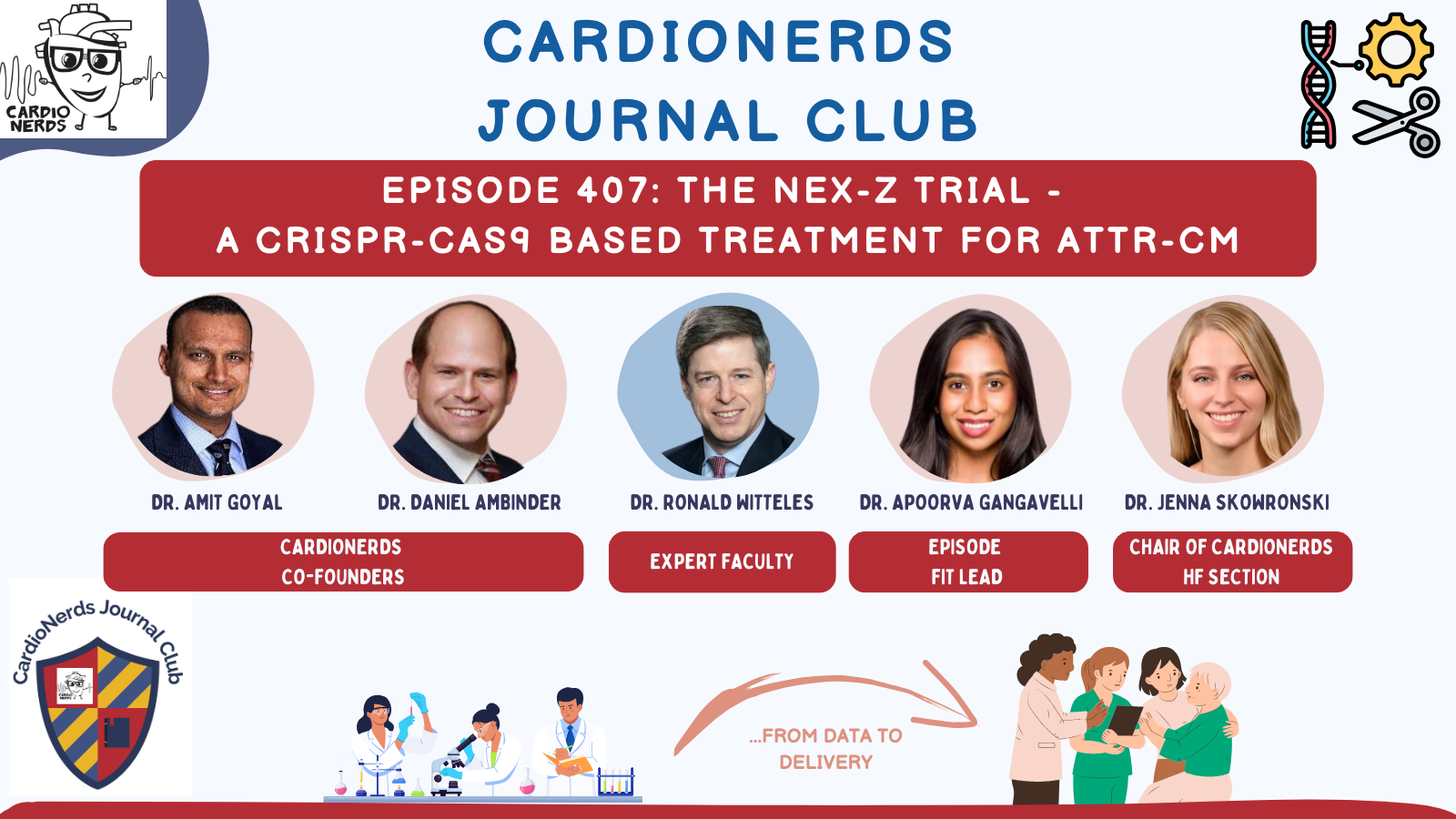
Join CardioNerds Heart Failure Section Chair Dr. Jenna Skowronski, episode lead Dr. Apoorva Gangavelli, and expert faculty Dr. Ronald Witteles as they discuss the Nex-Z trial.
This was a phase 1, open-label trial investigating nex-z, a CRISPR-Cas9-based treatment, in 36 patients with transthyretin amyloidosis with cardiomyopathy (ATTR-CM). The primary objectives were aimed at studying the safety and pharmacodynamics of this novel gene-based treatment modality. This episode dives into the nuances of the data, future directions for investigation, and future clinical implications.
Fontana, M., Solomon, S. D., Kachadourian, J., Walsh, L., Rocha, R., Lebwohl, D., Smith, D., Täubel, J., Gane, E. J., Pilebro, B., Adams, D., Razvi, Y., Olbertz, J., Haagensen, A., Zhu, P., Xu, Y., Leung, A., Sonderfan, A., Gutstein, D. E., & Gillmore, J. D. (2024). CRISPR-Cas9 Gene Editing with Nexiguran Ziclumeran for ATTR Cardiomyopathy. The New England Journal of Medicine. https://doi.org/10.1056/NEJMoa2412309
The AI-powered Podcast Player
Save insights by tapping your headphones, chat with episodes, discover the best highlights - and more!